
HealthcareBy City Prime Care Team
What Are the Warning Signs of Pneumonia, and Who Needs Care Fast? Reading the Symptom Clues, the Five Risk Groups and the Sample Recovery Timeline
Pneumonia is a lung infection that can be mild or serious. Learn how it differs from a cold or the flu, the warning signs, the five higher-risk groups, how severity is judged and what recovery usually looks like.
Medically reviewed by City Prime Care Administrator9 min read
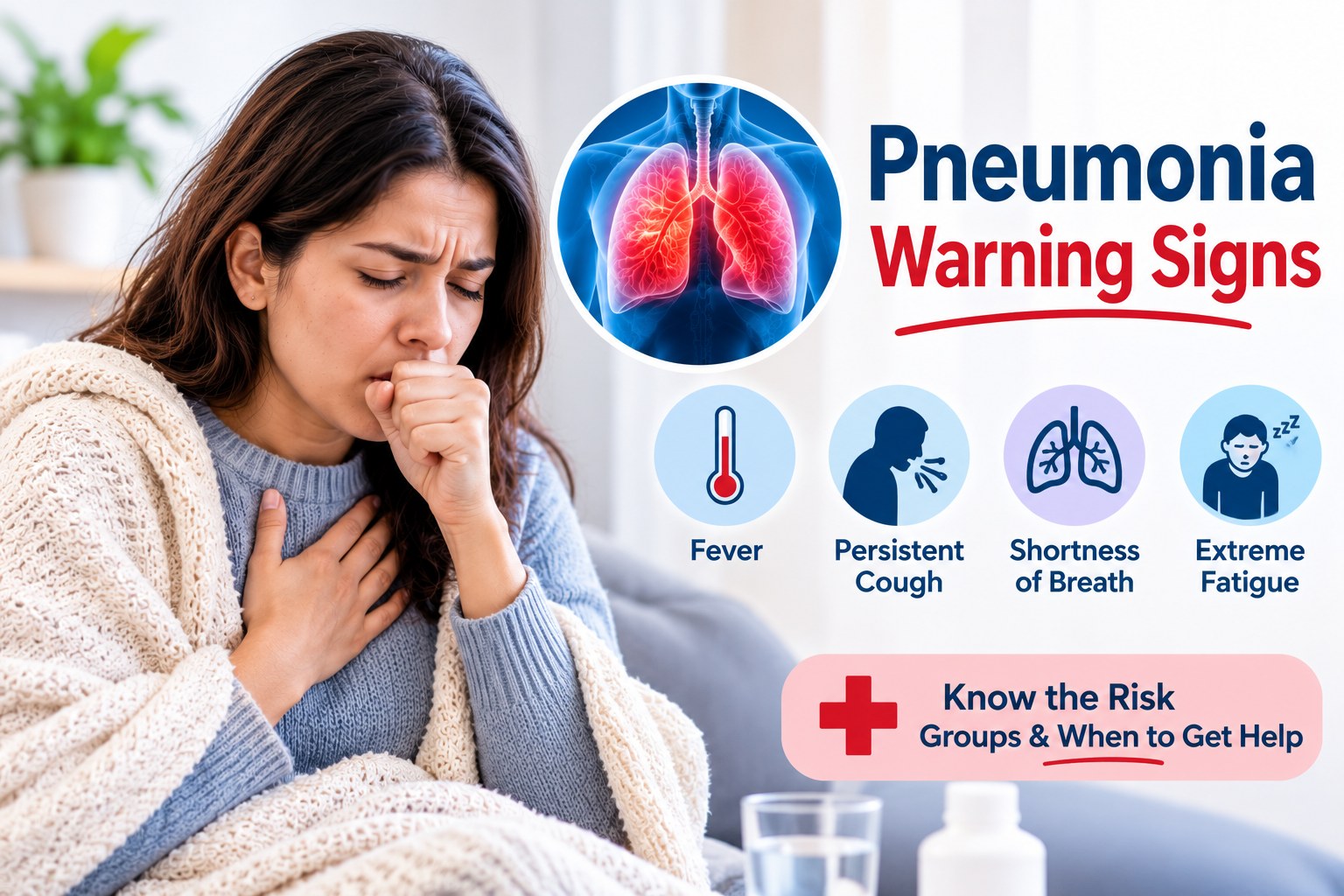
Table of contents
- 1. Pneumonia Compared With a Cold, the Flu and Bronchitis
- 2. The Warning Signs to Watch For
- 3. The Five Risk Groups
- 4. How Pneumonia Is Diagnosed
- 5. How Severity Is Judged
- 6. Treatment and a Sample Recovery Timeline
- 7. Prevention: Vaccines and Daily Habits
- 8. Red Flags, When to See a Doctor and Booking
- Conclusion
- Frequently Asked Questions
- See a Doctor in Elmhurst or Chinatown
Pneumonia is more than a bad cough. It is an infection of the lungs that can make breathing hard and, in people who are older, very young or have other illnesses, can become serious quickly. It is also common, and most healthy adults recover with proper treatment. The key is telling pneumonia apart from a cold or bronchitis and knowing when to seek care fast.
This guide explains what pneumonia is, how its symptoms differ from a cold or the flu, who is at higher risk, how it is diagnosed, how severity is judged, what treatment and recovery usually look like, a sample recovery timeline and how vaccines and daily habits lower risk. It is general education, not personal medical advice. City Prime Care provides primary care, urgent care and diagnostic testing in Elmhurst, and you can find the clinic on Google: City Prime Care on Google. See also the clinic's lifestyle counseling page.
In this article:
- 1. Pneumonia compared with a cold, the flu and bronchitis (table)
- 2. The warning signs to watch for
- 3. The five risk groups (table)
- 4. How pneumonia is diagnosed
- 5. How severity is judged (graph)
- 6. Treatment and a sample recovery timeline (table)
- 7. Prevention: vaccines and daily habits
- 8. Red flags, when to see a doctor and booking
1. Pneumonia Compared With a Cold, the Flu and Bronchitis
Pneumonia can start like a cold or the flu, which is why it is easy to underestimate. The pattern of symptoms, how long they last and whether breathing is affected help tell them apart.
| Condition | Typical symptoms | Usual course |
|---|---|---|
| 1. Common cold | Runny nose, sore throat, mild cough, little or no fever | Improves in about 7 to 10 days |
| 2. Influenza (flu) | Sudden fever, body aches, tiredness, dry cough | Improves in about a week; can lead to pneumonia |
| 3. Acute bronchitis | Cough with phlegm, chest soreness, mild or no fever | Cough may last 2 to 3 weeks; breathing is usually not very short |
| 4. Pneumonia | Fever and chills, productive cough, chest pain on breathing, shortness of breath, fatigue | Does not improve, or worsens, after several days |
For more on telling coughs apart, see when a cough is more than a cold and flu vs cold vs COVID-19.
2. The Warning Signs to Watch For
Common signs of pneumonia include:
- A cough that brings up green, yellow or rust-colored phlegm
- Fever, sweating and shaking chills
- Shortness of breath or fast breathing, even at rest
- Sharp chest pain that gets worse when you breathe in or cough
- Fatigue and loss of appetite
- Nausea, vomiting or diarrhea in some people
In older adults, pneumonia may look different: confusion, dizziness, a lower than normal temperature, falls or a sudden drop in daily function may be the only clues. Infants may breathe fast, feed poorly or seem unusually sleepy. See childhood illness vs when to call a doctor.
3. The Five Risk Groups
Anyone can get pneumonia, but some groups are more likely to get it, or to get very sick from it.
| Risk group | Why risk is higher | Helpful steps |
|---|---|---|
| 1. Adults aged 65 and older | Weaker immune response and more chronic illness | Vaccines, early care when symptoms start; see medicine safety for older adults |
| 2. Young children, especially under 2 | Smaller airways and immature immunity | Keep vaccines up to date; see pediatric urgent care |
| 3. People with asthma, COPD or heart disease | Lungs and heart have less reserve | Follow action plans; see asthma control |
| 4. People who smoke or vape | Damage to airway defenses | Quit with support; see quitting smoking or vaping |
| 5. People with diabetes, a weak immune system or heavy alcohol use | The body fights infection less well | Control blood sugar; see diabetes checkups and alcohol and health |
4. How Pneumonia Is Diagnosed
A clinician usually starts with your history and an exam, listening to your lungs and checking your breathing rate, temperature, heart rate and oxygen level with a small fingertip sensor. Depending on how sick you are, they may order:
| Test | What it shows |
|---|---|
| 1. Pulse oximetry | Oxygen level in the blood; low readings mean more serious illness |
| 2. Chest X-ray | Shows whether there is an area of infection in the lungs; see when a cough needs an X-ray |
| 3. Blood tests | Signs of infection and kidney function; see common blood tests |
| 4. Flu, COVID-19 or other swabs | Finds a viral cause that may have specific treatment |
| 5. Phlegm or other tests | Used in hospital patients to identify the germ |
5. How Severity Is Judged
Clinicians use simple scoring tools to decide who can recover at home and who needs the hospital. One common tool is CURB-65, which adds a point for each of five findings: Confusion, high Urea (a blood test of kidney function), Respiratory rate of 30 or more breaths a minute, low Blood pressure and age 65 or older. The graph below is an illustrative guide to how the score relates to care, not a diagnostic tool.
| CURB-65 points | Relative severity (graph) | Usual setting of care |
|---|---|---|
| 1. 0 to 1 | ██░░░░░░░░ Lower | Often treated at home with close follow-up |
| 2. 2 | █████░░░░░ Moderate | Short hospital stay or close monitoring is often considered |
| 3. 3 or more | ██████████ High | Hospital care, sometimes intensive care |
Other factors also count, such as low oxygen levels, other illnesses, inability to drink or take medicine, and whether someone lives alone. A clinician decides based on the whole picture.
6. Treatment and a Sample Recovery Timeline
Treatment depends on the cause. Bacterial pneumonia is treated with antibiotics. Viral pneumonia is mainly managed with rest and fluids, with antiviral medicine for flu or COVID-19 in some people. Fungal pneumonia needs specific medicine. Severe cases may need oxygen and hospital care. Take medicines as prescribed and do not stop early, and avoid cough suppressants unless a clinician advises them, since coughing helps clear the lungs.
The timeline below is an illustrative example for a healthy adult with uncomplicated bacterial pneumonia treated at home. Recovery varies a lot. Each block shows how much the symptom is usually still present.
| Time | Symptom burden (graph) | What is typical | What to do |
|---|---|---|---|
| 1. Days 1 to 3 | ██████████ | Fever, chills, strong cough, fatigue | Start treatment, rest, fluids; call if breathing worsens |
| 2. Days 4 to 7 | ██████░░░░ | Fever settles; cough and tiredness continue | Keep taking medicine; gentle walking |
| 3. Weeks 2 to 3 | ████░░░░░░ | Cough eases; energy slowly returns | Gradual return to work and activity |
| 4. Weeks 4 to 6 | ██░░░░░░░░ | Mild tiredness may linger | Follow-up visit; ask about repeat chest imaging if advised |
| 5. After 6 weeks | █░░░░░░░░░ | Most people feel back to normal | Review vaccines and risk factors |
Dehydration is common with fever and fast breathing. For help with fluids, see dehydration warning signs. Sleep and rest also speed recovery; see sleep and your health.
7. Prevention: Vaccines and Daily Habits
Many cases of pneumonia can be prevented or made milder. Vaccines are one of the strongest tools, and good daily habits add protection.
| Protection | Who it is for | Notes |
|---|---|---|
| 1. Pneumococcal vaccine | Young children, adults 50 or 65 and older (guidance varies), and younger people with certain conditions | Protects against the most common bacterial cause; ask your clinician which version |
| 2. Yearly flu vaccine | Nearly everyone aged 6 months and older | Flu can lead to pneumonia; see when to get your flu shot |
| 3. COVID-19 and RSV vaccines | Based on age and risk; RSV vaccination is recommended for some older adults | See the adult vaccines guide |
| 4. Handwashing and covering coughs | Everyone | Reduces spread of germs |
| 5. Not smoking, limiting alcohol | Everyone | Protects airway defenses |
| 6. Managing chronic conditions | People with asthma, diabetes, heart or lung disease | Keep follow-up visits; see chronic disease management |
The American Lung Association explains pneumonia and lung health at lung.org, and the Centers for Disease Control and Prevention has vaccine guidance at cdc.gov.
8. Red Flags, When to See a Doctor and Booking
| Situation | Action |
|---|---|
| Severe shortness of breath, blue or gray lips, or chest pain that is crushing | Call 911; see chest discomfort decoded |
| New confusion, fainting, or a very high or very low temperature | Go to the emergency room |
| Cough with fever lasting more than 3 to 5 days, or getting worse after a cold seemed to improve | Book a visit or go to urgent care; see urgent care vs the ER |
| Fast breathing or poor feeding in a baby or young child | Seek care the same day |
| You are 65 or older, or have a chronic illness, and have a cough with fever | Do not wait; be checked early |
| You want a vaccine or follow-up review | Use the appointment page and choose Primary Care |
Conclusion
Pneumonia ranges from a mild illness you recover from at home to a serious infection that needs the hospital. The difference often comes down to age, other health conditions and how early care starts. Watch breathing, fluids, fever and confusion closely, get checked early and ask your clinician about vaccines so you are better protected next season.
Contact Us: To ask about a lingering cough, vaccines or follow-up after pneumonia, reach City Prime Care through our Contact Us page, or find the clinic on Google: City Prime Care on Google. This article is for general information and does not replace personal medical advice. If you have severe trouble breathing, blue lips or confusion, call 911.
Frequently Asked Questions
See a Doctor in Elmhurst or Chinatown
Have a question about your own health? Book a visit at our Elmhurst, Queens clinic or our Chinatown, Manhattan clinic, or explore our primary care services.
Related articles
Healthcare
How Can You Recognize a Stroke in Time? Reading the BE-FAST Warning Signs, the Five Emergency Steps and the Sample Hospital Timeline
Stroke care is a race against time. Learn the BE-FAST warning signs, the five emergency steps, what happens at the hospital, why a TIA is a warning and which risk factors you can control.
Healthcare
What Causes Acid Reflux, and When Is Heartburn More Than Heartburn? Reading the Trigger List, the Five Warning Signs and the Sample Meal-and-Sleep Plan
Occasional heartburn is common, but frequent reflux can damage the esophagus and sometimes mimics heart trouble. Learn the triggers, lifestyle steps and medicines, five warning signs, and a sample meal-and-sleep plan.
Healthcare
How Do You Know If a Head Injury Is a Concussion? Reading the Symptom Checklist, the Five Danger Signs and the Sample Return-to-Activity Plan
A concussion does not need a knockout and often shows nothing on a scan. Learn the symptom checklist, the five danger signs that need the ER, how recovery usually goes and a step-by-step return-to-activity plan.





