
HealthcareBy City Prime Care Team
Why Do Regular Checkups Matter If You Have Diabetes? Reading the Checkup Checklist, the A1c Ranges and the Sample Year of Visits
Diabetes affects more than blood sugar. See what a good diabetes checkup includes, how to read A1c ranges, how often to be tested, and a sample year of visits for adults living with diabetes in Queens.
Medically reviewed by City Prime Care Administrator9 min read
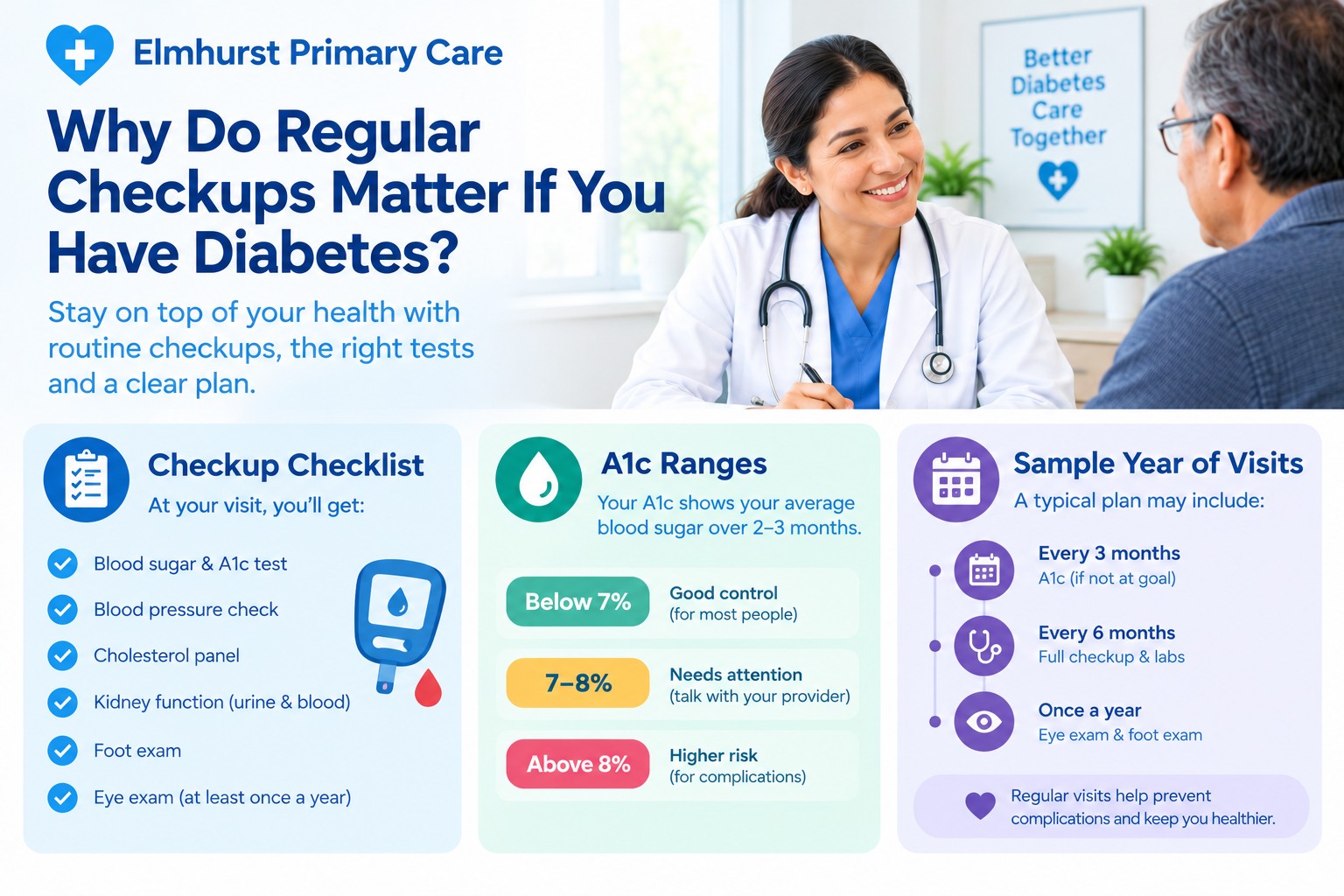
Table of contents
- 1. Why Regular Checkups Matter
- 2. The Diabetes Checkup Checklist
- 3. Reading A1c Ranges
- 4. Medicines and Insulin: What Is Reviewed
- 5. Food That Fits Your Life
- 6. A Sample Year of Visits
- 7. Red Flags: When to Seek Care Quickly
- 8. Questions to Ask at Your Next Visit
- Conclusion
- Frequently Asked Questions
- See a Doctor in Elmhurst or Chinatown
Diabetes is often described as a blood sugar condition, but it reaches much further. Over years, high blood sugar can affect the eyes, kidneys, nerves, heart, and feet, often without obvious symptoms until damage has started. That is why regular checkups matter so much: they catch small changes early, while there is still plenty of time to correct course.
This guide explains what a good diabetes checkup includes, how to read A1c ranges, how often tests are generally done, and how a sample year of visits might look. Much of the clinical framework comes from the chronic disease management page on the City Prime Care website, and some from widely used diabetes guidance. It is general education, not personal medical advice. For the basics of the condition itself, see our guide to type 2 diabetes.
In this article:
- 1. Why regular checkups matter
- 2. The diabetes checkup checklist (table)
- 3. Reading A1c ranges (graph)
- 4. Medicines and insulin: what is reviewed
- 5. Food that fits your life
- 6. A sample year of visits (graph)
- 7. Red flags: when to seek care quickly
- 8. Questions to ask at your next visit
1. Why Regular Checkups Matter
The clinic's services page says diabetes affects the eyes, kidneys, nerves, heart, and feet, so good care goes well beyond checking blood sugar. At routine visits, it says providers review your readings, check blood pressure and weight, examine your feet, and make sure yearly kidney tests and eye exams are on schedule.
Regular checkups also keep your medicines up to date. Diabetes treatment changes over time as your body, weight, age, and other conditions change, and a plan that worked two years ago may not be the best plan now. You can read more in the MedlinePlus diabetes overview and the American Diabetes Association's patient resources.
2. The Diabetes Checkup Checklist
| Check | What it looks for | General timing (your clinician decides) |
|---|---|---|
| 1. Blood sugar readings and A1c | How well blood sugar is controlled over time | A1c about twice a year when well controlled; about every three months if treatment changes or levels are above goal |
| 2. Blood pressure | High blood pressure doubles down on heart and kidney risk | At every visit |
| 3. Weight | Weight affects blood sugar, blood pressure, and cholesterol | At every visit |
| 4. Foot exam | Nerve damage, poor circulation, sores that may go unnoticed | At routine visits; check your own feet daily |
| 5. Kidney tests | Early signs of kidney damage | At least yearly |
| 6. Eye exam | Diabetes-related changes in the retina | Kept on schedule, usually yearly; ask your clinician |
| 7. Cholesterol | Heart and stroke risk; see cholesterol guide | As your clinician advises |
| 8. Medicine review | Effectiveness, side effects, and interactions | At every visit |
| 9. Vaccines | Infections can be harder on people with diabetes; see adult vaccines | Yearly flu vaccine and others as advised |
Many of these tests are blood tests. Our guide on common blood tests explains what they measure and which ones may require fasting.
3. Reading A1c Ranges
The A1c test reflects your average blood sugar over roughly the past three months. The ranges below are the commonly used reference points for adults. They are a general guide, and your own target is set by your clinician.
| A1c result | Position on scale (graph) | What it generally means |
|---|---|---|
| Below 5.7% | ███░░░░░░░ Lower | Typical range without diabetes |
| 5.7% to 6.4% | █████░░░░░ Moderate | Prediabetes range |
| 6.5% or higher | ███████░░░ Higher | Diabetes range when confirmed |
| Below about 7% (common target) | ██████░░░░ Treatment goal | Many adults with diabetes aim here, but the clinic notes your personal target depends on age, other health conditions, and risk of low blood sugar |
The clinic says it explains each result in plain language and adjusts the plan together. If you are not sure what your numbers mean, ask your provider to write down your personal target.
4. Medicines and Insulin: What Is Reviewed
According to the clinic's page, providers review every medicine you take, watch for side effects, and consider options such as metformin, newer oral or injectable medicines, and insulin when needed. If you use insulin, visits cover injection technique, meter or glucose sensor readings, and how to recognize and treat low blood sugar. The clinic also checks how diabetes medicines fit with the rest of your prescriptions and sends refills to your pharmacy.
| Topic | Why it is reviewed |
|---|---|
| Side effects | Some medicines can cause stomach upset or low blood sugar |
| Interactions | Diabetes medicines may interact with blood pressure or cholesterol medicines |
| Injection technique and devices | Small mistakes change how much medicine you get |
| Low blood sugar | You and your family should know the signs and what to do |
| Cost and refills | A plan only works if you can get and take the medicine |
5. Food That Fits Your Life
Food affects blood sugar directly, but advice only helps when it fits how you really eat. The clinic says it talks through portion sizes, carbohydrate awareness, and meal timing using the dishes you already cook at home, whether that means rice, tortillas, or noodles. For more structured help, it offers lifestyle counseling and can refer you to a registered dietitian or a diabetes education program.
Practical ideas to discuss with your provider:
- Which portion of your usual meal is carbohydrate, and how large it is
- How meal timing relates to your medicines
- Swaps that keep favorite foods while lowering blood sugar spikes
- How activity after meals affects your readings
- How sleep affects blood sugar; see our sleep guide
- Whether a dietitian or diabetes education class would help
6. A Sample Year of Visits
The graph below is an illustrative example of how checkups and tests might be spread across a year for an adult with well-controlled diabetes. It is not a schedule for any individual, and visits are more frequent when treatment changes.
| Period | Planned activity (graph) | Example focus |
|---|---|---|
| January-March | ███████ Busiest | Yearly review, A1c, kidney tests, cholesterol, goal setting |
| April-June | ███ Light | Check-in on readings, medicine refills, eye exam booked |
| July-September | █████ Moderate | A1c recheck about six months later, foot exam, weight and blood pressure |
| October-December | ████ Moderate | Flu and other vaccines, plan for the next year |
Related reading: annual physical guide, understanding your results.
7. Red Flags: When to Seek Care Quickly
| Warning sign | Why it matters | Action |
|---|---|---|
| Confusion, fainting, seizure, or unable to wake | Severe low or high blood sugar | Call 911 |
| Low blood sugar that does not improve after treatment | May need emergency help | Call 911 or seek emergency care |
| Very high readings with extreme thirst, frequent urination, nausea, vomiting, or fruity breath | Possible serious blood sugar emergency | Seek emergency care |
| A foot sore, blister, or infection that is not healing | Can worsen quickly in diabetes | Call the clinic the same day |
| Sudden vision changes | May be diabetes-related | Seek prompt evaluation |
| Chest pain, trouble breathing, signs of stroke | Heart and stroke risk is higher with diabetes | Call 911; see our chest discomfort guide |
Vomiting and diarrhea can affect blood sugar and hydration; see our guide on upset stomach and recovery and dehydration.
8. Questions to Ask at Your Next Visit
Bring this short list to your appointment:
- What is my personal A1c target, and how close am I?
- When are my kidney tests, eye exam, and foot exam due?
- Are my blood pressure and cholesterol where they should be for someone with diabetes?
- Are any of my medicines or supplements likely to interact or cause side effects?
- What should I do if my blood sugar is too low or too high, and when should I call or go to the ER?
To plan a visit, see the clinic's chronic disease management page or use the appointment page.
Conclusion
Regular checkups turn diabetes from a series of surprises into a plan you can follow. Know your numbers, keep your tests on schedule, and bring your questions to every visit.
Contact Us: To ask about diabetes care, A1c testing, or booking a checkup, reach City Prime Care through our Contact Us page. This article is for general information and does not replace personal medical advice. In an emergency, call 911.
Frequently Asked Questions
See a Doctor in Elmhurst or Chinatown
Have a question about your own health? Book a visit at our Elmhurst, Queens clinic or our Chinatown, Manhattan clinic, or explore our primary care services.
Related articles
Healthcare
What Can You Do About Prediabetes Before It Becomes Diabetes? Reading the Blood Sugar Ranges, the Five Lifestyle Levers and the Sample Twelve-Week Plan
Prediabetes means blood sugar is higher than normal but not yet diabetes, and it is often silent. Learn the A1c and glucose ranges, who should be tested, five lifestyle levers that help, and a sample twelve-week plan.
Healthcare
What Should You Know About Fatty Liver Disease? Reading the Risk Factors, the Five Checks and the Sample Liver-Friendly Plan
Fatty liver disease is common, usually silent, and closely linked to weight, prediabetes and cholesterol. Learn what causes it, how it is found, how weight loss and habits help, and a sample liver-friendly plan.
Healthcare
How Can You Tell If Your Kidneys Are Healthy? Reading the Kidney Tests, the Five Risk Checks and the Sample Kidney-Protection Plan
Chronic kidney disease is often silent until it is advanced. Learn the two key tests, who is at risk, how stages are defined, how to protect your kidneys, and a sample kidney-protection plan.





