
HealthcareBy City Prime Care Team
How Does Chronic Disease Management Work for Elmhurst Patients? Reading the Condition List, the Five Plan Steps and the Sample Follow-Up Rhythm
Long-term conditions need more than occasional visits. See how a chronic disease management plan works, which conditions it covers, what is monitored, how follow-up visits are spaced, and how Medicare chronic care management fits in.
Medically reviewed by City Prime Care Administrator9 min read
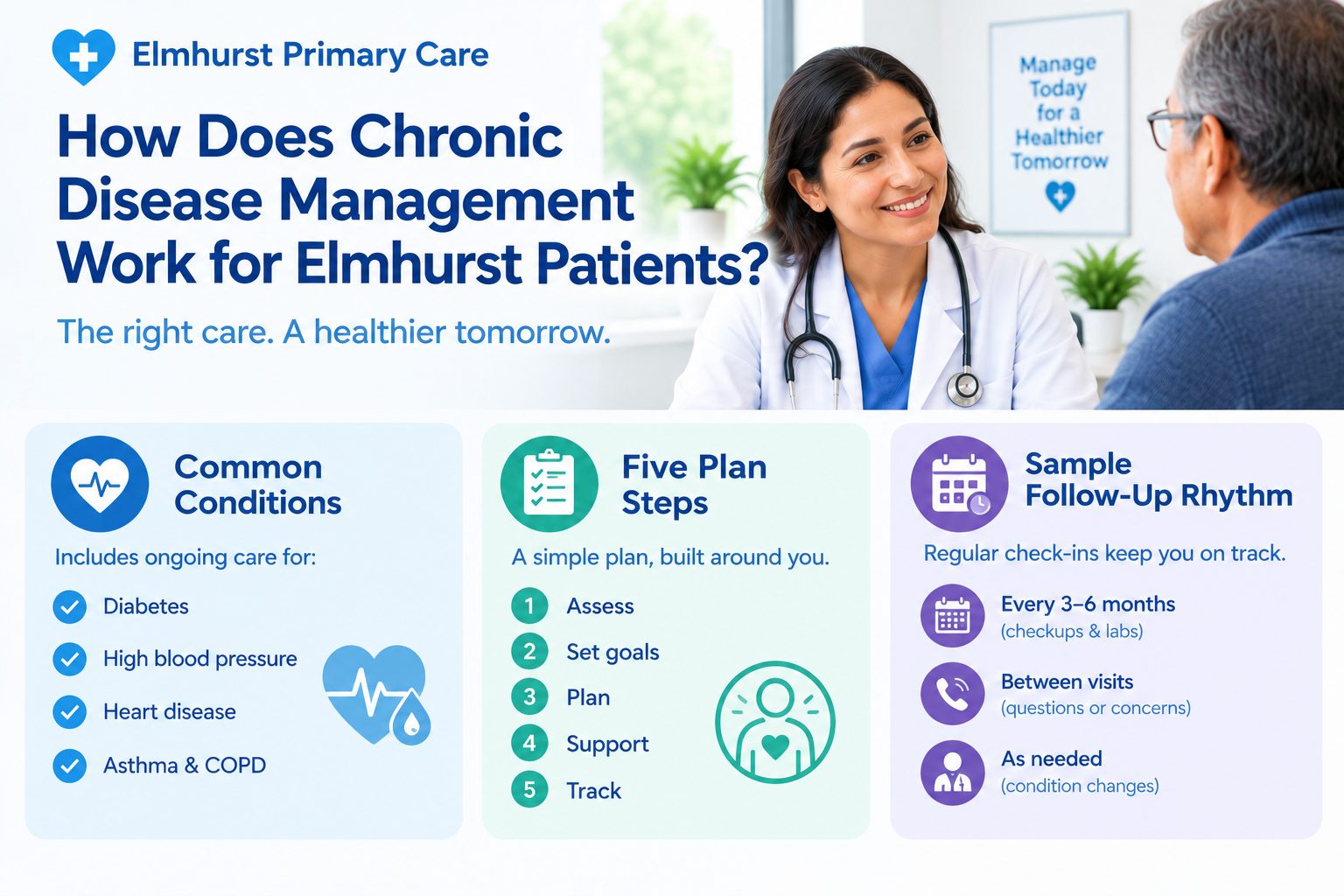
Table of contents
- 1. What Chronic Disease Management Means
- 2. Conditions Followed
- 3. The Five Steps of a Care Plan
- 4. What Gets Monitored
- 5. A Sample Follow-Up Rhythm
- 6. Medicare Chronic Care Management
- 7. Red Flags: When Not to Wait
- 8. Your Part in the Plan
- Conclusion
- Frequently Asked Questions
- See a Doctor in Elmhurst or Chinatown
Living with a long-term condition such as diabetes, high blood pressure, high cholesterol, or asthma is not a single event. It is a routine of check-ins, tests, medicine reviews, and small daily choices. People who do best tend to have one team that knows their history, tracks their numbers over time, and adjusts the plan as life changes.
This guide explains how chronic disease management works, based on what City Prime Care says about its program on its services page: the conditions it follows, the five steps of a plan, what gets monitored, a sample follow-up rhythm, and how Medicare chronic care management fits in. It is general education, not personal medical advice. To see the service itself, visit the chronic disease management page or read about the Elmhurst clinic.
In this article:
- 1. What chronic disease management means
- 2. Conditions followed (table)
- 3. The five steps of a care plan
- 4. What gets monitored (table)
- 5. A sample follow-up rhythm (graph)
- 6. Medicare chronic care management
- 7. Red flags: when not to wait
- 8. Your part in the plan
1. What Chronic Disease Management Means
A chronic condition is one that lasts a year or longer and needs ongoing care. According to the clinic's services page, its chronic disease management program helps adults living with diabetes, high blood pressure, high cholesterol, asthma, or COPD keep their conditions steady through regular check-ins, lab monitoring, and a written plan, with the same primary care team at each visit.
The clinic also notes that many patients have two or three conditions at once, and each affects the others. Diabetes raises heart risk, blood pressure medicines can interact with other prescriptions, and extra weight makes breathing problems harder to control. That is why reviewing everything together at each visit matters. For patient-friendly background, see the MedlinePlus chronic conditions overview.
2. Conditions Followed
| Condition | Why regular follow-up matters | Learn more |
|---|---|---|
| 1. Type 1 and type 2 diabetes, prediabetes | Affects eyes, kidneys, nerves, heart, and feet; needs blood sugar and A1c tracking | Type 2 diabetes guide |
| 2. High blood pressure | Often has no symptoms but raises the risk of heart attack, stroke, and kidney disease | High blood pressure guide |
| 3. High cholesterol and weight concerns | Add quietly to long-term heart and stroke risk | Cholesterol numbers guide |
| 4. Asthma and COPD | Flare-ups are easier to prevent than treat; inhaler technique and a written action plan help | Asthma guide |
| 5. Thyroid and other long-term conditions | Need routine follow-up and lab checks | Common blood tests |
3. The Five Steps of a Care Plan
The clinic describes plans that start with a review and move through goals and follow-up. In plain steps, a plan usually looks like this:
- Review your history: past diagnoses, family history, current medicines, and recent test results.
- Set realistic goals together, such as a blood pressure range, an A1c target, a cholesterol goal, or fewer asthma flare-ups.
- Schedule follow-up visits, closer together while treatment is being adjusted and further apart once things are steady.
- Order lab work and other tests when the plan calls for them, through diagnostic testing.
- Put the plan in writing, including an action plan for asthma or COPD so you know what to do when symptoms worsen.
Learn how results are explained in our article on understanding your diagnostic testing results.
4. What Gets Monitored
| What is checked | Why | How often (general guide, your clinician decides) |
|---|---|---|
| A1c (average blood sugar over about three months) | Shows whether diabetes is on target | The clinic says guidelines suggest about twice a year when well controlled, every three months when treatment changes or levels are above goal |
| Blood pressure, in the office and at home | Home readings give a fuller picture than one office reading | At visits, with home tracking when asked |
| Lipid panel | Shows cholesterol and triglycerides, one part of overall risk | Repeated to see whether the plan is working |
| Kidney tests and potassium | Some blood pressure medicines affect them; diabetes can affect kidneys | Yearly kidney tests for diabetes; blood work as the plan requires |
| Eye exam and foot exam | Diabetes can affect eyes and feet | Eye exams kept on schedule; feet checked at routine visits |
| Weight, waist size, related labs | Weight affects blood pressure, blood sugar, and cholesterol | At visits |
| Inhaler and spacer technique, symptom frequency | Small mistakes can keep medicine from reaching the lungs; frequent rescue inhaler use suggests the plan needs adjusting | At visits |
5. A Sample Follow-Up Rhythm
The clinic says follow-up visits are spaced closer together while treatment is adjusted and stretch out once the condition is steady. The graph below is an illustrative example of that pattern over a year, not a schedule for any individual patient. Each block represents roughly one planned contact.
| Phase | Planned contacts (graph) | What is happening |
|---|---|---|
| Weeks 0-4: starting or changing treatment | ██████ Frequent | Review readings, check side effects, adjust medicines |
| Months 2-3: fine-tuning | ████ Regular | Repeat labs, confirm goals are being reached |
| Months 4-9: steady | ██ Less often | Routine check-ins and refills |
| Months 10-12: yearly review | ███ Planned review | Annual labs, eye exam, vaccines, and goals for the next year |
Vaccines are part of the picture, especially for asthma and COPD. See our adult vaccines guide for what to discuss each year.
6. Medicare Chronic Care Management
The clinic's page describes Medicare chronic care management as a program for people with two or more chronic conditions expected to last at least a year. It adds care coordination between visits. The clinic lists these typical monthly services:
Typical services described on the clinic's page:
- A written, personalized care plan, with a copy for the patient
- Medication reviews and help keeping prescriptions up to date
- Phone check-ins with the care team between visits
- Coordination with specialists, labs, pharmacies, and home health services
- Follow-up after an emergency room visit or hospital stay
The clinic says Medicare requires your consent before these services begin, that you can stop at any time, and that because it is a billed service your usual Medicare Part B deductible and coinsurance may apply. Ask the front desk what it would mean for your plan before enrolling. You can read Medicare's own information at Medicare.gov.
7. Red Flags: When Not to Wait
| Warning sign | Action |
|---|---|
| Chest pain, sudden weakness, trouble speaking, or a severe headache | Call 911 right away; the clinic says not to wait for an appointment |
| Severe shortness of breath or blue lips | Call 911 |
| Confusion, fainting, or very high or very low blood sugar with symptoms | Seek emergency care |
| Rising rescue inhaler use, more night-time symptoms | Call the clinic; the plan may need adjusting |
| New side effects after a medicine change | Call the clinic the same day |
Our article on chest discomfort explains warning signs that should never wait.
8. Your Part in the Plan
Good care is a partnership. These habits help the plan work:
- Bring all medicines, supplements, and any home readings to every visit
- Take medicines as prescribed and tell your provider about side effects instead of stopping on your own
- Keep follow-up and lab appointments, even when you feel well
- Move more, eat in a way that fits your food and culture, and ask about lifestyle counseling
- Get enough sleep; see our sleep guide
- Ask for a referral when needed through referral services
- Keep up with yearly checkups; see the annual physical guide
Conclusion
Chronic disease management is steady, practical work: a clear plan, regular numbers, and a team that knows you. Done well, it keeps long-term conditions from taking over daily life.
Contact Us: To ask about care for diabetes, blood pressure, cholesterol, or asthma, or to learn about Medicare chronic care management, reach City Prime Care through our Contact Us page or the appointment page. This article is for general information and does not replace personal medical advice. In an emergency, call 911.
Frequently Asked Questions
See a Doctor in Elmhurst or Chinatown
Have a question about your own health? Book a visit at our Elmhurst, Queens clinic or our Chinatown, Manhattan clinic, or explore our primary care services.
Related articles
Healthcare
How Can You Tell If Your Kidneys Are Healthy? Reading the Kidney Tests, the Five Risk Checks and the Sample Kidney-Protection Plan
Chronic kidney disease is often silent until it is advanced. Learn the two key tests, who is at risk, how stages are defined, how to protect your kidneys, and a sample kidney-protection plan.
Healthcare
What Should You Know About Fatty Liver Disease? Reading the Risk Factors, the Five Checks and the Sample Liver-Friendly Plan
Fatty liver disease is common, usually silent, and closely linked to weight, prediabetes and cholesterol. Learn what causes it, how it is found, how weight loss and habits help, and a sample liver-friendly plan.
Healthcare
How Can You Lose Weight Safely With Your Doctor's Support? Reading the Weight Categories, the Five Starting Steps and the Sample Twelve-Week Tracker
Healthy weight change is usually gradual, and even a modest loss can improve blood pressure, blood sugar and cholesterol. Learn how doctors assess weight, the five starting steps, when medicine is discussed, and a sample twelve-week tracker.





