
HealthcareBy City Prime Care Team
Flu vs Cold vs COVID-19 in Queens, NY: Symptoms, Home Care, and When to See a Doctor
Not sure if it is the flu, a cold, or COVID-19? Compare symptoms side by side, learn how to care for yourself at home, and know the warning signs that mean it is time to get medical care.
Medically reviewed by City Prime Care Administrator9 min read
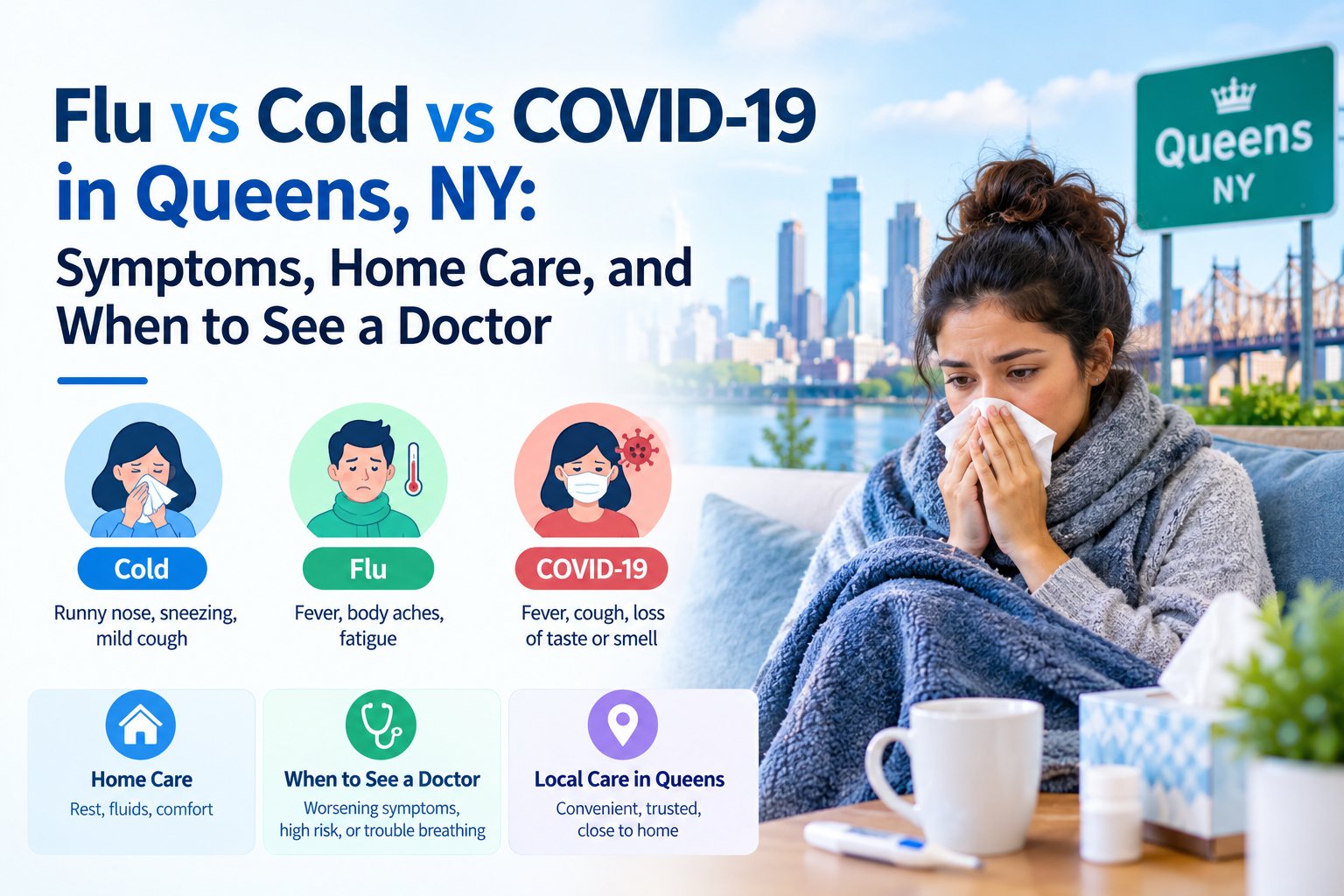
Table of contents
- 1. What Is the Flu, and When Is Flu Season?
- 2. Flu vs Cold vs COVID-19: Symptom Comparison
- 3. Flu Activity by Month: A Typical Season
- 4. Who Is at Higher Risk of Flu Complications?
- 5. Seven Steps to Care for the Flu at Home
- 6. Flu Treatment Options Explained
- 7. Warning Signs: When to Seek Urgent or Emergency Care
- 8. How to Prevent the Flu
- 9. Related Reading and Trusted Sources
- 10. Contact Us
- Conclusion
- Frequently Asked Questions
- See a Doctor in Elmhurst or Chinatown
Every autumn, clinics across Queens start to see the same pattern: sudden fevers, aching muscles, dry coughs, and people asking whether it is the flu, a cold, or COVID-19. Because the symptoms overlap so much, it can be hard to know what you are dealing with, and just as hard to know when to rest at home and when to see a doctor.
This guide explains how the flu differs from other common respiratory illnesses, how to care for yourself at home, who needs extra caution, and which warning signs mean you should get medical care right away. It is written for families, working adults, and seniors across Queens, NY. If you are unsure where to go for care, our guide on when to visit urgent care instead of waiting for your doctor can help you decide.
1. What Is the Flu, and When Is Flu Season?
Influenza, usually called the flu, is a contagious respiratory illness caused by influenza viruses. It infects the nose, throat, and sometimes the lungs. Unlike a mild cold, the flu can cause severe illness and, in some people, serious complications such as pneumonia.
In the United States, flu activity typically begins to rise in the fall, peaks between December and February, and can continue into spring, according to the Centers for Disease Control and Prevention (CDC). The exact timing and severity change every year, which is why health experts recommend preparing early.
Key facts to know about the flu:
- It spreads mainly through droplets when people cough, sneeze, or talk.
- People can spread the flu starting about one day before symptoms appear.
- Most healthy adults recover in about one to two weeks, though tiredness and cough can linger.
- Anyone can get the flu, but some groups face a higher risk of complications.
2. Flu vs Cold vs COVID-19: Symptom Comparison
The table below shows how these three illnesses usually differ. Symptoms vary from person to person, so use this as a general guide rather than a diagnosis. For current national guidance on COVID-19, visit the CDC COVID-19 page.
| Symptom | Flu | Common Cold | COVID-19 |
|---|---|---|---|
| How it starts | Sudden, often within hours | Gradual over 1 to 3 days | Gradual or sudden |
| Fever | Common, can be high | Uncommon or mild | Common |
| Body aches | Common, often severe | Slight | Common |
| Fatigue | Common, can last weeks | Mild | Common |
| Cough | Dry, can be intense | Mild to moderate | Dry cough is common |
| Sore throat | Sometimes | Common | Sometimes |
| Runny or stuffy nose | Sometimes | Very common | Sometimes |
| Headache | Common | Rare | Common |
| Loss of taste or smell | Uncommon | Uncommon | Reported more often |
Because these illnesses look so similar, only a test can tell them apart. If you are at higher risk or your symptoms are getting worse, getting tested early helps your doctor choose the right treatment. You can also read how urgent care in Elmhurst handles fever, cold, and sore throat.
3. Flu Activity by Month: A Typical Season
The graph below shows the general pattern of flu activity through a typical season. Each block represents a rough level of activity. This is an illustration of the usual seasonal pattern, not exact case counts, and each year is different.
| Month | Activity Graph | Typical Level |
|---|---|---|
| October | ██ | Low, starting to rise |
| November | ████ | Rising |
| December | ████████ | High |
| January | ██████████ | Peak |
| February | ██████████ | Peak |
| March | ██████ | Declining |
| April | ███ | Low |
| May | ██ | Very low |
Because it takes about two weeks after vaccination for your body to build full protection, October is widely considered a good time to get your flu shot, before activity climbs. Busy flu months also mean longer clinic lines, so see our tips on the best times to visit a walk-in clinic to avoid long waits.
4. Who Is at Higher Risk of Flu Complications?
The following groups are more likely to develop serious illness from the flu and should seek advice early:
- Adults aged 65 and older
- Children under 5 years old, especially those under 2
- Pregnant people and those up to two weeks after delivery
- People with chronic conditions such as asthma, diabetes, heart disease, or kidney disease
- People with weakened immune systems
- Residents of nursing homes and long-term care facilities
If you manage a long-term condition, our chronic disease management team can help you plan ahead for flu season.
5. Seven Steps to Care for the Flu at Home
If you are generally healthy and your symptoms are manageable, these steps can help you recover more comfortably:
- Stay home and rest. Your body needs energy to fight the virus, and staying home protects others.
- Drink plenty of fluids such as water, broth, and warm tea to prevent dehydration.
- Manage fever and aches with an over-the-counter medicine such as acetaminophen or ibuprofen, following the label directions.
- Use a humidifier or breathe warm steam to ease congestion and a sore throat.
- Eat light, nourishing foods as your appetite allows.
- Monitor your symptoms daily and note any that get worse.
- Return to normal activity only after you have been fever-free for at least 24 hours without fever-reducing medicine and your symptoms are clearly improving.
Important: children and teenagers should not be given aspirin while they have the flu, because it has been linked to a rare but serious condition called Reye's syndrome.
6. Flu Treatment Options Explained
| Option | What It Does | Good to Know |
|---|---|---|
| Prescription antiviral medicine | Can shorten illness and reduce complications | Works best when started within 48 hours of the first symptoms |
| Fever and pain relievers | Ease fever, headache, and body aches | Follow label dosing and avoid aspirin in children |
| Rest and fluids | Support your body's natural recovery | Essential for everyone with the flu |
| Antibiotics | Treat bacterial infections only | Do not work against the flu virus; used only if a bacterial complication develops |
If you think you have the flu and you are in a higher-risk group, do not wait. Contacting a clinic within the first day or two gives you the best chance of benefiting from antiviral treatment. Our acute care services are designed for sudden illnesses like this.
7. Warning Signs: When to Seek Urgent or Emergency Care
Get emergency help right away if an adult has any of the following:
- Difficulty breathing or shortness of breath
- Persistent pain or pressure in the chest or abdomen
- Sudden dizziness, confusion, or inability to think clearly
- Severe or ongoing vomiting
- Symptoms that improve and then return with a worse fever and cough
- Worsening of a chronic medical condition
For children, seek emergency care if you notice:
- Fast breathing or trouble breathing
- Bluish lips or face
- Ribs pulling in with each breath
- Not drinking enough fluids or not urinating
- Being unusually hard to wake or not interacting
- Fever with a rash
If your symptoms are not an emergency but you are worried, a same-day visit to a walk-in clinic or urgent care can help you get checked, tested, and treated without a long wait. Not sure which to choose? Read Walk-In Clinic vs Urgent Care: What's the Difference?
8. How to Prevent the Flu
These habits lower your chances of catching and spreading the flu:
- Get a flu vaccine every year. It is recommended for everyone aged 6 months and older, with rare exceptions.
- Wash your hands often with soap and water for at least 20 seconds.
- Cover coughs and sneezes with a tissue or your elbow.
- Avoid touching your eyes, nose, and mouth.
- Stay home when you are sick and keep a distance from sick people.
- Clean frequently touched surfaces such as phones, doorknobs, and keyboards.
- Open windows or improve ventilation when possible in shared indoor spaces.
To learn more about staying ahead of illness, explore our preventive care services. For local flu updates and vaccine information in New York City, you can also visit the NYC Health Department flu page.
9. Related Reading and Trusted Sources
More from City Prime Care: High Blood Pressure Explained, Annual Physical Checkup Guide, and Common Blood Tests Explained.
Trusted external sources: CDC Influenza (Flu), CDC COVID-19, and MedlinePlus Influenza.
10. Contact Us
If you or a family member has flu-like symptoms, City Prime Care is here to help with evaluation, testing, and treatment guidance. Visit our Elmhurst, Queens clinic or reach out through our contact page at https://www.cityprimecare.com/contact to learn more or plan your visit.
Conclusion
The flu can feel overwhelming, but knowing the differences between it, a cold, and COVID-19 puts you in a better position to act quickly. Rest, fluids, early testing, and timely treatment make a real difference, and an annual flu shot remains the best protection.
This article is for general education and does not replace personal medical advice. If you have concerns about your health, please speak with a qualified healthcare professional.
Frequently Asked Questions
See a Doctor in Elmhurst or Chinatown
Have a question about your own health? Book a visit at our Elmhurst, Queens clinic or our Chinatown, Manhattan clinic, or explore our primary care services.
Related articles
Healthcare
Sore Throat That Won't Quit: When It's Strep and When It's Not
Not every sore throat is strep. Learn how strep throat differs from a viral sore throat, how the rapid test works, why antibiotics matter, home care tips, and warning signs to watch.
Healthcare
How Do Kidney Stones Cause Sudden Severe Pain? Reading the Warning Signs, the Five Prevention Steps and the Sample Stone-Size Outlook
Kidney stones can cause sudden, intense flank pain and blood in the urine. Learn the warning signs, how size affects passing a stone, five prevention steps, and when pain with fever or vomiting needs urgent care.
Healthcare
Chest Discomfort Decoded: Heartburn, Muscle Strain, Anxiety or Something Serious?
Chest pain can come from the heart, the stomach, the muscles or even stress. Learn the usual patterns, the warning signs of a heart attack, and why unexplained chest pain should never be ignored.





