
HealthcareBy City Prime Care Team
Chest Discomfort Decoded: Heartburn, Muscle Strain, Anxiety or Something Serious?
Chest pain can come from the heart, the stomach, the muscles or even stress. Learn the usual patterns, the warning signs of a heart attack, and why unexplained chest pain should never be ignored.
Medically reviewed by City Prime Care Administrator9 min read
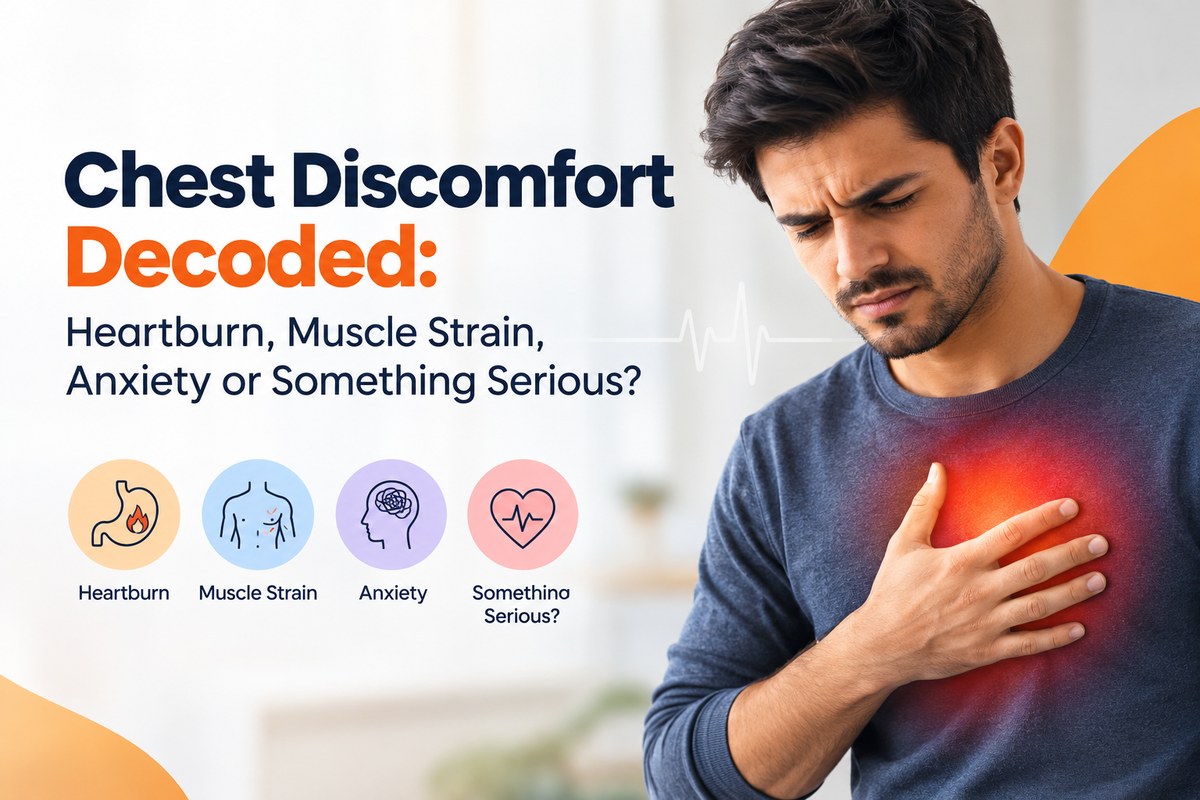
Table of contents
- 1. Why the Chest Hurts: The Main Sources
- 2. Common Causes Compared
- 3. Heart Attack Warning Signs
- 4. Who Is at Higher Risk?
- 5. What to Do Right Now If You Have Chest Pain
- 6. What Happens During an Evaluation
- 7. Managing Heartburn and Chest Wall Pain
- 8. Prevention: Protecting Your Heart for the Long Term
- Conclusion
- Frequently Asked Questions
- See a Doctor in Elmhurst or Chinatown
Few symptoms cause as much worry as chest pain, and for good reason. The chest holds the heart, lungs, esophagus, major blood vessels, and a framework of muscles and ribs. Pain in this area can come from any of them. Many cases turn out to be harmless, such as acid reflux or a strained muscle, but some are medical emergencies where minutes matter.
This guide helps you understand the usual patterns behind chest discomfort, the warning signs of a heart attack, and why you should never try to diagnose serious chest pain on your own. It is general education, not a way to rule out a heart problem. If you are ever unsure, treat chest pain as urgent. For help deciding between care options, our article on when to visit urgent care instead of waiting for your doctor is a useful companion, but remember that emergencies belong in the ER.
In this article:
- 1. Why the chest hurts: the main sources
- 2. Comparison of common causes (table)
- 3. Heart attack warning signs
- 4. Who is at higher risk (graph)
- 5. What to do right now
- 6. What happens during an evaluation
- 7. Managing heartburn and chest wall pain
- 8. Prevention
1. Why the Chest Hurts: The Main Sources
Chest pain generally comes from one of these systems:
- Heart: reduced blood flow, inflammation, or rhythm problems
- Lungs: infection, a blood clot, or irritation of the lining
- Digestive tract: acid reflux or esophageal spasm
- Muscles, ribs, and cartilage: strain or inflammation
- Nerves and skin: for example, shingles
- Emotional and stress-related causes, including panic episodes
Because symptoms overlap, even clinicians use an exam, an ECG, and sometimes blood tests to sort them out. You can read general information in the MedlinePlus heart attack overview and the American Heart Association resources.
2. Common Causes Compared
| Cause | How it often feels | What may make it worse or better | Urgency |
|---|---|---|---|
| 1. Heart attack or angina | Pressure, squeezing, or fullness in the center or left of the chest; may spread to arm, jaw, neck, or back | Exertion worsens; rest may ease angina but not a heart attack | Emergency: call 911 |
| 2. Heartburn or acid reflux | Burning behind the breastbone, sour taste, often after meals | Worse lying down or bending; antacids may help | Usually not urgent, but see a clinician if frequent |
| 3. Chest wall or muscle strain | Sharp or aching, tender to touch | Worse with movement, deep breaths, or pressing on the area | Usually mild; get checked if unsure |
| 4. Anxiety or panic | Tight chest, racing heart, shortness of breath, tingling | May come with stress; often peaks within minutes | Cannot be assumed; evaluate first |
| 5. Lung problems (pneumonia, clot) | Sharp pain with breathing, cough, or sudden shortness of breath | Worse with deep breaths | Often urgent |
| 6. Shingles | Burning or tingling pain on one side, then a rash | Pain precedes rash | See a clinician promptly |
The key lesson from this table: some causes feel alike. Pressure, tightness, or burning can occur with both heartburn and heart problems, which is why unexplained chest pain should be assessed rather than guessed at.
3. Heart Attack Warning Signs
Call 911 right away if chest discomfort comes with any of these:
- Pressure, squeezing, or heaviness in the chest lasting more than a few minutes or going away and coming back
- Pain or discomfort spreading to the arm, shoulder, back, neck, or jaw
- Shortness of breath, with or without chest discomfort
- Cold sweat, nausea, or lightheadedness
- Unusual fatigue or a sense of doom
Symptoms can look different in women, older adults, and people with diabetes, who may have less typical signs such as nausea, back or jaw pain, or unusual tiredness. Do not drive yourself to the hospital; call 911 so help can start immediately.
4. Who Is at Higher Risk?
Some risk factors raise the chance that chest pain is heart-related. The graph below is an illustrative way to think about how much each factor can contribute. It is not a risk calculator.
| Risk factor | Relative contribution (graph) | What you can do |
|---|---|---|
| High blood pressure | █████████░ Major | Monitor and treat; see our blood pressure guide |
| High cholesterol | ████████░░ Major | Check lipid levels and discuss treatment |
| Smoking | ██████████ Major | Seek help to quit |
| Diabetes | ███████░░░ Significant | Keep blood sugar in target range |
| Family history of early heart disease | ██████░░░░ Significant | Share with your clinician |
| Physical inactivity and excess weight | █████░░░░░ Moderate | Aim for regular movement |
| Age | █████░░░░░ Moderate | Stay current on screenings |
Learn more about managing these factors in our guides to high blood pressure, high cholesterol and your lipid numbers, and type 2 diabetes.
5. What to Do Right Now If You Have Chest Pain
If you think chest pain could be heart-related:
- Stop what you are doing and sit or lie down.
- Call 911 or your local emergency number instead of driving yourself.
- Unlock your door and, if possible, have someone stay with you.
- If a clinician has previously prescribed you nitroglycerin, follow the instructions you were given.
- If you are not allergic to aspirin and emergency dispatchers advise it, they may tell you to chew an aspirin; follow their guidance rather than deciding alone.
- Tell responders about your medical conditions and medicines.
When symptoms are clearly mild and typical for heartburn, sitting upright, avoiding heavy meals, and speaking with a clinician about ongoing symptoms are sensible next steps. If you are not sure, always choose to be safe.
6. What Happens During an Evaluation
| Step | Purpose |
|---|---|
| 1. History and symptom review | Understand timing, triggers, and risk factors |
| 2. Vital signs and physical exam | Check blood pressure, heart rate, oxygen, heart and lung sounds |
| 3. ECG (electrocardiogram) | Look for signs of heart strain or damage |
| 4. Blood tests | Look for markers of heart injury and other causes |
| 5. Chest imaging or stress testing as needed | Evaluate lungs, heart structure, and blood flow |
| 6. Follow-up plan | Treatment, referral to a cardiologist, and lifestyle guidance |
For routine risk assessment and follow-up, see our pages on diagnostic testing and preventive care, and our article on common blood tests.
7. Managing Heartburn and Chest Wall Pain
Once serious causes have been ruled out, these steps may help:
- Eat smaller meals and avoid lying down for two to three hours after eating
- Reduce triggers such as spicy or fatty foods, caffeine, alcohol, and tobacco
- Raise the head of your bed slightly if reflux wakes you at night
- Maintain a healthy weight
- Use gentle stretching and warmth for muscle-related chest wall pain
- Talk to a pharmacist or clinician before using antacids or acid-reducing medicine regularly
- See a clinician if heartburn happens more than twice a week, causes trouble swallowing, or comes with unintended weight loss
8. Prevention: Protecting Your Heart for the Long Term
Heart-healthy habits support everything from blood pressure to reflux:
- Move your body for at least 150 minutes per week, as tolerated and approved by your clinician
- Eat plenty of vegetables, fruit, whole grains, and lean proteins
- Do not smoke, and limit alcohol
- Manage stress and sleep well
- Know your numbers: blood pressure, cholesterol, and blood sugar
- Keep up with checkups; our annual physical guide lists screenings by age
Conclusion
Chest pain has many causes, from simple reflux to a heart attack, and the safest approach is never to assume. Learn the warning signs, know your risk factors, and call 911 for symptoms that could be a heart emergency.
Contact Us: For ongoing heartburn, risk assessment, or follow-up care after a chest pain evaluation, reach City Prime Care through our Contact Us page. This article is general education and does not replace personal medical advice. If you have chest pain with shortness of breath, sweating, or pain spreading to the arm or jaw, call 911 immediately.
Frequently Asked Questions
See a Doctor in Elmhurst or Chinatown
Have a question about your own health? Book a visit at our Elmhurst, Queens clinic or our Chinatown, Manhattan clinic, or explore our primary care services.
Related articles
Healthcare
How Do Kidney Stones Cause Sudden Severe Pain? Reading the Warning Signs, the Five Prevention Steps and the Sample Stone-Size Outlook
Kidney stones can cause sudden, intense flank pain and blood in the urine. Learn the warning signs, how size affects passing a stone, five prevention steps, and when pain with fever or vomiting needs urgent care.
Healthcare
Is This Just a Headache? How to Tell Tension Headaches, Migraines and Warning-Sign Headaches Apart
Not every headache is the same. Compare tension headaches, migraines and cluster headaches, learn common triggers, home-care steps, and the warning signs that mean a headache needs urgent attention.
Healthcare
Sore Throat That Won't Quit: When It's Strep and When It's Not
Not every sore throat is strep. Learn how strep throat differs from a viral sore throat, how the rapid test works, why antibiotics matter, home care tips, and warning signs to watch.





