
HealthcareBy City Prime Care Team
When Should You Get Your Flu Shot This Season? Reading the Vaccine Types, the Priority Groups and the Sample Season Calendar
Aim to get your flu shot by the end of October, but it still helps later. See who needs it most, the 2026-27 vaccine types, what to expect at the clinic and a sample season calendar.
Medically reviewed by City Prime Care Administrator9 min read
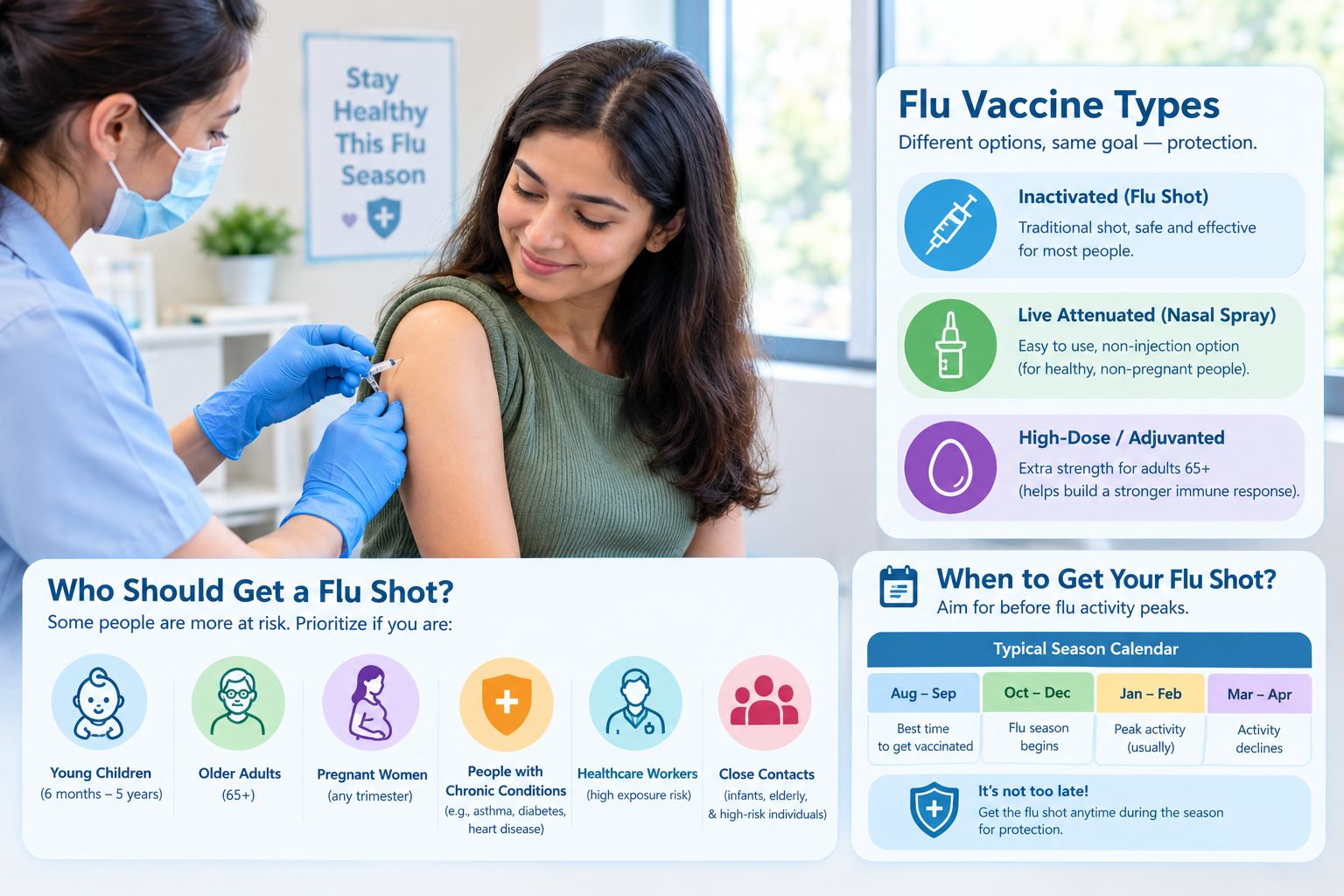
Table of contents
- 1. Why the Flu Shot Matters Every Year
- 2. Timing: When to Get Your Flu Shot
- 3. Who Should Get a Flu Shot
- 4. Flu Vaccine Types
- 5. What to Expect at the Clinic
- 6. Side Effects and When to Ask First
- 7. Flu Shot With Other Vaccines
- 8. Children and the Two-Dose Rule
- 9. A Sample 2026-27 Season Calendar
- 10. Flu or a Cold: When to Call
- Conclusion
- Frequently Asked Questions
- See a Doctor in Elmhurst or Chinatown
Every fall, flu vaccination brings the same questions: when is the right time, which shot is best for my age and who should not skip it? Flu is more than a bad cold. It can cause pneumonia, worsen asthma, diabetes and heart disease, and send older adults, young children and pregnant women to the hospital.
This guide covers the 2026-27 season in plain language: the best timing, who needs the shot most, the main vaccine types, what to expect at the clinic and a sample season calendar. It draws on CDC interim guidance for 2026-2027, which keeps the existing adult and child recommendations and says most people should be vaccinated in September or October, and on the CDC seasonal flu vaccine summary. Federal agencies and medical societies may word advice differently for some groups, such as young children, so confirm your plan with a clinician. This is general education, not personal medical advice. You can also find City Prime Care on Google.
In this article:
- 1. Why the flu shot matters every year
- 2. Timing: when to get it (graph)
- 3. Who should get a flu shot (table)
- 4. Flu vaccine types (table)
- 5. What to expect at the clinic
- 6. Side effects and when to ask first (table)
- 7. Flu shot with other vaccines
- 8. Children and the two-dose rule (table)
- 9. A sample 2026-27 season calendar
- 10. Flu or a cold: when to call (table)
1. Why the Flu Shot Matters Every Year
Flu viruses change every year, so last year's protection does not carry over fully. Vaccine makers update the formula for each season, and your protection from a past shot fades over months. An annual shot is the best single step to reduce your chance of severe flu, hospital stays and missed work or school.
Vaccination also protects people around you, including babies too young to be vaccinated and relatives with weak immune systems. For other recommended adult shots, see our adult vaccines guide.
2. Timing: When to Get Your Flu Shot
Flu season in the United States usually runs from fall into spring, with activity often peaking between December and February. The graph is an illustrative picture of typical timing, not a forecast. Each block is a rough level of flu activity.
| Month | Typical flu activity (graph) | Best action |
|---|---|---|
| September | █ | Good time to get vaccinated |
| October | ██ | Ideal: get vaccinated by month end |
| November | ███ | Still worth it; protection builds in about 2 weeks |
| December | █████ | Still worth it if not vaccinated |
| January | ██████ | Peak activity is common; vaccinate if you have not |
| February | ██████ | Peak activity is common; vaccine still helps |
| March to May | ███ to █ | Activity fades; vaccine still useful if flu is circulating |
The key point from CDC guidance is that vaccination should continue throughout the season while flu viruses are circulating and unexpired vaccine remains available. Do not skip it just because October has passed. See the CDC flu page for current activity.
3. Who Should Get a Flu Shot
Medical societies recommend a yearly flu shot for everyone 6 months and older. Some groups gain the most from vaccination because flu can be more dangerous for them.
| Group | Why it matters | Notes |
|---|---|---|
| Adults 65 and older | Higher risk of pneumonia and hospital stays | Preferably high-dose, adjuvanted or recombinant vaccine |
| Pregnant women | Flu can be more severe; vaccination also protects the newborn | Can be vaccinated in any trimester |
| Children under 5, especially under 2 | Higher risk of severe illness | Young children may need two doses |
| People with asthma, diabetes, heart, lung or kidney disease | Flu can worsen the condition | See chronic disease management |
| People with weakened immune systems | Harder to clear the infection | Ask about the best vaccine type |
| Caregivers and healthcare workers | Protect patients and family | Annual shot advised |
If you live with asthma, read our guide to keeping asthma under control through every season in Queens. For diabetes, see why regular checkups matter if you have diabetes.
4. Flu Vaccine Types
All U.S. flu vaccines for 2026-27 are trivalent, meaning they cover three flu strains. Which products are in stock varies by clinic, so ask what is available.
| Type | Who it is for | Notes |
|---|---|---|
| Standard-dose inactivated shot | Most people 6 months and older | The most common option |
| High-dose inactivated shot | Adults 65 and older | Higher antigen dose for a stronger response |
| Adjuvanted inactivated shot | Adults 65 and older | Contains an ingredient that boosts response |
| Recombinant shot | Adults, including those with egg allergy | Made without eggs |
| Cell-based shot | Most people 6 months and older | Made in cell culture rather than eggs |
| Nasal spray | Healthy, non-pregnant people in the approved age range | Not for everyone; ask your clinician |
5. What to Expect at the Clinic
A flu shot visit is quick:
- Book through the appointment page or ask about a same-visit shot at your next appointment.
- Bring your insurance card and tell staff about allergies and past vaccine reactions.
- Answer a short health questionnaire and choose the vaccine type with the clinician.
- Receive the injection in the upper arm, then wait a few minutes if asked.
- Keep your vaccination record, and ask for a copy if your school or employer needs it.
6. Side Effects and When to Ask First
| Situation | What to know | What to do |
|---|---|---|
| Sore, red or swollen arm | Common and usually mild | Move the arm; cold pack if helpful |
| Low fever, aches, tiredness | Can last a day or two | Rest, fluids, and a fever reducer if advised |
| Severe allergic reaction to a past flu shot | A reason to ask before another dose | Talk to your clinician first |
| History of Guillain-Barré syndrome | Guidance depends on timing and risk | Discuss with your clinician |
| Moderate or severe illness today | Vaccination may be delayed | Ask the clinic when to return |
| Hives, swelling or trouble breathing after a shot | Rare but an emergency | Call 911 |
7. Flu Shot With Other Vaccines
Many people can get several vaccines in the same visit:
- Flu and COVID-19 vaccines are often given together; ask your clinician what is recommended for you.
- Adults 50 and older may also be due for shingles and pneumococcal shots.
- Pregnant women should ask about RSV, Tdap and COVID-19 timing.
- Check the CDC adult immunization schedule and our adult vaccines guide.
8. Children and the Two-Dose Rule
| Child | Doses this season | Timing |
|---|---|---|
| 6 months to 8 years, never vaccinated or not enough past doses | Two doses | At least 4 weeks apart; give the first as soon as possible |
| 6 months to 8 years, already received enough past doses | One dose | Ideally in September or October |
| 9 years and older | One dose | Ideally in September or October |
| Under 6 months | Cannot be vaccinated | Protect through vaccinated parents and caregivers |
A child's doctor can confirm how many doses are needed based on the vaccine history.
9. A Sample 2026-27 Season Calendar
| When | Checklist |
|---|---|
| Early October | ☐ Check your vaccine record ☐ Book your flu shot |
| By end of October | ☐ Get the shot ☐ Children needing two doses get dose one now |
| Late November | ☐ Second dose for children who need it ☐ Ask about other vaccines |
| December to February | ☐ Watch for flu symptoms ☐ Call early if you are at higher risk |
| Spring | ☐ Update your records ☐ Plan next fall's shot |
10. Flu or a Cold: When to Call
| Clue | More like a cold | More like flu |
|---|---|---|
| Onset | Gradual | Sudden |
| Fever | Uncommon or mild | Common, often high |
| Body aches | Mild | Strong |
| Tiredness | Mild | Often severe |
| When to call | If symptoms last longer than expected | Early, especially if you are at higher risk |
Antiviral medicine for flu works best when started within about 48 hours of symptoms, so call early if you are over 65, pregnant, or have a chronic condition. Seek emergency care for trouble breathing, chest pain, confusion, or a fever that returns after improving.
Conclusion
A flu shot is one of the simplest ways to lower your risk of serious illness. Aim for the end of October, do not worry if you are a little late, and ask your clinician which vaccine suits your age and health.
Contact Us: To ask about flu shots, same-visit vaccines or an appointment, reach City Prime Care through our Contact Us page, or find us on Google. This article is for general information and does not replace personal medical advice. In an emergency, call 911.
Frequently Asked Questions
See a Doctor in Elmhurst or Chinatown
Have a question about your own health? Book a visit at our Elmhurst, Queens clinic or our Chinatown, Manhattan clinic, or explore our primary care services.
Related articles
Healthcare
Which STD Tests Do You Need, and How Often? Reading the Risk Groups, the Five Testing Rules and the Sample Annual Testing Calendar
Many infections cause no symptoms, so testing on a schedule matters. See which STD tests fit your risk group, how long after exposure to test, and a sample annual testing calendar.
Healthcare
Know Your Numbers: A Plain-English Guide to LDL, HDL and Triglycerides
High cholesterol rarely causes symptoms. Learn what LDL, HDL, and triglyceride numbers mean, who is at risk, 9 practical ways to lower cholesterol, and when to see a doctor.
Healthcare
What Are the Warning Signs of Pneumonia, and Who Needs Care Fast? Reading the Symptom Clues, the Five Risk Groups and the Sample Recovery Timeline
Pneumonia is a lung infection that can be mild or serious. Learn how it differs from a cold or the flu, the warning signs, the five higher-risk groups, how severity is judged and what recovery usually looks like.





