
HealthcareBy City Prime Care Team
How Do You Know If a Head Injury Is a Concussion? Reading the Symptom Checklist, the Five Danger Signs and the Sample Return-to-Activity Plan
A concussion does not need a knockout and often shows nothing on a scan. Learn the symptom checklist, the five danger signs that need the ER, how recovery usually goes and a step-by-step return-to-activity plan.
Medically reviewed by City Prime Care Administrator9 min read
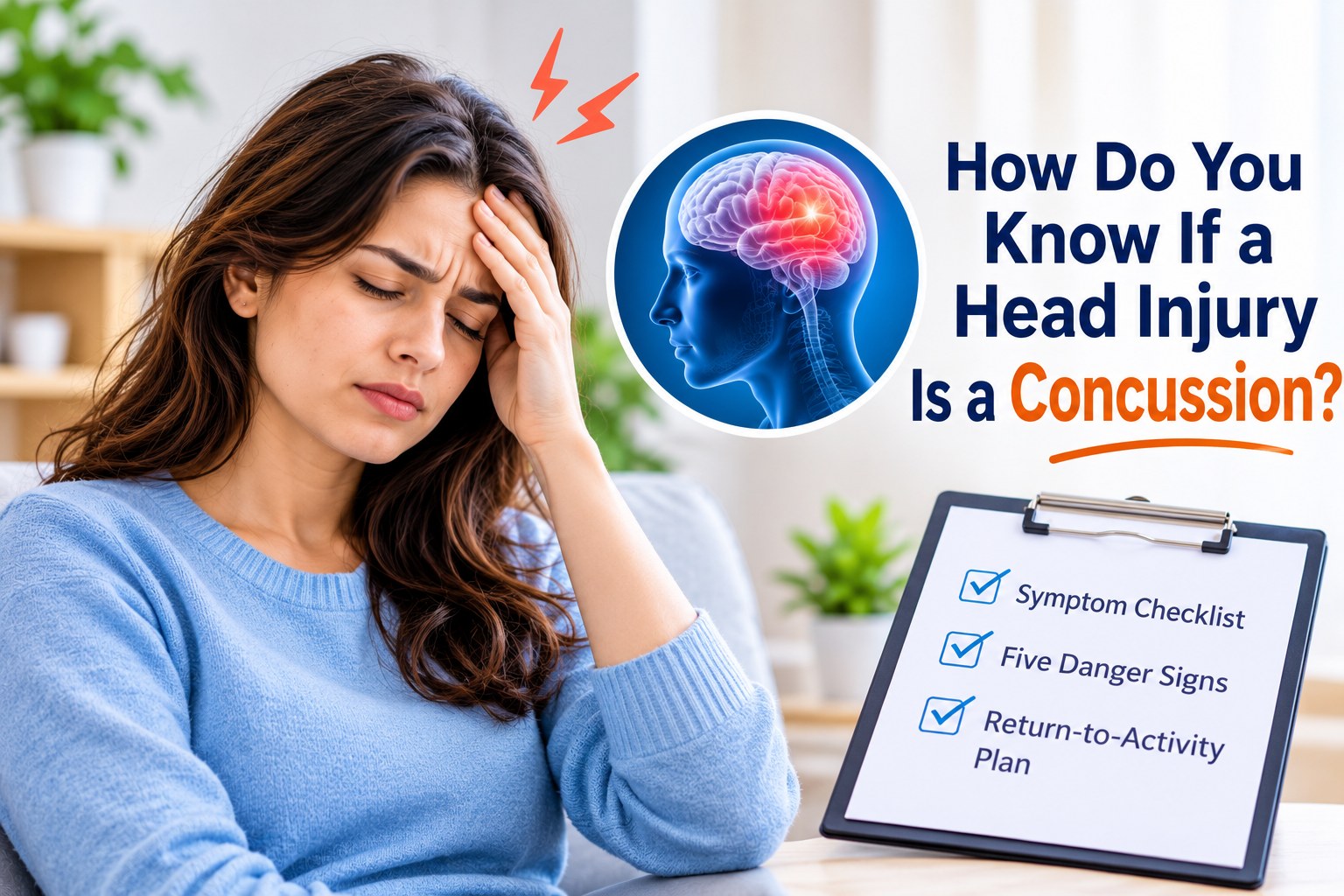
Table of contents
- 1. What a Concussion Is and How It Differs From Other Head Injuries
- 2. The Concussion Symptom Checklist
- 3. The Five Danger Signs That Need the ER
- 4. What a Clinician Checks
- 5. How Long Recovery Takes
- 6. A Sample Return-to-Activity Plan
- 7. Children, Teens and Older Adults
- 8. Red Flags, When to See a Doctor and Booking
- Conclusion
- Frequently Asked Questions
- See a Doctor in Elmhurst or Chinatown
A bump on the head is easy to shrug off, and most are minor. But a concussion, a mild form of traumatic brain injury, does not always show up on a scan, and it does not require being knocked out. It can follow a fall, a car crash, a sports collision or a blow from an object. What matters is recognizing it early, avoiding a second injury while the brain recovers and knowing which signs mean you need emergency care.
This guide explains what a concussion is, the symptom checklist, the five danger signs that need an emergency room, what a clinician checks, how long recovery usually takes, a sample step-by-step return-to-activity plan and the extra care that children and older adults need. It is general education, not personal medical advice. City Prime Care provides primary care and urgent care in Elmhurst, and you can find the clinic on Google: City Prime Care on Google. See also the clinic's lifestyle counseling page.
In this article:
- 1. What a concussion is and how it differs from other head injuries (table)
- 2. The concussion symptom checklist (table)
- 3. The five danger signs that need the ER
- 4. What a clinician checks
- 5. How long recovery takes (graph)
- 6. A sample return-to-activity plan (table)
- 7. Children, teens and older adults
- 8. Red flags, when to see a doctor and booking
1. What a Concussion Is and How It Differs From Other Head Injuries
A concussion is a temporary disturbance in how the brain works after a blow, jolt or whiplash-type movement of the head or body. It is usually a problem of function rather than visible damage, which is why scans are often normal.
| Injury | What it means | Typical care |
|---|---|---|
| 1. Concussion | Brain function is disturbed; scans are usually normal | Relative rest, symptom watching, gradual return to activity |
| 2. Scalp bruise or cut | Injury to the outer tissue only | Clean and protect; see first aid for cuts and burns |
| 3. Skull fracture | A break in the bone | Emergency imaging and specialist care |
| 4. Bleeding in or around the brain | A bleed that may grow over hours or days | Emergency care; higher risk with blood thinners and in older adults |
The Centers for Disease Control and Prevention offers concussion resources at cdc.gov for families, schools and coaches.
2. The Concussion Symptom Checklist
Symptoms may appear right away or over the next hours to days. They tend to fall into four groups. Having several, or having them worsen, is a reason to be evaluated.
| Group | Common symptoms | Notes |
|---|---|---|
| 1. Physical | Headache, nausea, vomiting, dizziness, balance problems, blurred vision, sensitivity to light or noise | Headache is the most common symptom |
| 2. Thinking | Feeling foggy, slowed down, confused, trouble concentrating or remembering | May not be noticed until you return to school or work |
| 3. Emotional | Irritability, sadness, anxiety, being more emotional than usual | Can last during recovery; see stress, low mood and anxiety |
| 4. Sleep | Sleeping more or less than usual, trouble falling asleep, tiredness | See sleep and your health |
Loss of consciousness happens in only a minority of concussions. Not being "knocked out" does not mean the injury was mild.
3. The Five Danger Signs That Need the ER
Go to the emergency room or call 911 after a head injury if any of these appear:
- 1. A headache that keeps getting worse or becomes severe
- 2. Repeated vomiting or worsening nausea
- 3. Drowsiness, inability to wake up, or loss of consciousness, even briefly
- 4. Seizures, weakness, numbness, slurred speech, or unequal pupil size
- 5. Increasing confusion, agitation, unusual behavior, or clear fluid or blood from the nose or ears
In small children, also watch for inconsolable crying, refusing to feed and a bulging soft spot. Anyone on blood thinners, and any older adult with a head injury, should be checked even if they feel well. See also urgent care vs the emergency room.
4. What a Clinician Checks
A clinician starts with how the injury happened and what you have noticed since. Then they typically check:
| Check | What it looks for |
|---|---|
| 1. Alertness and memory | Orientation, concentration and short-term memory |
| 2. Eyes and reflexes | Pupils, eye movement and basic neurologic function |
| 3. Balance and coordination | Walking, standing and finger-to-nose tests |
| 4. Neck and skull | Tenderness, injury to the neck, signs of fracture |
| 5. Medicines and risks | Blood thinners, alcohol, previous concussions |
| 6. Imaging, if needed | A CT scan for bleeding or fracture when red flags are present; see when an injury needs an X-ray |
Many concussions can be assessed in primary care or urgent care when there are no danger signs. If red flags are present, the clinician will send you to the emergency room.
5. How Long Recovery Takes
The graph below is an illustrative guide to how symptoms often ease. Recovery varies a lot between people. Each block shows the share of people who typically feel mostly recovered by that time.
| Time since injury | Share feeling mostly recovered (graph) | What to expect |
|---|---|---|
| 1. First 48 hours | █░░░░░░░░░ Few | Symptoms often at their peak; rest, hydrate, avoid risk |
| 2. Days 3 to 7 | ████░░░░░░ Some | Light activity introduced as symptoms allow |
| 3. Weeks 2 to 4 | ████████░░ Most adults | Return to school or work; gradual sports plan |
| 4. Beyond 4 weeks | ██████████ Nearly all by about 3 months | A minority have lingering symptoms and need a clinician's review |
Poor sleep, stress, a past concussion, migraines and anxiety can slow recovery. Your clinician can look at these. Persistent headaches may overlap with migraine; see tension headaches, migraines and warning-sign headaches.
6. A Sample Return-to-Activity Plan
After the first day or two of relative rest, activity is increased step by step. The plan below is a common example used for sports, and it can be adapted for school and work. Move to the next step only if symptoms do not return or worsen. If they do, go back one step and talk to a clinician. Each step usually lasts at least 24 hours.
| Step | Effort (graph) | Example activity | Goal |
|---|---|---|---|
| 1. Symptom-limited activity | ██░░░░░░░░ | Daily tasks, short walks, light screen time as tolerated | Gentle return to normal life |
| 2. Light aerobic exercise | ████░░░░░░ | Walking or stationary cycling at an easy pace | Raise heart rate slightly |
| 3. Moderate exercise | ██████░░░░ | Jogging, light running drills, no head impact | Add movement |
| 4. Sport-specific, non-contact training | ███████░░░ | Passing drills, harder training, resistance exercise | Add coordination and thinking |
| 5. Full practice | ████████░░ | Normal training, with clinician clearance | Restore confidence |
| 6. Return to play or full duties | ██████████ | Full competition or normal work | Full recovery |
Avoid alcohol and any activity with a risk of another head injury until a clinician says it is safe. A second blow before recovery can cause a more serious injury. If you want help with sleep, stress and routine during recovery, see how your doctor can help you change food, sleep and stress habits.
7. Children, Teens and Older Adults
| Group | Extra considerations | Related reading |
|---|---|---|
| 1. Infants and toddlers | Cannot describe symptoms; watch for vomiting, unusual sleepiness, crying that cannot be soothed | Childhood illness vs when to call a doctor |
| 2. School-age children and teens | Need a school plan, short breaks and written clearance before returning to sport | Pediatric urgent care |
| 3. Adults | Plan a gradual return to work, driving and screens | Use the sample plan above |
| 4. Older adults | Falls are the leading cause; bleeding can develop slowly, especially on blood thinners | Fall prevention for seniors and medicine safety |
8. Red Flags, When to See a Doctor and Booking
| Situation | Action |
|---|---|
| Any danger sign from section 3 | Call 911 or go to the ER immediately |
| Head injury while taking blood thinners, or in an older adult | Be checked the same day even if you feel well |
| Mild symptoms after a bump, no danger signs | Book a visit within a day or two; use urgent care if you cannot be seen |
| Symptoms lasting longer than 2 to 4 weeks | Book a follow-up for review |
| Worsening mood, anxiety, or sleep trouble after the injury | Tell your clinician; these are treatable |
| You want return-to-school, work or sport guidance | Use the appointment page and choose Primary Care |
Conclusion
A concussion is a real injury to brain function, even though scans are often normal. Most people recover fully with relative rest at first and a step-by-step return to normal life. Knowing the danger signs, avoiding a second blow while healing and not rushing back to sport or work are the keys to a safe recovery.
Contact Us: To ask about a recent head injury, return-to-school or work guidance, or follow-up care, reach City Prime Care through our Contact Us page, or find the clinic on Google: City Prime Care on Google. This article is for general information and does not replace personal medical advice. If you see any danger sign, call 911 or go to the emergency room.
Frequently Asked Questions
See a Doctor in Elmhurst or Chinatown
Have a question about your own health? Book a visit at our Elmhurst, Queens clinic or our Chinatown, Manhattan clinic, or explore our primary care services.
Related articles
Healthcare
What Are the Warning Signs of Pneumonia, and Who Needs Care Fast? Reading the Symptom Clues, the Five Risk Groups and the Sample Recovery Timeline
Pneumonia is a lung infection that can be mild or serious. Learn how it differs from a cold or the flu, the warning signs, the five higher-risk groups, how severity is judged and what recovery usually looks like.
Healthcare
How Can You Recognize a Stroke in Time? Reading the BE-FAST Warning Signs, the Five Emergency Steps and the Sample Hospital Timeline
Stroke care is a race against time. Learn the BE-FAST warning signs, the five emergency steps, what happens at the hospital, why a TIA is a warning and which risk factors you can control.
Healthcare
What Causes a Sudden Gout Attack? Reading the Uric Acid Levels, the Five Flare Triggers and the Sample Low-Purine Plan
Gout causes sudden, severe joint pain when uric acid builds up and forms crystals. Learn how uric acid levels are read, the five common flare triggers, how attacks are treated and a sample low-purine eating plan.





