
HealthcareBy City Prime Care Team
How Can Seniors in Queens Lower Their Risk of Falling? Reading the Risk Factors, the Five Home Fixes and the Sample Weekly Balance Plan
About one in four adults 65 and older falls each year, but many falls are preventable. See the main risk factors, five home fixes, how a clinic checks fall risk, and a sample weekly balance plan for seniors in Queens.
Medically reviewed by City Prime Care Administrator9 min read
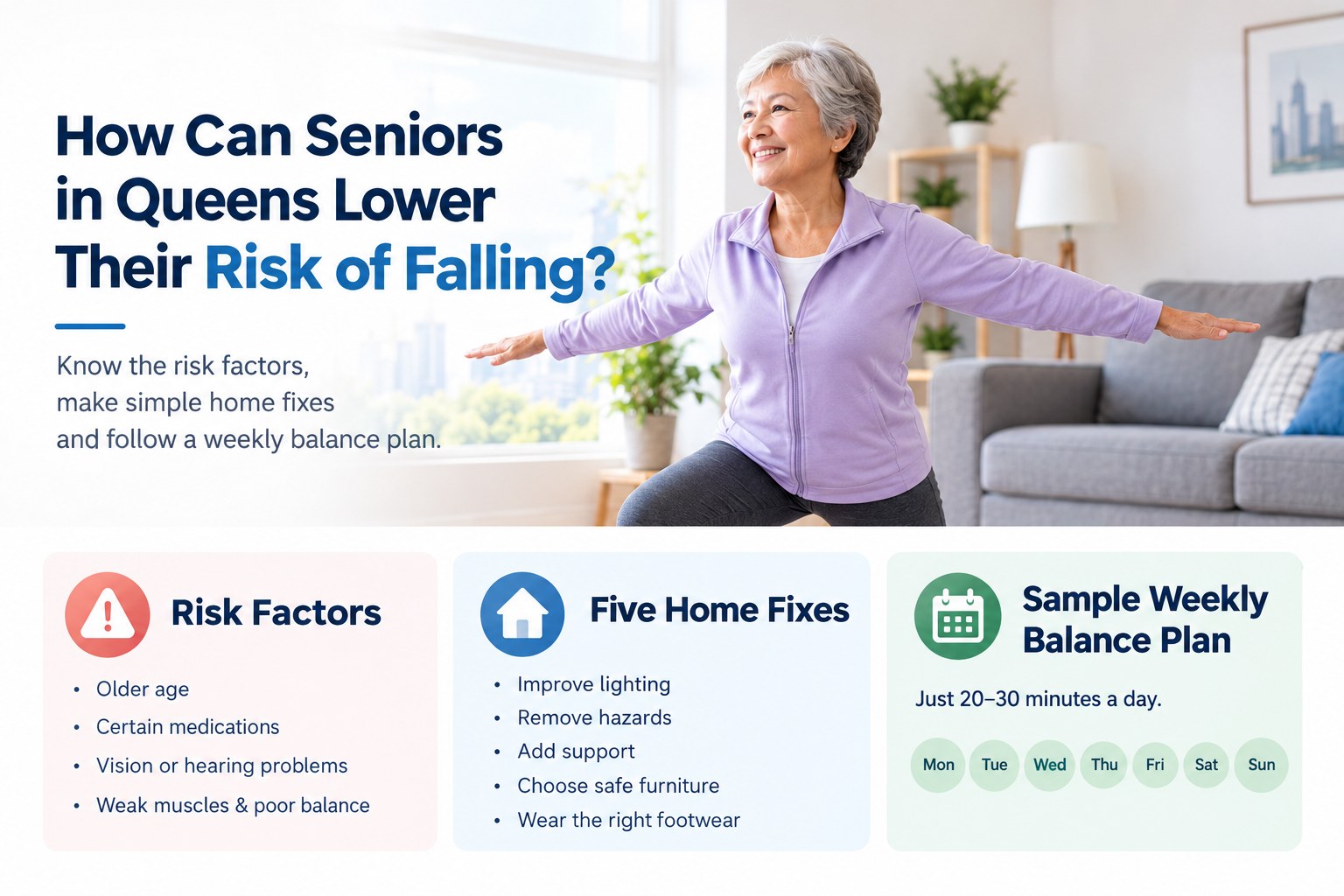
Table of contents
- 1. Why Falls Matter, and Why They Are Preventable
- 2. Main Risk Factors
- 3. How Much Each Factor Contributes
- 4. Five Home Fixes
- 5. How a Clinic Assesses Fall Risk
- 6. A Sample Weekly Balance Plan
- 7. Medicines, Vision, and Footwear
- 8. Red Flags and When to Call 911
- Conclusion
- Frequently Asked Questions
- See a Doctor in Elmhurst or Chinatown
A fall can change an older person's life in a moment: a broken hip, a hospital stay, a loss of confidence that keeps someone indoors for months. The CDC reports that about one in four adults 65 and older falls each year. The reassuring part is that many falls are not accidents of fate. They have causes that can be found and reduced: medicines, unsteady footing, poor vision, slippery floors, and sudden drops in blood pressure.
This guide explains how seniors and their families in Queens can lower the risk of falling, drawing on the fall-risk assessment described on the City Prime Care geriatric care page and on guidance from national health agencies. It covers the risk factors, five home fixes, how a clinic assesses fall risk, a sample weekly balance plan, and when to get urgent help. It is general education, not personal medical advice. You can find the clinic on Google: City Prime Care on Google. See the clinic's geriatric care page.
In this article:
- 1. Why falls matter, and why they are preventable
- 2. Main risk factors (table)
- 3. How much each factor contributes (graph)
- 4. Five home fixes
- 5. How a clinic assesses fall risk
- 6. A sample weekly balance plan
- 7. Medicines, vision, and footwear
- 8. Red flags and when to call 911
1. Why Falls Matter, and Why They Are Preventable
The clinic's page notes that forgetfulness and unsteadiness are two of the most common worries it hears from older patients and their children, and that neither should be brushed off as just getting older. Depression can look like memory loss, poor sleep can worsen balance, and a fall can shake someone's confidence enough that they stop going out, which makes muscles weaker and the next fall more likely.
For reliable background, see the CDC's STEADI falls prevention resources and the National Institute on Aging's guide to falls and fall prevention. Our article on how the Elmhurst clinic supports older adults explains the wider approach to senior care.
2. Main Risk Factors
| Risk factor | How it raises fall risk | What can help |
|---|---|---|
| 1. Weak legs and poor balance | Slower reactions and less strength to catch yourself | Strength and balance exercises; physical therapy if advised |
| 2. Medicines | Dizziness, drowsiness, or confusion; the clinic notes several sleep and allergy medicines are linked to confusion and falls | A medication review; see managing multiple medications safely |
| 3. Blood pressure that drops on standing | Lightheadedness when rising from a chair or bed | Lying and standing blood pressure checks |
| 4. Poor vision or hearing | Missing steps, curbs, and obstacles | Regular eye and hearing checks; updated glasses |
| 5. Foot problems and footwear | Pain, numbness, and slippery soles | Supportive, non-slip shoes; foot checks |
| 6. Home hazards | Loose rugs, clutter, poor lighting, wet bathroom floors | A home safety checklist |
| 7. Memory and mood changes | Poor judgment and fear of falling | Memory screening and mood review |
| 8. Previous falls | A past fall is one of the strongest predictors of another | Tell your clinician about every fall and near-fall |
3. How Much Each Factor Contributes
The graph below is an illustrative guide to how much weight clinicians tend to give each factor, not clinic data. It shows why a fall assessment looks at the whole person instead of one cause.
| Factor | Relative contribution (graph) | Fixable? |
|---|---|---|
| Previous falls and fear of falling | ██████████ Very high | Partly, with exercise and confidence-building |
| Weak legs and balance | █████████░ Very high | Yes, with training |
| Medicines | ████████░░ High | Often, with a review |
| Vision and hearing | ███████░░░ High | Often |
| Home hazards | ██████░░░░ Medium | Yes |
| Footwear and foot problems | █████░░░░░ Medium | Yes |
4. Five Home Fixes
Start with these changes, which cost little and help a lot:
- Clear the paths: remove clutter, cords, and loose rugs from the places you walk most, and secure any rug you keep with non-slip backing.
- Light the way: add bright lights in hallways and stairs, plug night lights into the route from bed to bathroom, and keep a flashlight by the bed.
- Make the bathroom safe: add grab bars by the toilet and shower, use a non-slip mat, and consider a shower chair; the clinic says it can help with orders for equipment such as walkers or shower chairs.
- Secure the stairs: tighten handrails on both sides, mark step edges, and never carry loads that block your view.
- Keep what you need within reach: store daily items between waist and shoulder height so you do not need a step stool.
The clinic says its fall assessment can include a home safety checklist, and that it helps with the paperwork and orders behind staying safe at home, including home health referrals and therapy at home.
5. How a Clinic Assesses Fall Risk
| Step | What the clinic says it does | Why it matters |
|---|---|---|
| 1. Ask | Questions about past falls and fear of falling | History predicts risk |
| 2. Watch | Watching how you rise from a chair and walk | Shows strength and gait |
| 3. Measure | Blood pressure lying and standing | Finds drops that cause dizziness |
| 4. Review | Medicines, vision, and footwear | Common fixable causes |
| 5. Act | Possible physical therapy, a home safety checklist, a cane assessment, or referrals for vision or foot problems | Turns findings into a plan |
These checks are part of senior primary care at the clinic. Medicare also covers an Annual Wellness Visit, which includes a review of fall risk; see our insurance coverage guide.
6. A Sample Weekly Balance Plan
The plan below is an illustrative example, not a prescription. Check with your clinician before starting any exercise program, especially if you have heart, joint, or dizziness problems. Each block is about 5 minutes.
| Day | Time (graph) | Activity |
|---|---|---|
| Monday | ███ 15 min | Walk indoors or outdoors with sturdy shoes |
| Tuesday | ██ 10 min | Chair stands: rise from a firm chair and sit back down slowly |
| Wednesday | ███ 15 min | Walk, then stand on one foot holding a counter |
| Thursday | ██ 10 min | Heel-to-toe walking along a wall |
| Friday | ███ 15 min | Walk plus gentle stretching |
| Saturday | ███ 15 min | Group activity such as tai chi or a senior center class if available |
| Sunday | █ 5 min | Rest day with a short stroll |
The New York City Department for the Aging lists senior centers and programs that may offer balance and exercise classes.
7. Medicines, Vision, and Footwear
Three quick checks that prevent many falls:
- Medicines: bring every bottle to a visit at least yearly; ask whether any sleep, allergy, or blood pressure medicine could be causing dizziness; never stop a medicine on your own
- Vision: have eyes checked yearly and keep glasses current; be careful with multifocal lenses on stairs
- Footwear: choose shoes with firm, non-slip soles that fit well; avoid walking in socks or loose slippers
- Hearing and ears: ear problems can affect balance; see our guide on ear infections
8. Red Flags and When to Call 911
| Warning sign | Action |
|---|---|
| A fall with head injury, severe pain, a deformed limb, or inability to get up | Call 911 |
| Chest pain, trouble breathing, or signs of a stroke before or after a fall | Call 911; see our guide on chest discomfort |
| Sudden confusion after a fall | Call 911 |
| A fall without injury | Tell your clinician; any fall deserves a review |
| Repeated near-falls or new unsteadiness | Book a prompt visit |
Book through the appointment page and choose Geriatric Care.
Conclusion
Falls are common, but they are not inevitable. A clear home, steady footing, safe medicines, good vision, and a regular fall-risk check keep older adults independent for longer.
Contact Us: To ask about fall-risk assessment, medication reviews, or senior primary care, reach City Prime Care through our Contact Us page, or find the clinic on Google: City Prime Care on Google. This article is for general information and does not replace personal medical advice. For a serious fall, call 911.
Frequently Asked Questions
See a Doctor in Elmhurst or Chinatown
Have a question about your own health? Book a visit at our Elmhurst, Queens clinic or our Chinatown, Manhattan clinic, or explore our primary care services.
Related articles
Healthcare
How Does the Elmhurst Clinic Support Older Adults' Health? Reading the Care Areas, the Visit Types and the Sample Senior Checkup Plan
Senior primary care focuses on staying independent, keeping medicines safe, preventing falls and planning ahead. See the care areas at the Elmhurst clinic, the visit types, and a sample senior checkup plan.
Healthcare
Is It Normal Wear and Tear or Arthritis? Reading the Joint Pain Patterns, the Five Self-Care Steps and the Sample Joint-Protection Plan
Joint pain has many causes, from overuse to osteoarthritis, rheumatoid arthritis and gout. Learn how the patterns differ, what helps at home, when to see a doctor, when a hot swollen joint is urgent, and a sample joint-protection plan.
Healthcare
What Should Seniors and Families Know Before Choosing Elder Care? Reading the Selection Signals, the Five Questions and the Sample Family Checklist
Finding a doctor for an aging parent is stressful. Learn the difference between senior primary care and a geriatrician, the signals of good elder care, five questions to ask, and a sample family checklist.





