
HealthcareBy City Prime Care Team
What Causes a Sudden Gout Attack? Reading the Uric Acid Levels, the Five Flare Triggers and the Sample Low-Purine Plan
Gout causes sudden, severe joint pain when uric acid builds up and forms crystals. Learn how uric acid levels are read, the five common flare triggers, how attacks are treated and a sample low-purine eating plan.
Medically reviewed by City Prime Care Administrator9 min read
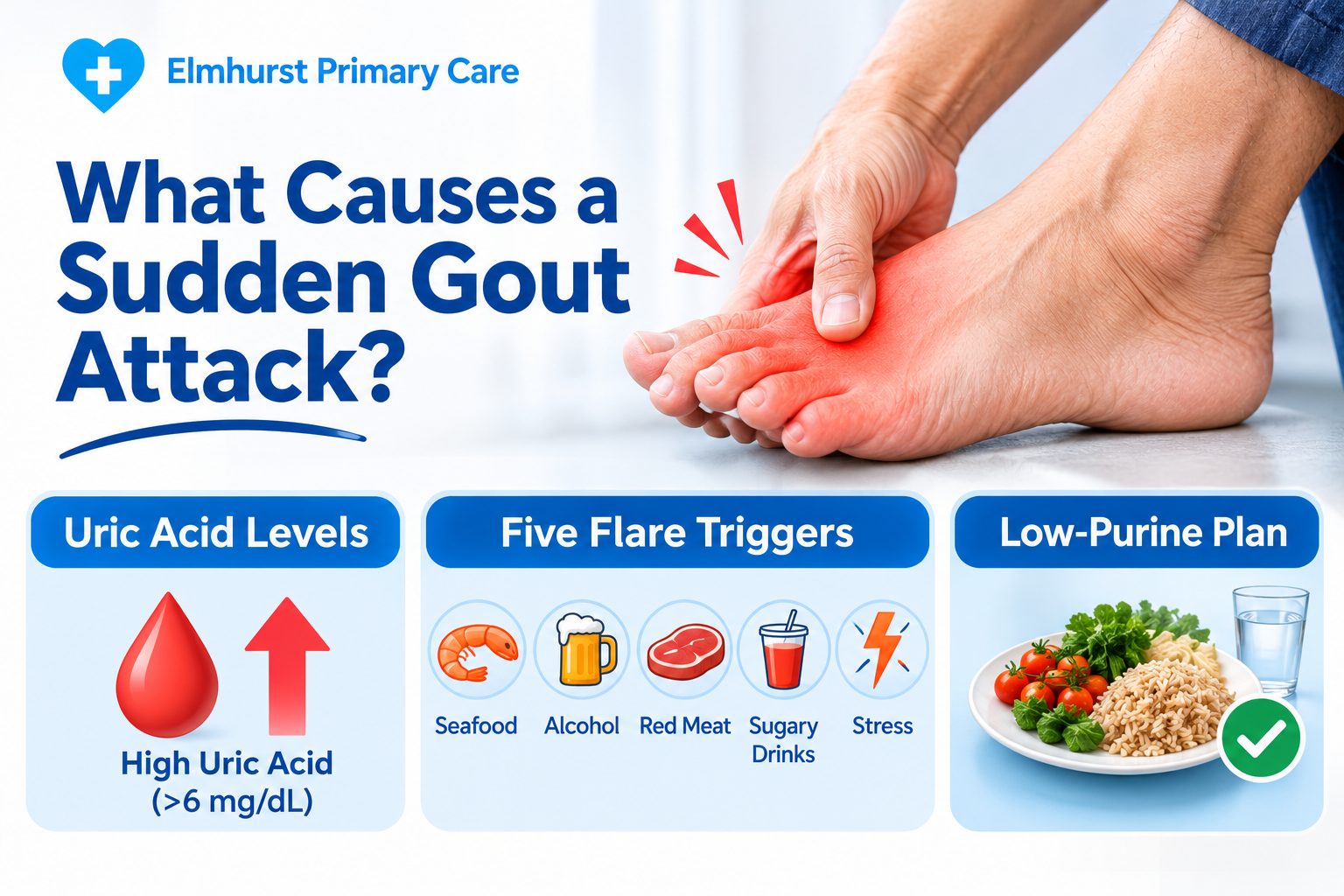
Table of contents
- 1. What Gout Is and How It Differs From Other Joint Pain
- 2. Reading Your Uric Acid Level
- 3. The Five Common Flare Triggers
- 4. What a Gout Attack Feels Like
- 5. How Gout Is Diagnosed and Treated
- 6. A Sample Low-Purine Eating Plan
- 7. Long-Term Protection for Joints and Kidneys
- 8. Red Flags, When to See a Doctor and Booking
- Conclusion
- Frequently Asked Questions
- See a Doctor in Elmhurst or Chinatown
Many people with gout can tell you the exact night it started: they went to bed fine and woke with a toe so painful that even a bedsheet felt unbearable. Gout is a form of inflammatory arthritis caused by too much uric acid in the blood, which can form sharp crystals inside a joint. It is common, it is more likely in men and in people after menopause, and it is very treatable.
This guide explains what causes gout, how uric acid levels are read, the five most common flare triggers, the difference between gout and other joint pain, how attacks are treated, a sample low-purine eating plan and when a painful joint needs urgent care. It is general education, not personal medical advice. City Prime Care provides primary care and diagnostic testing in Elmhurst, and you can find the clinic on Google: City Prime Care on Google. See also the clinic's lifestyle counseling page.
In this article:
- 1. What gout is and how it differs from other joint pain (table)
- 2. Reading your uric acid level (table and graph)
- 3. The five common flare triggers
- 4. What a gout attack feels like
- 5. How gout is diagnosed and treated (table)
- 6. A sample low-purine eating plan (table)
- 7. Long-term protection for joints and kidneys
- 8. Red flags, when to see a doctor and booking
1. What Gout Is and How It Differs From Other Joint Pain
In gout, uric acid builds up and forms urate crystals in and around a joint. The immune system reacts to the crystals with sudden, intense inflammation. Other conditions can look similar, so the pattern of symptoms matters.
| Condition | Typical pattern | How it differs |
|---|---|---|
| 1. Gout | Sudden severe pain, redness, heat and swelling, often in the big toe, peaking within 12 to 24 hours | Attacks come and go; pain is often worst at night |
| 2. Osteoarthritis | Gradual aching and stiffness, worse after activity | Wear-and-tear; see normal wear and tear or arthritis |
| 3. Septic (infected) joint | A hot, swollen joint with fever or chills | A medical emergency that needs same-day care |
| 4. Pseudogout | Similar attack, often in the knee or wrist in older adults | Caused by a different crystal |
| 5. Injury or sprain | Pain after a twist or fall | See sprain vs fracture |
The National Institute of Arthritis and Musculoskeletal and Skin Diseases explains gout at niams.nih.gov, and the Arthritis Foundation has practical tips at arthritis.org.
2. Reading Your Uric Acid Level
A blood test measures serum uric acid in milligrams per deciliter (mg/dL). Crystals tend to form when blood levels stay above about 6.8 mg/dL, and clinicians treating gout often aim for a level below 6 mg/dL. The ranges below are general guides; labs and clinicians may use slightly different cut-offs. For more on reading lab reports, see how to read your blood test results.
| Uric acid level (mg/dL) | Relative crystal risk (graph) | What it usually means |
|---|---|---|
| 1. Below 6.0 | ██░░░░░░░░ Low | Treatment target for people with gout; crystals can slowly dissolve |
| 2. 6.0 to 6.8 | ████░░░░░░ Borderline | Close to the level where crystals can form |
| 3. 6.9 to 8.9 | ██████░░░░ High | Crystals can form; attacks are more likely |
| 4. 9.0 or higher | ██████████ Very high | Highest risk of attacks, lumps under the skin (tophi) and joint damage |
A single result does not tell the whole story. Levels can fall during an attack, so clinicians often retest several weeks after the flare has settled.
3. The Five Common Flare Triggers
| Trigger | Why it can set off an attack | What helps |
|---|---|---|
| 1. Alcohol, especially beer and spirits | Raises uric acid and reduces its removal by the kidneys | Cut back or avoid; see how much alcohol is too much |
| 2. Purine-rich foods | Red meat, organ meats and some seafood add to uric acid | Smaller portions; see the sample plan below |
| 3. Sugary drinks and fructose | Raise uric acid production | Choose water; limit soda and sweetened juice |
| 4. Dehydration | Concentrated blood and urine make crystals more likely | Drink enough fluids; see dehydration warning signs |
| 5. Medicines and sudden changes | Water pills (diuretics), low-dose aspirin, starting or stopping uric acid medicine, crash diets, surgery or illness | Ask before stopping medicines; see taking many medicines safely |
Excess weight, high blood pressure, diabetes, kidney disease and family history also raise risk, which is why gout often appears alongside other conditions covered in our blood pressure guide and weight management guide.
4. What a Gout Attack Feels Like
A typical gout attack:
- Starts suddenly, often at night or in the early morning
- Causes intense pain in one joint, often the base of the big toe
- Makes the joint red or purple, hot, swollen and very tender to touch
- Peaks within about 12 to 24 hours
- Eases within a week or two even without treatment, but can return
- May cause peeling or itchy skin over the joint as it heals
Without treatment, repeat attacks tend to become more frequent, affect more joints and can lead to lasting damage or chalky lumps called tophi.
5. How Gout Is Diagnosed and Treated
A clinician usually diagnoses gout from your symptoms, an exam and a uric acid test. When it is unclear, joint fluid may be examined for crystals, and imaging can help. Treatment has two separate goals: calm the flare, and prevent future flares.
| Goal | Common options | Key points |
|---|---|---|
| 1. Settle an attack | Anti-inflammatory medicines (NSAIDs), colchicine, or a short course of steroids | Works best when started early; the right choice depends on kidneys, stomach, heart and other medicines |
| 2. Prevent attacks long term | Uric acid lowering medicines such as allopurinol or febuxostat, taken daily | Started once the flare has settled; usually continued even when you feel well |
| 3. Protect during the first months | Low-dose preventive medicine for a period when starting uric acid medicine | Reduces flares that can occur as crystals dissolve |
| 4. Support at home | Rest and raise the joint, apply a cold pack wrapped in cloth, drink fluids | Helps comfort but does not replace medicine |
| 5. Monitor | Repeat uric acid and kidney tests, see common blood tests | Used to adjust the dose and check safety |
Do not stop long-term uric acid medicine during a flare unless your clinician tells you to, since changes in uric acid can prolong the attack.
6. A Sample Low-Purine Eating Plan
The plan below is an illustrative example of eating patterns often recommended for people with gout. It is not a strict diet, and your own plan should consider kidney disease, diabetes and other conditions. Each block shows how much to limit.
| Food group | Limit level (graph) | Examples and tips |
|---|---|---|
| 1. Organ meats and some fish and shellfish | ██████████ Avoid or rarely | Liver, kidney, sardines, anchovies; large amounts of shellfish |
| 2. Red meat | ███████░░░ Limit | Smaller portions, a few times a week at most |
| 3. Beer and spirits | ████████░░ Limit or avoid | Wine in small amounts is less strongly linked, but less is better |
| 4. Sugary drinks | ████████░░ Limit | Replace soda and sweetened juice with water |
| 5. Vegetables, whole grains, beans and lentils | ██░░░░░░░░ Encouraged | Even vegetables higher in purines have not been shown to trigger attacks |
| 6. Low-fat dairy and water | █░░░░░░░░░ Encouraged | Aim for plenty of fluids daily |
A habit coach can make these changes easier. See our guide on how your doctor can help you change food, sleep and stress habits.
7. Long-Term Protection for Joints and Kidneys
Repeated gout is not only a joint problem. High uric acid is linked with kidney stones, kidney disease, high blood pressure, heart disease and diabetes. Treating gout well often means looking at these too.
| Area | Why it matters | Related reading |
|---|---|---|
| 1. Kidneys | Uric acid is cleared by the kidneys; stones and kidney damage can occur | Kidney health and kidney stones |
| 2. Blood pressure and heart | Often found together with gout | Blood pressure and cholesterol |
| 3. Blood sugar | Linked with insulin resistance | Prediabetes |
| 4. Weight | Losing weight gradually lowers uric acid | Safe weight loss; avoid crash diets, which can trigger attacks |
| 5. Joints | Untreated gout can erode joints | Keep follow-up visits and uric acid checks |
8. Red Flags, When to See a Doctor and Booking
| Situation | Action |
|---|---|
| A hot, swollen joint with fever, chills or feeling very unwell | Go to the ER or urgent care the same day; see urgent care vs the ER |
| A first attack of sudden severe joint pain | Book a visit within a day or two to confirm the cause |
| Pain that does not settle after several days of treatment | Call your clinician |
| Two or more attacks in a year, or visible lumps near joints | Ask about long-term uric acid lowering medicine |
| Severe back or side pain with blood in the urine | Seek urgent care; this may be a kidney stone |
| You want a gout plan or lab tests | Use the appointment page and choose Primary Care |
Conclusion
Gout is painful, but it is one of the most controllable forms of arthritis. Treating the flare quickly, learning your personal triggers, and, when needed, lowering uric acid with long-term medicine can prevent attacks and protect the joints and kidneys. If you have had one attack, a conversation with your clinician now is better than waiting for the next one.
Contact Us: To ask about joint pain, uric acid testing or a gout plan, reach City Prime Care through our Contact Us page, or find the clinic on Google: City Prime Care on Google. This article is for general information and does not replace personal medical advice. In an emergency, call 911.
Frequently Asked Questions
See a Doctor in Elmhurst or Chinatown
Have a question about your own health? Book a visit at our Elmhurst, Queens clinic or our Chinatown, Manhattan clinic, or explore our primary care services.
Related articles
Healthcare
What Are the Warning Signs of Pneumonia, and Who Needs Care Fast? Reading the Symptom Clues, the Five Risk Groups and the Sample Recovery Timeline
Pneumonia is a lung infection that can be mild or serious. Learn how it differs from a cold or the flu, the warning signs, the five higher-risk groups, how severity is judged and what recovery usually looks like.
Healthcare
How Do You Know If a Head Injury Is a Concussion? Reading the Symptom Checklist, the Five Danger Signs and the Sample Return-to-Activity Plan
A concussion does not need a knockout and often shows nothing on a scan. Learn the symptom checklist, the five danger signs that need the ER, how recovery usually goes and a step-by-step return-to-activity plan.
Healthcare
How Can You Recognize a Stroke in Time? Reading the BE-FAST Warning Signs, the Five Emergency Steps and the Sample Hospital Timeline
Stroke care is a race against time. Learn the BE-FAST warning signs, the five emergency steps, what happens at the hospital, why a TIA is a warning and which risk factors you can control.





