
Urgent Care / HealthcareBy City Prime Care Team
First Aid at Home: What to Do for Cuts and Burns Before You Reach the Clinic
Know exactly what to do for a cut or burn at home, how to tell burn degrees apart, when a wound needs stitches or a tetanus shot, and which signs mean urgent or emergency care.
Medically reviewed by City Prime Care Administrator10 min read
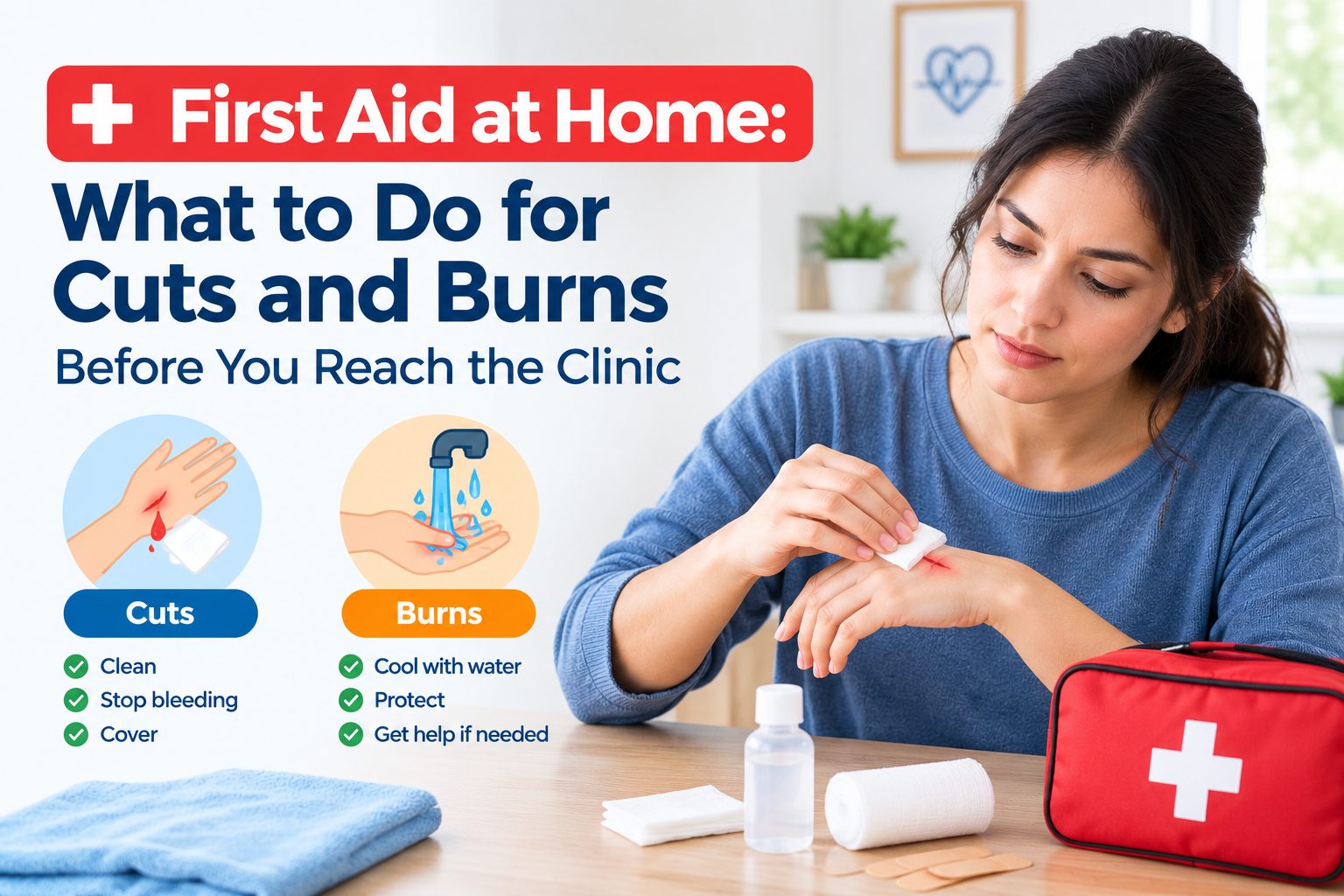
Table of contents
- 1. First Aid for a Minor Cut: 6 Steps
- 2. When a Cut Needs Medical Care or Stitches
- 3. Tetanus: Do You Need a Booster?
- 4. Understanding Burn Degrees
- 5. First Aid for a Minor Burn: 5 Steps
- 6. Burn First Aid Do's and Don'ts
- 7. When a Burn Needs Emergency or Urgent Care
- 8. Signs of Infection to Watch For
- 9. Home First Aid Kit Checklist
- 10. Related Reading and Trusted Sources
- Conclusion
- Frequently Asked Questions
- See a Doctor in Elmhurst or Chinatown
Kitchen knives, paper edges, hot pans, and curling irons: minor cuts and burns happen to almost everyone. Knowing what to do in the first few minutes can lower pain, reduce the chance of infection, and limit scarring.
This guide covers first aid steps for cuts and burns, a simple chart of burn degrees, when stitches or a tetanus shot may be needed, signs of infection, and the situations that call for urgent or emergency care. It is general information and not a substitute for personal medical advice.
1. First Aid for a Minor Cut: 6 Steps
For small cuts and scrapes, follow these steps:
- Wash your hands with soap and water, or wear clean gloves if you have them.
- Stop the bleeding by pressing firmly on the wound with a clean cloth or gauze. Keep steady pressure for several minutes without peeking, and raise the area above heart level if you can.
- Rinse the wound with clean running water for a few minutes. Use mild soap around the wound, not deep inside it.
- Remove small bits of dirt with a clean tweezer; do not dig for deeply embedded objects.
- Apply a thin layer of antibiotic ointment if you wish, then cover with a clean bandage or sterile gauze.
- Change the bandage daily, or sooner if wet or dirty, and watch for signs of infection.
For general wound care information see the MedlinePlus wounds and injuries page.
2. When a Cut Needs Medical Care or Stitches
| Situation | Why it matters | What to do |
|---|---|---|
| Bleeding does not slow after about 10 minutes of firm pressure | Could involve a deeper blood vessel | Keep pressure on and go to the ER or call 911 |
| Blood is spurting or soaking through bandages quickly | Possible artery injury | Call 911 |
| Edges gape open or the cut is deep (roughly a quarter inch or more) | Stitches or skin glue may help it heal | Get seen as soon as possible |
| Cut is on the face, hand, joint, or genitals | Function and appearance matter | Get seen by a clinician |
| Animal or human bite | High risk of infection | Seek care the same day |
| Dirty, rusty, or deeply embedded object, or debris you cannot remove | Higher risk of infection and tetanus | Seek care the same day |
| Numbness, weakness, or cannot move a finger or limb normally | Possible nerve or tendon injury | Get seen urgently |
Wounds that need stitches generally heal best when closed within several hours, so do not wait if you think it needs closing. Not sure where to go? Read about when to choose urgent care instead of waiting for your doctor.
3. Tetanus: Do You Need a Booster?
Tetanus bacteria live in soil and dust and can enter through breaks in the skin. The CDC generally advises a booster when it has been a long time since your last dose. Ask your clinician to confirm for your situation.
| Type of wound | Booster generally considered if last tetanus shot was more than |
|---|---|
| Clean, minor wound | 10 years ago |
| Dirty or deep wound (soil, rust, puncture, bite) | 5 years ago |
| Not sure about vaccine history, or never fully vaccinated | Get checked promptly |
See our adult vaccines guide for more on Tdap and Td shots.
4. Understanding Burn Degrees
Doctors describe burns by how deep they go into the skin. The deeper the burn, the more serious it is. The bar in the graph is an illustration of depth, not a measure of size.
| Degree | Skin layers affected | What it looks like | Pain | Depth (graph) |
|---|---|---|---|---|
| First degree | Outer layer only | Red, dry, no blisters (like mild sunburn) | Painful | ██ |
| Second degree | Outer and part of the next layer | Red, swollen, wet, with blisters | Very painful | █████ |
| Third degree | Through the full thickness of skin | White, leathery, brown, or charred | May be painless because nerves are damaged | █████████ |
For official guidance see the MedlinePlus burns page.
5. First Aid for a Minor Burn: 5 Steps
For small first-degree burns and small second-degree burns:
- Move away from the heat source and remove rings, watches, or tight clothing near the burn before swelling starts.
- Cool the burn under cool (not ice-cold) running water for about 10 to 20 minutes.
- Gently pat dry and cover loosely with a clean non-stick dressing or clean plastic wrap.
- Take over-the-counter pain relief as directed on the label if needed.
- Do not pop blisters. If a blister breaks, wash gently and cover with a clean dressing.
6. Burn First Aid Do's and Don'ts
| Do | Do not |
|---|---|
| Use cool running water | Use ice, which can damage the skin |
| Cover with a clean, non-stick dressing | Apply butter, oil, toothpaste, or egg |
| Keep the area clean and watch for infection | Pop blisters |
| Protect healing skin from sun | Pull off clothing stuck to the burn |
7. When a Burn Needs Emergency or Urgent Care
Call 911 or go to the ER for a burn that:
- Looks white, leathery, brown, or charred (third degree)
- Is larger than the palm of the hand, or covers a large area
- Is on the face, hands, feet, groin, or over a major joint
- Is caused by chemicals or electricity
- Happens with trouble breathing, smoke inhalation, or burns around the mouth
- Occurs in an infant, young child, or older adult
For smaller blistering burns or any burn you are unsure about, same-day care at urgent care can help.
8. Signs of Infection to Watch For
| Sign | What to do |
|---|---|
| Increasing redness, warmth, or swelling after the first day or two | See a clinician |
| Pus or foul-smelling drainage | See a clinician the same day |
| Red streaks spreading away from the wound | Seek urgent care right away |
| Fever or chills | Seek care the same day |
| Pain that keeps getting worse instead of better | See a clinician |
If you have diabetes, poor circulation, or a weak immune system, infections can develop faster. See our type 2 diabetes guide for why blood sugar matters in healing.
9. Home First Aid Kit Checklist
- Adhesive bandages in several sizes
- Sterile gauze pads and medical tape
- Antibiotic ointment
- Non-stick burn dressings
- Clean tweezers and small scissors
- Disposable gloves
- Saline or clean bottled water for rinsing
- Pain reliever suitable for your family, stored safely
- A cold pack
- Emergency numbers and a list of your medicines
Check your kit twice a year and replace anything that is expired.
10. Related Reading and Trusted Sources
More from City Prime Care: read about sprain vs fracture and when you need an X-ray, dehydration and our first visit to urgent care in Elmhurst.
Trusted outside sources: MedlinePlus: Wounds and Injuries, MedlinePlus: Burns and Mayo Clinic: Cuts and Scrapes First Aid.
Conclusion
Most small cuts and burns heal well with simple first aid. The key is to act quickly, keep the wound clean, and know when to get help. If you are ever unsure, it is better to have a wound checked than to wait.
Contact Us
Need a wound checked, stitches, or a tetanus shot? Our Queens, NY team can help with same-day care. Contact City Prime Care here. This article is for general information and does not replace advice from your own healthcare provider. In an emergency, call 911.
Frequently Asked Questions
See a Doctor in Elmhurst or Chinatown
Have a question about your own health? Book a visit at our Elmhurst, Queens clinic or our Chinatown, Manhattan clinic, or explore our primary care services.
Related articles
Urgent Care / Healthcare
Sprain vs Fracture: How to Tell the Difference and When You Need an X-Ray
A swollen ankle or wrist can be a sprain or a broken bone. Learn the signs that separate them, basic first aid, and when an X-ray at urgent care is the right call.
Urgent Care / Healthcare
When Should You Visit Urgent Care Instead of Waiting for Your Doctor?
Not sure whether to wait for your doctor or go to urgent care today? Use a simple three-window rule to decide, and learn how to find urgent care near you.
Urgent Care / Healthcare
Does Urgent Care in Elmhurst Really Handle Fever, Cold, and Sore Throat? What the Seasonal Data Reveals, the Care Test It Turns On, and What Each Symptom Counts
Fever, cold, and sore throat are common reasons patients seek urgent care, with respiratory visits often increasing during peak flu season. This guide explains what patients can expect, including possible testing, busier clinic periods, and warning signs that may require more urgent medical evaluation.





