
Urgent CareBy City Prime Care Team
Which Conditions Can Urgent Care in Elmhurst Treat? Reading the Fifteen-Condition List, the Five Quick Checks and the Sample Treatment Path
See 15 common conditions urgent care in Elmhurst can evaluate and treat, with signs, tests and usual treatment for each, plus five quick checks, what is not suited to urgent care and a sample treatment path.
Medically reviewed by City Prime Care Administrator11 min read
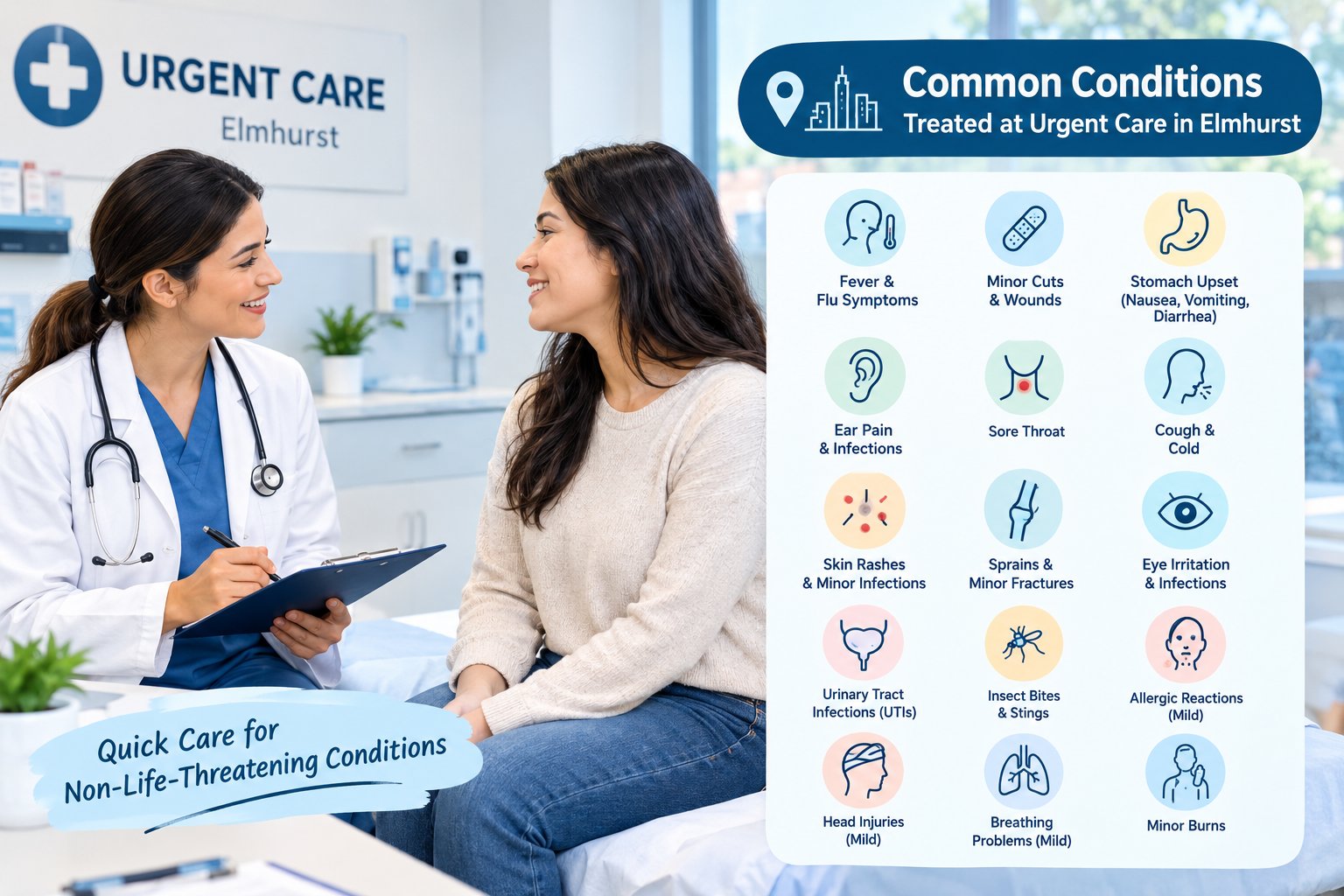
Table of contents
- 1. What Urgent Care Is Designed to Handle
- 2. Fifteen Common Conditions
- 3. How the Fifteen Break Down by Type
- 4. Five Quick Checks Before You Go
- 5. Conditions Better Suited Elsewhere
- 6. Tests and Treatments You May Be Offered
- 7. Why Not Every Infection Needs Antibiotics
- 8. A Sample Treatment Path
- 9. Staying Well and Following Up
- Conclusion
- Frequently Asked Questions
- See a Doctor in Elmhurst or Chinatown
People often wait too long to get care because they are not sure a problem is serious enough, or they assume urgent care cannot handle it. In fact, urgent care can evaluate and treat a wide range of common illnesses and injuries that need attention today but are not emergencies. Knowing which conditions fit helps you get care sooner and avoid a crowded emergency room.
This guide lists 15 common conditions urgent care in Elmhurst can evaluate and treat, with typical signs, tests and treatments for each. It also covers five quick checks before you go, the conditions that are better suited to the ER or your regular doctor, and a sample treatment path. It draws on guidance from the CDC antibiotic use page, the CDC flu page and the CDC group A strep page. Which services and tests are offered on site can differ, so ask City Prime Care first. This is general education, not personal medical advice, and you can also find the clinic on Google.
In this article:
- 1. What urgent care is designed to handle
- 2. Fifteen common conditions (tables)
- 3. How the fifteen break down by type (graph)
- 4. Five quick checks before you go
- 5. Conditions better suited elsewhere
- 6. Tests and treatments you may be offered (table)
- 7. Why not every infection needs antibiotics
- 8. A sample treatment path
- 9. Staying well and following up
1. What Urgent Care Is Designed to Handle
Urgent care sits between your regular doctor and the emergency room. It is designed for problems that need prompt attention, often the same day, but do not threaten life or limb. Clinicians can examine you, run rapid tests, take X-rays at many clinics, treat wounds and prescribe medicine. When a problem needs a specialist or hospital, they can refer you onward.
Many people also use urgent care when their regular doctor cannot see them quickly. See same-day doctor appointment options in Elmhurst, when to visit urgent care instead of waiting for your doctor and our guide to whether urgent care still covers common conditions in Elmhurst.
2. Fifteen Common Conditions
The first table covers eight infections and illnesses. The second covers seven injuries and sudden problems. Treatments are typical examples and depend on your exam.
| # | Condition | Typical signs | Often tested with | Usual treatment |
|---|---|---|---|---|
| 1 | Strep throat | Sore throat, fever, swollen glands, often no cough | Rapid strep test | Antibiotics if positive |
| 2 | Flu | Sudden fever, aches, cough, tiredness | Rapid flu test | Rest and fluids; antiviral medicine in some cases |
| 3 | COVID-19 | Fever, cough, loss of taste or smell, fatigue | Rapid COVID-19 test | Rest, fluids; antiviral medicine for some high-risk patients |
| 4 | Cold or sinus infection | Congestion, runny nose, facial pressure, cough | Exam | Supportive care; antibiotics only if bacterial |
| 5 | Ear infection | Ear pain, fever, muffled hearing | Ear exam | Pain relief; antibiotics in some cases |
| 6 | Urinary tract infection | Burning, urgency, frequent urination | Urine test | Antibiotics if confirmed |
| 7 | Pinkeye | Red, itchy or sticky eye | Exam | Drops if bacterial; supportive care if viral |
| 8 | Bronchitis or mild chest infection | Cough, chest tightness, mucus | Exam; chest X-ray if pneumonia is suspected | Supportive care; antibiotics if bacterial |
| # | Condition | Typical signs | Often tested with | Usual treatment |
|---|---|---|---|---|
| 9 | Sprain or strain | Swelling, bruising, pain with movement | Exam; X-ray to rule out fracture | Rest, ice, compression, elevation; brace |
| 10 | Minor fracture | Pain over a bone, swelling, cannot use the limb | X-ray | Splint and referral to a bone specialist |
| 11 | Cut or laceration | Open wound, bleeding | Exam; tetanus history check | Cleaning, stitches or glue; tetanus shot if due |
| 12 | Minor burn | Redness, blisters, pain | Exam | Cooling, dressings, pain control |
| 13 | Rash or allergic skin reaction | Itching, hives, redness, mild swelling | Exam | Antihistamines, creams or steroids as needed |
| 14 | Mild asthma flare-up | Wheeze, cough, mild tightness that responds to a rescue inhaler | Exam, peak flow | Inhaler treatment and a plan for follow-up |
| 15 | Dehydration or stomach bug | Vomiting, diarrhea, weakness, dark urine | Exam; sometimes blood or urine tests | Oral rehydration; IV fluids in some cases |
For more on specific conditions, see which infections and injuries an acute care visit can treat, sprain vs fracture, first aid at home for cuts and burns, how ear infections show up and what asthma really is. For fluids, read when IV hydration makes sense.
3. How the Fifteen Break Down by Type
The graph groups the fifteen conditions by type. Each block represents one condition.
| Type | Number of conditions (graph) | Examples |
|---|---|---|
| Throat, nose, ear and eye infections | █████ 5 | Strep, cold or sinus, ear infection, pinkeye, flu |
| Chest and breathing | ███ 3 | COVID-19, bronchitis, mild asthma flare-up |
| Urinary | █ 1 | Urinary tract infection |
| Bone, joint and muscle injuries | ██ 2 | Sprain or strain, minor fracture |
| Skin and wounds | ███ 3 | Cut, minor burn, rash or allergic reaction |
| Fluids and stomach | █ 1 | Dehydration or stomach bug |
4. Five Quick Checks Before You Go
Run through these five checks to decide whether urgent care fits:
- Is it an emergency? Chest pain, trouble breathing, stroke signs, severe bleeding or confusion means call 911.
- Does it need care today? If it cannot wait for a routine appointment but is not life-threatening, urgent care often fits.
- Can you drink fluids, move normally and stay alert? If yes, urgent care is likely suitable.
- Is the person a baby under 3 months with a fever, a pregnant patient with severe symptoms, or someone with a weak immune system? Call ahead or go to the ER.
- Have you called the clinic? Confirm hours, services, age limits and insurance before you travel.
If you are unsure, see when a problem calls for the emergency room instead of urgent care in Queens and where to go when illness strikes suddenly.
5. Conditions Better Suited Elsewhere
Urgent care is not the right place for every problem. These usually belong in the ER or with your regular doctor.
| Better suited to | Examples |
|---|---|
| Emergency room or 911 | Chest pain, stroke signs, severe trouble breathing, serious head injury, major bleeding, bone through the skin, severe allergic reaction, overdose |
| Regular doctor or specialist | Ongoing chronic disease management, routine checkups and vaccines, long-term medicine changes, non-urgent test follow-up |
| Mental health crisis services | Thoughts of self-harm or harming others; call or text 988 in the United States |
For routine and ongoing care, see how chronic disease management works for Elmhurst patients and the services of the Elmhurst primary care clinic.
6. Tests and Treatments You May Be Offered
| Test or treatment | What it checks or does | Result time (varies) |
|---|---|---|
| Rapid strep test | Group A strep in the throat | Minutes |
| Rapid flu or COVID-19 test | Flu or COVID-19 virus | Minutes |
| Urine test | Signs of urinary infection | Minutes to a day |
| X-ray | Bones and some lung problems | Often same visit |
| Blood tests | Infection markers, dehydration, other causes | Hours to days |
| Wound care | Cleaning, glue, stitches, dressings | At the visit |
| Tetanus shot | Protection after a wound when due | At the visit |
| Splint or brace | Support for sprains and minor fractures | At the visit |
Ask which tests are done on site and which are arranged through referral services. Read about imaging in our guide on when an injury or cough calls for an X-ray.
7. Why Not Every Infection Needs Antibiotics
Antibiotics work only against bacteria. Colds, most sore throats, most sinus infections, flu and COVID-19 are caused by viruses, so antibiotics will not help and can cause side effects such as diarrhea and rash. Overuse also fuels antibiotic resistance. A clinician uses your symptoms, an exam and sometimes a rapid test to decide. When antibiotics are prescribed, finish them as directed. Learn more on the CDC antibiotic use page.
8. A Sample Treatment Path
This sample follows a patient with a urinary tract infection. Every case is different.
| Stage | What happens | Notes |
|---|---|---|
| Day 0, morning | Burning and urgency begin | Drink water and call the clinic |
| Day 0, visit | Exam, urine test and treatment plan | Antibiotics started the same day if confirmed |
| Days 1 to 2 | Symptoms start to ease | Finish the full course; return if fever, back pain or vomiting appears |
| Day 3 | Most symptoms improved | Call if no improvement |
| Day 7 | Medicine course completed | Return if symptoms come back |
| Weeks 2 to 4 | Follow-up with primary care if needed | Book via the appointment page |
9. Staying Well and Following Up
A few habits help you avoid repeat visits:
- Get your yearly flu shot and stay current on vaccines; see our flu season guide and the CDC flu page.
- Wash your hands often and stay home when you have a fever.
- Keep chronic conditions such as diabetes and asthma controlled.
- Keep your tetanus booster current, about every ten years.
- Book a primary care follow-up after an urgent care visit, and return sooner if symptoms worsen.
- Keep a list of your medicines and allergies on your phone for quick visits.
Conclusion
Urgent care in Elmhurst can handle a wide range of common illnesses and minor injuries quickly, from strep throat and urinary infections to sprains, cuts and mild asthma flare-ups. Use the five quick checks, know when to choose the ER and follow through with your regular doctor for ongoing care.
Contact Us: To ask whether your condition can be seen today, reach City Prime Care through our Contact Us page, or find us on Google. This article is for general information and does not replace personal medical advice. In an emergency, call 911.
Frequently Asked Questions
See a Doctor in Elmhurst or Chinatown
Have a question about your own health? Book a visit at our Elmhurst, Queens clinic or our Chinatown, Manhattan clinic, or explore our primary care services.
Related articles
Urgent Care
What Happens at Your First Urgent Care Visit in Elmhurst? Reading the Check-In Steps, the Five Things to Bring and the Sample Visit Timeline
Nervous about your first urgent care visit? See how check-in, triage and the exam work, the five things to bring, what tests and treatments to expect and a sample timeline from arrival to follow-up.
Urgent Care
When Does a Problem Call for the Emergency Room Instead of Urgent Care in Queens? Reading the Symptom Split, the Five Red Flags and the Sample Decision Path
Not sure whether to go to urgent care or the emergency room in Queens? Compare the two side by side, learn five red flags, see a severity scale and follow a simple decision path with examples.
Urgent Care
Walk-In Urgent Care in Queens NY: A Neighborhood Guide
A practical neighborhood guide to walk-in urgent care in Queens, NY: what it treats, how to choose a center near you, and what to bring.





