
Urgent CareBy City Prime Care Team
What Happens at Your First Urgent Care Visit in Elmhurst? Reading the Check-In Steps, the Five Things to Bring and the Sample Visit Timeline
Nervous about your first urgent care visit? See how check-in, triage and the exam work, the five things to bring, what tests and treatments to expect and a sample timeline from arrival to follow-up.
Medically reviewed by City Prime Care Administrator10 min read
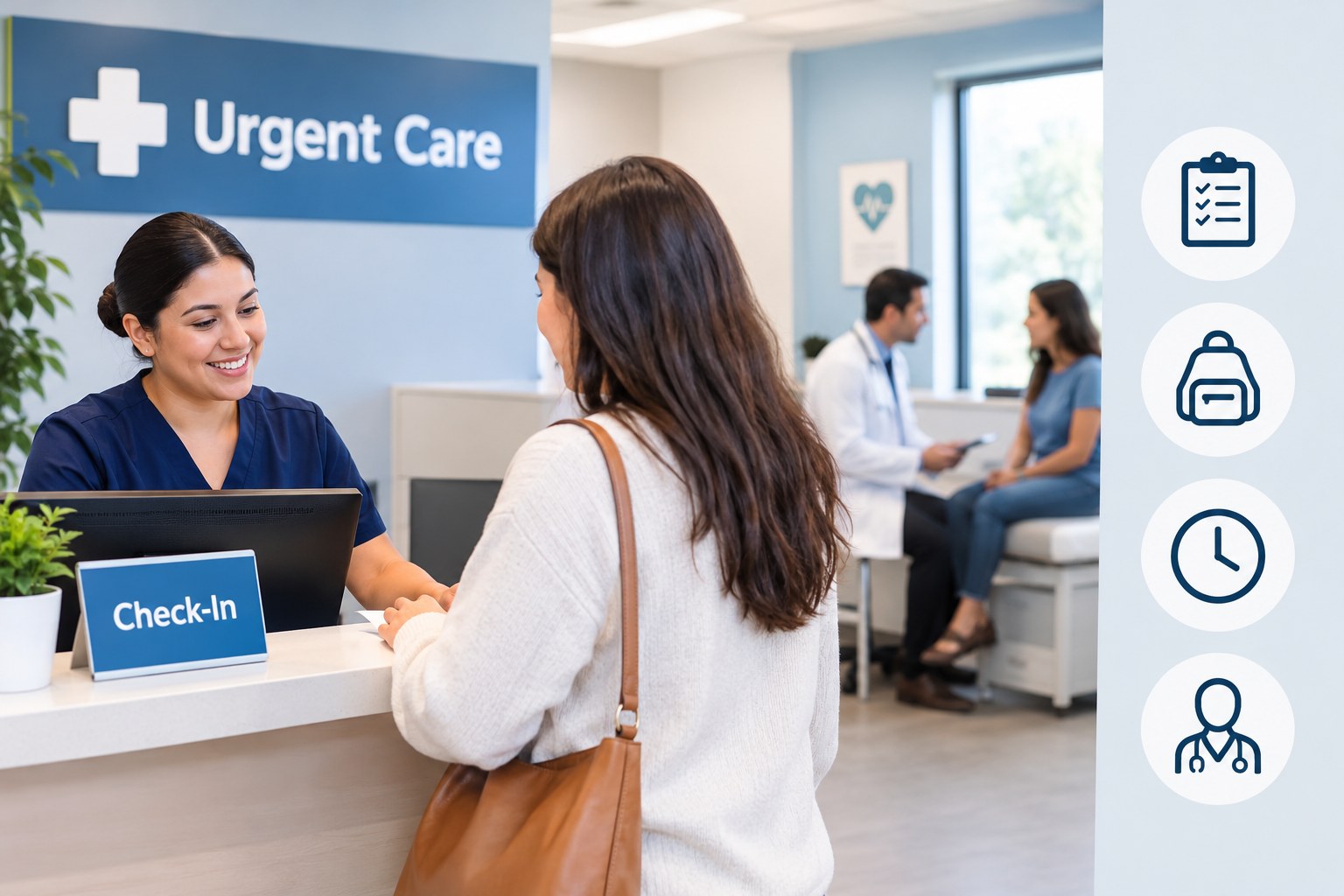
Table of contents
- 1. Before You Go: Walk-In or Call Ahead
- 2. Five Things to Bring
- 3. Check-In and Triage
- 4. What the Clinician Will Ask
- 5. Tests and Treatments You May See
- 6. When the Clinic Is Busiest
- 7. Insurance, Medicaid and Cost Questions
- 8. A Sample Visit Timeline
- 9. After the Visit: Instructions, Follow-Up and Referrals
- Conclusion
- Frequently Asked Questions
- See a Doctor in Elmhurst or Chinatown
Walking into an urgent care clinic for the first time can feel uncertain. You may wonder whether you need an appointment, what to bring, how long you will wait and what the clinician will actually do. Knowing the flow ahead of time makes the visit calmer and often faster, because you arrive with the right information and the right expectations.
This guide walks through a first urgent care visit in Elmhurst from start to finish: before you go, check-in, triage, the exam, tests and treatments, wait-time patterns, insurance questions and follow-up. It draws on patient guidance from the CDC antibiotic use page and the American College of Emergency Physicians. Hours, services and tests available on site can differ, so ask City Prime Care before you come. This is general education, not personal medical advice, and you can also find the clinic on Google.
In this article:
- 1. Before you go: walk-in or call ahead
- 2. Five things to bring
- 3. Check-in and triage (table)
- 4. What the clinician will ask
- 5. Tests and treatments you may see (table)
- 6. When the clinic is busiest (graph)
- 7. Insurance, Medicaid and cost questions
- 8. A sample visit timeline
- 9. After the visit: instructions, follow-up and referrals
1. Before You Go: Walk-In or Call Ahead
Many urgent care visits are walk-in, so you often do not need an appointment. Still, a quick call helps you confirm today's hours, whether the clinic treats your symptom or your child's age and how busy it is. If you are unsure whether urgent care is the right place, check our guides on urgent care open now in Elmhurst, how to choose the right clinic and what to expect at a walk-in clinic.
If you have chest pain, trouble breathing, signs of a stroke, severe bleeding or a serious injury, skip urgent care and call 911. See when a problem calls for the emergency room instead of urgent care in Queens for how to decide.
2. Five Things to Bring
Bringing these five items saves time at check-in and helps the clinician treat you safely:
- A photo ID and your insurance card, or your Medicaid or Medicare card.
- A list of your current medicines with doses, including vitamins and supplements.
- A list of allergies, especially to medicines and latex.
- A short summary of your health history: chronic conditions, surgeries and your primary care doctor's name.
- A note of your symptoms: when they started, what makes them better or worse, and any temperature readings.
If you are bringing a child, also bring the vaccination record and the child's latest weight. For children's visits, see when to bring your child to pediatric urgent care.
3. Check-In and Triage
After you arrive, staff register you and a nurse or medical assistant checks the basics. Triage means sorting patients by how urgent their problem is, so a person with trouble breathing may be seen before someone with a sore throat even if they arrived later.
| Step | What happens | What you can do |
|---|---|---|
| Registration | You give your name, ID, insurance and contact details and sign consent forms | Have documents ready |
| Vital signs | Temperature, pulse, blood pressure, breathing rate and oxygen level | Tell staff if you feel faint or short of breath |
| Triage questions | Staff ask about your main symptom, pain level, allergies and medicines | Be specific and honest |
| Waiting room | You wait to be called; staff may re-check you if symptoms change | Tell staff right away if you feel worse |
| Exam room | A clinician reviews your history and examines you | Ask questions as they come up |
4. What the Clinician Will Ask
Expect questions like these, and have your answers ready:
- What is the main problem, and when did it start?
- Has it gotten better, worse or stayed the same?
- Do you have a fever, pain, vomiting, dizziness or shortness of breath?
- What have you tried so far, such as medicines or home care?
- Do you have chronic conditions such as diabetes, asthma or high blood pressure?
- Could you be pregnant, and are you taking any blood thinners?
- Have you had a similar problem before, or any recent injury, travel or sick contacts?
Honest, complete answers help the clinician choose the right test and treatment. Mention anything you are embarrassed about. Clinicians ask about sensitive topics every day.
5. Tests and Treatments You May See
Which tests and treatments are done on site depends on the clinic, so ask what is available. The table lists common ones.
| Test or treatment | Used for | Typical timing |
|---|---|---|
| Rapid strep test | Sore throat with fever | Minutes |
| Rapid flu or COVID-19 test | Fever, cough and body aches | Minutes |
| Urine test | Burning with urination, urgency | Minutes to a day |
| X-ray | Suspected sprain, fracture or some chest problems | Often during the visit |
| Wound care, glue or stitches | Cuts and lacerations | During the visit |
| Tetanus shot | Wounds when tetanus status is not current | During the visit |
| Prescription medicine | Bacterial infections, pain control, allergies | Sent to your pharmacy |
| Splint or brace | Sprains and minor fractures | During the visit |
| Referral | Problems that need a specialist or ongoing care | Arranged through referral services |
For imaging decisions, see when an injury or cough calls for an X-ray. Antibiotics are used only for bacterial infections; read the CDC antibiotic use page for why.
6. When the Clinic Is Busiest
Wait times depend on how many people arrive and how sick they are. The graph shows a general pattern seen at many walk-in clinics, not a measured schedule for any one clinic. More blocks mean a more crowded waiting room. Call the clinic to ask about current wait times.
| Time of day or week | Typical crowding (graph) | Tip |
|---|---|---|
| Early morning on weekdays | ███ moderate | Often busy when doors open |
| Midday on weekdays | ██ lighter | Often a quieter window |
| Late afternoon and early evening | █████ busiest | After-work and after-school rush |
| Late evening | ███ moderate | Check closing time before you go |
| Weekends | █████ busy | Many offices are closed, so more patients come |
| Mondays and flu season | █████ busy | Weekend illness and seasonal spikes |
For more tips, read our guides on the best times to visit a walk-in clinic and urgent care on weekends and evenings in Elmhurst.
7. Insurance, Medicaid and Cost Questions
Ask about coverage before you are seen. Coverage rules, copays and the plans accepted vary by clinic and plan, so confirm details with the clinic and your insurer. If you have Medicaid or Medicare, see our guide on whether urgent care in Elmhurst accepts Medicaid and Medicare.
Useful questions to ask at check-in:
- Do you accept my insurance plan, and what is my copay for this visit?
- Are tests such as X-rays or lab work billed separately?
- What are your self-pay options if I am uninsured?
- Will I get an itemized bill or visit summary?
- Will you send my records to my primary care doctor?
8. A Sample Visit Timeline
Every visit differs, but this sample shows a typical sequence for a sore throat with fever. Times are rough and depend on how busy the clinic is.
| Time | What happens | Notes |
|---|---|---|
| Before arriving | Call about hours and wait; gather ID, insurance and medicine list | Optional but helpful |
| 0 to 10 minutes | Check-in, forms and insurance | Bring documents |
| 10 to 25 minutes | Vital signs and triage questions | Tell staff about allergies |
| Waiting time varies | Wait for an exam room | Report any worsening symptoms |
| Exam, about 10 to 20 minutes | Clinician examines you and orders a rapid test | Ask what the test checks |
| Test results, minutes | Rapid strep result returns; treatment is explained | Ask about side effects |
| Discharge | Instructions, prescription sent to pharmacy, follow-up advice | Ask when to return |
| Next 1 to 3 days | Take medicine as directed; rest and fluids | Book follow-up via the appointment page |
9. After the Visit: Instructions, Follow-Up and Referrals
Before you leave and in the days after, remember to:
- Read your discharge instructions and ask about anything unclear before you go.
- Fill any prescription promptly and take it exactly as directed.
- Know the warning signs that mean you should return or go to the ER.
- Book a follow-up with your primary care provider; see same-day doctor appointment options in Elmhurst.
- Ask for a copy of your visit summary and any test results.
- If you were referred to a specialist, schedule it soon through referral services.
Conclusion
A first urgent care visit is easier when you know what to expect: bring your ID, insurance, medicine list and symptoms, expect triage and a short wait, ask questions and follow the discharge plan. If a clinician finds a problem that needs more care, follow the referral promptly.
Contact Us: To ask about hours, services or wait times, reach City Prime Care through our Contact Us page, or find us on Google. This article is for general information and does not replace personal medical advice. In an emergency, call 911.
Frequently Asked Questions
See a Doctor in Elmhurst or Chinatown
Have a question about your own health? Book a visit at our Elmhurst, Queens clinic or our Chinatown, Manhattan clinic, or explore our primary care services.
Related articles
Urgent Care
When Does a Problem Call for the Emergency Room Instead of Urgent Care in Queens? Reading the Symptom Split, the Five Red Flags and the Sample Decision Path
Not sure whether to go to urgent care or the emergency room in Queens? Compare the two side by side, learn five red flags, see a severity scale and follow a simple decision path with examples.
Urgent Care
Which Conditions Can Urgent Care in Elmhurst Treat? Reading the Fifteen-Condition List, the Five Quick Checks and the Sample Treatment Path
See 15 common conditions urgent care in Elmhurst can evaluate and treat, with signs, tests and usual treatment for each, plus five quick checks, what is not suited to urgent care and a sample treatment path.
Healthcare
How Do You Find a Trusted Primary Care Clinic Near You in Queens? Reading the Clinic Signals, the Five Steps and the Sample Travel Times
Choosing a primary care clinic in Queens is easier with a checklist. Compare clinic types, read the trust signals, follow five steps, and see sample travel times to the Elmhurst clinic from nearby neighborhoods.





