
HealthcareBy City Prime Care Team
Which Infections and Injuries Can an Elmhurst Acute Care Visit Treat? Reading the Condition Groups, the Five Home-Care Limits and the Sample Treatment Timeline
Find out which infections and injuries an acute care visit in Elmhurst commonly treats, how long you can usually wait before calling and which warning signs mean you should not wait.
Medically reviewed by City Prime Care Administrator9 min read
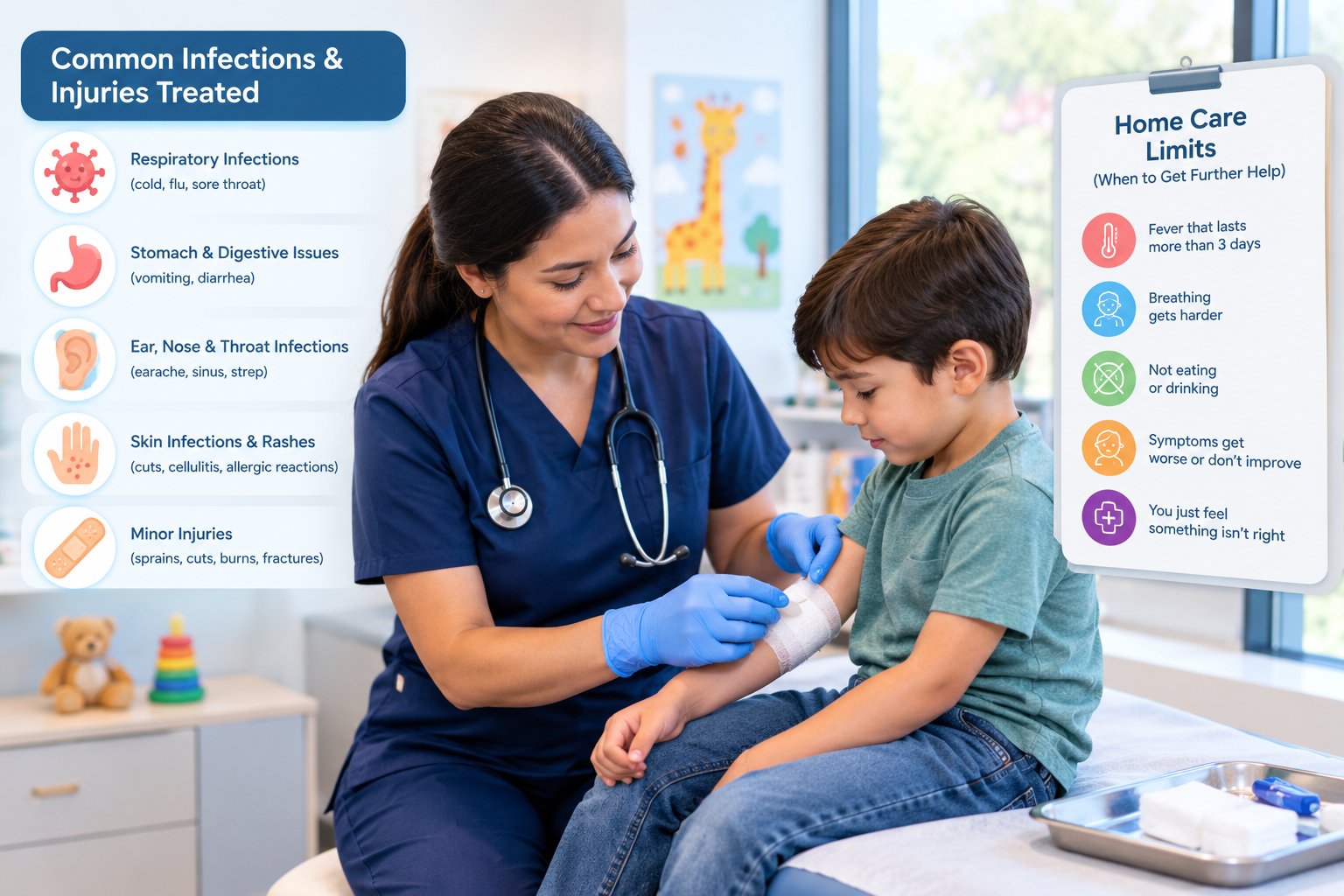
Table of contents
- 1. The Three Condition Groups
- 2. Common Infections
- 3. Common Injuries
- 4. How Long to Wait Before You Call
- 5. Five Home-Care Limits
- 6. Why Not Every Infection Needs Antibiotics
- 7. Tests You May Be Offered
- 8. A Sample Treatment Timeline
- 9. Staying Well: Prevention and Follow-Up
- Conclusion
- Frequently Asked Questions
- See a Doctor in Elmhurst or Chinatown
Sore throats, urinary infections, twisted ankles and small cuts rarely wait for a convenient moment. Most are not emergencies, yet most also should not be left alone for days. Acute care exists for this stretch: a clinician sees you promptly, checks what is going on and starts treatment.
This guide covers the infections and injuries an acute care visit in Elmhurst commonly handles, how long you can usually wait before calling, which signs mean you should not wait and what a typical treatment path looks like. It draws on patient guidance from the CDC and the CDC group A strep page. Services and tests offered on site can differ, so ask City Prime Care what is available. This is general education, not personal medical advice. You can also find the clinic on Google.
In this article:
- 1. The three condition groups
- 2. Common infections (table)
- 3. Common injuries (table)
- 4. How long to wait before you call (graph)
- 5. Five home-care limits
- 6. Why not every infection needs antibiotics
- 7. Tests you may be offered
- 8. A sample treatment timeline
- 9. Staying well: prevention and follow-up
1. The Three Condition Groups
Acute care visits tend to fall into three groups: infections (bacterial or viral), injuries (sprains, fractures, cuts and burns) and sudden symptoms (rash, dehydration, flare-ups of a chronic condition). Each group has different warning signs and a different treatment path, which the tables below lay out.
If you want a broader picture of same-day choices, read our guide on where to go when illness strikes suddenly, and see the services of the Elmhurst primary care clinic.
2. Common Infections
| Condition | Typical signs | Often tested with | Usual treatment |
|---|---|---|---|
| Strep throat | Sore throat, fever, swollen glands, no cough | Rapid strep test | Antibiotics if positive |
| Flu | Sudden fever, aches, cough, tiredness | Rapid flu test | Rest, fluids; antiviral medicine if early and high risk |
| Urinary tract infection | Burning, urgency, frequent urination | Urine test | Antibiotics if confirmed |
| Ear infection | Ear pain, fever, muffled hearing | Ear exam | Pain relief; antibiotics in some cases |
| Sinus infection | Facial pressure, congestion, thick discharge | Exam | Often viral; antibiotics only if bacterial |
| Bronchitis or chest infection | Cough, chest tightness, mucus | Exam; chest X-ray if pneumonia is suspected | Supportive care; antibiotics if bacterial |
| Pinkeye | Red, itchy or sticky eye | Exam | Drops if bacterial; supportive care if viral |
| Skin infection | Red, warm, swollen, painful skin | Exam | Antibiotics and wound care |
For flu prevention, see our adult vaccines guide. For ongoing asthma, see keeping asthma under control through every season in Queens.
3. Common Injuries
| Injury | Typical signs | Often tested with | Usual treatment |
|---|---|---|---|
| Sprain or strain | Swelling, bruising, pain with movement | Exam; X-ray to rule out a fracture | Rest, ice, compression, elevation; brace |
| Minor fracture | Pain over a bone, swelling, cannot use the limb | X-ray | Splint and referral to a bone specialist |
| Cut or laceration | Open wound, bleeding | Exam; tetanus history check | Cleaning, stitches or glue; tetanus shot if due |
| Minor burn | Redness, blisters, pain | Exam | Cooling, dressings, pain control |
| Insect bite or sting | Swelling, itching, redness | Exam | Antihistamines, cold compress; watch for allergy signs |
| Back strain | Pain after lifting, no numbness or weakness | Exam | Activity advice, pain control; referral if not improving |
Learn more about imaging in our guide on when an injury or cough calls for an X-ray, and ask about specialist care through referral services.
4. How Long to Wait Before You Call
Many minor illnesses improve on their own, so a short wait is often reasonable. The graph shows common rule-of-thumb thresholds for when to call or be seen. They are guides, not rules, and each block is about two days. Call sooner if you are over 65, pregnant, have a chronic condition or your symptoms are severe.
| Symptom | Call or be seen after (graph) | Why |
|---|---|---|
| Fever above normal (adults) | ██ about 3 days | Persistent fever suggests infection that may need treatment |
| Sore throat | ████ about 7 days, or sooner with fever and swollen glands | Strep needs a test and treatment |
| Sinus symptoms | █████ about 10 days, or sooner if worsening | Viral sinus infections usually improve within this time |
| Cough | ███████████ about 3 weeks | A cough lasting this long needs evaluation |
| Urinary burning | █ within 1 day | Early treatment prevents spreading to the kidneys |
| Sprain, no improvement | ███ about 5 to 7 days | May hide a fracture |
5. Five Home-Care Limits
Home care works for mild problems when you stay within these limits:
- Symptoms are mild and slowly improving.
- You can drink fluids, eat a little and sleep.
- Fever is low and not getting higher day by day.
- Pain is controlled with over-the-counter medicine as labeled.
- You have none of the warning signs: trouble breathing, chest pain, confusion, stiff neck, severe pain, blood in vomit or stool, or swelling of the face or throat.
If any limit is crossed, call the clinic or seek emergency care. Chest pain, trouble breathing and stroke signs always need 911; see the stroke symptoms guide.
6. Why Not Every Infection Needs Antibiotics
Antibiotics treat bacterial infections only. Colds, most sore throats, most sinus infections and flu are viral, so antibiotics will not help and can cause side effects such as diarrhea or rashes. Taking antibiotics when they are not needed also encourages resistant bacteria. A clinician uses your symptoms, an exam and sometimes a rapid test to decide.
When antibiotics are prescribed, take them exactly as directed. For national guidance, see the CDC antibiotic use page.
7. Tests You May Be Offered
| Test | What it checks | Result time (varies) |
|---|---|---|
| Rapid strep test | Group A strep in the throat | Minutes |
| Rapid flu or COVID-19 test | Flu or COVID-19 virus | Minutes |
| Urine test | Infection signs in the urine | Minutes to a day |
| X-ray | Bones and some lung problems | Often same visit |
| Blood tests | Infection markers, dehydration, other causes | Hours to days |
| Wound check | Depth, debris, need for stitches | At the visit |
Ask the clinic which of these tests are done on site and which are sent out or arranged through referral services.
8. A Sample Treatment Timeline
| Stage | What happens | Notes |
|---|---|---|
| Day 0 | Visit, exam, quick tests and treatment plan | Start medicine the same day if prescribed |
| Days 1 to 2 | Symptoms may start to ease; rest and fluids | Call if worse |
| Days 3 to 5 | Most mild infections improve; sprains still sore | Call if no improvement |
| Day 7 | Check progress; finish the medicine course | Return if symptoms linger or return |
| Weeks 2 to 4 | Primary care follow-up if needed | Book through the appointment page |
For dehydration from a stomach bug or fever, see when IV hydration makes sense for dehydration, flu or recovery.
9. Staying Well: Prevention and Follow-Up
A few habits lower the chance of repeat visits:
- Get your yearly flu shot and stay current on other vaccines; see our flu season guide and adult vaccines guide.
- Wash your hands often and stay home when you have a fever.
- Keep your chronic conditions controlled; see chronic disease management in Elmhurst.
- Keep your tetanus booster current, about every ten years.
- Book a primary care follow-up after any acute visit.
Conclusion
Most infections and minor injuries can be treated quickly, and early care often shortens recovery. Know the common conditions, use the home-care thresholds as a guide and do not wait when a warning sign appears.
Contact Us: To ask whether your infection or injury can be seen the same day, reach City Prime Care through our Contact Us page, or find us on Google. This article is for general information and does not replace personal medical advice. In an emergency, call 911.
Frequently Asked Questions
See a Doctor in Elmhurst or Chinatown
Have a question about your own health? Book a visit at our Elmhurst, Queens clinic or our Chinatown, Manhattan clinic, or explore our primary care services.
Related articles
Healthcare
Is It Normal Wear and Tear or Arthritis? Reading the Joint Pain Patterns, the Five Self-Care Steps and the Sample Joint-Protection Plan
Joint pain has many causes, from overuse to osteoarthritis, rheumatoid arthritis and gout. Learn how the patterns differ, what helps at home, when to see a doctor, when a hot swollen joint is urgent, and a sample joint-protection plan.
Healthcare
When Does Your Primary Care Doctor Send You to a Specialist? Reading the Referral Triggers, the Insurance Steps and the Sample Referral Timeline
A referral connects your primary care team to a specialist. Learn when referrals happen, how insurance approval works, what to prepare, how records and results flow back, and a sample referral timeline.
Healthcare
Where Should You Go When Illness Strikes Suddenly? Reading the Care-Level Ladder, the Five Emergency Signs and the Sample Same-Day Visit Flow
Not sure whether to go to acute care, your own doctor or the ER? See the care-level ladder, the five emergency signs, a symptom-by-symptom guide and what a same-day visit looks like.





