
HealthcareBy City Prime Care Team
How Do Ear Infections Show Up in Children and Adults? Reading the Symptom Patterns, the Five Care Steps and the Sample Recovery Timeline
Ear infections cause pain, fever and muffled hearing in children and adults alike. Compare middle-ear infection and swimmer's ear, follow five care steps, see a sample recovery timeline, and learn when to be seen quickly.
Medically reviewed by City Prime Care Administrator9 min read
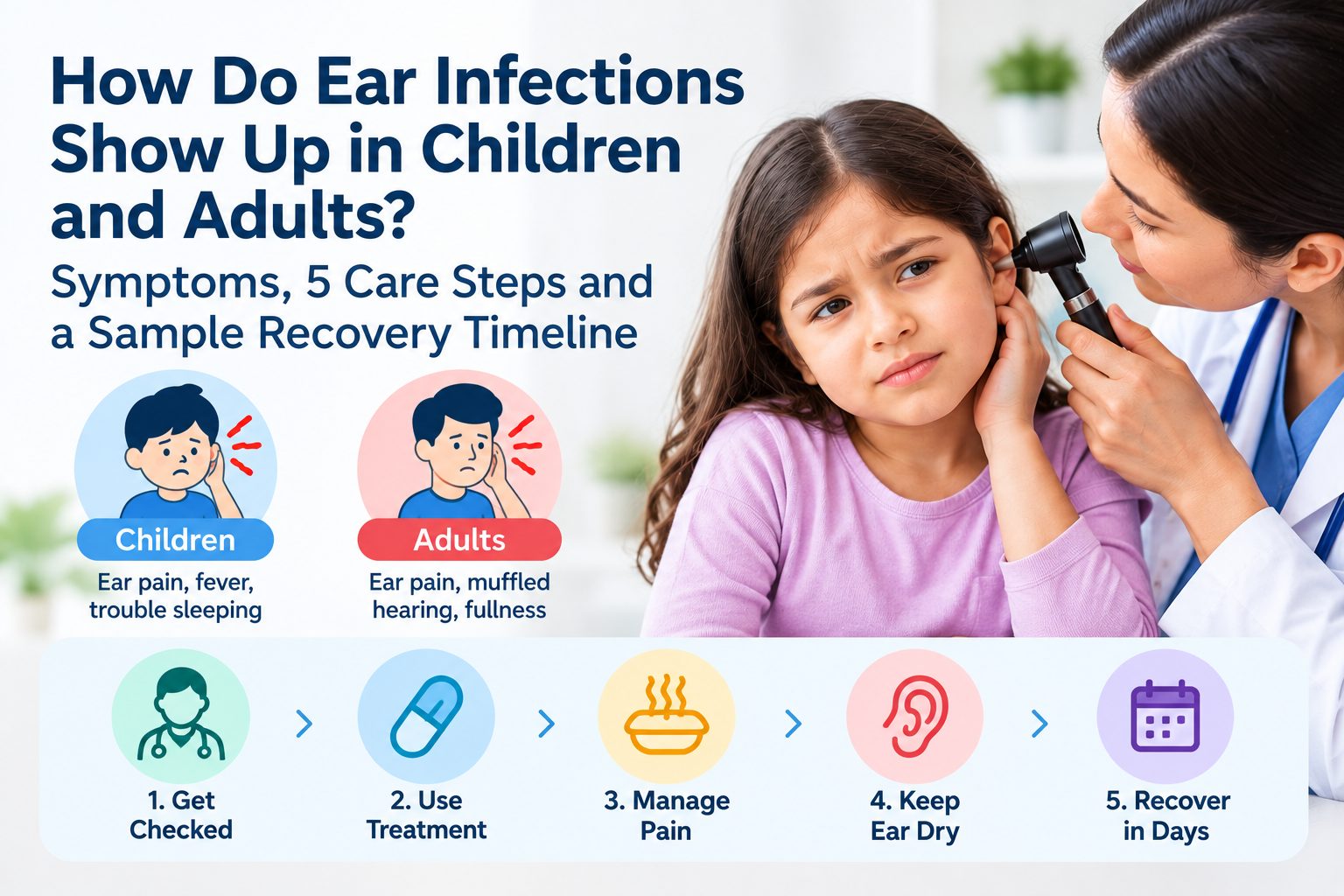
Table of contents
- 1. What an Ear Infection Is
- 2. Middle-Ear Infection vs Swimmer's Ear
- 3. Reading the Symptom Patterns by Age
- 4. The Five Care Steps
- 5. Sample Recovery Timeline
- 6. Do You Need Antibiotics?
- 7. Red Flags: When to Be Seen Quickly
- 8. Prevention
- Conclusion
- Frequently Asked Questions
- See a Doctor in Elmhurst or Chinatown
A sudden earache at night, a toddler tugging at an ear, or a muffled feeling after a cold: ear infections are one of the most common reasons families and adults seek care. They are most familiar in young children, but adults get them too, often after a cold, allergies, or swimming.
Many ear infections improve within a few days, yet some need treatment and a few signal complications. This guide reads the symptom patterns, compares the two main types, walks through five practical care steps, shows a sample recovery timeline, and lists the red flags. If you are deciding where to go, our article on walk-in clinic vs urgent care can help.
In this article:
- 1. What an ear infection is
- 2. Middle-ear infection vs swimmer's ear (table)
- 3. Reading the symptom patterns by age
- 4. The five care steps
- 5. Sample recovery timeline (graph)
- 6. Do you need antibiotics?
- 7. Red flags: when to be seen quickly
- 8. Prevention
1. What an Ear Infection Is
The ear has three parts: the outer ear and canal, the middle ear behind the eardrum, and the inner ear. Most infections happen in the middle ear (otitis media) or the outer ear canal (otitis externa, often called swimmer's ear). A cold or allergy can block the small Eustachian tube that drains the middle ear, letting fluid build up and become infected.
Children are affected more often because their Eustachian tubes are shorter and more horizontal. For patient-friendly background, see the MedlinePlus ear infections page and the NIDCD overview of ear infections in children.
2. Middle-Ear Infection vs Swimmer's Ear
| Feature | Middle-ear infection | Swimmer's ear (outer ear) |
|---|---|---|
| 1. Where | Behind the eardrum | Ear canal |
| 2. Common trigger | Cold, allergies, sinus congestion | Water in the ear, cotton swabs, scratching |
| 3. Typical pain | Deep, aching, worse lying down | Sharp pain when the outer ear is touched or pulled |
| 4. Other symptoms | Fever, muffled hearing, irritability, fluid drainage if the eardrum ruptures | Itching, redness, swelling, discharge, feeling of fullness |
| 5. Fever | Often present | Less common |
| 6. Usual treatment | Pain relief, watchful waiting or antibiotics depending on case | Ear drops chosen by a clinician; keep canal dry |
A cold often comes first. Our guide on flu vs cold vs COVID-19 explains the respiratory illnesses that commonly lead to ear problems.
3. Reading the Symptom Patterns by Age
| Age group | What you may notice | Clue |
|---|---|---|
| Infants | Fussiness, poor feeding, trouble sleeping, fever | May pull at the ear, but not always |
| Toddlers | Tugging ears, crying, irritability, balance changes | Often follows a cold |
| School-age children | Ear pain, complaining of muffled sound | Can describe the pain |
| Adults | Ear pain, pressure, reduced hearing, sometimes dizziness | Often follows sinus or throat illness |
Allergies can also cause ear fullness. Our article on seasonal allergies explains how to spot the pattern.
4. The Five Care Steps
For a mild ear infection without red-flag symptoms:
- Treat the pain first. Ask a pharmacist or clinician about the right over-the-counter pain relief and age-appropriate dosing, especially for children.
- Use a warm compress over the ear for comfort, never anything hot, and never put objects in the ear.
- Keep the head slightly elevated when resting, which some people find more comfortable than lying flat.
- Keep the ear dry if you suspect swimmer's ear, and avoid swimming until your clinician advises.
- Follow up. Contact a clinician if symptoms are not improving in about 48 to 72 hours, if they worsen, or if a young child or infant is affected.
5. Sample Recovery Timeline
The graph below is an illustrative guide to a typical uncomplicated middle-ear infection. It is not patient data, and recovery varies.
| Day | Ear pain level (graph) | What to focus on |
|---|---|---|
| Day 1 | ██████████ High | Pain relief, fluids, rest |
| Day 2 | ████████░░ High-moderate | Monitor fever and hydration |
| Day 3 | ██████░░░░ Moderate | Recheck: if no better, call a clinician |
| Day 5 | ████░░░░░░ Mild | Return to normal activity as comfortable |
| Day 7 | ██░░░░░░░░ Minimal | Fluid behind the eardrum may linger for weeks |
Hearing can feel muffled for several weeks after pain fades because fluid may remain behind the eardrum. Persistent hearing changes deserve a recheck.
6. Do You Need Antibiotics?
Not always. Many ear infections, particularly mild ones in older children and adults, clear on their own. A clinician considers age, severity, fever, and how long symptoms have lasted. Viruses cause some ear problems, and antibiotics do not help viral infections.
| Situation | Typical approach (clinician decides) |
|---|---|
| Mild symptoms, older child or adult, no high fever | Pain relief and watchful waiting for a short period |
| Infant, high fever, or severe pain | Prompt evaluation; antibiotics are more likely |
| No improvement after 2-3 days | Re-evaluation; antibiotics may be started |
| Swimmer's ear | Antibiotic or anti-inflammatory ear drops, not oral medicine in most cases |
| Frequent repeated infections | Evaluate for causes; possible specialist referral |
If antibiotics are prescribed, finishing the course as directed matters. Learn more about primary care and acute care at City Prime Care.
7. Red Flags: When to Be Seen Quickly
| Warning sign | Why it matters | Suggested action |
|---|---|---|
| Infant under 6 months with fever or ear symptoms | Higher risk | Be seen promptly |
| Fever of 102.2°F (39°C) or higher | May signal a more significant infection | Call a clinician |
| Swelling, redness, or pain behind the ear | Possible spread of infection | Be seen the same day |
| Stiff neck, severe headache, confusion | Possible serious complication | Go to the ER |
| Facial weakness or drooping | Nerve involvement | Go to the ER |
| Sudden hearing loss or severe dizziness | Needs urgent evaluation | Be seen right away |
| Bloody or pus-like drainage | Possible ruptured eardrum | Be seen soon |
If you are unsure how urgent your situation is, read our guide on when to visit urgent care instead of waiting for your doctor.
8. Prevention
These habits reduce the risk of ear infections:
- Wash hands often to limit colds
- Keep vaccines up to date; see our adult vaccines guide and ask your child's clinician about the childhood schedule
- Avoid tobacco smoke exposure, especially around children
- Breastfeed infants when possible and avoid bottle feeding while lying flat
- Dry ears gently after swimming or showering and avoid cotton swabs
- Manage allergies so congestion does not block the Eustachian tube
Conclusion
Most ear infections are short and manageable, but infants, high fevers, and warning signs deserve prompt attention. Reading the pattern of symptoms helps you choose the right next step.
Contact Us: If you or your child has ear pain that is not improving, or you want guidance on next steps, reach City Prime Care through our Contact Us page. This article is for general education and does not replace personal medical advice. In an emergency, call 911.
Frequently Asked Questions
See a Doctor in Elmhurst or Chinatown
Have a question about your own health? Book a visit at our Elmhurst, Queens clinic or our Chinatown, Manhattan clinic, or explore our primary care services.
Related articles
Healthcare
Why Do You Feel Tired All the Time? Reading the Anemia Signs, the Five Testing Steps and the Sample Iron-Level Recovery
Constant tiredness, pale skin and shortness of breath can point to anemia. Learn the common causes, the blood tests used, a sample iron recovery pattern, five testing steps and when symptoms need urgent attention.
Healthcare
How Do Kidney Stones Cause Sudden Severe Pain? Reading the Warning Signs, the Five Prevention Steps and the Sample Stone-Size Outlook
Kidney stones can cause sudden, intense flank pain and blood in the urine. Learn the warning signs, how size affects passing a stone, five prevention steps, and when pain with fever or vomiting needs urgent care.
Healthcare
Chest Discomfort Decoded: Heartburn, Muscle Strain, Anxiety or Something Serious?
Chest pain can come from the heart, the stomach, the muscles or even stress. Learn the usual patterns, the warning signs of a heart attack, and why unexplained chest pain should never be ignored.





