
HealthcareBy City Prime Care Team
Which Common Medical Tests Might You Need, and What Do They Show? Reading the Everyday Tests, the Five Preparation Questions and the Sample Test Planner
Blood, urine, heart and imaging tests each answer a different question. Learn what common tests show, how to prepare, what questions to ask your clinician, and a sample test planner you can bring to your visit.
Medically reviewed by City Prime Care Administrator9 min read
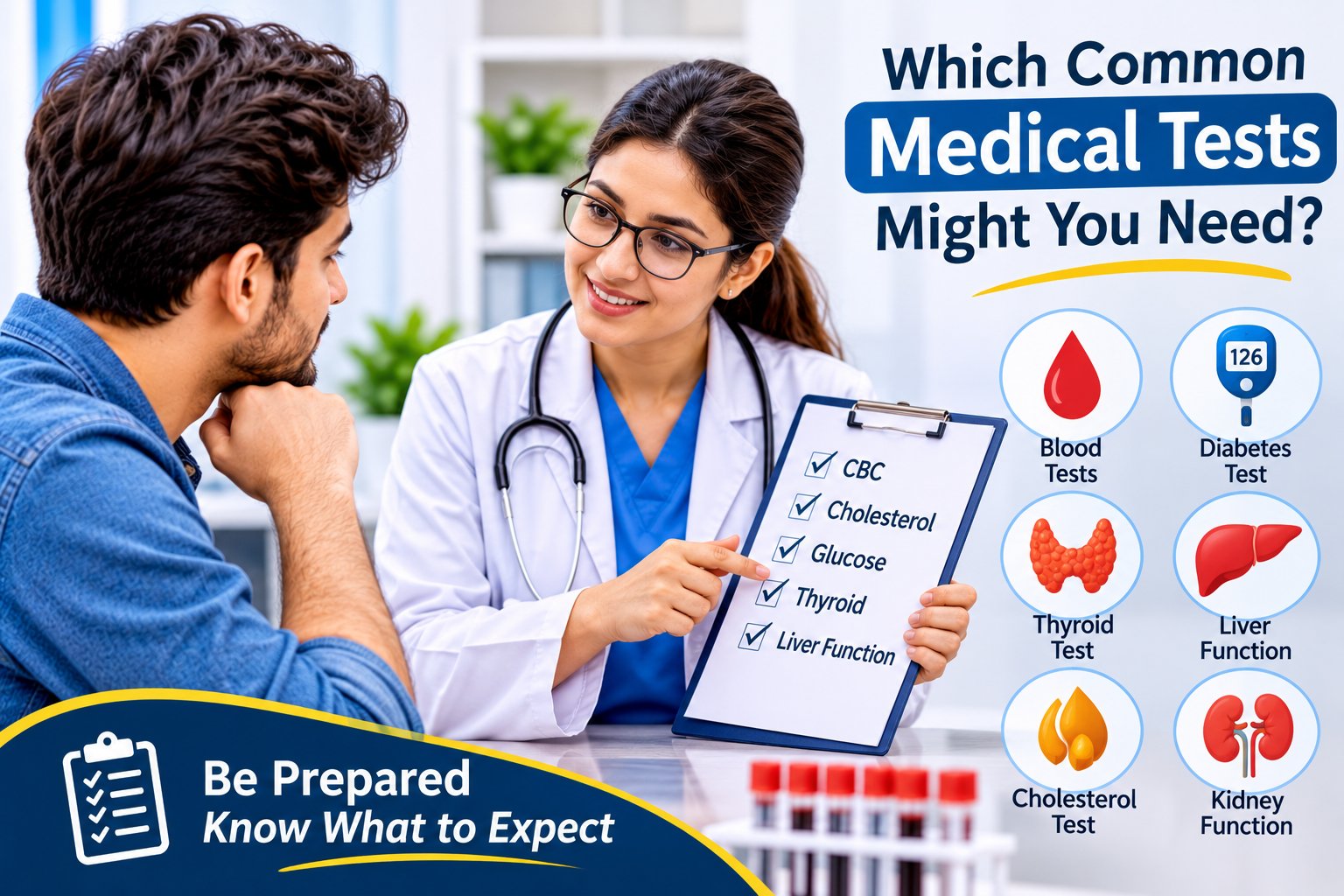
Table of contents
- 1. How Tests Answer Questions
- 2. Common Blood Tests and What They Show
- 3. Other Everyday Tests
- 4. How Often Tests Are Repeated
- 5. Five Preparation Questions
- 6. Reading a Result: Normal, Borderline, Abnormal
- 7. A Sample Test Planner
- 8. When a Result Is Urgent
- Conclusion
- Frequently Asked Questions
- See a Doctor in Elmhurst or Chinatown
Medical tests can feel like a foreign language: CBC, CMP, A1c, TSH, EKG, ultrasound. Each one answers a specific question, and knowing the question helps you understand why a test was ordered, how to prepare, and what the result may mean. Not every test is needed by everyone. The best testing is targeted to your age, risks, and symptoms.
This guide walks through the most common diagnostic tests and what they show, with preparation tips, five questions to ask your clinician, and a sample test planner. It draws on the descriptions of testing on the City Prime Care website, which says it follows national guidelines such as those from the U.S. Preventive Services Task Force and matches tests to age, sex, family history, and personal risk instead of ordering everything available. I could not open the clinic's dedicated diagnostic testing page, so please confirm details with the clinic. This is general education, not personal medical advice. You can find the clinic on Google: City Prime Care on Google. See the clinic's diagnostic testing page.
In this article:
- 1. How tests answer questions
- 2. Common blood tests and what they show (table)
- 3. Other everyday tests (table)
- 4. How often tests are repeated (graph)
- 5. Five preparation questions
- 6. Reading a result: normal, borderline, abnormal
- 7. A sample test planner
- 8. When a result is urgent
1. How Tests Answer Questions
A test is a tool, not a verdict. Screening tests look for hidden problems when you feel fine. Diagnostic tests look for the cause of symptoms. Monitoring tests track a known condition. The clinic says the result of any test is read with your history and exam, not in isolation, and that your provider explains what is normal, what is borderline, and what needs action.
For background on what lab tests measure and how to read them, see the MedlinePlus laboratory tests page and the independent Testing.com guide to lab tests. Our own guide on understanding your diagnostic testing results goes deeper on reports.
2. Common Blood Tests and What They Show
| Test | What it measures | Question it answers |
|---|---|---|
| 1. Complete blood count (CBC) | Red cells, white cells, and platelets | Is there anemia, infection, or a clotting problem? |
| 2. Comprehensive metabolic panel | Kidney function, liver enzymes, electrolytes such as sodium and potassium, and glucose | How are my major organs working, and is a medicine affecting them? |
| 3. Lipid panel | Total cholesterol, LDL, HDL, and triglycerides | What is my cholesterol, and how does it fit my heart risk? |
| 4. Hemoglobin A1c | Average blood sugar over roughly three months | Do I have prediabetes or diabetes, and is it controlled? |
| 5. TSH | Thyroid-stimulating hormone | Is my thyroid underactive or overactive? |
| 6. Vitamin D, B12, folate | Levels of specific vitamins | Is a shortfall causing symptoms? Routine testing for everyone is not recommended |
| 7. Ferritin and iron studies | Iron stores | Is iron low? |
| 8. PSA | A protein made by the prostate | Part of a shared decision about prostate screening in men |
See the guides we have written on cholesterol, diabetes checkups, and tiredness and anemia.
3. Other Everyday Tests
| Test | What it shows | Notes |
|---|---|---|
| Urinalysis and urine culture | Infection, blood, protein, sugar, and kidney problems | A clean sample is collected at the visit |
| EKG | Heart rhythm and strain | The clinic says it takes a few minutes and uses no needles |
| Blood pressure and vital signs | Pulse, blood pressure, temperature, oxygen | See our blood pressure guide |
| Pap and HPV tests | Cervical changes | Done in the clinic; see women's screenings |
| Stool-based colorectal tests | Hidden blood or abnormal DNA | Can be handled in the clinic |
| Mammogram, CT, ultrasound, X-ray | Images of the breast, chest, abdomen, bones, or blood vessels | The clinic says imaging is arranged by referral to an outside center |
| Infection tests | Strep, flu, urinary and other infections, and STIs | Chosen based on symptoms |
4. How Often Tests Are Repeated
The graph below is an illustrative guide to how often tests are commonly repeated for adults without special risks. Your clinician sets your schedule, and the clinic says it spaces testing to your age and risk, for example A1c about twice a year when diabetes is well controlled.
| Test | Typical repeat interval (graph) | Note |
|---|---|---|
| Blood pressure | █░░░░░░░░░ Every visit | Home readings can help |
| A1c with diabetes | ███░░░░░░░ 3 to 6 months | Every three months if treatment changes |
| Cholesterol | █████░░░░░ Every few years | More often after a change |
| General blood work | ██████░░░░ Yearly or as advised | At a checkup |
| Pap or HPV | ███████░░░ Every 3 to 5 years | By age and test type |
| Colorectal screening | ████████░░ Per test chosen | Starting at 45 |
5. Five Preparation Questions
Before any test, ask your clinician:
- Why is this test being done, and what will we do with the result?
- Do I need to fast, and for how long? The clinic says fasting glucose or lipid panels usually mean skipping food and drinks other than water for 8 to 12 hours.
- Should I take or hold any medicine or supplement, such as biotin, which can affect results?
- How and when will I get the result, and who will explain it?
- What happens if the result is abnormal: do I repeat it, see a specialist, or start treatment?
6. Reading a Result: Normal, Borderline, Abnormal
| Result type | What it generally means | What to do |
|---|---|---|
| Within the reference range | Typical for most healthy people | Keep your routine; recheck as advised |
| Borderline | Near the edge of the range; may be nothing or an early sign | Your provider may repeat the test or suggest lifestyle changes |
| Outside the range | May need action; context matters | Discuss with your provider; do not self-diagnose |
| Critical | Very high or very low and potentially dangerous | You will be contacted promptly; follow instructions |
Reference ranges differ between laboratories, age, sex, and pregnancy, so always use the range on your own report. A single odd result is often repeated.
7. A Sample Test Planner
Copy and fill in this planner with your clinician. It is a blank template, not a recommendation.
| Test | Why I need it | Fasting? | Last done | Next due |
|---|---|---|---|---|
| Blood pressure | No | |||
| Lipid panel | Ask | |||
| A1c or glucose | Ask | |||
| Blood count and metabolic panel | Ask | |||
| Thyroid (TSH) | No | |||
| Cancer screening by age | No | |||
| Vaccines due | No |
Our annual physical guide and screenings guide for Elmhurst adults have age-by-age tables.
8. When a Result Is Urgent
| Situation | Action |
|---|---|
| Chest pain, trouble breathing, or signs of a stroke | Call 911 |
| A critical result you are called about | Follow your clinician's instructions right away |
| Black or bloody stools, or vomiting blood | Go to the ER |
| Very high blood sugar with confusion or vomiting | Seek emergency care |
| A result you do not understand | Call the clinic and ask |
To book testing, use the appointment page. The clinic says it accepts most major plans, including Medicaid and Medicare; see our insurance coverage guide.
Conclusion
Tests are most useful when you know why they are ordered, how to prepare, and what the next step is for each possible result. Bring a planner, ask the five questions, and keep a record of your numbers.
Contact Us: To ask about testing, fasting, or results, reach City Prime Care through our Contact Us page, or find the clinic on Google: City Prime Care on Google. This article is for general information and does not replace personal medical advice. In an emergency, call 911.
Frequently Asked Questions
See a Doctor in Elmhurst or Chinatown
Have a question about your own health? Book a visit at our Elmhurst, Queens clinic or our Chinatown, Manhattan clinic, or explore our primary care services.
Related articles
Healthcare
Why Is Vitamin D Low So Often in New York? Reading the Risk Groups, the Testing Steps and the Sample Retest Timeline
Weak winter sun and indoor lives leave many New Yorkers low in vitamin D. Learn who is at risk, the signs, how testing works, how treatment and retesting are usually done, and the risks of taking too much.
Healthcare
What Labs and Screenings Can You Get at a Diagnostic Testing Clinic in Elmhurst? Reading the Test Groups, the Referral Path and the Sample Results Timeline
A diagnostic testing visit can include blood work, urine tests, an EKG and confidential infection testing. See what is done in the clinic, what goes to referral, how results reach you and a sample results timeline.
Healthcare
How Do You Read Your Blood Test Results Without Panic? Reading the Result Columns, the Five Key Panels and the Sample Annotated Report
A lab report is full of numbers, ranges and flags. Learn how to read the columns, what the key panels mean, example reference ranges, when a flagged result matters and a sample annotated report.





