
HealthcareBy City Prime Care Team
What Labs and Screenings Can You Get at a Diagnostic Testing Clinic in Elmhurst? Reading the Test Groups, the Referral Path and the Sample Results Timeline
A diagnostic testing visit can include blood work, urine tests, an EKG and confidential infection testing. See what is done in the clinic, what goes to referral, how results reach you and a sample results timeline.
Medically reviewed by City Prime Care Administrator9 min read
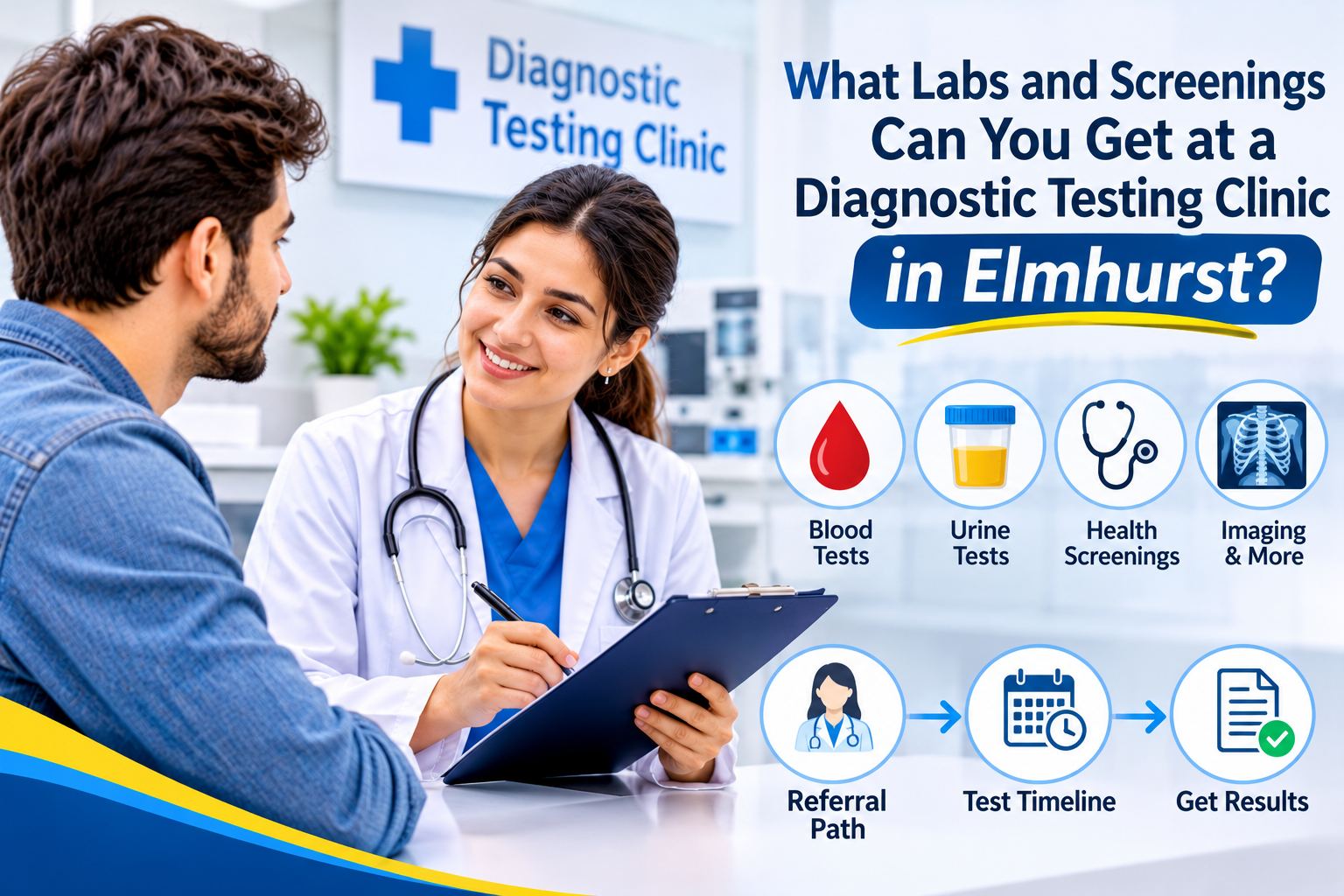
Table of contents
- 1. What Diagnostic Testing Is
- 2. The Test Groups
- 3. In the Clinic or by Referral?
- 4. How Results Reach You
- 5. Preparing for Your Tests
- 6. Confidential Infection Testing
- 7. A Sample Results Timeline
- 8. Insurance, Booking, and Red Flags
- Conclusion
- Frequently Asked Questions
- See a Doctor in Elmhurst or Chinatown
When your doctor says you need some tests, it helps to know what that means: a blood draw, a urine sample, a heart tracing, a swab, or a referral to an imaging center. A diagnostic testing service at a primary care clinic brings the common ones together so the same team that orders your tests also explains the results and decides what comes next.
This guide explains what diagnostic testing includes at the City Prime Care clinic in Elmhurst, using what the clinic says on its services pages. The clinic lists blood work, urine tests, EKG, and STD testing done in the clinic, with every result explained by your own doctor, and referrals for tests such as mammograms and CT scans. It covers the test groups, what is done in the clinic and what goes out, how results reach you, and a sample results timeline. I could not open the clinic's dedicated diagnostic testing page while preparing this article, so details come from other clinic pages and should be confirmed with the clinic. This is general education, not personal medical advice. You can find the clinic on Google: City Prime Care on Google. See the clinic's diagnostic testing page.
In this article:
- 1. What diagnostic testing is
- 2. The test groups (table)
- 3. In the clinic or by referral? (table)
- 4. How results reach you (graph)
- 5. Preparing for your tests
- 6. Confidential infection testing
- 7. A sample results timeline
- 8. Insurance, booking, and red flags
1. What Diagnostic Testing Is
Diagnostic tests look for the cause of symptoms, check how a condition is doing, or screen for problems before symptoms appear. The clinic says its testing is done in the clinic where possible, and that every result comes back to your own provider, who explains it in plain language. When you need a specialist or an imaging test, it arranges the referral and any insurance approval.
For plain-language background on what lab tests measure, see the MedlinePlus laboratory tests page. Our guide to common blood tests explains the most frequent ones.
2. The Test Groups
| Test group | What it shows | Why it may be ordered |
|---|---|---|
| 1. Complete blood count (CBC) | Red cells, white cells, platelets | Anemia, infection, clotting problems; see why you feel tired |
| 2. Comprehensive metabolic panel | Kidney function, liver enzymes, electrolytes, glucose | Organ health and medicine effects |
| 3. Lipid panel | Total cholesterol, LDL, HDL, triglycerides | Heart risk; see cholesterol guide |
| 4. Hemoglobin A1c | Average blood sugar over about three months | Prediabetes and diabetes; see diabetes checkups |
| 5. Thyroid (TSH) | Thyroid function | Fatigue, weight change, hair thinning, feeling cold |
| 6. Vitamin and iron studies | B12, folate, vitamin D, ferritin and iron | Suspected deficiency; see vitamin and mineral infusions |
| 7. Urine tests | Infection, kidney problems, sugar | Burning urination, kidney or diabetes checks |
| 8. EKG | Heart rhythm and strain | Chest symptoms, risk factors, or a baseline |
| 9. STD testing | Common infections | Screening or symptoms; see section 6 |
3. In the Clinic or by Referral?
| Done in the clinic | Arranged by referral |
|---|---|
| Blood draws processed by a licensed laboratory | Mammograms |
| Urine samples | Colonoscopies |
| EKG when age, symptoms, or risk call for it (no needles, a few minutes) | Low-dose lung CT and other CT scans |
| STD testing | Bone density scans and ultrasounds |
| Pap smears and stool kits | Specialist consultations |
The clinic says its referral services team sends the order, helps you find an in-network location, and follows up on results. See also our screenings guide for Elmhurst adults.
4. How Results Reach You
The clinic says blood and urine samples collected at your visit are processed by a licensed laboratory and that results usually return within a few days. The graph below is an illustrative guide to how long different tests generally take, not a promise about this clinic.
| Test | Typical wait (graph) | Note |
|---|---|---|
| EKG | █░░░░░░░░░ Minutes | Done and reviewed during the visit |
| Urine dipstick | █░░░░░░░░░ Minutes to hours | Some tests are quick in the office |
| Routine blood tests | ████░░░░░░ A few days | The clinic says usually within a few days |
| Specialized blood tests or cultures | ██████░░░░ Several days | Depends on the test |
| Imaging by referral | ███████░░░ Varies | Depends on scheduling and reports |
Your provider explains each number: what is normal, what is borderline, and what needs action. Our guide on understanding your diagnostic testing results helps you read a report.
5. Preparing for Your Tests
A few simple steps make testing smoother:
- Ask when you book whether fasting is needed; for fasting glucose or lipid panels the clinic says to skip food and drinks other than water for 8 to 12 hours, and a morning appointment makes this easier.
- Keep taking regular medicines unless told otherwise, and call first if you have diabetes or use insulin.
- Bring photo ID, insurance cards, a list of medicines and supplements, and past results.
- Tell staff about supplements such as biotin, which can affect some lab results.
- Wear short sleeves or layers, drink water, and arrive about ten minutes early.
6. Confidential Infection Testing
The clinic's women's and men's health pages describe STI testing as confidential and say it can be added to a routine visit, with treatment and counseling on prevention when needed. Your result stays in your medical record, which is protected under federal privacy law.
| Topic | What to know |
|---|---|
| Which tests | Depends on your history; common choices include chlamydia, gonorrhea, HIV, syphilis, and hepatitis B and C |
| How samples are taken | Often a urine sample or swab, and a blood draw for some infections |
| Timing | Some infections do not show up right after exposure; ask your provider when to test or retest |
| Results and treatment | Your provider explains results and treats or refers when needed |
| Resources | CDC sexually transmitted infections and the CDC GetTested locator |
7. A Sample Results Timeline
The timeline below is illustrative, not a promise about timing, and shows a typical path from a routine visit to a plan.
| Stage | Progress (graph) | What happens |
|---|---|---|
| Day 0: visit | ████░░░░░░ | History, exam, blood and urine collected, EKG if needed |
| Days 1-3: lab processing | ██████░░░░ | A licensed laboratory processes your samples |
| Results review | ████████░░ | Your provider reviews the numbers |
| Conversation | █████████░ | Results explained in plain language |
| Plan | ██████████ | Follow-up tests, treatment, referral, or yearly recheck |
8. Insurance, Booking, and Red Flags
The clinic says it accepts most major plans, including Medicaid and Medicare, and asks you to call to confirm yours. It notes that labs or care for a problem found during a visit may be billed as diagnostic, which can mean a copay or deductible; see our insurance coverage guide. If you are uninsured, ask about self-pay and check eligibility on NY State of Health.
| Warning sign | Action |
|---|---|
| Chest pain, trouble breathing, or signs of a stroke | Call 911; see our guide on chest discomfort |
| Fever with severe pain, confusion, or fainting | Seek urgent care |
| A result that worries you before your provider calls | Call the clinic |
| Symptoms after possible exposure to an infection | Book a prompt visit |
Book through the appointment page and choose Diagnostic Testing, or see the Elmhurst clinic page.
Conclusion
Good testing is targeted: the right tests for your age, risks, and symptoms, explained clearly by someone who knows you. Prepare a little, ask about fasting, and make sure you know who will call you with results.
Contact Us: To ask about labs, an EKG, STD testing, or booking a testing visit, reach City Prime Care through our Contact Us page, or find the clinic on Google: City Prime Care on Google. This article is for general information and does not replace personal medical advice. In an emergency, call 911.
Frequently Asked Questions
See a Doctor in Elmhurst or Chinatown
Have a question about your own health? Book a visit at our Elmhurst, Queens clinic or our Chinatown, Manhattan clinic, or explore our primary care services.
Related articles
Healthcare
Why Is Vitamin D Low So Often in New York? Reading the Risk Groups, the Testing Steps and the Sample Retest Timeline
Weak winter sun and indoor lives leave many New Yorkers low in vitamin D. Learn who is at risk, the signs, how testing works, how treatment and retesting are usually done, and the risks of taking too much.
Healthcare
Which Common Medical Tests Might You Need, and What Do They Show? Reading the Everyday Tests, the Five Preparation Questions and the Sample Test Planner
Blood, urine, heart and imaging tests each answer a different question. Learn what common tests show, how to prepare, what questions to ask your clinician, and a sample test planner you can bring to your visit.
Healthcare
How Do You Read Your Blood Test Results Without Panic? Reading the Result Columns, the Five Key Panels and the Sample Annotated Report
A lab report is full of numbers, ranges and flags. Learn how to read the columns, what the key panels mean, example reference ranges, when a flagged result matters and a sample annotated report.





