
HealthcareBy City Prime Care Team
Which Screenings Should Elmhurst Adults Not Skip? Reading the Screening Priorities, the Three Age Bands and the Sample Referral Path
Some screenings catch serious problems early, yet many adults skip them. See the screenings that matter in each age band, how in-clinic and referral screenings differ, and a sample referral path from order to results.
Medically reviewed by City Prime Care Administrator9 min read
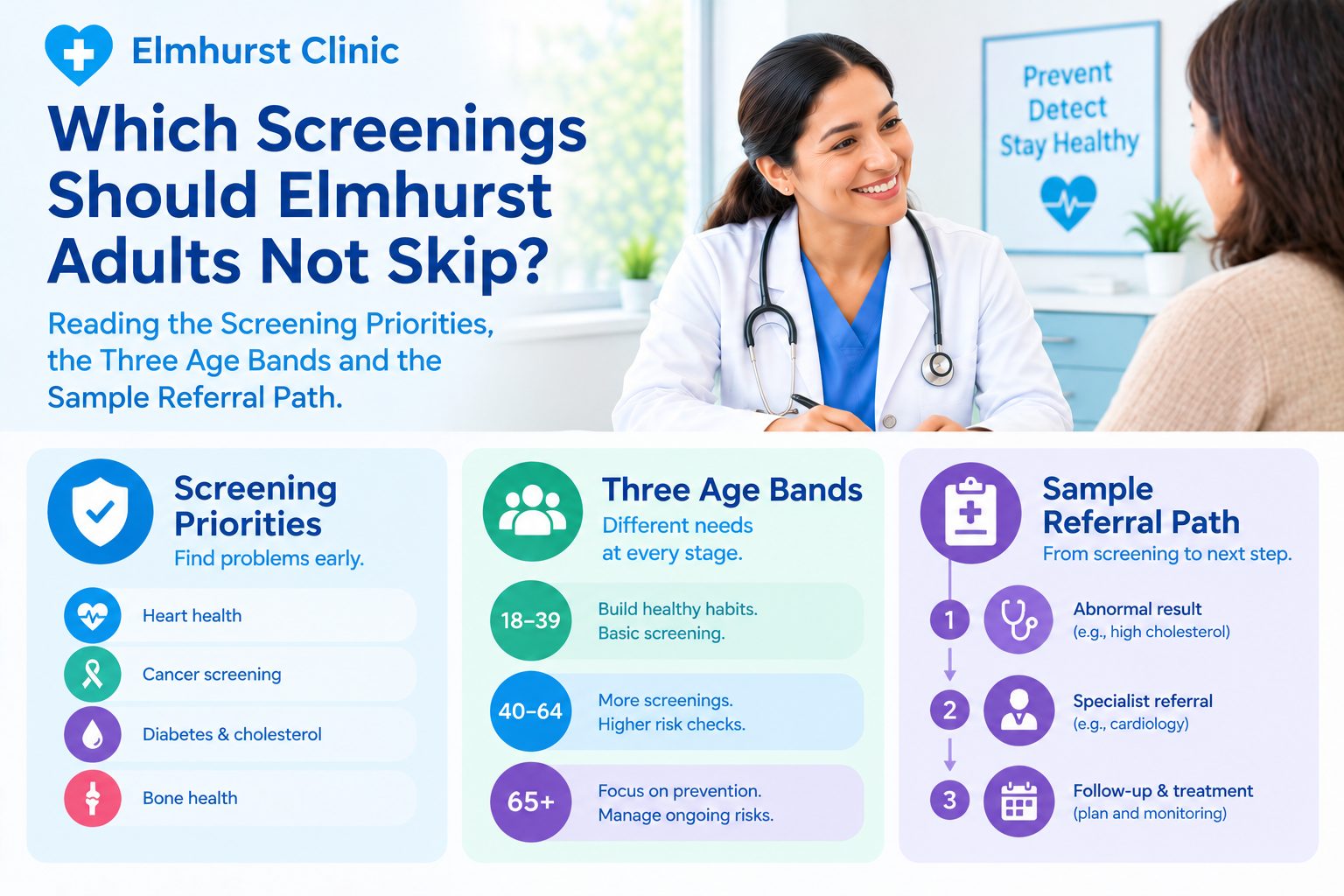
Table of contents
- 1. Why Screenings Get Skipped, and Why They Matter
- 2. Screening Priorities at a Glance
- 3. Adults 18 to 39
- 4. Adults 40 to 64
- 5. Adults 65 and Older
- 6. In the Clinic or by Referral?
- 7. A Sample Referral Path in Five Steps
- 8. Barriers and How to Overcome Them
- Conclusion
- Frequently Asked Questions
- See a Doctor in Elmhurst or Chinatown
Screenings are tests for people who feel fine. That is exactly why they get skipped: nothing hurts, life is busy, and a test that finds nothing can feel like a wasted afternoon. But the point of screening is to catch conditions such as high blood pressure, prediabetes, and certain cancers early, when they are easiest to treat.
This guide uses the preventive care page on the City Prime Care website to explain which screenings matter at different ages, which can be done in the clinic and which are arranged by referral, and what a sample referral path looks like. Guidelines come from national groups such as the U.S. Preventive Services Task Force, and your provider adjusts them to your own risk. This is general education, not personal medical advice. For the full picture of the service, see the clinic's preventive care page.
In this article:
- 1. Why screenings get skipped, and why they matter
- 2. Screening priorities at a glance (table and graph)
- 3. Adults 18 to 39
- 4. Adults 40 to 64
- 5. Adults 65 and older
- 6. In the clinic or by referral? (table)
- 7. A sample referral path in five steps
- 8. Barriers and how to overcome them
1. Why Screenings Get Skipped, and Why They Matter
The clinic's page says preventive care helps adults of every age keep up with yearly physicals, age-appropriate screenings, and routine vaccines, so small problems are found while they are still easy to manage. Many screenings are simple blood tests or quick in-office checks. Others need a referral to an outside imaging center or specialist, which can feel like extra work, so they are the ones people most often delay.
The right screenings depend on your age, sex, family history, and habits. Someone with a parent who had colon cancer, for example, may need to start earlier than the general schedule. For background on screening in general, see the MedlinePlus health screening page and our annual physical checkup guide.
2. Screening Priorities at a Glance
The graph below shows the typical starting ages the clinic's page and national guidelines describe for average-risk adults. Each block is about five years of age. Your provider may start earlier if your risk is higher.
| Screening | Typical starting age (graph) | Where it is done |
|---|---|---|
| Blood pressure | ████ 18 | In the clinic, at visits |
| HIV and hepatitis C (one-time) | ████ 18 | In the clinic, blood test |
| Cervical cancer (Pap or HPV test) | ████ 21 | In the clinic |
| Diabetes and prediabetes | ███████ 35 | In the clinic, blood test |
| Breast cancer (mammogram) | ████████ 40 | Outside imaging center by referral |
| Colorectal cancer | █████████ 45 | Stool test in the clinic or colonoscopy by referral |
| Lung cancer (low-dose CT, eligible smokers) | ██████████ 50 | Outside imaging center by referral |
| Bone density (women) and aortic aneurysm ultrasound (men who ever smoked) | █████████████ 65 | Outside imaging by referral |
3. Adults 18 to 39
The clinic says the focus in your twenties and thirties is building a baseline.
| Screening | What the clinic's page says | Note |
|---|---|---|
| Blood pressure | Regular checks are recommended | High blood pressure rarely causes symptoms; see our blood pressure guide |
| HIV and hepatitis C | A one-time test is recommended | Ask about repeat testing if your risk changes |
| Depression and anxiety | Screening is recommended | Ask your provider about mood, sleep, and stress |
| Cervical cancer | Begin at 21, with a Pap test every three years or HPV-based testing later | See women's health |
| STI testing | Sexually active younger adults may need chlamydia, gonorrhea, or other tests | Available through diagnostic testing |
| Cholesterol and diabetes | Start sooner if you carry extra weight or have a strong family history | See our cholesterol guide |
4. Adults 40 to 64
The clinic says midlife is when cancer screening moves to the front.
| Screening | What the clinic's page says | Note |
|---|---|---|
| Colorectal cancer | Starts at 45, with a stool-based test or a colonoscopy by referral | Earlier if a close relative had colon cancer |
| Breast cancer | Mammograms every other year for women starting at 40 | Arranged by referral |
| Diabetes and prediabetes | Adults 35 and older who are overweight should be checked | See our diabetes checkup guide |
| Cholesterol and heart risk | Testing and heart risk scoring guide decisions about statins | See high cholesterol |
| Lung cancer | Current or former heavy smokers aged 50 and up may qualify for yearly low-dose lung CT | Arranged by referral |
| Vaccines | Shingles two-dose series and pneumococcal for adults 50 and older | See adult vaccines |
5. Adults 65 and Older
After 65, the clinic says screening shifts toward keeping you independent and safe.
Priorities listed on the clinic's page:
- Bone density scan for women, to check for osteoporosis
- A one-time abdominal aortic aneurysm ultrasound for men 65 to 75 who have ever smoked, arranged by referral
- Fall risk, hearing, vision, and memory checks
- Talking through which cancer screenings still make sense after 75, since some taper off
- The Medicare Annual Wellness Visit, a planning appointment with a health risk questionnaire and a written screening and vaccine schedule
- Ongoing care for older adults through geriatric care
6. In the Clinic or by Referral?
| Done in the clinic | Arranged by referral |
|---|---|
| Blood pressure, weight, BMI | Mammograms |
| Blood and urine tests, EKG | Colonoscopies |
| Pap smears and stool kits | Bone density scans |
| Vaccines such as flu, COVID-19, Tdap, shingles, and pneumococcal (call to confirm stock) | Low-dose lung CT |
| Depression and anxiety screening | Abdominal aortic aneurysm ultrasound |
The clinic says its referral services team sends the order, helps you find an in-network location, and follows up on the results with you.
7. A Sample Referral Path in Five Steps
The path below is an illustrative example based on how the clinic describes its referral service. It is a general pattern, not a promise about timing.
| Step | What happens | Progress (graph) |
|---|---|---|
| 1. Decide | At your visit, your provider reviews what is due, such as a mammogram or colonoscopy | ██░░░░░░░░ |
| 2. Order | The clinic sends the order and any insurance approval | ████░░░░░░ |
| 3. Find a location | The team helps you find an in-network imaging center or specialist | ██████░░░░ |
| 4. Get the test | You attend the appointment, with your records sent ahead | ████████░░ |
| 5. Follow up | The clinic follows up on the results and explains them to you | ██████████ |
Learn how to read results in our guide on understanding your diagnostic testing results.
8. Barriers and How to Overcome Them
| Common barrier | Practical answer |
|---|---|
| I feel fine | Screening is for people without symptoms; that is when it works best |
| I am worried about cost | Many plans cover recommended screenings in network; ask the front desk to check your benefits, and read our insurance coverage article |
| I do not know which tests I need | Book a visit and ask your provider for a written screening schedule |
| It is hard to get to an outside center | Ask the referral team to help find a convenient in-network location |
| I am nervous about the test | Ask what to expect and whether there are alternatives, such as a stool-based colorectal test |
| Language is a barrier | The Elmhurst team speaks English and Spanish, and interpreters are arranged for other languages |
To start, use the clinic's appointment page and choose Preventive Care.
Conclusion
The screenings you skip are the ones that cannot warn you. Learn which ones matter at your age, ask for a written schedule, and let the clinic help with referrals so nothing falls through the cracks.
Contact Us: To ask which screenings you are due for, or to book a preventive visit, reach City Prime Care through our Contact Us page. This article is for general information and does not replace personal medical advice. In an emergency, call 911.
Frequently Asked Questions
See a Doctor in Elmhurst or Chinatown
Have a question about your own health? Book a visit at our Elmhurst, Queens clinic or our Chinatown, Manhattan clinic, or explore our primary care services.
Related articles
Healthcare
Why Is Vitamin D Low So Often in New York? Reading the Risk Groups, the Testing Steps and the Sample Retest Timeline
Weak winter sun and indoor lives leave many New Yorkers low in vitamin D. Learn who is at risk, the signs, how testing works, how treatment and retesting are usually done, and the risks of taking too much.
Healthcare
What Labs and Screenings Can You Get at a Diagnostic Testing Clinic in Elmhurst? Reading the Test Groups, the Referral Path and the Sample Results Timeline
A diagnostic testing visit can include blood work, urine tests, an EKG and confidential infection testing. See what is done in the clinic, what goes to referral, how results reach you and a sample results timeline.
Healthcare
Which Common Medical Tests Might You Need, and What Do They Show? Reading the Everyday Tests, the Five Preparation Questions and the Sample Test Planner
Blood, urine, heart and imaging tests each answer a different question. Learn what common tests show, how to prepare, what questions to ask your clinician, and a sample test planner you can bring to your visit.





