
HealthcareBy City Prime Care Team
How Do You Read Your Blood Test Results Without Panic? Reading the Result Columns, the Five Key Panels and the Sample Annotated Report
A lab report is full of numbers, ranges and flags. Learn how to read the columns, what the key panels mean, example reference ranges, when a flagged result matters and a sample annotated report.
Medically reviewed by City Prime Care Administrator9 min read
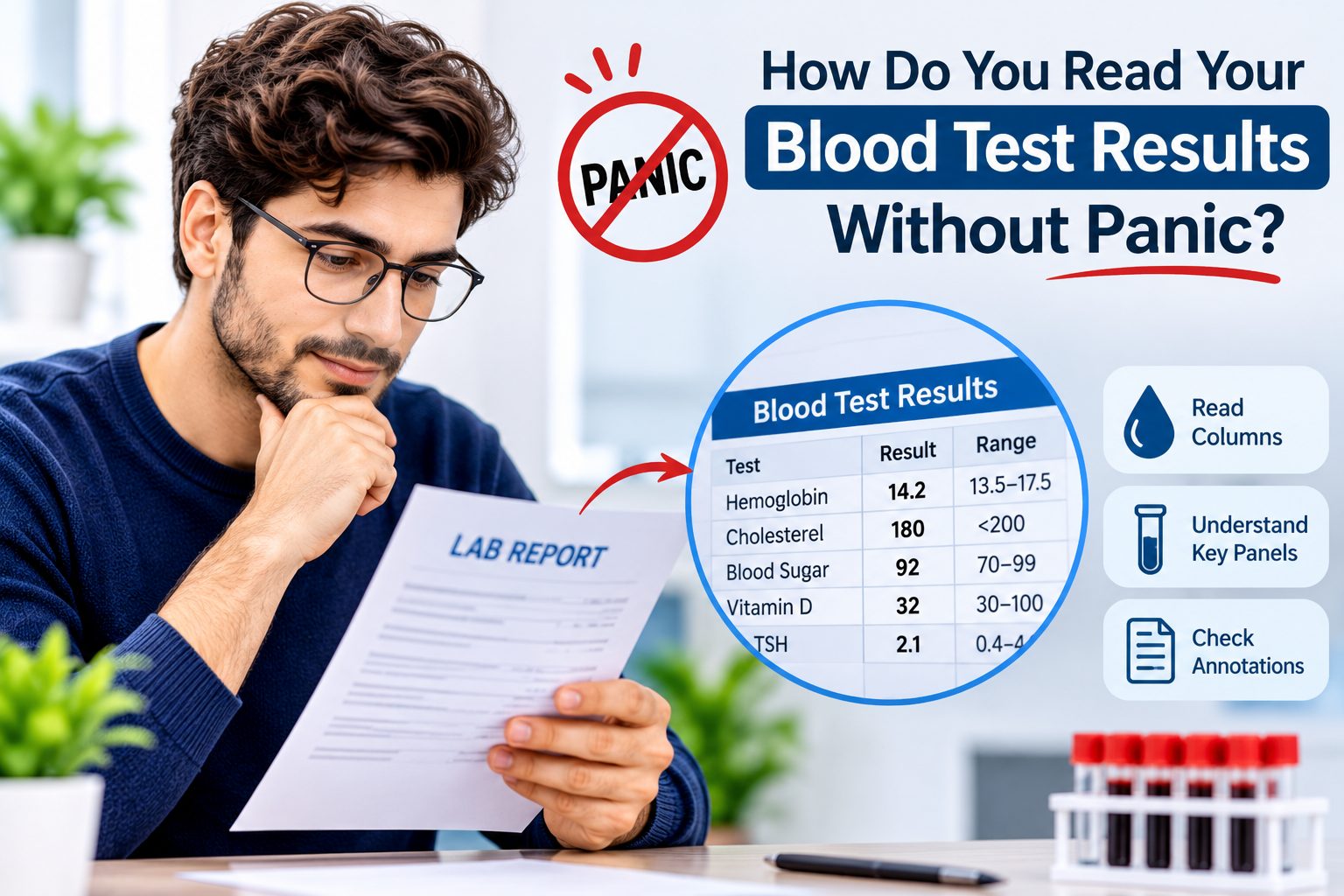
Table of contents
- 1. How a Lab Report Is Laid Out
- 2. Five Key Panels and Example Ranges
- 3. How Flagged Results Are Usually Distributed
- 4. Why One Flagged Value Is Rarely the Whole Story
- 5. Five Steps to Take When You Get Results
- 6. A Sample Annotated Report
- 7. Things That Can Change Results
- 8. When to Call Your Clinician or Seek Care
- Conclusion
- Frequently Asked Questions
- See a Doctor in Elmhurst or Chinatown
The result arrives in a patient portal or on paper: a long list of abbreviations, numbers, ranges, and a few flags in bold or red. For many people, the first reaction is worry. But a flagged number is not a diagnosis. It is a prompt to look closer, with context from your history, symptoms, medicines, and exam.
This guide explains how to read a blood test report calmly: the result columns, the five key panels most people see, example reference ranges, how to tell when a flagged value matters, and a sample annotated report. It uses the approach described on the City Prime Care website, where the clinic says your provider explains each number in plain language: what is normal, what is borderline, and what needs action. It complements our guides on common blood tests and understanding your diagnostic testing results. This is general education, not personal medical advice, and reference ranges vary by laboratory. You can find the clinic on Google: City Prime Care on Google. See the clinic's diagnostic testing page.
In this article:
- 1. How a lab report is laid out (table)
- 2. Five key panels and example ranges (table)
- 3. How flagged results are usually distributed (graph)
- 4. Why one flagged value is rarely the whole story
- 5. Five steps to take when you get results
- 6. A sample annotated report
- 7. Things that can change results
- 8. When to call your clinician or seek care
1. How a Lab Report Is Laid Out
| Column | What it means | Tip |
|---|---|---|
| 1. Test name | What was measured, often abbreviated, such as CBC or TSH | Search the abbreviation on MedlinePlus lab tests |
| 2. Result | Your measured value | Note the units, such as mg/dL or mIU/L |
| 3. Reference range | The range seen in most healthy people, set by the laboratory | Differs by lab, age, sex, and pregnancy; use your own report |
| 4. Flag | H (high), L (low), or an asterisk when outside the range | A flag means look closer, not panic |
| 5. Collection date and time | When the sample was taken | Fasting status matters for some tests |
| 6. Comments | Notes from the lab or your provider | Read these carefully |
The clinic says blood drawn during a visit is processed by a licensed laboratory and results usually return within a few days, and that your own provider explains each one.
2. Five Key Panels and Example Ranges
The ranges below are general adult examples only. Always compare your result with the range on your own report, and let your clinician interpret it.
| Panel | What it checks | Example adult range | A flagged result may suggest |
|---|---|---|---|
| 1. Complete blood count (CBC) | Red cells, white cells, platelets | Hemoglobin about 13.5 to 17.5 g/dL in men and 12 to 15.5 in women | Low: anemia; see why you feel tired. High white cells: infection or inflammation |
| 2. Comprehensive metabolic panel | Kidney function, liver enzymes, electrolytes, glucose | Fasting glucose about 70 to 99 mg/dL | High glucose: prediabetes or diabetes; abnormal kidney or liver values need follow-up |
| 3. Lipid panel | Total cholesterol, LDL, HDL, triglycerides | Total below 200; LDL below 100 for many adults; triglycerides below 150 mg/dL | High LDL or triglycerides: heart risk; see cholesterol guide |
| 4. Hemoglobin A1c | Average blood sugar over about three months | Below 5.7%; 5.7 to 6.4% prediabetes; 6.5% or higher diabetes range | See diabetes checkups |
| 5. TSH | Thyroid function | About 0.4 to 4.0 mIU/L | High: possible underactive thyroid; low: possible overactive thyroid |
For the thyroid, see the American Thyroid Association, and for cholesterol, the American Heart Association cholesterol resources.
3. How Flagged Results Are Usually Distributed
The graph below is an illustrative guide, not clinic data, to how flagged results tend to break down. It shows why most flags are mild and why context matters.
| What a flag usually turns out to be | How often (graph) | Typical next step |
|---|---|---|
| Slightly outside the range with no symptoms | ██████████ Most common | Repeat the test or adjust habits |
| Explained by a temporary cause such as illness or dehydration | ███████░░░ Common | Recheck after recovery |
| A real finding that is easy to treat | ██████░░░░ Frequent | A plan with your provider |
| A finding that needs specialist input | ███░░░░░░░ Less common | Referral |
| A critical value needing prompt action | █░░░░░░░░░ Rare | You are contacted quickly |
4. Why One Flagged Value Is Rarely the Whole Story
Reasons results need context:
- Reference ranges describe most healthy people, not a guarantee for you
- Illness, dehydration, hard exercise, alcohol, and stress can shift values
- Medicines and supplements, such as biotin, can change results
- Fasting versus non-fasting affects glucose and triglycerides
- Trends matter more than a single number, which is why keeping your results helps
- The clinic says a good answer is whether your levels explain how you feel, not a single number read in isolation
5. Five Steps to Take When You Get Results
When the report arrives:
- Read the reference range and flag for each line, and note the units.
- Look for comments from the lab or your provider.
- Write down what is flagged and any symptoms or recent changes that may explain it.
- Wait for or request your provider's explanation, since the clinic says each result is explained in plain language.
- Ask what to do next: repeat, change habits, treat, or refer; and when the next test is due.
Avoid searching the internet for worst-case explanations before speaking to your clinician. For trusted general information, use MedlinePlus or Testing.com.
6. A Sample Annotated Report
The example below uses invented numbers to show how to think about a report. It is not a real patient.
| Test | Result | Range | Flag | How to think about it |
|---|---|---|---|---|
| Hemoglobin | 11.2 g/dL | 12 to 15.5 | L | Slightly low; ask about heavy periods, diet, and iron studies |
| Fasting glucose | 104 mg/dL | 70 to 99 | H | Mildly high; repeat and check A1c |
| LDL cholesterol | 128 mg/dL | Below 100 | H | Borderline; consider overall heart risk and lifestyle |
| HDL cholesterol | 58 mg/dL | 50 or above | Within range | |
| TSH | 2.1 mIU/L | 0.4 to 4.0 | Within range | |
| Creatinine | 0.9 mg/dL | 0.6 to 1.2 | Within range |
In this example, none of the flags is an emergency, but together they tell a story worth discussing: possible anemia, early blood sugar changes, and borderline cholesterol. See the clinic's chronic disease management and preventive care pages.
7. Things That Can Change Results
| Factor | What it can change | What to do |
|---|---|---|
| Not fasting when you should have | Glucose and triglycerides | Ask whether fasting is needed; the clinic says 8 to 12 hours for fasting panels |
| Dehydration | Kidney values and blood counts | Drink water before blood work unless told otherwise |
| Biotin and other supplements | Thyroid and some hormone tests | Tell the clinic about supplements |
| Recent illness or intense exercise | White cells, inflammation markers, muscle enzymes | Mention recent events |
| Time of day | Some hormones, such as testosterone, are best measured in the morning | Follow timing instructions |
| Medicines | Many lab values | Bring a list |
8. When to Call Your Clinician or Seek Care
| Situation | Action |
|---|---|
| Chest pain, severe shortness of breath, or signs of a stroke | Call 911; see our guide on chest discomfort |
| A call about a critical result | Follow the instructions promptly |
| Very high blood sugar with vomiting or confusion | Seek emergency care |
| A flagged result and new symptoms | Call the clinic the same day |
| A flagged result and no symptoms | Book a follow-up visit to review it |
To book a results review, use the appointment page or see the Elmhurst clinic page.
Conclusion
A lab report is a snapshot, not a verdict. Learn the columns, compare against your own ranges, keep your results together, and let your clinician put the numbers in context.
Contact Us: To ask about a result or book a follow-up, reach City Prime Care through our Contact Us page, or find the clinic on Google: City Prime Care on Google. This article is for general information and does not replace personal medical advice. In an emergency, call 911.
Frequently Asked Questions
See a Doctor in Elmhurst or Chinatown
Have a question about your own health? Book a visit at our Elmhurst, Queens clinic or our Chinatown, Manhattan clinic, or explore our primary care services.
Related articles
Healthcare
Why Is Vitamin D Low So Often in New York? Reading the Risk Groups, the Testing Steps and the Sample Retest Timeline
Weak winter sun and indoor lives leave many New Yorkers low in vitamin D. Learn who is at risk, the signs, how testing works, how treatment and retesting are usually done, and the risks of taking too much.
Healthcare
What Labs and Screenings Can You Get at a Diagnostic Testing Clinic in Elmhurst? Reading the Test Groups, the Referral Path and the Sample Results Timeline
A diagnostic testing visit can include blood work, urine tests, an EKG and confidential infection testing. See what is done in the clinic, what goes to referral, how results reach you and a sample results timeline.
Healthcare
Which Common Medical Tests Might You Need, and What Do They Show? Reading the Everyday Tests, the Five Preparation Questions and the Sample Test Planner
Blood, urine, heart and imaging tests each answer a different question. Learn what common tests show, how to prepare, what questions to ask your clinician, and a sample test planner you can bring to your visit.





