
HealthcareBy City Prime Care Team
Why Do You Feel Tired All the Time? Reading the Anemia Signs, the Five Testing Steps and the Sample Iron-Level Recovery
Constant tiredness, pale skin and shortness of breath can point to anemia. Learn the common causes, the blood tests used, a sample iron recovery pattern, five testing steps and when symptoms need urgent attention.
Medically reviewed by City Prime Care Administrator9 min read
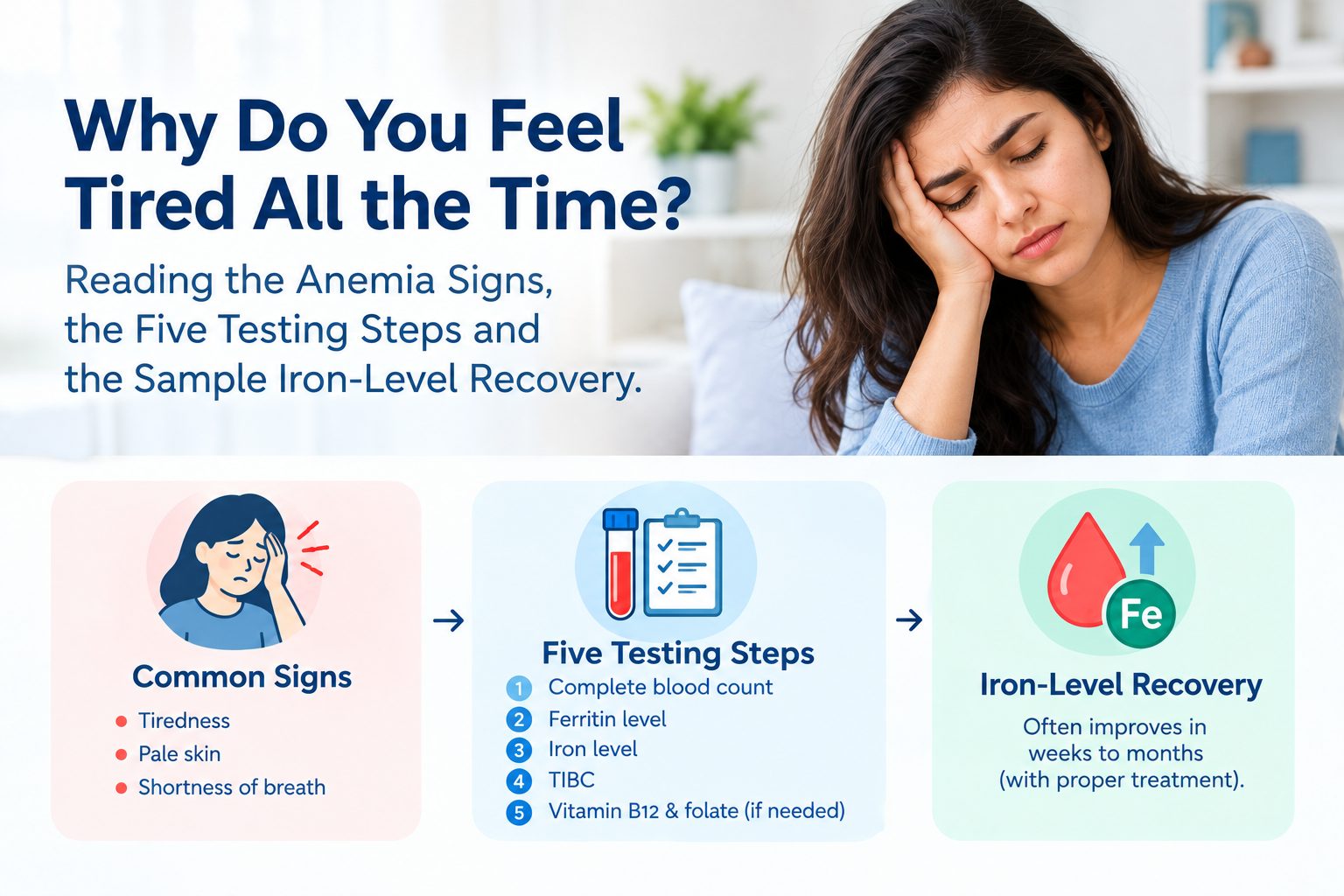
Table of contents
Everyone feels tired sometimes. But when fatigue lasts for weeks, comes with pale skin, a racing heart, or breathlessness on stairs, it is worth asking whether your blood is carrying enough oxygen. Anemia means you have fewer healthy red blood cells, or less hemoglobin, than your body needs. It is common and, in many cases, very treatable.
This guide reads the signs of anemia, explains the most frequent causes, walks through the five testing steps clinicians commonly use, and shows a sample iron-level recovery pattern. It also lists the symptoms that call for urgent care. You can pair it with our article on common blood tests to understand your lab report.
In this article:
- 1. What anemia is
- 2. Types and causes (table)
- 3. Reading the signs and symptoms
- 4. The five testing steps
- 5. Normal vs low values (table)
- 6. Sample iron-level recovery (graph)
- 7. Red flags: when to seek urgent care
- 8. Eating and living well
1. What Anemia Is
Red blood cells contain hemoglobin, the protein that carries oxygen from the lungs to every tissue. When hemoglobin is low, organs and muscles get less oxygen, which can cause tiredness, weakness, and shortness of breath. Anemia is not a disease by itself but a sign of something else, such as low iron, blood loss, or a chronic illness.
For background reading, see the MedlinePlus anemia page and the NHLBI anemia overview.
2. Types and Causes of Anemia
| Type | Main cause | Who is more at risk |
|---|---|---|
| 1. Iron-deficiency anemia | Not enough iron from diet, poor absorption, or blood loss | Women with heavy periods, pregnancy, vegetarians, people with digestive conditions |
| 2. Vitamin B12 or folate deficiency | Low intake or poor absorption of these vitamins | Older adults, people with certain stomach or bowel conditions, some on long-term acid medicines |
| 3. Anemia of chronic disease | Long-term illness such as kidney disease or inflammation | People with chronic conditions |
| 4. Blood loss | Heavy periods, ulcers, bowel bleeding, surgery | Varies; needs the source found |
| 5. Inherited types (e.g., thalassemia, sickle cell) | Genetic changes in hemoglobin or red cells | Family history |
Because anemia can signal hidden blood loss, the cause should always be identified rather than simply treated with supplements.
3. Reading the Signs and Symptoms
| Symptom | Why it happens | Severity clue |
|---|---|---|
| Persistent fatigue and weakness | Less oxygen delivered to muscles | Common even in mild anemia |
| Pale skin, lips, or inner eyelids | Fewer red cells in circulation | Easier to notice in moderate cases |
| Shortness of breath on exertion | Body tries to move more oxygen | More noticeable as anemia worsens |
| Fast or pounding heartbeat | Heart works harder | Can be significant |
| Dizziness or headaches | Reduced oxygen to the brain | Common |
| Cold hands and feet | Reduced circulation | Common |
| Brittle nails, hair loss, craving ice or non-food items | Linked with iron deficiency | Specific clue |
Fatigue also has many other causes, including poor sleep, stress, thyroid problems, and diabetes. See our guides on sleep and your health and type 2 diabetes.
4. The Five Testing Steps
A clinician typically works through these steps:
- Review symptoms and history, including diet, periods, pregnancies, medicines, bleeding, and family history.
- Perform a physical exam, checking skin color, heart rate, and signs of other conditions.
- Order a complete blood count (CBC), which measures hemoglobin, hematocrit, red cell size, and other values.
- Add iron studies and vitamin tests, such as ferritin, iron, transferrin saturation, vitamin B12, and folate, to find the type of anemia.
- Look for the cause and plan treatment, which may include additional tests such as screening for blood loss, followed by rechecking blood levels.
See our diagnostic testing page and our guide on understanding your diagnostic testing results for help reading reports.
5. Normal vs Low Values
Reference ranges differ between laboratories and by age, sex, and pregnancy status, so always use the range printed on your own report. The figures below are general examples only.
| Test | General example of a typical adult range | What a low value may suggest |
|---|---|---|
| Hemoglobin (g/dL) | About 13.5 to 17.5 in men; about 12 to 15.5 in women | Anemia |
| Hematocrit (%) | About 41 to 50 in men; about 36 to 44 in women | Anemia |
| MCV (fL) | About 80 to 100 | Low suggests iron deficiency or inherited type; high suggests B12 or folate deficiency |
| Ferritin (ng/mL) | Varies widely by lab and sex | Low suggests low iron stores |
| Vitamin B12 (pg/mL) | Varies by lab | Low suggests deficiency |
6. Sample Iron-Level Recovery
When iron deficiency is treated, hemoglobin often rises first and iron stores rebuild more slowly. The graph below is an illustrative pattern, not patient data, and your clinician will set the plan.
| Time on treatment | Symptom and lab recovery (graph) | What often happens |
|---|---|---|
| Start | ██░░░░░░░░ Low | Fatigue, low hemoglobin, low ferritin |
| 2 to 4 weeks | ████░░░░░░ Improving | Energy may begin to improve; hemoglobin starts to rise |
| 2 months | ███████░░░ Much better | Hemoglobin often approaches normal |
| 3 to 6 months | ██████████ Restored | Iron stores (ferritin) rebuild; treatment length decided by clinician |
Do not start high-dose iron without testing. Too much iron can be harmful and can mask other problems.
7. Red Flags: When to Seek Urgent Care
| Warning sign | Why it matters | Action |
|---|---|---|
| Chest pain or severe shortness of breath | Heart under strain | Call 911 |
| Fainting or near-fainting | Significant anemia or blood loss | Seek urgent care |
| Black, tarry, or bloody stools; vomiting blood | Possible gastrointestinal bleeding | Go to the ER |
| Very heavy menstrual bleeding soaking pads hourly | Ongoing blood loss | Be seen urgently |
| Rapid heartbeat at rest | Heart compensating | Seek urgent care |
| Pallor with jaundice or dark urine | Possible red cell breakdown | Be seen promptly |
If you are unsure where to go, see our guide to when to visit urgent care instead of waiting for your doctor.
8. Eating and Living Well
Food and habits that support healthy blood:
- Iron-rich foods: lean red meat, poultry, fish, beans, lentils, tofu, and iron-fortified cereals
- Vitamin C foods such as citrus, peppers, and tomatoes eaten with iron-rich plant foods to help absorption
- Folate sources: leafy greens, beans, and fortified grains
- B12 sources: fish, meat, eggs, dairy, and fortified foods; ask about supplements if you are vegan
- Avoid drinking tea or coffee with iron-rich meals, as they can reduce absorption
- Do not self-treat with supplements without testing; ask about preventive care and lifestyle counseling
- Keep regular checkups, as outlined in our annual physical guide
Conclusion
Ongoing fatigue is not something you simply have to live with. A simple blood test can reveal anemia, and finding the cause matters as much as treating it. With the right plan, most people feel much better within weeks.
Contact Us: If you are tired all the time or have symptoms of anemia, reach City Prime Care through our Contact Us page. This article is for general education and does not replace personal medical advice. For chest pain, fainting, or signs of bleeding, call 911 or go to the ER.
Frequently Asked Questions
See a Doctor in Elmhurst or Chinatown
Have a question about your own health? Book a visit at our Elmhurst, Queens clinic or our Chinatown, Manhattan clinic, or explore our primary care services.
Related articles
Healthcare
How Do Kidney Stones Cause Sudden Severe Pain? Reading the Warning Signs, the Five Prevention Steps and the Sample Stone-Size Outlook
Kidney stones can cause sudden, intense flank pain and blood in the urine. Learn the warning signs, how size affects passing a stone, five prevention steps, and when pain with fever or vomiting needs urgent care.
Healthcare
How Do Ear Infections Show Up in Children and Adults? Reading the Symptom Patterns, the Five Care Steps and the Sample Recovery Timeline
Ear infections cause pain, fever and muffled hearing in children and adults alike. Compare middle-ear infection and swimmer's ear, follow five care steps, see a sample recovery timeline, and learn when to be seen quickly.
Healthcare
Chest Discomfort Decoded: Heartburn, Muscle Strain, Anxiety or Something Serious?
Chest pain can come from the heart, the stomach, the muscles or even stress. Learn the usual patterns, the warning signs of a heart attack, and why unexplained chest pain should never be ignored.





