
HealthcareBy City Prime Care Team
How Do You Keep Blood Pressure in a Healthy Range? Reading the Pressure Categories, the Five Daily Habits and the Sample Follow-Up Schedule
High blood pressure usually has no symptoms, so numbers matter. Learn the pressure categories, how to take home readings, five daily habits that help, how follow-up is spaced, and the signs that mean call 911.
Medically reviewed by City Prime Care Administrator9 min read
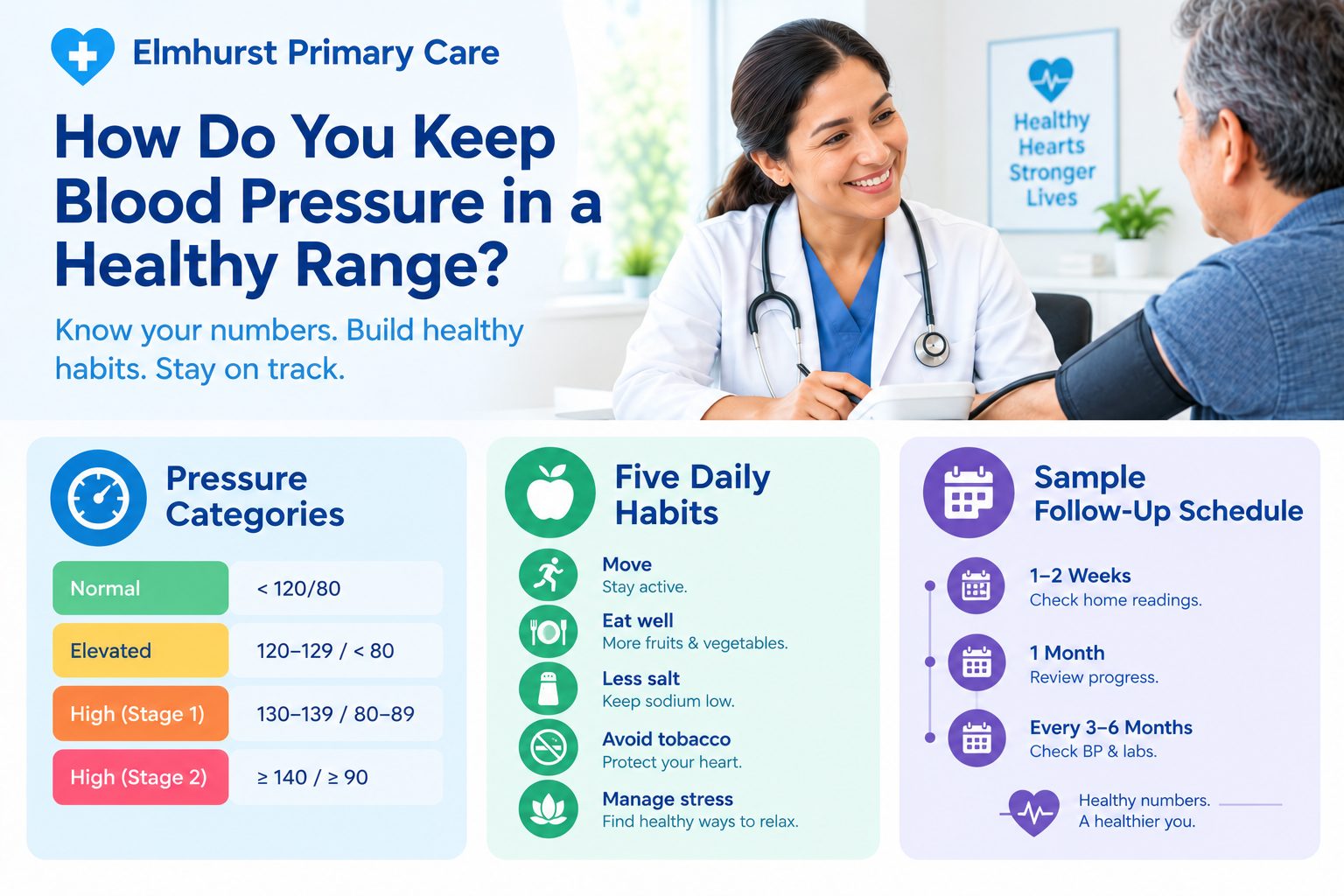
Table of contents
High blood pressure, also called hypertension, is one of the most common long-term conditions in adults, and one of the quietest. Most people feel fine while pressure slowly strains the heart, blood vessels, brain, and kidneys. That is why the numbers, not the symptoms, guide care: you often cannot feel a number that needs attention.
This guide explains blood pressure categories, how to take reliable home readings, five daily habits that help, what follow-up usually looks like, and the warning signs that should never wait. It draws on the chronic disease management page of the City Prime Care website and standard guidance from national heart organizations. It is general education, not personal medical advice. For more background, see our guide to high blood pressure and the American Heart Association's blood pressure resources.
In this article:
- 1. Why blood pressure matters
- 2. Blood pressure categories (table and graph)
- 3. How to take a reliable home reading
- 4. The five daily habits
- 5. Treatment and monitoring
- 6. A sample follow-up schedule (graph)
- 7. Red flags: when to call 911
- 8. Making it stick
1. Why Blood Pressure Matters
Blood pressure is the force of blood against artery walls. Two numbers are reported. The top number, systolic, is the pressure when the heart beats, and the bottom number, diastolic, is the pressure between beats. The clinic's services page notes that high blood pressure usually causes no symptoms, yet over the years it raises the risk of heart attack, stroke, and kidney disease.
Because a single reading can be higher in a busy exam room, the clinic says it confirms the diagnosis with repeat readings and may ask patients to track home numbers. The MedlinePlus high blood pressure page offers plain-language background.
2. Blood Pressure Categories
The table below shows the commonly used categories for adults, based on American Heart Association and American College of Cardiology guidance. The graph is a simple visual guide. Your clinician decides what applies to you, since a diagnosis needs repeat readings.
| Category | Systolic / Diastolic (mm Hg) | Level (graph) | General meaning |
|---|---|---|---|
| Normal | Below 120 and below 80 | ██░░░░░░░░ | Keep healthy habits |
| Elevated | 120-129 and below 80 | ████░░░░░░ | Lifestyle changes recommended |
| Stage 1 | 130-139 or 80-89 | ██████░░░░ | Lifestyle changes; medicine depends on overall risk |
| Stage 2 | 140 or higher, or 90 or higher | ████████░░ | Usually lifestyle changes plus medicine |
| Crisis | Higher than 180 and/or higher than 120 | ██████████ | Recheck after a few minutes; with symptoms, call 911 |
Our article on common blood tests explains related labs, such as kidney function, that are often checked alongside blood pressure.
3. How to Take a Reliable Home Reading
Home readings give a fuller picture than a single office reading. These steps follow standard guidance:
- Use a validated upper-arm monitor with a cuff that fits; ask your clinician or pharmacist to check the size and bring the device to a visit to compare it.
- Avoid caffeine, exercise, and smoking for at least 30 minutes before measuring, and use the bathroom first.
- Sit quietly for five minutes with your back supported, feet flat, legs uncrossed, and your arm resting at heart level.
- Take two readings a minute apart, in the morning before medicine and in the evening, for about a week before a visit, or as your clinician advises.
- Write down each result with the date and time, and bring the log, or the device, to your appointment.
4. The Five Daily Habits
The clinic's page says treatment usually combines daily habits with medicine. It lists lowering salt, staying active, limiting alcohol, and quitting tobacco. Here are five habits to discuss with your provider, with practical ideas.
| Habit | Practical idea | Related help |
|---|---|---|
| 1. Lower salt | Read labels, cook at home more, and use herbs and spices; packaged and restaurant foods are major sources | Lifestyle counseling |
| 2. Stay active | Aim for regular movement such as walking, as your clinician approves | Annual physical guide |
| 3. Limit alcohol | Keep alcohol modest or avoid it | Ask your provider what is right for you |
| 4. Do not use tobacco | Ask about support to quit | Lifestyle counseling covers quitting smoking |
| 5. Sleep and stress | Protect sleep and build in breaks; poor sleep is linked to higher pressure | Sleep and your health |
Weight also matters. The clinic notes that losing even 5 to 10 percent of body weight can improve blood pressure, blood sugar, and cholesterol.
5. Treatment and Monitoring
The clinic says it chooses and adjusts medicines based on your readings, lab results, and other conditions. Blood work checks kidney function and potassium, and an ECG may be part of your heart risk review.
| Part of care | What it does |
|---|---|
| Repeat readings and home tracking | Confirms the diagnosis and shows how treatment is working |
| Medicines | Lower pressure when habits alone are not enough; chosen based on your health history |
| Blood work | Checks kidney function and potassium, which some medicines affect |
| ECG and heart risk review | Looks at the heart and overall risk |
| Medicine review | Checks for side effects and interactions with other prescriptions |
| Follow-up visits | Spaced closer together while treatment is adjusted, then further apart once pressure is steady |
Do not stop or change blood pressure medicine on your own. Call the clinic if you have side effects. To learn about the service, see chronic disease management and the clinic's diagnostic testing.
6. A Sample Follow-Up Schedule
The clinic says follow-up visits are closer together while treatment is being adjusted and stretch out once pressure is steady. The graph below is an illustrative example, not a schedule for any individual patient.
| Phase | Contact frequency (graph) | Focus |
|---|---|---|
| Diagnosis and start | ███████ High | Repeat and home readings, labs, plan and first medicine if needed |
| Adjustment | █████ Regular | Check readings, side effects, and adjust doses |
| Steady | ███ Less often | Routine checks and refills |
| Yearly review | ██ Planned | Labs, heart risk review, vaccines, new goals |
7. Red Flags: When to Call 911
| Warning sign | Action |
|---|---|
| Chest pain | Call 911 right away; see our guide on chest discomfort |
| Sudden weakness or numbness on one side, facial drooping, or trouble speaking | Call 911; possible stroke |
| Severe headache with very high readings | Call 911; the clinic says not to wait for an appointment |
| Reading above 180/120 with chest pain, shortness of breath, vision changes, or confusion | Call 911 |
| Reading above 180/120 without symptoms | Rest and recheck after a few minutes; if still that high, call your clinician right away |
| Dizziness or fainting after a medicine change | Call the clinic the same day |
Headaches have many causes. Our article on tension headaches, migraines and warning-sign headaches explains which patterns need urgent care.
8. Making It Stick
Habits that help people stay on track:
- Keep a simple log of home readings and bring it to visits
- Take medicine at the same time every day and use a pill organizer if helpful
- Refill before you run out, and ask the clinic about reminders
- Choose one habit to change first rather than everything at once
- Tell your provider about supplements and over-the-counter medicines, since some raise blood pressure
- Keep follow-up appointments, even when your numbers look fine
- Book through the appointment page when it is time for a visit
Conclusion
Blood pressure is easy to measure and highly treatable, which is exactly why it is worth checking. Know your numbers, build a few steady habits, and keep follow-up visits.
Contact Us: To ask about blood pressure checks, home monitoring, or treatment, reach City Prime Care through our Contact Us page. This article is for general information and does not replace personal medical advice. If you have chest pain, sudden weakness, trouble speaking, or a severe headache, call 911.
Frequently Asked Questions
See a Doctor in Elmhurst or Chinatown
Have a question about your own health? Book a visit at our Elmhurst, Queens clinic or our Chinatown, Manhattan clinic, or explore our primary care services.
Related articles
Healthcare
How Can You Lose Weight Safely With Your Doctor's Support? Reading the Weight Categories, the Five Starting Steps and the Sample Twelve-Week Tracker
Healthy weight change is usually gradual, and even a modest loss can improve blood pressure, blood sugar and cholesterol. Learn how doctors assess weight, the five starting steps, when medicine is discussed, and a sample twelve-week tracker.
Healthcare
How Much Alcohol Is Too Much for Your Health? Reading the Drink Sizes, the Risk Levels and the Sample Cut-Back Plan
Alcohol affects the liver, heart, blood pressure, sleep and mood, and risk rises with every extra drink. Learn standard drink sizes, low-risk and heavy drinking limits, warning signs, how to cut back safely, and when to get medical help.
Healthcare
How Can You Tell If Your Kidneys Are Healthy? Reading the Kidney Tests, the Five Risk Checks and the Sample Kidney-Protection Plan
Chronic kidney disease is often silent until it is advanced. Learn the two key tests, who is at risk, how stages are defined, how to protect your kidneys, and a sample kidney-protection plan.





