
HealthcareBy City Prime Care Team
When Is It Time to See a Doctor About Cholesterol? Reading the Lipid Numbers, the Five Trigger Points and the Sample Retest Plan
Cholesterol causes no symptoms, so testing is how you find out. Learn the lipid ranges, why overall risk matters more than one number, five reasons to see a doctor, and a sample retest plan after changes.
Medically reviewed by City Prime Care Administrator9 min read
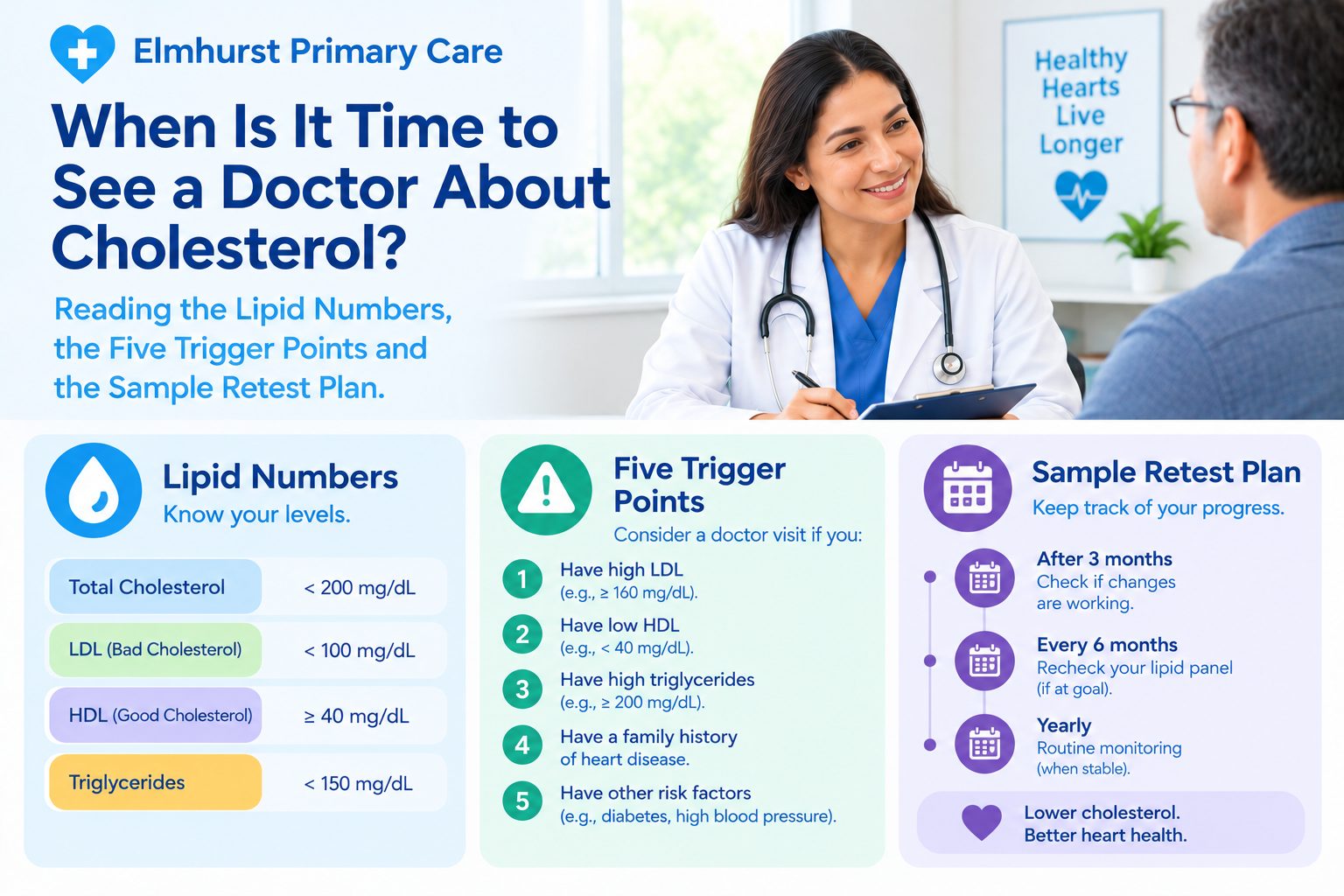
Table of contents
- 1. What a Lipid Panel Measures
- 2. Lipid Ranges
- 3. Why Overall Risk Matters More Than One Number
- 4. The Five Trigger Points to See a Doctor
- 5. Lifestyle Steps That Help
- 6. When Medicine Comes Up
- 7. A Sample Retest Plan
- 8. Red Flags and Questions to Ask
- Conclusion
- Frequently Asked Questions
- See a Doctor in Elmhurst or Chinatown
Cholesterol is one of the most common reasons adults get blood work, and one of the most misunderstood. It causes no symptoms, so you cannot feel it rising. It is also not simply good or bad: your body needs some cholesterol, and what matters is the type, the amount, and what else is going on in your health. A single number rarely tells the whole story.
This guide explains the lipid panel and its commonly used ranges, why your overall heart risk guides decisions more than any one result, five clear reasons to see a doctor, the lifestyle steps and medicines that may come up, and a sample retest plan. It uses the chronic disease management page on the City Prime Care website and standard guidance from national heart organizations. It is general education, not personal medical advice. For a detailed explanation of LDL, HDL, and triglycerides, see our guide to knowing your cholesterol numbers.
In this article:
- 1. What a lipid panel measures
- 2. Lipid ranges (table and graph)
- 3. Why overall risk matters more than one number
- 4. The five trigger points to see a doctor
- 5. Lifestyle steps that help
- 6. When medicine comes up
- 7. A sample retest plan (graph)
- 8. Red flags and questions to ask
1. What a Lipid Panel Measures
A lipid panel is a blood test that measures several fats in your blood. The clinic's services page says a cholesterol evaluation starts with a lipid panel and a look at your full risk profile, including age, blood pressure, diabetes, smoking, and family history.
A standard panel usually reports:
- Total cholesterol: the overall amount
- LDL cholesterol: often called the bad type, because high levels can build up in artery walls
- HDL cholesterol: often called the good type, because it helps carry cholesterol away
- Triglycerides: another blood fat, affected by diet, alcohol, weight, and blood sugar
For plain-language background, see the MedlinePlus cholesterol page and the American Heart Association cholesterol resources. Whether you need to fast depends on the test your clinician orders, so ask when you book.
2. Lipid Ranges
The ranges below are commonly used reference points for adults, in mg/dL. They are general guidance. Your own targets depend on your overall risk and are set by your clinician. The graph shows relative position from lower to higher.
| Measure | Range (mg/dL) | Level (graph) | General category |
|---|---|---|---|
| Total cholesterol | Below 200 | ███░░░░░░░ | Desirable |
| Total cholesterol | 200-239 | ██████░░░░ | Borderline high |
| Total cholesterol | 240 and above | █████████░ | High |
| LDL | Below 100 | ██░░░░░░░░ | Optimal for many adults |
| LDL | 130-159 | ██████░░░░ | Borderline high |
| LDL | 160-189 | ████████░░ | High |
| LDL | 190 and above | ██████████ | Very high; needs medical attention |
| HDL | Below 40 (men) or below 50 (women) | ██░░░░░░░░ | Low, a risk factor |
| HDL | 60 and above | ██████░░░░ | Higher is generally better |
| Triglycerides | Below 150 | ██░░░░░░░░ | Normal |
| Triglycerides | 150-199 | ████░░░░░░ | Borderline high |
| Triglycerides | 200-499 | ███████░░░ | High |
| Triglycerides | 500 and above | ██████████ | Very high; needs medical attention |
Learn how to read the rest of your lab report in our guide on common blood tests and understanding your diagnostic testing results.
3. Why Overall Risk Matters More Than One Number
The clinic's page says overall risk, not a single number, guides whether lifestyle changes alone make sense or whether a medicine such as a statin is worth discussing. Two people with the same LDL can have very different risk.
| Risk factor | Why it matters | What helps |
|---|---|---|
| Age | Risk rises over time | Regular checkups |
| High blood pressure | Combines with cholesterol to strain arteries | Blood pressure guide |
| Diabetes | Raises heart risk and often changes lipid patterns | Type 2 diabetes guide |
| Smoking | Damages arteries and lowers HDL | Ask about quitting support |
| Family history | Early heart disease in relatives may raise your risk | Tell your provider |
| Weight and activity | Affect LDL, HDL, and triglycerides | Lifestyle counseling |
4. The Five Trigger Points to See a Doctor
Consider booking a visit if any of these apply:
- You have never had a lipid panel, or it has been several years. Adults are commonly screened and then rechecked every few years; ask your clinician what schedule suits you.
- You have a family history of early heart disease or very high cholesterol.
- You have other risk factors, such as high blood pressure, diabetes, smoking, or excess weight.
- A result came back borderline or high, or a lab report flagged an out-of-range value.
- You already take cholesterol medicine and it is time to retest, or you notice side effects such as muscle pain.
A yearly visit is a natural time to check. See our annual physical guide for which screenings to expect.
5. Lifestyle Steps That Help
| Step | Practical idea |
|---|---|
| 1. Eat for your heart | More vegetables, beans, whole grains, fish, and nuts; fewer fried and heavily processed foods; use foods you already enjoy |
| 2. Move regularly | Walking and other activity as your clinician approves |
| 3. Weight | The clinic says even losing 5 to 10 percent of body weight can improve blood pressure, blood sugar, and cholesterol |
| 4. Quit tobacco | Ask about support |
| 5. Limit alcohol | It can raise triglycerides |
| 6. Sleep | See our sleep guide |
For structured help, the clinic offers lifestyle counseling, and its providers look for medical causes such as thyroid problems or medication side effects that can affect lipids.
6. When Medicine Comes Up
The clinic says that, depending on overall risk, a medicine such as a statin may be worth discussing. Statins are widely used to lower LDL and reduce the risk of heart attack and stroke in people who need them. Decisions weigh your age, risk factors, test results, and preferences.
Questions to ask when medicine is discussed:
- What is my overall heart risk, and how much could treatment lower it?
- What are the possible side effects, and what should I do if I notice muscle pain?
- How long will I need the medicine, and how often will I be retested?
- Do any of my other medicines or supplements interact with it?
- Can lifestyle changes alone work first, and for how long?
7. A Sample Retest Plan
The clinic says repeat lipid testing shows whether the plan is working, and the plan is adjusted at follow-up visits. The graph below is an illustrative example of how retesting might be spaced after a change; your clinician sets the timing.
| Time | Planned step (graph) | What happens |
|---|---|---|
| Start | ██████░░░░ | Baseline lipid panel and risk review; set goals |
| About 6-12 weeks later | █████░░░░░ | Repeat panel after lifestyle changes or a new medicine |
| Adjustment | ████░░░░░░ | Change the plan if goals are not met |
| Once steady | ██░░░░░░░░ | Periodic testing, often yearly |
8. Red Flags and Questions to Ask
| Warning sign | Action |
|---|---|
| Chest pain, pressure, or shortness of breath | Call 911; see our guide on chest discomfort |
| Sudden weakness, facial drooping, or trouble speaking | Call 911; possible stroke |
| Severe muscle pain or dark urine after starting a cholesterol medicine | Call the clinic the same day |
| LDL 190 or higher, or a very high triglyceride result | Book a prompt visit |
| Family history of early heart disease and never tested | Book a visit to be screened |
Questions worth asking at your next visit:
- What is my overall risk, and what are my personal targets?
- Which results are borderline, and when should I retest?
- Which habits would help most for me?
- Do I need medicine, and what are the pros and cons?
- When is my next lipid panel?
To plan a visit, see chronic disease management or use the appointment page.
Conclusion
Cholesterol care is a long game built on simple steps: get tested, understand your overall risk, make habits that fit your life, and retest to see what works. If a result is flagged or you have risk factors, a conversation with your provider is the right next step.
Contact Us: To ask about a lipid panel, understand a result, or discuss cholesterol treatment, reach City Prime Care through our Contact Us page. This article is for general information and does not replace personal medical advice. In an emergency, call 911.
Frequently Asked Questions
See a Doctor in Elmhurst or Chinatown
Have a question about your own health? Book a visit at our Elmhurst, Queens clinic or our Chinatown, Manhattan clinic, or explore our primary care services.
Related articles
Healthcare
How Can You Lose Weight Safely With Your Doctor's Support? Reading the Weight Categories, the Five Starting Steps and the Sample Twelve-Week Tracker
Healthy weight change is usually gradual, and even a modest loss can improve blood pressure, blood sugar and cholesterol. Learn how doctors assess weight, the five starting steps, when medicine is discussed, and a sample twelve-week tracker.
Healthcare
What Can You Do About Prediabetes Before It Becomes Diabetes? Reading the Blood Sugar Ranges, the Five Lifestyle Levers and the Sample Twelve-Week Plan
Prediabetes means blood sugar is higher than normal but not yet diabetes, and it is often silent. Learn the A1c and glucose ranges, who should be tested, five lifestyle levers that help, and a sample twelve-week plan.
Healthcare
How Can Your Doctor Help You Change Food, Sleep and Stress Habits? Reading the Five Habit Areas, the Coaching Steps and the Sample Progress Tracker
Lifestyle counseling is one-on-one help from your primary care team with eating, movement, smoking, stress and sleep. See the five habit areas, how coaching works step by step, and a sample progress tracker.





