
HealthcareBy City Prime Care Team
What Should You Know About Fatty Liver Disease? Reading the Risk Factors, the Five Checks and the Sample Liver-Friendly Plan
Fatty liver disease is common, usually silent, and closely linked to weight, prediabetes and cholesterol. Learn what causes it, how it is found, how weight loss and habits help, and a sample liver-friendly plan.
Medically reviewed by City Prime Care Administrator9 min read
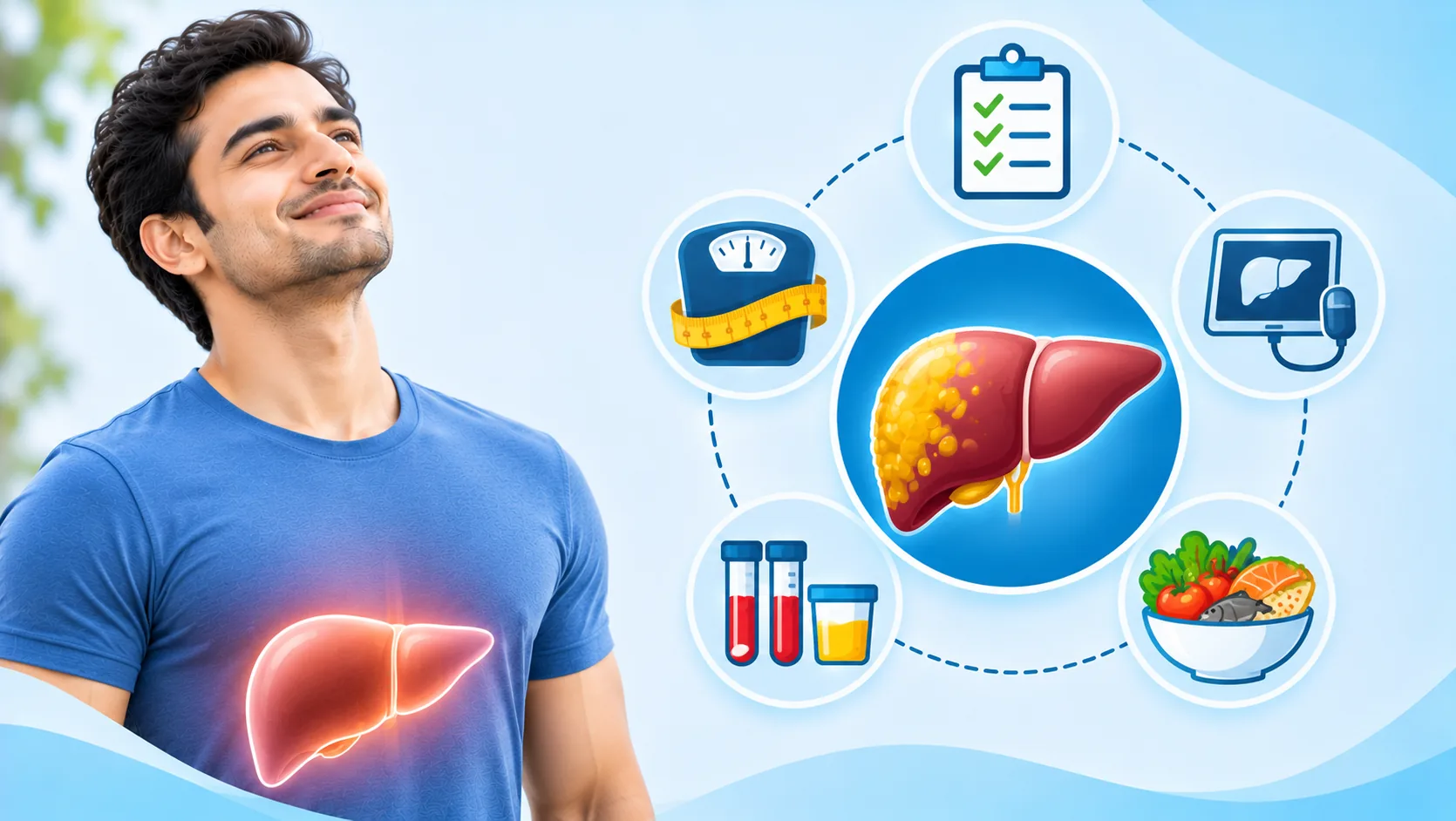
Table of contents
- 1. What Fatty Liver Disease Is
- 2. Who Is at Risk
- 3. How It Is Found
- 4. What Liver Blood Tests Show
- 5. The Five Checks to Ask About
- 6. What Helps: Weight, Food, Activity, and Conditions
- 7. A Sample Liver-Friendly Plan
- 8. Red Flags and Booking
- Conclusion
- Frequently Asked Questions
- See a Doctor in Elmhurst or Chinatown
The liver is a quiet workhorse. It processes nutrients, stores energy, makes proteins, and clears toxins and medicines. Fatty liver disease means too much fat has built up in liver cells. It is very common, especially in people with extra weight, prediabetes or diabetes, high triglycerides, or high blood pressure. Most people have no symptoms, and the first clue is often an abnormal liver test on a routine blood panel.
This guide explains fatty liver disease in plain language: what causes it, who is at risk, how it is found, what the liver blood tests mean, how habits and weight loss help, and a sample liver-friendly plan. The medical name has been updated to metabolic dysfunction-associated steatotic liver disease, or MASLD, but many people still know it as NAFLD or simply fatty liver. It draws on what City Prime Care says about its comprehensive metabolic panel, which includes liver enzymes, and on its weight and chronic disease pages, together with national guidance. It is general education, not personal medical advice. You can find the clinic on Google: City Prime Care on Google. See the clinic's diagnostic testing page.
In this article:
- 1. What fatty liver disease is
- 2. Who is at risk (table and graph)
- 3. How it is found
- 4. What liver blood tests show (table)
- 5. The five checks to ask about
- 6. What helps: weight, food, activity, and conditions
- 7. A sample liver-friendly plan
- 8. Red flags and booking
1. What Fatty Liver Disease Is
A small amount of fat in the liver is normal. When fat makes up more than about five to ten percent of the liver's weight, it is called fatty liver. In many people it stays harmless. In some, it causes inflammation and scarring, which can progress over years to cirrhosis. Alcohol can also cause fatty liver, and the two causes often combine.
For plain-language background, see the National Institute of Diabetes and Digestive and Kidney Diseases' NAFLD and NASH information, the American Liver Foundation, and the MedlinePlus fatty liver page.
2. Who Is at Risk
The graph below is an illustrative guide to how strongly each factor is linked to fatty liver, not a risk calculator.
| Risk factor | Relative link (graph) | What helps |
|---|---|---|
| Excess weight, especially around the waist | ██████████ Strong | Gradual weight loss; see weight management |
| Prediabetes or type 2 diabetes | █████████░ Strong | See prediabetes and diabetes checkups |
| High triglycerides or abnormal cholesterol | ████████░░ Strong | See cholesterol guide |
| High blood pressure | ███████░░░ Common companion | See blood pressure guide |
| Sleep apnea | ██████░░░░ Linked | See sleep apnea |
| Heavy alcohol use | ███████░░░ Strong for alcohol-related fatty liver | Limit alcohol; ask your clinician what is safe |
| Certain medicines and rapid weight loss | ████░░░░░░ Less common | Medicine review |
| Family history and some ethnic groups | ████░░░░░░ Moderate | Tell your provider |
3. How It Is Found
| Clue | How it appears | Next step |
|---|---|---|
| 1. Abnormal liver enzymes on routine blood work | ALT or AST above the laboratory range | Repeat tests and look for causes |
| 2. Ultrasound or other imaging | Bright liver on ultrasound done for another reason | Review with your clinician; imaging is arranged by referral |
| 3. Risk-score calculations | Scores such as FIB-4 use age, enzymes, and platelets to estimate scarring risk | Guides who needs further testing |
| 4. Special scans or biopsy | Liver stiffness scans or, rarely, biopsy | Specialist care in selected cases |
| 5. Symptoms | Usually none; some have fatigue or discomfort in the upper right abdomen | See red flags below |
The clinic's page says its comprehensive metabolic panel includes liver enzymes, along with kidney function, electrolytes, and glucose. See our guides on reading your blood test results and common blood tests.
4. What Liver Blood Tests Show
Reference ranges vary by laboratory, so always use the range on your own report. The table below gives general examples only.
| Test | What it reflects | General example range | What a high value may suggest |
|---|---|---|---|
| ALT | Liver cell irritation | About 7 to 55 U/L (varies) | Fatty liver, medicines, alcohol, viral hepatitis, other causes |
| AST | Liver and muscle cell irritation | About 8 to 48 U/L (varies) | Similar; muscle injury can raise AST |
| ALP | Bile flow and bone | About 40 to 129 U/L (varies) | Bile duct or bone problems |
| Bilirubin | How the liver handles waste | About 0.1 to 1.2 mg/dL | Jaundice, bile or liver problems |
| Albumin | Protein the liver makes | About 3.5 to 5.0 g/dL | Low levels may reflect poor liver function or other illness |
| Platelets | Part of the blood count | About 150 to 450 per microliter (varies) | Low counts can accompany advanced liver scarring |
A mildly raised enzyme does not mean serious disease; many people with fatty liver have normal enzymes, and some with raised enzymes have mild disease. Your clinician looks at the whole picture.
5. The Five Checks to Ask About
If you have risk factors or a flagged liver test, ask your clinician about:
- A repeat liver panel to see whether the result persists, and a review of medicines, supplements, and alcohol.
- Testing for other causes, such as hepatitis B and C and other liver conditions, when appropriate; a one-time hepatitis C test is recommended for adults, per the clinic's preventive care page.
- Checking blood sugar and A1c, cholesterol and triglycerides, and blood pressure, since these often go together.
- A risk score such as FIB-4, and whether imaging or a liver stiffness scan is needed.
- A plan for weight, food, activity, sleep, and follow-up, with referral to a liver specialist if scarring is a concern.
The clinic says referrals for imaging and specialists are arranged through its referral services and the team follows up on results; see our guide on when your doctor sends you to a specialist.
6. What Helps: Weight, Food, Activity, and Conditions
| Lever | What the evidence generally supports | Practical step |
|---|---|---|
| Weight loss | Losing about 5 percent can reduce liver fat, and 7 to 10 percent or more can improve inflammation and sometimes scarring | The clinic says even 5 to 10 percent loss improves blood pressure, blood sugar, and cholesterol; avoid crash dieting |
| Food | Mediterranean-style patterns help | More vegetables, beans, whole grains, fish, nuts, olive oil; fewer sugary drinks, refined carbohydrates, and fried foods |
| Activity | Exercise reduces liver fat even without weight loss | Aim toward 150 minutes of moderate activity a week plus strength work on two days |
| Blood sugar and cholesterol | Controlling diabetes and lipids protects the liver and heart | Follow your plan with chronic disease management |
| Alcohol | Alcohol adds to liver injury | Ask your clinician whether to avoid it completely |
| Medicines and supplements | Some herbal products can harm the liver | Tell your clinician about everything you take; see managing many medicines |
| Vaccines | Hepatitis A and B vaccines protect a liver that may already be stressed | Ask about vaccines; see adult vaccines |
7. A Sample Liver-Friendly Plan
The plan below is illustrative, not a prescription. Each block shows relative priority. Check with your clinician before changing diet or exercise, especially if you take medicines.
| Area | Priority (graph) | Example steps |
|---|---|---|
| Weight and waist | ██████████ | Aim for gradual loss of 5 to 10 percent over several months |
| Food | █████████░ | Water instead of sugary drinks; vegetables at most meals; smaller starch portions |
| Activity | ████████░░ | Walk after meals; build toward 150 minutes a week |
| Blood sugar, lipids, blood pressure | ███████░░░ | Regular checks and treatment as advised |
| Alcohol and medicines | ██████░░░░ | Limit or avoid alcohol; review supplements |
| Follow-up | ██████░░░░ | Repeat liver tests in a few months, then yearly or as advised |
Our guide on how your doctor can help you change food, sleep and stress habits explains how clinic support works.
8. Red Flags and Booking
| Warning sign | Action |
|---|---|
| Vomiting blood, black or bloody stools, or confusion and drowsiness | Call 911 or go to the ER |
| Yellowing of the skin or eyes, dark urine, or pale stools | Be seen promptly |
| Swelling of the abdomen or legs, or easy bruising | Book a prompt visit |
| Persistent pain in the upper right abdomen, unplanned weight loss, or severe fatigue | Book a prompt visit |
| A flagged liver test and risk factors | Book a visit through the appointment page |
For emergencies with chest or abdominal symptoms, see our guide on chest discomfort.
Conclusion
Fatty liver is common, silent, and often reversible in its early stages. A flagged liver test is a reason to look at weight, blood sugar, cholesterol, alcohol, and medicines together, and to make steady changes.
Contact Us: To ask about liver tests, weight, diabetes, or cholesterol, reach City Prime Care through our Contact Us page, or find the clinic on Google: City Prime Care on Google. This article is for general information and does not replace personal medical advice. In an emergency, call 911.
Frequently Asked Questions
See a Doctor in Elmhurst or Chinatown
Have a question about your own health? Book a visit at our Elmhurst, Queens clinic or our Chinatown, Manhattan clinic, or explore our primary care services.
Related articles
Healthcare
How Can You Tell If Your Kidneys Are Healthy? Reading the Kidney Tests, the Five Risk Checks and the Sample Kidney-Protection Plan
Chronic kidney disease is often silent until it is advanced. Learn the two key tests, who is at risk, how stages are defined, how to protect your kidneys, and a sample kidney-protection plan.
Healthcare
What Does a Comprehensive Health Assessment Actually Cover? Reading the Five Parts, the Difference From a Checkup and the Sample Results Timeline
A comprehensive health assessment is one unhurried visit that combines your history, a full exam, lab work, a heart check and a written plan. See its five parts, how it differs from a sick visit or yearly screening, and a sample results timeline.
Healthcare
How Does Chronic Disease Management Work for Elmhurst Patients? Reading the Condition List, the Five Plan Steps and the Sample Follow-Up Rhythm
Long-term conditions need more than occasional visits. See how a chronic disease management plan works, which conditions it covers, what is monitored, how follow-up visits are spaced, and how Medicare chronic care management fits in.





