
HealthcareBy City Prime Care Team
What Does a Comprehensive Health Assessment Actually Cover? Reading the Five Parts, the Difference From a Checkup and the Sample Results Timeline
A comprehensive health assessment is one unhurried visit that combines your history, a full exam, lab work, a heart check and a written plan. See its five parts, how it differs from a sick visit or yearly screening, and a sample results timeline.
Medically reviewed by City Prime Care Administrator8 min read
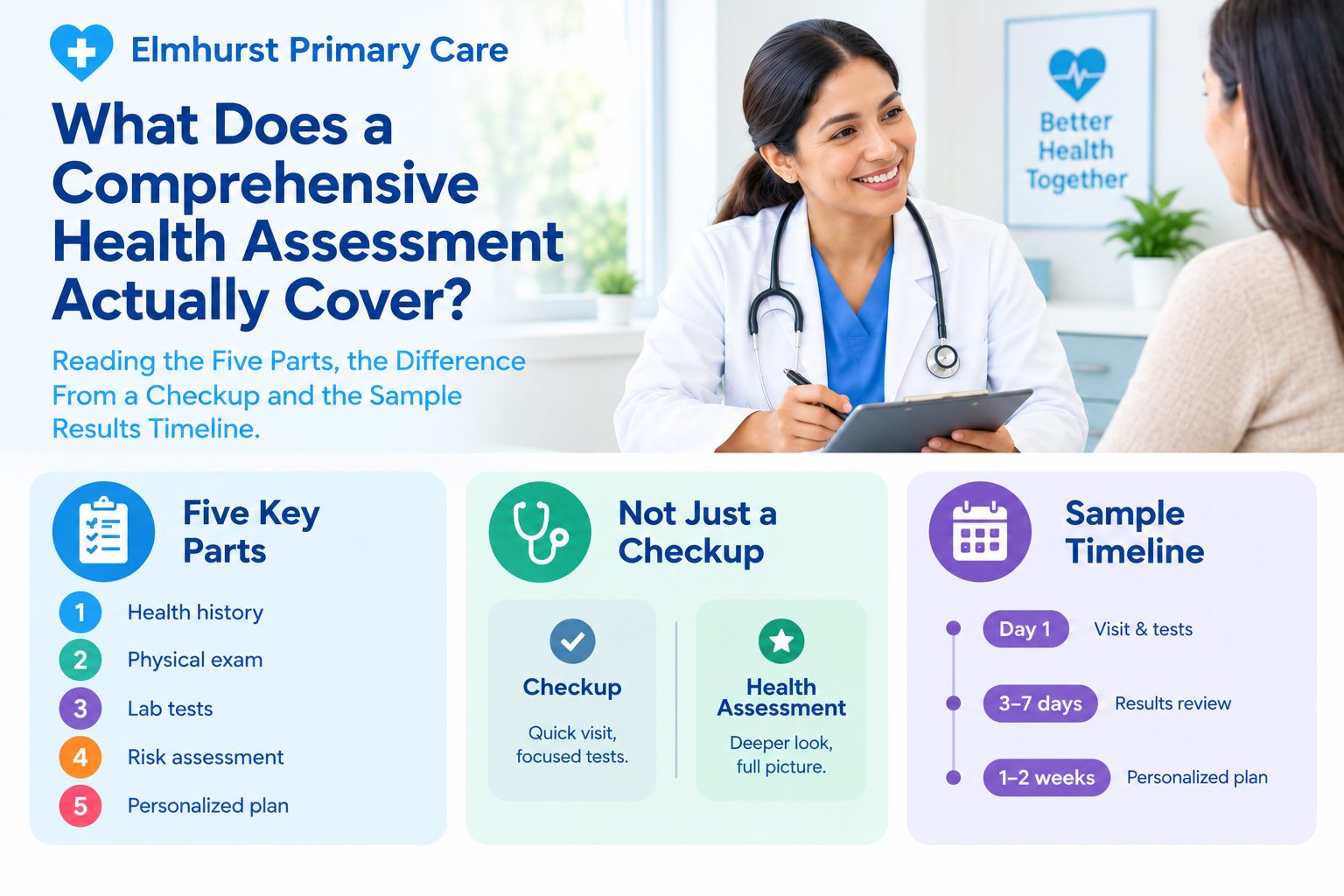
Table of contents
- 1. What a Comprehensive Health Assessment Is
- 2. The Five Parts of the Visit
- 3. How It Differs From Other Visits
- 4. Who Benefits Most
- 5. A Sample Results Timeline
- 6. What You Leave With
- 7. How to Prepare in Four Steps
- 8. When Not to Wait for an Assessment
- Conclusion
- Frequently Asked Questions
- See a Doctor in Elmhurst or Chinatown
Most people have had a quick checkup: a few questions, blood pressure, a listen to the lungs, and out the door in fifteen minutes. A comprehensive health assessment is different. It is one unhurried visit built to look at your whole health at once, set a baseline, and end with a written plan you can follow for the year ahead.
This guide explains what a comprehensive health assessment is, using the description on the City Prime Care comprehensive health assessments page. It covers the five parts of the visit, how it differs from a sick visit, an annual physical, and ongoing preventive care, who benefits most, and a sample timeline from the visit to your written plan. Service details can change, so confirm them on the service page or by calling the clinic. This is general education, not personal medical advice.
In this article:
- 1. What a comprehensive health assessment is
- 2. The five parts of the visit (table)
- 3. How it differs from other visits (table)
- 4. Who benefits most
- 5. A sample results timeline (graph)
- 6. What you leave with
- 7. How to prepare in four steps
- 8. When not to wait for an assessment
1. What a Comprehensive Health Assessment Is
The clinic describes a comprehensive health assessment as one unhurried visit that brings together your history, a physical exam, lab work, and a heart check, then ends with a written plan. It says the visit suits new patients and anyone overdue for a full checkup. A sick visit focuses on a single complaint. This appointment looks at how your whole body is doing, what your risks are for the years ahead, and which tests make sense for your age and background.
The clinic also notes this is not the same as ongoing screening. The assessment is one full checkup, and its preventive care service handles the vaccines and repeat screenings that follow over time. Many patients book the assessment first, then use preventive care to keep up with what it recommends. For a refresher on yearly screenings, see our annual physical checkup guide.
2. The Five Parts of the Visit
| Part | What happens | Why it matters |
|---|---|---|
| 1. Medical and family history review | Your provider reviews past illnesses, surgeries, allergies, medicines and supplements, family history, sleep, stress, alcohol, tobacco, and exercise | Family history of heart disease, diabetes, or some cancers can change when screening should begin |
| 2. Full physical exam | A head-to-toe exam of eyes, ears, throat, neck and thyroid, lymph nodes, skin, lungs, heart, abdomen, reflexes, and joints if you have aches | Looks at everything in one sitting; anything unusual is explained on the spot |
| 3. Blood work and lab panel | A blood draw and, when useful, a urine sample, processed by a licensed laboratory; the panel is chosen for you | A healthy 30-year-old and a 60-year-old with diabetes in the family get different orders |
| 4. Heart and vitals check | Blood pressure, pulse, breathing rate, temperature, and oxygen level, plus an in-office EKG when age, symptoms, or risk call for it | High blood pressure rarely causes symptoms; the EKG is quick and uses no needles |
| 5. Your personal care plan | Once results return, usually within a few days, your provider explains each number and gives a written plan | Covers follow-up tests, screening dates, lifestyle goals, and referrals |
If more specialized testing is needed, the clinic says its diagnostic testing service coordinates it. Learn what common labs measure in our guide to common blood tests.
3. How It Differs From Other Visits
| Visit type | Main purpose | Typical scope | Learn more |
|---|---|---|---|
| Sick visit (acute care) | Treat a new problem | Focused on one complaint | Acute care |
| Annual physical (preventive care) | Yearly review, screenings, and vaccines | History, exam, routine labs when due, and updated plan | Preventive care |
| Comprehensive health assessment | One thorough baseline visit | History, full exam, blood and urine labs, EKG when needed, written plan | Comprehensive assessments |
| Chronic disease management | Ongoing care for long-term conditions | Regular check-ins, labs, and medication reviews | Chronic disease management |
The clinic says patients with an ongoing condition can move from an assessment straight into chronic disease management without starting over.
4. Who Benefits Most
The clinic says almost any adult benefits, and it lists situations where an assessment is especially worthwhile.
| If this describes you | Why an assessment may help |
|---|---|
| You have not had a full checkup in over a year | Brings you up to date in one visit |
| You are a new patient | Sets a baseline with your new provider |
| Heart disease, diabetes, or cancer runs in your family | Family history can change screening timing |
| You are 40 or older and unsure which screenings are due | The visit reviews what is due by age and risk |
| An employer or school needs a recent physical | Provides a recent, documented exam |
If you are not sure whether to book an assessment or a yearly physical, ask the front desk when booking through the appointment page.
5. A Sample Results Timeline
The clinic says lab results usually return within a few days. The graph below is an illustrative timeline of how the visit and results might unfold. Actual timing varies by test and laboratory.
| Stage | Progress (graph) | What happens |
|---|---|---|
| Day 0: visit | ████░░░░░░ | History, full exam, vitals, blood and urine collected, EKG if needed |
| Days 1-3: lab processing | ██████░░░░ | A licensed laboratory processes your samples |
| Within a few days: results | ████████░░ | Your provider reviews each result |
| Follow-up conversation | █████████░ | Numbers are explained in plain language: normal, borderline, or needing action |
| Written plan in hand | ██████████ | Follow-up tests, screening dates, lifestyle goals, and referrals |
Our article on understanding your diagnostic testing results can help you read the numbers on your report.
6. What You Leave With
At the end of the process, the clinic says you leave with a written plan covering:
- Follow-up tests that your results or risks call for
- Screening dates for the years ahead
- Lifestyle goals, with help from lifestyle counseling if you want it
- Any specialist referrals, coordinated through referral services
- A path into ongoing care if a condition was found, such as high blood pressure or prediabetes
Related reading: high blood pressure, cholesterol, and diabetes checkups.
7. How to Prepare in Four Steps
A little preparation makes the visit faster and more accurate:
- Ask about fasting when you book. If your visit includes fasting glucose or lipid tests, the clinic says to skip food and drinks other than water for 8 to 12 hours; a morning appointment makes this easier. If you have diabetes or use insulin, call first for safe instructions.
- Gather what to bring: photo ID, insurance card, a list of medicines and supplements with doses, recent lab results or specialist letters, your vaccination record, and any forms.
- Bring home readings if you track blood pressure, sleep, or glucose, since trends over weeks say more than one reading.
- Wear short sleeves or layers, allow extra time, and arrive about ten minutes early.
8. When Not to Wait for an Assessment
| Situation | Suggested step |
|---|---|
| Chest pain, trouble breathing, or signs of a stroke | Call 911; the clinic says these should never wait for an appointment |
| A new problem such as fever or infection | Book a sick visit or call the clinic early for a same-day appointment |
| Unexplained weight loss, severe fatigue, or a new lump | Call the clinic for a prompt visit |
| Routine baseline or overdue checkup | Book a comprehensive assessment or yearly physical |
See our guide on chest discomfort for warning signs that should never wait.
Conclusion
A comprehensive health assessment turns scattered tests and questions into a single clear picture and a plan. If you are a new patient, overdue for a full checkup, or unsure what screenings you need, it is a practical place to start.
Contact Us: To ask whether an assessment is right for you, check coverage, or book, reach City Prime Care through our Contact Us page. This article is for general information and does not replace personal medical advice. In an emergency, call 911.
Frequently Asked Questions
See a Doctor in Elmhurst or Chinatown
Have a question about your own health? Book a visit at our Elmhurst, Queens clinic or our Chinatown, Manhattan clinic, or explore our primary care services.
Related articles
Healthcare
Which Services Does the Elmhurst Primary Care Clinic Offer? Reading the Service Map, the Four Care Groups and the Sample Patient Journey
A plain-language tour of the 13 services at City Prime Care in Elmhurst: primary and preventive care, chronic conditions, diagnostics and referrals, and wellness. See the four care groups and a sample patient journey.
Healthcare
How Do You Book a Visit at City Prime Care? Reading the Booking Options, the Four Steps and the Sample Visit Timeline
Booking a primary care visit is easier when you know the steps. See how to choose a clinic, service, provider and time, how same-day slots work, what to have ready, and a sample timeline from request to follow-up.
Healthcare
What Should You Know About Fatty Liver Disease? Reading the Risk Factors, the Five Checks and the Sample Liver-Friendly Plan
Fatty liver disease is common, usually silent, and closely linked to weight, prediabetes and cholesterol. Learn what causes it, how it is found, how weight loss and habits help, and a sample liver-friendly plan.





