
HealthcareBy City Prime Care Team
Which Physical Exam Do You Need for Work, School or Immigration? Reading the Exam Types, the Paperwork Rules and the Sample Preparation Timeline
Work, school and immigration physicals each have their own forms and rules. Learn the four exam types, who can sign, how far ahead to plan and what to bring to your visit.
Medically reviewed by City Prime Care Administrator9 min read
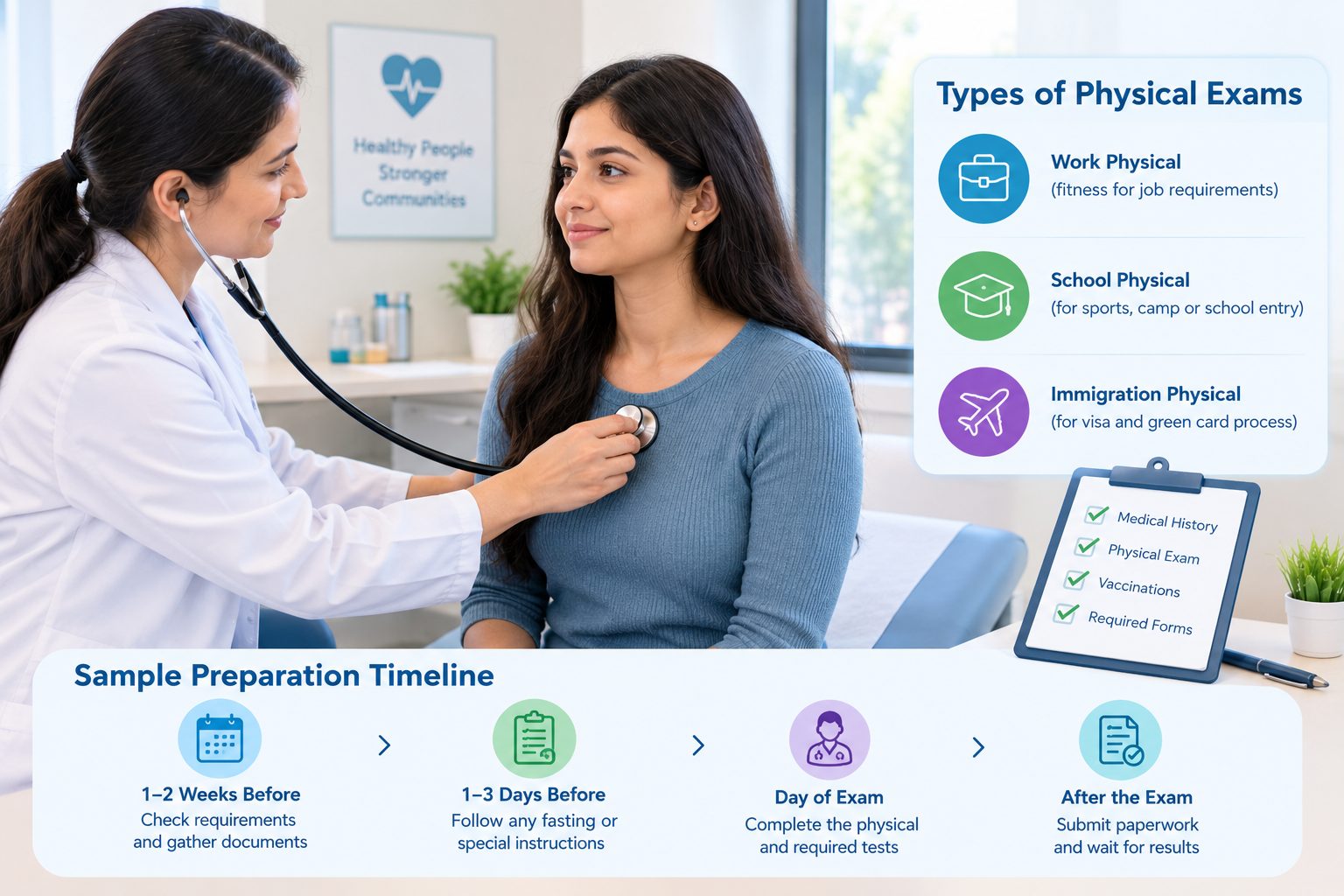
Table of contents
- 1. Why One Physical Does Not Fit Every Form
- 2. The Four Main Exam Types
- 3. How Far Ahead to Plan
- 4. Work and Driving Physicals
- 5. School, Camp and Sports Physicals
- 6. Immigration Medical Exams
- 7. What to Bring
- 8. Five Steps to a Smooth Visit
- 9. A Sample Preparation Timeline
- 10. Costs and Insurance
- Conclusion
- Frequently Asked Questions
- See a Doctor in Elmhurst or Chinatown
Few people book a physical for fun. Most ask for one because an employer, school, camp, licensing agency or immigration process requires a signed form by a deadline. The surprise is that these exams are not interchangeable: each has its own paperwork, its own rules about who can sign and its own list of required tests or vaccines.
This guide explains the four main types of required physicals, how far ahead to plan, what to bring and what a smooth visit looks like. It draws on agency information from USCIS, the Federal Motor Carrier Safety Administration and the New York State Department of Health. Rules and forms change, so always follow the instructions on your own form. This is general education, not personal medical or legal advice. You can also find City Prime Care on Google.
In this article:
- 1. Why one physical does not fit every form
- 2. The four main exam types (table)
- 3. How far ahead to plan (graph)
- 4. Work and driving physicals
- 5. School, camp and sports physicals
- 6. Immigration medical exams
- 7. What to bring (checklist)
- 8. Five steps to a smooth visit
- 9. A sample preparation timeline
- 10. Costs and insurance (table)
1. Why One Physical Does Not Fit Every Form
A regular annual physical looks at your general health. A required physical answers a narrower question for someone else: are you fit for this job, this classroom, this sport or this immigration category? The examiner may have to follow a set form, record specific findings and sometimes hold a special certification.
If you simply want a health checkup, see our guides on the annual physical and what to expect from a full checkup at the Elmhurst clinic.
2. The Four Main Exam Types
| Exam type | Who asks for it | Typical contents | Who can sign |
|---|---|---|---|
| Pre-employment or work physical | Employer | History, vitals, exam, sometimes vision, hearing or drug test | Licensed clinician, per employer instructions |
| Commercial driver (DOT) exam | Federal rules for commercial drivers | Vision, hearing, blood pressure, urine test, exam | Certified medical examiner on the federal registry |
| School, camp or sports physical | School, camp or league | Growth, vision, heart and lung exam, vaccine review | Licensed clinician; follow form instructions |
| Immigration medical exam | U.S. immigration agency | History, exam, vaccine review, blood and TB tests as required | USCIS-designated civil surgeon (for green card exams) |
3. How Far Ahead to Plan
The graph shows suggested planning time before a deadline. These are rules of thumb, not legal requirements; each block is about one week.
| Exam | Suggested lead time (graph) | Why |
|---|---|---|
| Sports or camp physical | ██ 2 weeks | Forms are simple; vaccines may need time |
| Pre-employment physical | ██ 2 weeks | Tests such as drug screens add steps |
| Commercial driver (DOT) exam | ███ 3 weeks | Findings such as high blood pressure may need follow-up |
| School entry physical | ████ 4 weeks | Vaccines and records often need catching up |
| Immigration medical exam | ██████ 6 weeks | Blood and TB tests, vaccine records and form requirements |
4. Work and Driving Physicals
Work physicals vary from a basic exam to a role-specific one with vision, hearing, strength or respiratory checks, plus drug testing. Employers usually tell you which tests they need, so ask for the instructions or form first.
For commercial drivers, remember:
- DOT exams must be done by a medical examiner listed on the FMCSA National Registry.
- Conditions such as high blood pressure or diabetes can shorten the card's validity or need extra paperwork.
- Bring your medication list and any specialist letters for chronic conditions.
- Check our guides on blood pressure and diabetes checkups to prepare.
Ask the clinic whether it has a certified examiner for DOT exams before you book.
5. School, Camp and Sports Physicals
New York State generally asks for a health exam for students entering school and at certain grade levels, along with required immunizations. Camps and sports leagues usually give their own form. Check the exact dates and form with the school, camp or league.
At a school or sports visit, expect:
- Height, weight and growth check
- Vision and hearing screening
- Heart, lung and joint exam, with questions about family heart history for sports clearance
- A review of vaccines, with missing shots given if needed
- Questions about sleep, mood, nutrition and screen time
For vaccines, see the adult vaccines guide and the CDC adult immunization schedule; a pediatric clinician can confirm the child schedule.
6. Immigration Medical Exams
For most family-based and many other green card applications, the medical exam on Form I-693 must be done by a USCIS-designated civil surgeon. A regular primary care physician cannot complete it unless he or she is also designated. Use the USCIS civil surgeon locator to find one, and check the USCIS Form I-693 page for the current form, instructions and validity rules.
Typical elements of the exam include:
- Medical history and a physical exam
- A review of vaccine records and any missing required shots
- Blood and TB testing, depending on age and agency rules
- A signed form, usually sealed by the civil surgeon
- Do not open a sealed envelope if the instructions say not to.
Ask City Prime Care whether it can help with immigration paperwork or direct you to a designated civil surgeon, and arrange any related testing through referral services.
7. What to Bring
| Item | Why it matters |
|---|---|
| ☐ The form, unsigned | The examiner must sign and date it during the visit |
| ☐ Photo ID and insurance card | Identity check and billing |
| ☐ Vaccine records | Needed for school, work and immigration requirements |
| ☐ Medication and allergy list | Helps the clinician assess fitness and safety |
| ☐ Glasses, contacts or hearing aids | Used for vision and hearing screening |
| ☐ Specialist letters | Support for chronic conditions such as diabetes or heart disease |
| ☐ Payment method | Some exams are not covered by insurance |
8. Five Steps to a Smooth Visit
Follow these five steps for one smooth visit:
- Read the form and note the deadline, required tests and who may sign.
- Call the clinic and confirm they can complete this exact form.
- Book through the appointment page and ask for any pre-visit instructions, such as fasting or bringing a urine sample.
- Gather your vaccine records and medication list before the day.
- Review the finished form for errors before you leave, then keep a copy.
9. A Sample Preparation Timeline
| When | Checklist |
|---|---|
| 6 weeks before | ☐ Read the form ☐ Confirm the clinic can sign it ☐ Find vaccine records |
| 4 weeks before | ☐ Book the visit ☐ Order records from your previous doctor if needed |
| 2 weeks before | ☐ Get any missing vaccines or lab work ☐ Fill in your part of the form |
| Day of visit | ☐ Bring the form unsigned ☐ Bring ID, insurance and glasses |
| After the visit | ☐ Check for mistakes ☐ Keep a copy ☐ Submit before the deadline |
10. Costs and Insurance
| Exam | Who often pays | What to ask |
|---|---|---|
| Pre-employment physical | Often the employer | Will you send a billing letter or authorization? |
| Commercial driver (DOT) exam | Employer or driver | What is the flat fee? |
| School, camp or sports physical | Insurance may cover a well-child visit; forms may be extra | Is there a form fee? |
| Immigration medical exam | Usually the applicant; often not covered by insurance | What does the exam fee include, and are tests extra? |
Our guide on whether insurance pays for preventive care explains the billing checks to make before any visit.
Conclusion
The right physical depends on who is asking for it. Find out the form, the deadline and the examiner rules first, book early and bring complete paperwork, and your exam will be one visit instead of three.
Contact Us: To ask which physical you need, whether the clinic can complete your form, or to book a visit, reach City Prime Care through our Contact Us page, or find us on Google. This article is for general information and does not replace personal medical or legal advice. In an emergency, call 911.
Frequently Asked Questions
See a Doctor in Elmhurst or Chinatown
Have a question about your own health? Book a visit at our Elmhurst, Queens clinic or our Chinatown, Manhattan clinic, or explore our primary care services.
Related articles
Healthcare
What Are the Warning Signs of Pneumonia, and Who Needs Care Fast? Reading the Symptom Clues, the Five Risk Groups and the Sample Recovery Timeline
Pneumonia is a lung infection that can be mild or serious. Learn how it differs from a cold or the flu, the warning signs, the five higher-risk groups, how severity is judged and what recovery usually looks like.
Healthcare
How Do You Know If a Head Injury Is a Concussion? Reading the Symptom Checklist, the Five Danger Signs and the Sample Return-to-Activity Plan
A concussion does not need a knockout and often shows nothing on a scan. Learn the symptom checklist, the five danger signs that need the ER, how recovery usually goes and a step-by-step return-to-activity plan.
Healthcare
How Can You Recognize a Stroke in Time? Reading the BE-FAST Warning Signs, the Five Emergency Steps and the Sample Hospital Timeline
Stroke care is a race against time. Learn the BE-FAST warning signs, the five emergency steps, what happens at the hospital, why a TIA is a warning and which risk factors you can control.





