
Urgent Care / HealthcareBy City Prime Care Team
When Should You Visit Urgent Care Instead of Waiting for Your Doctor?
Not sure whether to wait for your doctor or go to urgent care today? Use a simple three-window rule to decide, and learn how to find urgent care near you.
Medically reviewed by City Prime Care Medical Team5 min read
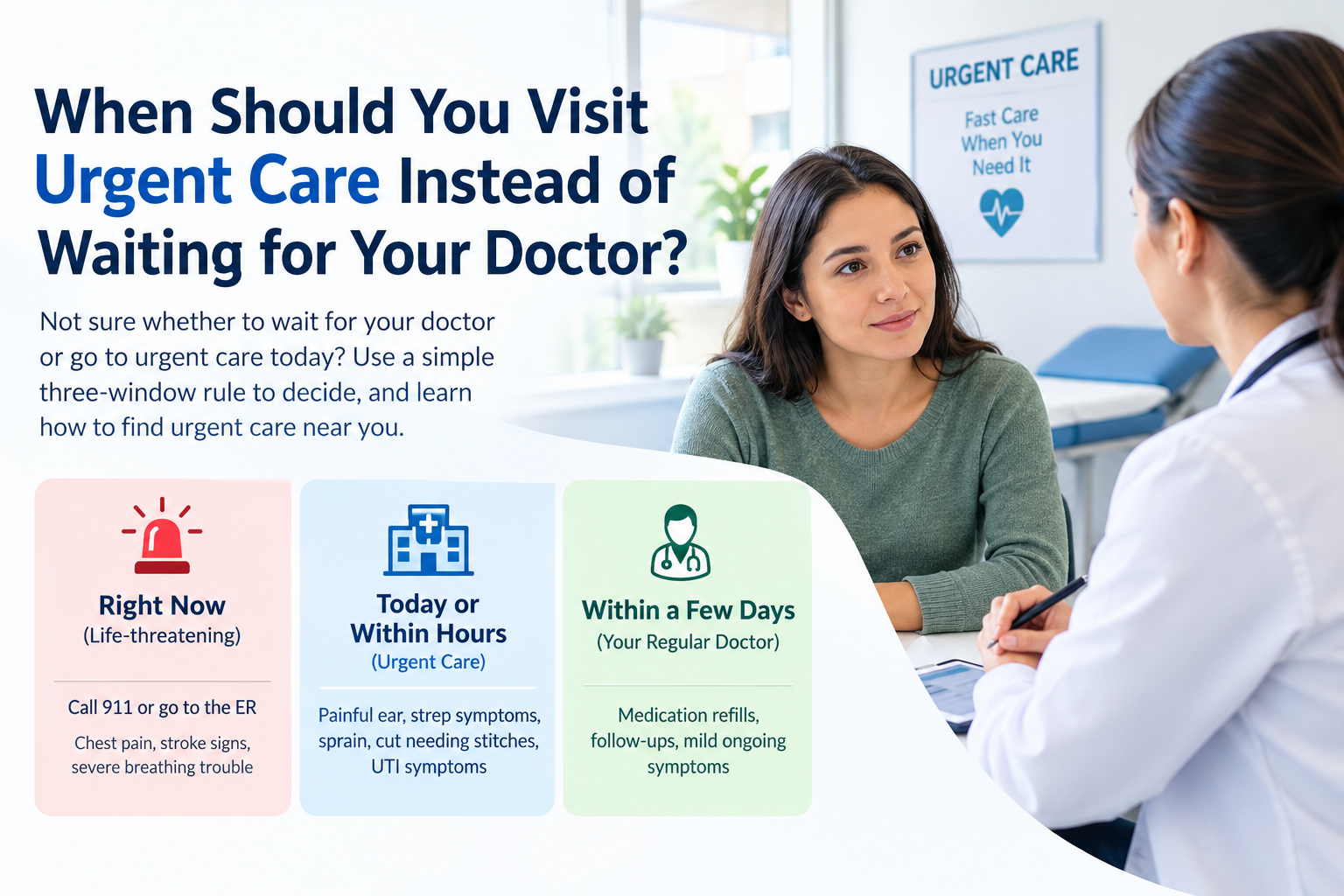
Table of contents
You wake up with a painful ear, a fever that won't quit, or an ankle that is swelling fast. Your doctor's office says the next opening is in three days. Do you wait, or do you go to urgent care today?
The answer depends on how serious your symptoms are and how long you can safely wait. This guide gives you a simple timeline to decide, plus tips for finding an urgent care near you.
Use the Three-Window Rule
A helpful way to decide is to ask how soon you need to be seen.
| How soon you need care | Best option | Examples |
|---|---|---|
| Right now, life-threatening | Call 911 or go to the ER | Chest pain, stroke signs, severe breathing trouble |
| Today or within hours | Urgent care | Painful ear, strep symptoms, sprain, cut needing stitches, UTI symptoms |
| Within a few days | Your regular doctor | Medication refills, follow-ups, mild ongoing symptoms |
If your symptoms are getting worse, or you are uncomfortable enough that waiting feels wrong, move up one window.
Signs You Should Not Wait for Your Doctor
Visit urgent care instead of waiting if you have:
- A fever that is high or lasting more than a couple of days
- Pain that is getting worse, such as ear, throat, or urinary pain
- An injury that you can't put weight on or that is swelling quickly
- A cut that is deep, gaping, or won't stop bleeding with pressure
- Vomiting or diarrhea with signs of dehydration
- A rash that is spreading or painful
- Cold or flu symptoms with a worsening cough or breathing discomfort that isn't severe
Waiting can make some conditions harder to treat. A throat infection, a urinary tract infection, or an untreated cut can all get worse over a few days.
When Waiting for Your Doctor Makes More Sense
Your regular doctor is usually the better choice when:
- You need a routine check-up or preventive screening
- You are managing a chronic condition, such as diabetes or high blood pressure
- You need a prescription refill and have time before you run out
- You want a follow-up after a hospital or urgent care visit
- Your symptoms are mild, stable, and not interfering with daily life
Your primary care doctor knows your history, which matters for long-term care. Urgent care is meant to complement that relationship, not replace it. Ask the urgent care to send a visit summary to your doctor.
How to Find Urgent Care Near You
When you search for urgent care near you, look beyond just the closest pin on the map. A few quick checks can save you a wasted trip.
- Check that the center is open right now, including evenings and weekends
- Confirm walk-ins are accepted, or whether you can check in online
- Ask whether it treats the problem you have, such as stitches, X-rays, or children
- Verify that your insurance is accepted, or ask about self-pay pricing
- Call ahead if you're unsure; staff can often tell you if the ER is a better choice
What to Bring
- Photo ID and insurance card
- A list of medications and allergies
- Your primary doctor's name and phone number
- Notes on when your symptoms started and what you've tried
Conclusion
If you need care today and it isn't an emergency, urgent care is usually faster and more convenient than waiting for a doctor's appointment. If your needs can wait a few days, your regular doctor is a great choice. And if you ever think your life is at risk, call 911.
This article is for general information only and is not a substitute for professional medical advice.
Frequently Asked Questions
See a Doctor in Elmhurst or Chinatown
Have a question about your own health? Book a visit at our Elmhurst, Queens clinic or our Chinatown, Manhattan clinic, or explore our primary care services.
Related articles
Urgent Care / Healthcare
Should You Visit Urgent Care Instead of Waiting for Your Doctor? What Your Symptoms Reveal, the Urgency Test It Turns On, and What Each Care Option Counts
This guide explains when a new, worsening, or disruptive health concern may be better suited to urgent care than waiting for a routine primary care appointment. It also covers when stable concerns can wait, how same-day access can help, when to call ahead, and why emergency symptoms require a higher level of care.
Urgent Care / Healthcare
Does Urgent Care in Elmhurst Really Handle Fever, Cold, and Sore Throat? What the Seasonal Data Reveals, the Care Test It Turns On, and What Each Symptom Counts
Fever, cold, and sore throat are common reasons patients seek urgent care, with respiratory visits often increasing during peak flu season. This guide explains what patients can expect, including possible testing, busier clinic periods, and warning signs that may require more urgent medical evaluation.
Urgent Care / Healthcare
Does Urgent Care in Elmhurst Accept Medicaid and Medicare? What the Research Reveals, the Coverage Test It Turns On, and What Each Plan Counts
National research shows that urgent care centers generally accept private insurance more often than Medicaid, while Medicaid acceptance varies by state and provider. Patients should verify their insurance plan, network coverage, and potential costs before visiting urgent care in Elmhurst.





