
HealthcareBy City Prime Care Team
Is It Allergies or Just a Cold? A Queens Guide to Sneezing, Itchy Eyes and Relief
Sneezing, itchy eyes, and a stuffy nose that will not quit? Learn how to tell allergies from a cold, common pollen seasons, treatment options, and when to see a doctor.
Medically reviewed by City Prime Care Administrator9 min read
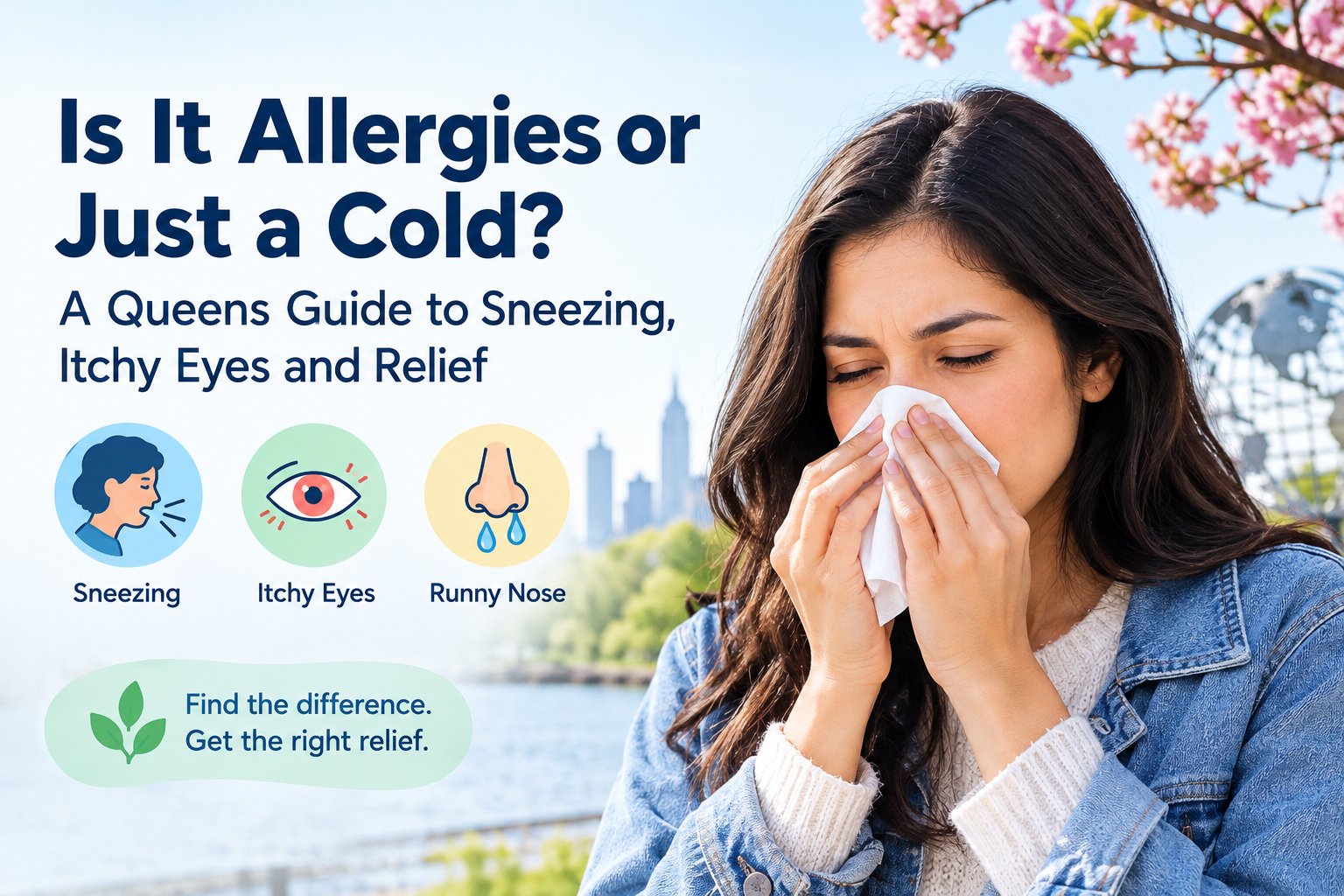
Table of contents
- 1. What Are Seasonal Allergies?
- 2. Allergies vs Cold vs Flu: Quick Comparison
- 3. Common Pollen Seasons in the Northeast (Simple Graph)
- 4. Treatment Options Compared
- 5. 8 Ways to Reduce Your Exposure
- 6. When Allergies Need a Doctor
- 7. Emergency Warning Signs of a Severe Allergic Reaction
- 8. Allergy Testing: What to Expect
- 9. Related Reading and Trusted Sources
- Conclusion
- Frequently Asked Questions
- See a Doctor in Elmhurst or Chinatown
Seasonal allergies, often called hay fever or allergic rhinitis, happen when your immune system overreacts to harmless things in the air, such as pollen or mold spores. The result is sneezing, a runny or stuffy nose, and itchy eyes that can drag on for weeks.
Many people mistake allergies for a cold, which leads to the wrong treatment. This guide explains the differences, which triggers are common in the Northeast, which medicines are used, simple ways to reduce exposure, and the signs that call for a medical visit. It is general information and not a substitute for personal medical advice.
1. What Are Seasonal Allergies?
When you breathe in an allergen such as pollen, your body releases chemicals like histamine. They cause swelling and irritation in your nose, eyes, and throat. Allergies are not contagious, and they can start at any age. For an overview see the MedlinePlus hay fever page.
Common symptoms include:
- Repeated sneezing
- Runny, stuffy, or itchy nose
- Itchy, red, or watery eyes
- Itchy throat or ears
- Postnasal drip and cough
- Fatigue and trouble concentrating
2. Allergies vs Cold vs Flu: Quick Comparison
Symptoms can overlap, but the pattern often gives clues. For the full flu picture, read our flu vs cold vs COVID-19 guide.
| Feature | Allergies | Cold | Flu |
|---|---|---|---|
| Start | Gradual, when exposed to a trigger | Gradual over a day or two | Sudden |
| How long | Weeks or as long as exposure continues | About 7 to 10 days | About 1 to 2 weeks |
| Fever | No | Rare or low | Common, often high |
| Itchy eyes or nose | Very common | Uncommon | Uncommon |
| Body aches | No | Mild | Common and often severe |
| Sneezing | Very common | Common | Sometimes |
| Mucus | Clear and thin | Thick or colored later | Varies |
3. Common Pollen Seasons in the Northeast (Simple Graph)
The timing below is a general pattern for the northeastern US and changes from year to year with the weather. Each block equals one month of typical activity.
| Allergen | Typical months | Graph |
|---|---|---|
| Tree pollen (oak, birch, maple) | March to May | ███ |
| Grass pollen | May to July | ███ |
| Weed pollen (especially ragweed) | August to October | ███ |
| Mold spores | Spring through late fall | ████████ |
| Indoor allergens (dust mites, pet dander) | Year round | ████████████ |
4. Treatment Options Compared
Many allergy medicines are sold without a prescription. Ask a pharmacist or clinician which one fits you, especially if you have other conditions or take other medicines.
| Option | Examples | Best for | Things to know |
|---|---|---|---|
| Oral antihistamines | Cetirizine, loratadine, fexofenadine | Sneezing, itching, runny nose | Some can cause drowsiness; newer ones are usually less sedating |
| Nasal steroid sprays | Fluticasone, triamcinolone | Congestion and overall nasal symptoms | Work best when used daily; may take days to reach full effect |
| Saline rinse | Saltwater spray or rinse | Clearing pollen and mucus | Use distilled, sterile, or previously boiled water only |
| Allergy eye drops | Antihistamine drops | Itchy, watery eyes | Remove contact lenses first unless the label says otherwise |
| Decongestants | Pseudoephedrine, oxymetazoline spray | Short-term stuffiness | Can raise blood pressure; see our blood pressure guide. Nasal spray types should not be used for more than a few days |
| Allergy shots or tablets (immunotherapy) | Prescribed after allergy testing | Long-term control | Prescribed by a clinician or allergist |
5. 8 Ways to Reduce Your Exposure
Medicine works best together with simple habits:
- Check the daily pollen count and plan outdoor time when it is lower.
- Keep windows closed during high pollen days, and use air conditioning with a clean filter.
- Shower and change clothes after being outdoors to remove pollen.
- Wash bedding weekly in hot water.
- Do not hang laundry outside on high pollen days.
- Use a HEPA filter in the bedroom if possible.
- Wear sunglasses outdoors to protect your eyes.
- Keep humidity under control to limit mold and dust mites.
6. When Allergies Need a Doctor
Schedule a visit if:
- Over-the-counter medicines are not helping after a couple of weeks
- Symptoms disturb your sleep or daily life
- You have wheezing, tightness in the chest, or repeated coughing; allergies and asthma often go together, see our asthma guide
- You have facial pain, thick colored mucus, or fever that may suggest a sinus infection
- You are not sure if it is allergies or a different condition
For general guidance on choosing the right place to be seen, our article on when to visit urgent care instead of waiting for your doctor can help.
7. Emergency Warning Signs of a Severe Allergic Reaction
A severe allergic reaction called anaphylaxis is rare with pollen but can happen with foods, insect stings, and medicines. Call 911 right away for any of these signs:
- Trouble breathing, wheezing, or throat tightness
- Swelling of the lips, tongue, or face
- Hives spreading over the body with dizziness or fainting
- Rapid heartbeat or sudden weakness
- Vomiting or stomach cramps shortly after exposure to a known allergen
If you have been prescribed an epinephrine auto-injector, use it as directed and still call 911.
8. Allergy Testing: What to Expect
| Test | How it works | What it shows |
|---|---|---|
| Skin prick test | Tiny drops of allergens placed on the skin and gently pricked | Which allergens cause a skin reaction |
| Blood test (specific IgE) | A blood sample is checked for allergy antibodies | Sensitivity to specific allergens |
| Medical history and exam | Your clinician reviews symptoms, timing, and exposures | Likely triggers and best treatment plan |
Learn more about allergy basics on the MedlinePlus allergy page.
9. Related Reading and Trusted Sources
More from City Prime Care: see our guides on common blood tests, adult vaccines and getting a same-day doctor appointment in Elmhurst.
Trusted outside sources: MedlinePlus: Hay Fever, MedlinePlus: Allergy and FDA: Know Which Medication Is Right for Your Seasonal Allergies.
Conclusion
Seasonal allergies are common and very treatable. Knowing your triggers, using the right medicine, and making a few changes at home can make a big difference. If your symptoms last longer than expected or keep coming back, a clinician can help you find a plan that works.
Contact Us
Dealing with stubborn allergy symptoms? Our Queens, NY team can help you find the cause and next steps. Contact City Prime Care here. This article is for general information and does not replace advice from your own healthcare provider.
Frequently Asked Questions
See a Doctor in Elmhurst or Chinatown
Have a question about your own health? Book a visit at our Elmhurst, Queens clinic or our Chinatown, Manhattan clinic, or explore our primary care services.
Related articles
Healthcare
Why Do You Feel Tired All the Time? Reading the Anemia Signs, the Five Testing Steps and the Sample Iron-Level Recovery
Constant tiredness, pale skin and shortness of breath can point to anemia. Learn the common causes, the blood tests used, a sample iron recovery pattern, five testing steps and when symptoms need urgent attention.
Healthcare
How Do Kidney Stones Cause Sudden Severe Pain? Reading the Warning Signs, the Five Prevention Steps and the Sample Stone-Size Outlook
Kidney stones can cause sudden, intense flank pain and blood in the urine. Learn the warning signs, how size affects passing a stone, five prevention steps, and when pain with fever or vomiting needs urgent care.
Healthcare
What Is Behind a Stubborn Itchy Rash? Reading the Rash Types, the Five Skin-Care Steps and the Sample Flare-Up Pattern
Itchy rashes can come from eczema, allergic reactions, irritants or infections. Compare common rash types, follow five skin-care steps, see a sample flare-up pattern, and learn which rashes need prompt medical care.





