
Walk-In ClinicBy City Prime Care Team
Walk-In Clinic vs Urgent Care: What's the Difference?
Walk-in clinic or urgent care? The two overlap, but they are not always identical. Learn the real differences and how to choose the right one for your symptoms.
Medically reviewed by City Prime Care Medical Team4 min read
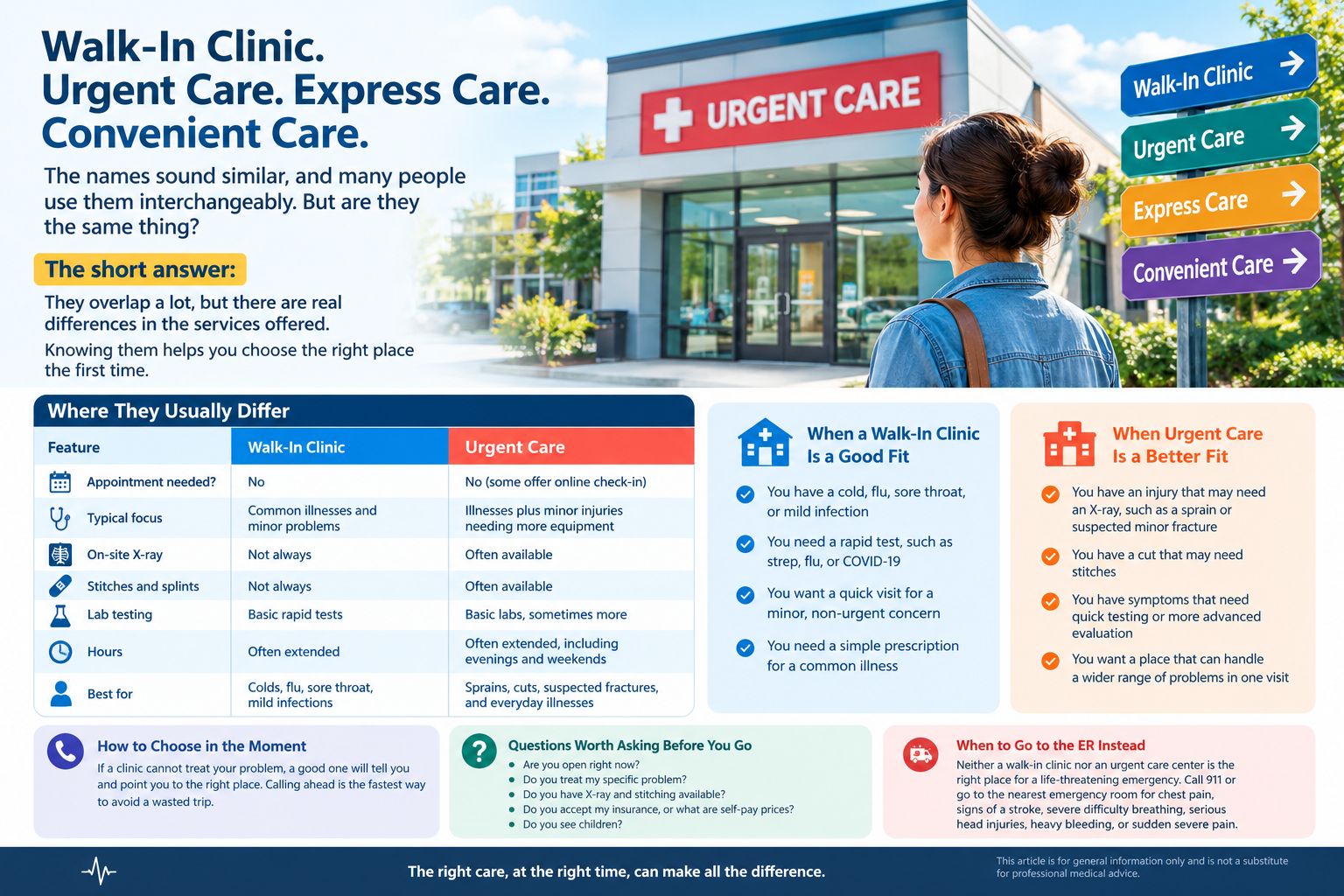
Table of contents
Walk-in clinic. Urgent care. Express care. Convenient care. The names sound similar, and many people use them interchangeably. But are they the same thing?
The short answer is that they overlap a lot, but there are real differences in the services offered. Knowing them helps you choose the right place the first time.
The Short Answer
Both walk-in clinics and urgent care centers see patients without appointments and treat non-emergency problems. Both usually have longer hours than a regular doctor's office, and both are generally less expensive than an emergency room for the same condition.
In practice, the line between them is blurry. Some facilities use the terms interchangeably, which is why the services a clinic lists matter more than its name.
Where They Usually Differ
| Walk-In Clinic | Urgent Care | |
|---|---|---|
| Appointment needed? | No | No (some offer online check-in) |
| Typical focus | Common illnesses and minor problems | Illnesses plus minor injuries needing more equipment |
| On-site X-ray | Not always | Often available |
| Stitches and splints | Not always | Often available |
| Lab testing | Basic rapid tests | Basic labs, sometimes more |
| Hours | Often extended | Often extended, including evenings and weekends |
| Best for | Colds, flu, sore throat, mild infections | Sprains, cuts, suspected fractures, and everyday illnesses |
These are general patterns, not rules. Every facility is different, so confirm what yours offers.
When a Walk-In Clinic Is a Good Fit
- You have a cold, flu, sore throat, or mild infection
- You need a rapid test, such as strep, flu, or COVID-19
- You want a quick visit for a minor, non-urgent concern
- You need a simple prescription for a common illness
When Urgent Care Is a Better Fit
- You have an injury that may need an X-ray, such as a sprain or suspected minor fracture
- You have a cut that may need stitches
- You have symptoms that need quick testing or more advanced evaluation
- You want a place that can handle a wider range of problems in one visit
How to Choose in the Moment
If a clinic cannot treat your problem, a good one will tell you and point you to the right place. Calling ahead is the fastest way to avoid a wasted trip.
Questions worth asking before you go:
- Are you open right now?
- Do you treat my specific problem?
- Do you have X-ray and stitching available?
- Do you accept my insurance, or what are self-pay prices?
- Do you see children?
When to Go to the ER Instead
Neither a walk-in clinic nor an urgent care center is the right place for a life-threatening emergency. Call 911 or go to the nearest emergency room for chest pain, signs of a stroke, severe difficulty breathing, serious head injuries, heavy bleeding, or sudden severe pain.
Conclusion
Walk-in clinics and urgent care centers overlap, and the labels matter less than what a facility can actually do. Focus on three things: whether it can treat your problem, whether it is open when you need it, and whether it takes your insurance. If your symptoms are life-threatening, skip both and call 911.
This article is for general information only and is not a substitute for professional medical advice.
Frequently Asked Questions
See a Doctor in Elmhurst or Chinatown
Have a question about your own health? Book a visit at our Elmhurst, Queens clinic or our Chinatown, Manhattan clinic, or explore our primary care services.
Related articles
Walk-In Clinic
Walk-In Clinic vs Urgent Care: What's the Difference?
Walk-in clinic or urgent care? Learn how they differ, what each treats, and how to choose the right one when you need care without an appointment.
Walk-In Clinic
Best Times to Visit a Walk-In Clinic to Avoid Long Waits
Want to spend less time in the waiting room? Learn what affects walk-in clinic wait times, the usual busy and quiet periods, and simple tips to get seen sooner.
Walk-In Clinic
Walk-In Clinic Near Me Open Now: Queens Late-Hours Guide
Need care after work or on a weekend? Learn how to find a walk-in clinic open now in Queens, what to bring, and when to call 911 instead.





