
HealthcareBy City Prime Care Team
Sore Throat That Won't Quit: When It's Strep and When It's Not
Not every sore throat is strep. Learn how strep throat differs from a viral sore throat, how the rapid test works, why antibiotics matter, home care tips, and warning signs to watch.
Medically reviewed by City Prime Care Administrator9 min read
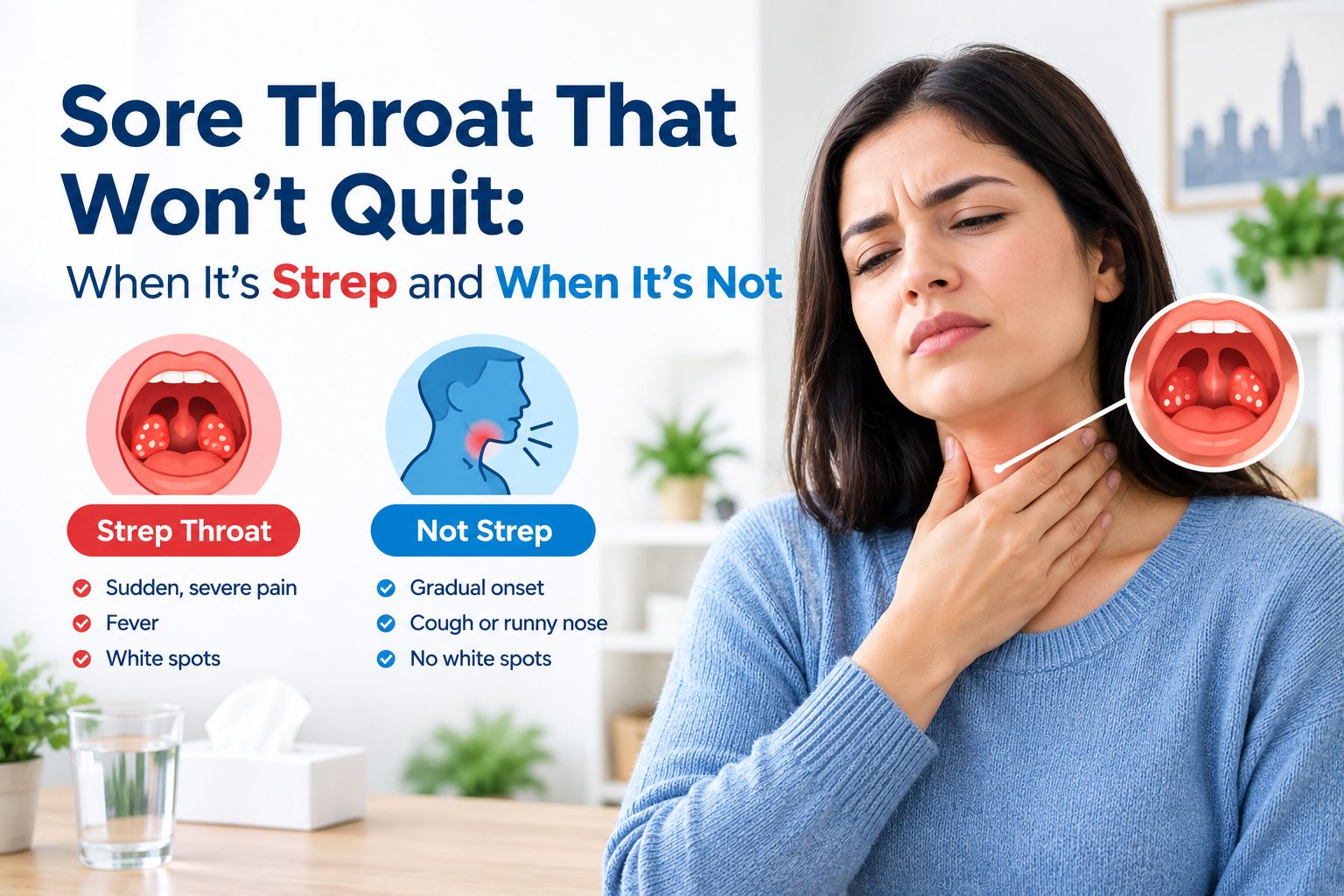
Table of contents
- 1. Strep Throat vs Viral Sore Throat: Key Differences
- 2. How Common Is Strep? (Simple Graph)
- 3. How Is Strep Throat Diagnosed?
- 4. Treatment: What Helps
- 5. Why Finishing the Antibiotic Matters: Possible Complications
- 6. 8 Home Care Tips for Any Sore Throat
- 7. When to See a Doctor
- 8. Emergency Warning Signs
- 9. Prevention: How to Lower the Chance of Spreading Strep
- 10. Related Reading and Trusted Sources
- Conclusion
- Frequently Asked Questions
- See a Doctor in Elmhurst or Chinatown
A sore throat is one of the most common reasons people visit a clinic. Most are caused by viruses and clear on their own. A smaller number are caused by group A streptococcus bacteria, known as strep throat, which needs antibiotics to prevent complications.
This guide explains how to tell the two apart, how clinicians test for strep, what treatment involves, simple home care steps, and which warning signs mean you should be seen quickly. It is general information and not a substitute for personal medical advice.
1. Strep Throat vs Viral Sore Throat: Key Differences
Symptoms overlap, so you cannot be sure from how you feel alone. The pattern below helps point toward one or the other, and a test confirms it. See the CDC page on strep throat for official information.
| Feature | More typical of strep throat | More typical of a viral sore throat |
|---|---|---|
| Onset | Sudden, often quite painful | Gradual, often with other cold signs |
| Cough | Usually absent | Often present |
| Runny or stuffy nose | Usually absent | Common |
| Fever | Common | Sometimes low or none |
| Tonsils | Red, swollen, sometimes with white patches | Mildly red or normal |
| Neck glands | Tender, swollen | Mild or none |
| Other clues | Headache, stomach pain, nausea (especially in children), tiny red spots on the roof of the mouth | Hoarseness, red or watery eyes (pink eye), mouth sores |
2. How Common Is Strep? (Simple Graph)
Most sore throats are not strep. According to the CDC, viruses cause most sore throats, and only around 1 in 10 adults and 3 in 10 children with a sore throat have strep throat. Each block below equals about 5 percent.
| Group | Share of sore throats caused by strep (approx.) | Graph |
|---|---|---|
| Children | About 30% (3 in 10) | ██████ |
| Adults | About 10% (1 in 10) | ██ |
That is why testing matters. Antibiotics help only for bacterial infections like strep and do not work on viruses.
3. How Is Strep Throat Diagnosed?
| Test | How it works | Time to result |
|---|---|---|
| Rapid strep test | A quick swab of the back of the throat | Usually within minutes |
| Throat culture | A swab sent to grow any bacteria | Usually 1 to 2 days |
If a rapid test is negative but your clinician still suspects strep, especially in a child, a throat culture may be done to double check.
4. Treatment: What Helps
If strep is confirmed, treatment usually includes:
- An antibiotic prescribed by your clinician, taken for the full course even if you feel better after a day or two
- Pain and fever relief with over-the-counter medicine, used as directed on the label (children should not be given aspirin)
- Plenty of fluids and rest
- Staying home until you meet the guidance on returning to school or work
Antibiotics shorten the illness slightly, lower the spread to others, and, most importantly, help prevent rare but serious complications.
5. Why Finishing the Antibiotic Matters: Possible Complications
| Complication | What it is |
|---|---|
| Abscess (pocket of pus) around the tonsils or in the neck | Can make swallowing and opening the mouth difficult |
| Rheumatic fever | An inflammatory illness that can affect the heart, joints, brain, and skin |
| Post-strep kidney inflammation | Swelling of the kidney filters after the infection |
| Ear and sinus infections | The bacteria can spread to nearby areas |
| Spread to others | Strep spreads easily through coughs, sneezes, and shared items |
6. 8 Home Care Tips for Any Sore Throat
These steps ease discomfort while your body fights the infection:
- Drink warm liquids such as tea with honey (honey is not for children under 1 year), or cool water.
- Gargle with warm salt water if you are old enough to do it safely.
- Suck on lozenges or hard candy (not for young children because of choking risk).
- Use a cool-mist humidifier or take a steamy shower.
- Rest your voice and your body.
- Take over-the-counter pain relief as directed on the label.
- Avoid smoke and strong irritants.
- Wash your hands often and do not share cups, forks, or towels.
If you are also dehydrated from fever and poor drinking, our dehydration guide explains the warning signs.
7. When to See a Doctor
Get seen the same day or within a day if you have:
- A sore throat with fever and no cough
- White patches on the tonsils or very swollen tonsils
- A sore throat lasting longer than a few days without improvement
- Swollen, tender glands in the neck
- A rash along with a sore throat
- Recent close contact with someone who has strep
A walk-in clinic or urgent care can often test for strep quickly. Our article on whether to choose a walk-in clinic or urgent care can help you decide.
8. Emergency Warning Signs
Seek emergency care right away if a sore throat comes with any of the following:
- Trouble breathing or noisy breathing
- Not able to swallow saliva, or drooling
- Severe one-sided throat pain with a muffled voice or inability to open the mouth fully
- Stiff neck or severe headache
- Swelling of the face or neck
- Signs of dehydration such as no urine for many hours, extreme drowsiness
9. Prevention: How to Lower the Chance of Spreading Strep
| Habit | Why it helps |
|---|---|
| Frequent handwashing with soap and water | Removes germs from the hands |
| Cover coughs and sneezes | Limits droplets in the air |
| Do not share cups, utensils, or bites of food; wash them after a sick person uses them | Strep passes through shared items |
| Stay home until it is safe to return | Protects classmates and coworkers |
| Keep vaccines current; see our adult vaccines guide | Prevents other respiratory infections that cause sore throats |
To learn more about how strep is tested and what to do after a positive result, see the CDC strep testing page.
10. Related Reading and Trusted Sources
More from City Prime Care: read about flu vs cold vs COVID-19 in Queens, seasonal allergies (a common cause of throat irritation) and urgent care open now in Elmhurst.
Trusted outside sources: CDC: About Strep Throat, CDC: Testing for Strep Throat and CDC: Preventing Group A Strep.
Conclusion
Most sore throats are viral and improve with rest, fluids, and comfort measures, but strep throat needs proper testing and antibiotics. If you are unsure, a quick test can give you a clear answer and the right treatment plan.
Contact Us
Have a painful sore throat or fever? Our Queens, NY team can help you get tested and treated. Contact City Prime Care here. This article is for general information and does not replace advice from your own healthcare provider.
Frequently Asked Questions
See a Doctor in Elmhurst or Chinatown
Have a question about your own health? Book a visit at our Elmhurst, Queens clinic or our Chinatown, Manhattan clinic, or explore our primary care services.
Related articles
Healthcare
Flu vs Cold vs COVID-19 in Queens, NY: Symptoms, Home Care, and When to See a Doctor
Not sure if it is the flu, a cold, or COVID-19? Compare symptoms side by side, learn how to care for yourself at home, and know the warning signs that mean it is time to get medical care.
Healthcare
How Do Kidney Stones Cause Sudden Severe Pain? Reading the Warning Signs, the Five Prevention Steps and the Sample Stone-Size Outlook
Kidney stones can cause sudden, intense flank pain and blood in the urine. Learn the warning signs, how size affects passing a stone, five prevention steps, and when pain with fever or vomiting needs urgent care.
Healthcare
Chest Discomfort Decoded: Heartburn, Muscle Strain, Anxiety or Something Serious?
Chest pain can come from the heart, the stomach, the muscles or even stress. Learn the usual patterns, the warning signs of a heart attack, and why unexplained chest pain should never be ignored.





