
HealthcareBy City Prime Care Team
Know Your Numbers: A Plain-English Guide to LDL, HDL and Triglycerides
High cholesterol rarely causes symptoms. Learn what LDL, HDL, and triglyceride numbers mean, who is at risk, 9 practical ways to lower cholesterol, and when to see a doctor.
Medically reviewed by City Prime Care Administrator9 min read
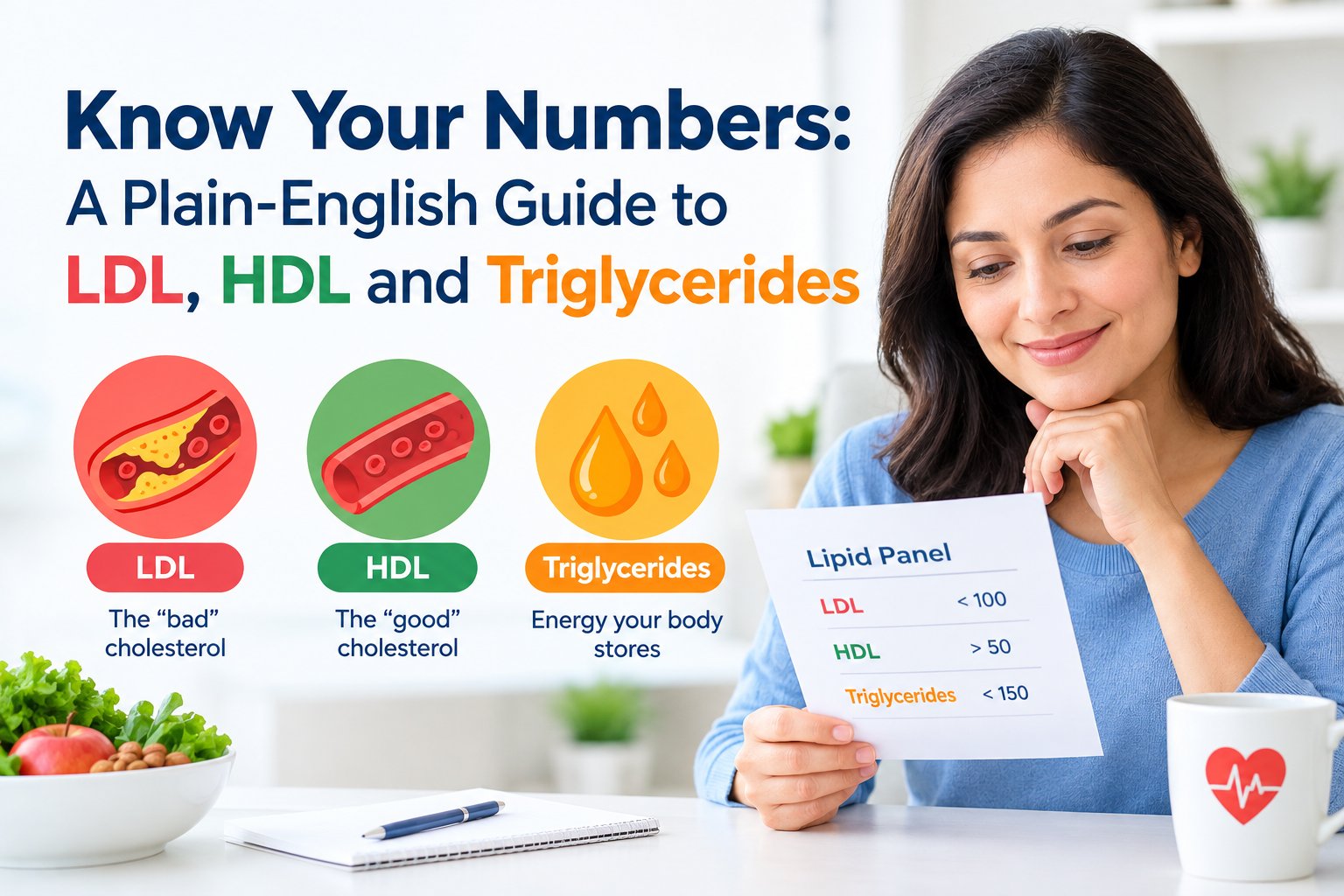
Table of contents
- 1. The Three Numbers on a Lipid Panel
- 2. Cholesterol Numbers for Adults (Reference Ranges)
- 3. LDL Levels at a Glance (Simple Graph)
- 4. Who Is at Higher Risk?
- 5. Symptoms: Why Testing Matters
- 6. 9 Ways to Lower Your Cholesterol
- 7. Smart Food Swaps
- 8. When Are Medicines Considered?
- 9. Emergency Warning Signs: Do Not Wait
- 10. Related Reading and Trusted Sources
- Conclusion
- Frequently Asked Questions
- See a Doctor in Elmhurst or Chinatown
Cholesterol is a waxy, fat-like substance your body needs to build cells and make hormones. The problem starts when levels of the wrong types climb too high. Over time, extra cholesterol can build up inside artery walls and raise the risk of heart disease and stroke.
The tricky part is that high cholesterol usually causes no symptoms at all. A simple blood test is the only way to know. This guide explains the numbers, who is at higher risk, nine practical ways to improve your levels, and when to talk to a doctor. It is general information and not a substitute for personal medical advice.
1. The Three Numbers on a Lipid Panel
A lipid panel is a blood test that measures several types of fats in your blood. The CDC cholesterol page explains the basics.
| Measurement | Common nickname | What it does |
|---|---|---|
| LDL cholesterol | Bad cholesterol | Can build up in artery walls and form plaque |
| HDL cholesterol | Good cholesterol | Helps carry extra cholesterol away from arteries |
| Triglycerides | Blood fats | Store extra calories; high levels add to heart risk |
| Total cholesterol | Overall number | Combines LDL, HDL, and part of the triglyceride value |
2. Cholesterol Numbers for Adults (Reference Ranges)
These are commonly used US reference ranges in mg/dL. Your clinician looks at your numbers together with your age, blood pressure, diabetes status, and other risks, so your personal goals may differ.
| Test | Desirable or optimal | Borderline | High |
|---|---|---|---|
| Total cholesterol | Below 200 | 200 to 239 | 240 and above |
| LDL cholesterol | Below 100 | 130 to 159 (100 to 129 is near optimal) | 160 to 189 (190 and above is very high) |
| HDL cholesterol | 60 and above is protective | Low: below 40 in men, below 50 in women | Higher is generally better |
| Triglycerides | Below 150 | 150 to 199 | 200 to 499 (500 and above is very high) |
3. LDL Levels at a Glance (Simple Graph)
The longer the bar, the higher the LDL range and the greater the concern. This is an illustration of the ranges, not a measure of your personal risk.
| LDL range (mg/dL) | Category | Graph |
|---|---|---|
| Below 100 | Optimal | ██ |
| 100 to 129 | Near optimal | ████ |
| 130 to 159 | Borderline high | ██████ |
| 160 to 189 | High | ████████ |
| 190 and above | Very high | ██████████ |
4. Who Is at Higher Risk?
| Risk factor | Can you change it? |
|---|---|
| Diet high in saturated and trans fats | Yes |
| Physical inactivity | Yes |
| Overweight or obesity | Yes, gradually |
| Smoking | Yes; quitting also raises HDL |
| Excess alcohol | Yes |
| Type 2 diabetes | Manageable; see our type 2 diabetes guide |
| High blood pressure | Manageable; see our high blood pressure guide |
| Age and family history (including inherited cholesterol disorders) | No, but you can still act on the rest |
5. Symptoms: Why Testing Matters
High cholesterol is called a silent condition because most people feel completely normal. Symptoms usually appear only after the damage has built up, such as chest pain from narrowed heart arteries. That is why screening is so important.
Questions worth asking at your next visit:
- When was my last cholesterol test?
- How often should I be tested, given my age and family history?
- Are my numbers fine, or should we repeat them?
- Do I have other risks, like blood pressure or blood sugar, that change my goals?
Adults who are otherwise healthy are generally advised to be checked every few years, and more often if they have risk factors. Our annual physical checkup guide and common blood tests guide explain what to expect.
6. 9 Ways to Lower Your Cholesterol
Small, steady changes add up. Try to build these habits one at a time:
- Cut back on saturated fat found in fatty red meat, butter, full-fat dairy, and many fried or processed foods.
- Avoid trans fats. Check labels for partially hydrogenated oils.
- Eat more soluble fiber from oats, beans, lentils, apples, and citrus fruit.
- Choose healthier fats such as olive oil, nuts, seeds, and fatty fish like salmon.
- Move your body. Aim for about 150 minutes of moderate activity each week, such as brisk walking.
- Reach and keep a healthy weight; even a modest loss can improve numbers.
- Quit smoking. It helps HDL levels and lowers overall heart risk.
- Limit alcohol, since too much raises triglycerides.
- Take prescribed medicines every day as directed and keep follow-up appointments.
7. Smart Food Swaps
| Choose more often | Limit |
|---|---|
| Oatmeal, whole grains, brown rice | White bread, sugary cereals, pastries |
| Beans, lentils, chickpeas | Processed meats like sausage and bacon |
| Fish, skinless poultry, tofu | Fatty cuts of red meat |
| Olive or canola oil | Butter, ghee, palm or coconut oil in large amounts |
| Fresh fruit, vegetables, unsalted nuts | Fried snacks and fast food |
8. When Are Medicines Considered?
Lifestyle changes come first for many people, but medicines may be recommended if your numbers or overall heart risk stay high. The most common are statins, which lower LDL. Others exist if statins are not suitable. Never stop or change a cholesterol medicine on your own; ask your clinician about side effects and alternatives. You can read more on the MedlinePlus cholesterol page.
Make an appointment soon if:
- You have never had your cholesterol checked and are over 20
- Your last results were borderline or high
- Heart disease or very high cholesterol runs in your family
- You have diabetes, high blood pressure, or smoke
9. Emergency Warning Signs: Do Not Wait
Call 911 for chest pain or pressure, pain spreading to the arm, jaw, or back, sudden shortness of breath, or signs of stroke such as face drooping, arm weakness, or slurred speech. These can be signs of a heart attack or stroke and need emergency care.
10. Related Reading and Trusted Sources
More from City Prime Care: our guides on sleep and your health, dehydration and when to choose urgent care over waiting for your doctor pair well with this one.
Trusted outside sources: CDC: About Cholesterol, MedlinePlus: Cholesterol and NHLBI: Blood Cholesterol.
Conclusion
You cannot feel high cholesterol, but you can measure it and improve it. A simple blood test, a few lifestyle changes, and medicine when needed can lower your risk of heart disease and stroke significantly.
Contact Us
Want to check your cholesterol or review your results? Our Queens, NY team can help you with testing and next steps. Contact City Prime Care here. This article is for general information and does not replace advice from your own healthcare provider.
Frequently Asked Questions
See a Doctor in Elmhurst or Chinatown
Have a question about your own health? Book a visit at our Elmhurst, Queens clinic or our Chinatown, Manhattan clinic, or explore our primary care services.
Related articles
Healthcare
Chest Discomfort Decoded: Heartburn, Muscle Strain, Anxiety or Something Serious?
Chest pain can come from the heart, the stomach, the muscles or even stress. Learn the usual patterns, the warning signs of a heart attack, and why unexplained chest pain should never be ignored.
Healthcare
Is This Just a Headache? How to Tell Tension Headaches, Migraines and Warning-Sign Headaches Apart
Not every headache is the same. Compare tension headaches, migraines and cluster headaches, learn common triggers, home-care steps, and the warning signs that mean a headache needs urgent attention.
Healthcare
Sleep and Your Health: How Many Hours You Really Need and 10 Habits for Better Sleep
Poor sleep affects mood, weight, blood pressure and immunity. See how many hours each age group needs, 10 practical sleep habits, and when to talk to a doctor.





