
HealthcareBy City Prime Care Team
Type 2 Diabetes: Early Signs, Blood Sugar Numbers, and a Practical Daily Management Plan
Learn the early warning signs of type 2 diabetes, how A1C and fasting glucose tests are interpreted, and how food, activity, and regular checkups help you stay in control.
Medically reviewed by City Prime Care Administrator10 min read
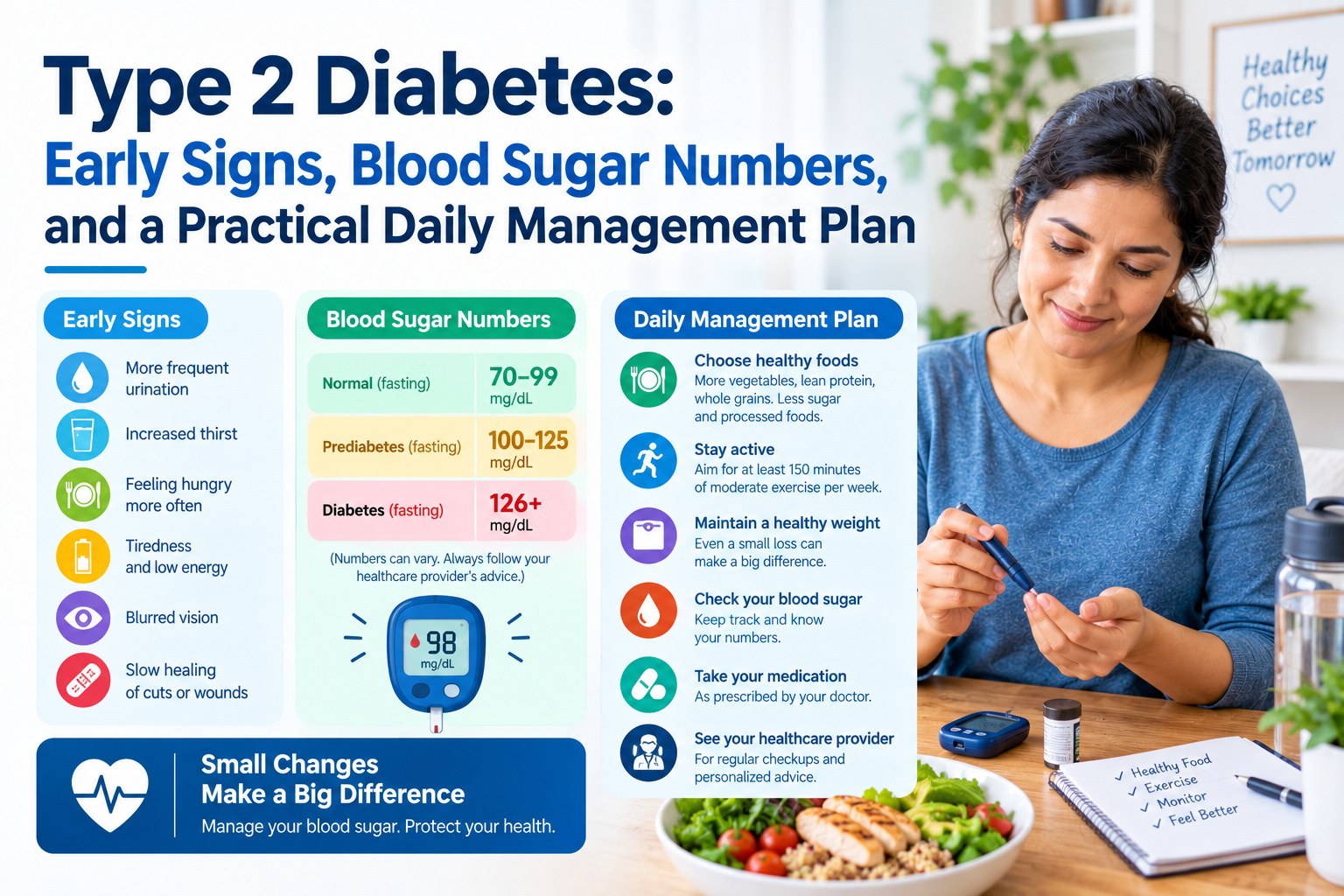
Table of contents
- 1. What Is Type 2 Diabetes?
- 2. Seven Early Warning Signs
- 3. Who Is at Higher Risk?
- 4. Diagnosis: Understanding Your Blood Sugar Numbers
- 5. Build a Balanced Plate
- 6. Seven Daily Habits for Better Control
- 7. Your Yearly Monitoring Checklist
- 8. Low Blood Sugar: What to Do
- 9. Prediabetes Can Often Be Reversed
- 10. Related Reading and Trusted Sources
- 11. Contact Us
- Conclusion
- Frequently Asked Questions
- See a Doctor in Elmhurst or Chinatown
Type 2 diabetes is a long-term condition in which the body does not use insulin properly, causing sugar (glucose) to build up in the blood. It is the most common form of diabetes and often develops slowly, so many people have it for years before it is diagnosed.
With early detection, steady daily habits, and regular medical follow-up, people with type 2 diabetes can stay healthy and prevent or delay serious complications. This guide walks through warning signs, test numbers, daily management, and what to monitor over the year. For background on the tests mentioned here, see our guide to common blood tests explained.
1. What Is Type 2 Diabetes?
After you eat, your body breaks food down into glucose, which enters your bloodstream. The hormone insulin helps move that glucose into your cells for energy. In type 2 diabetes, your cells resist insulin and, over time, the pancreas may not make enough to keep up. Blood sugar then stays too high.
Left uncontrolled, high blood sugar can damage nerves, blood vessels, the eyes, the kidneys, and the heart. That is why early diagnosis and steady management matter. You can read more on the CDC diabetes page.
2. Seven Early Warning Signs
Symptoms can be mild and easy to miss. Watch for these signs and speak with a doctor if several apply to you:
- Increased thirst that does not go away
- Needing to urinate more often, especially at night
- Constant tiredness or low energy
- Blurred vision
- Cuts, sores, or infections that heal slowly
- Tingling, numbness, or burning in the hands or feet
- Unexplained weight loss or increased hunger
Some people have no symptoms at all, which is why screening tests are so important.
3. Who Is at Higher Risk?
You may be at higher risk if you:
- Are overweight or have obesity, especially with extra weight around the waist
- Are 35 or older
- Have a parent or sibling with diabetes
- Are physically inactive
- Have high blood pressure or abnormal cholesterol
- Had gestational diabetes or gave birth to a baby over 9 pounds
- Have prediabetes or polycystic ovary syndrome (PCOS)
The American Diabetes Association recommends that testing generally begin at age 35 for all adults, and sooner for people with risk factors. High blood pressure is a common companion condition, so also read our guide to high blood pressure numbers and daily management.
4. Diagnosis: Understanding Your Blood Sugar Numbers
Three common blood tests are used to diagnose prediabetes and diabetes. Results should be confirmed by repeat testing unless you have clear symptoms.
| Test | Normal | Prediabetes | Diabetes |
|---|---|---|---|
| A1C (average blood sugar over about 3 months) | Below 5.7% | 5.7% to 6.4% | 6.5% or higher |
| Fasting plasma glucose (after 8 hours without food) | Below 100 mg/dL | 100 to 125 mg/dL | 126 mg/dL or higher |
| Oral glucose tolerance test (2 hours after drink) | Below 140 mg/dL | 140 to 199 mg/dL | 200 mg/dL or higher |
Need testing? Our diagnostic testing service can help, and our article on understanding your diagnostic testing results explains how to read a lab report.
5. Build a Balanced Plate
The plate method is a simple way to manage portions without counting every number. Picture your plate divided as shown in the graph below.
| Plate Section | Graph | Share of Plate |
|---|---|---|
| Non-starchy vegetables (leafy greens, broccoli, peppers, tomatoes) | ██████████ | About 50% |
| Lean protein (fish, chicken, eggs, beans, tofu) | █████ | About 25% |
| Carbohydrates, preferably whole grains or starchy vegetables | █████ | About 25% |
Helpful food tips:
- Choose water or unsweetened drinks instead of soda and juice.
- Pick whole grains such as brown rice, oats, and whole wheat roti or bread.
- Include fiber from vegetables, lentils, and beans to slow sugar absorption.
- Limit sweets, fried foods, and highly processed snacks.
If you would like personal guidance on food and activity, ask about our lifestyle counseling service.
6. Seven Daily Habits for Better Control
Consistency is more powerful than perfection. These habits form the foundation of good diabetes care:
- Eat meals at regular times and avoid long gaps between them.
- Move your body for at least 150 minutes per week, such as 30 minutes of brisk walking five days a week.
- Take medicines exactly as prescribed, and never skip doses without speaking to your doctor.
- Check your blood sugar as advised by your care team and keep a written log.
- Check your feet every day for cuts, blisters, redness, or swelling.
- Aim for 7 to 9 hours of sleep and find healthy ways to manage stress.
- Stay hydrated and avoid smoking.
7. Your Yearly Monitoring Checklist
| Check | Typical Frequency | Why It Matters |
|---|---|---|
| A1C test | Twice a year if stable, every 3 months if not at goal | Shows your average blood sugar control |
| Blood pressure | Every visit | High pressure adds to heart and kidney risk |
| Cholesterol panel | At least yearly, or as advised | Protects heart and blood vessels |
| Kidney tests (urine albumin and eGFR) | Yearly | Detects early kidney damage |
| Dilated eye exam | Every 1 to 2 years, as advised | Finds diabetic eye disease early |
| Foot exam | At least yearly, with daily self-checks | Prevents serious infections and ulcers |
For many adults with type 2 diabetes, a common A1C goal is below 7%, but your personal target depends on your age, health, and medicines, so discuss it with your doctor. Our chronic disease management team supports patients with this kind of long-term monitoring.
8. Low Blood Sugar: What to Do
Low blood sugar, called hypoglycemia, is usually defined as below 70 mg/dL. It can cause shakiness, sweating, confusion, fast heartbeat, and hunger, and it is more common in people who take insulin or certain diabetes pills.
Use the 15-15 rule:
- Take 15 grams of fast-acting carbohydrate, such as 4 ounces of juice or regular soda, or glucose tablets.
- Wait 15 minutes and recheck your blood sugar.
- Repeat if it is still below 70 mg/dL, then eat a small snack or meal once it rises.
- Call 911 if the person is confused, cannot swallow safely, or loses consciousness.
9. Prediabetes Can Often Be Reversed
If your numbers are in the prediabetes range, you have an opportunity to act. In the large national Diabetes Prevention Program study, run by the NIDDK, people who lost 5 to 7 percent of their body weight and exercised about 150 minutes a week lowered their risk of developing type 2 diabetes by about 58 percent. Small, steady changes work.
10. Related Reading and Trusted Sources
More from City Prime Care: Annual Physical Checkup Guide and Flu vs Cold vs COVID-19, since illness can affect blood sugar control.
Trusted external sources: American Diabetes Association, CDC Diabetes, and NIDDK Diabetes Prevention Program.
11. Contact Us
If you have symptoms, risk factors, or want a blood sugar check, City Prime Care can guide you on testing and next steps at our Elmhurst, Queens clinic. Please use our contact page at https://www.cityprimecare.com/contact to reach us.
Conclusion
A diabetes diagnosis can feel overwhelming, but it is highly manageable. Knowing your numbers, building simple daily routines, and keeping up with regular checkups are the habits that protect your health for the long term.
This article is for general education and does not replace personal medical advice. Please consult a qualified healthcare professional about your own diagnosis and treatment plan.
Frequently Asked Questions
See a Doctor in Elmhurst or Chinatown
Have a question about your own health? Book a visit at our Elmhurst, Queens clinic or our Chinatown, Manhattan clinic, or explore our primary care services.
Related articles
Healthcare
Why Do You Feel Tired All the Time? Reading the Anemia Signs, the Five Testing Steps and the Sample Iron-Level Recovery
Constant tiredness, pale skin and shortness of breath can point to anemia. Learn the common causes, the blood tests used, a sample iron recovery pattern, five testing steps and when symptoms need urgent attention.
Healthcare
How Do Kidney Stones Cause Sudden Severe Pain? Reading the Warning Signs, the Five Prevention Steps and the Sample Stone-Size Outlook
Kidney stones can cause sudden, intense flank pain and blood in the urine. Learn the warning signs, how size affects passing a stone, five prevention steps, and when pain with fever or vomiting needs urgent care.
Healthcare
Chest Discomfort Decoded: Heartburn, Muscle Strain, Anxiety or Something Serious?
Chest pain can come from the heart, the stomach, the muscles or even stress. Learn the usual patterns, the warning signs of a heart attack, and why unexplained chest pain should never be ignored.





