
HealthcareBy City Prime Care Team
Upset Stomach, Vomiting and Diarrhea: What's Behind It and How to Recover Safely
Stomach bugs and food poisoning are miserable but usually short-lived. Learn the common causes, how to rehydrate, what to eat, how to avoid spreading it, and the signs that mean you need medical care.
Medically reviewed by City Prime Care Administrator9 min read
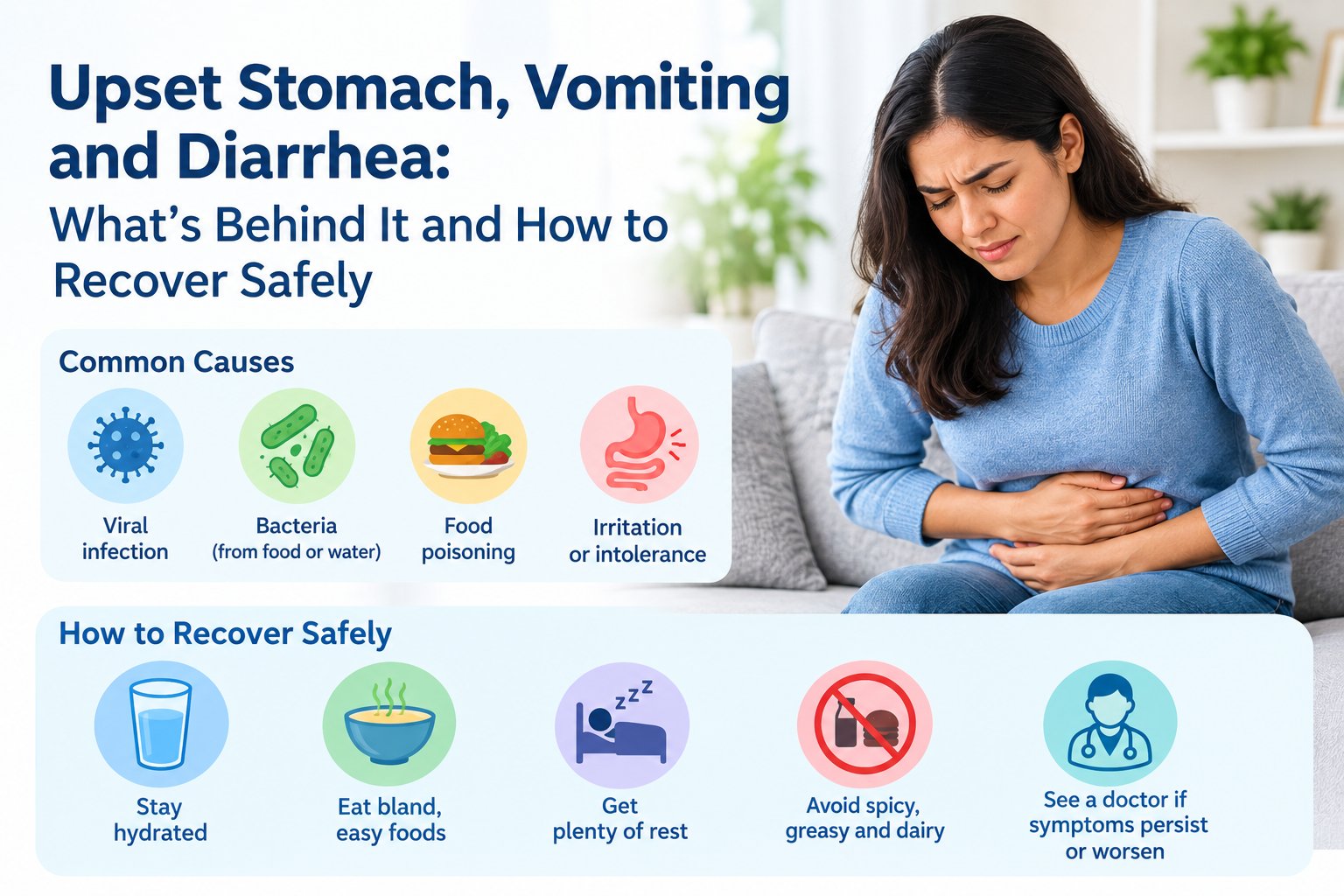
Table of contents
- 1. What Is Happening in Your Gut
- 2. Food Poisoning vs Stomach Flu: A Comparison
- 3. How Dehydration Develops
- 4. Recovery Plan, Step by Step
- 5. What to Eat and What to Avoid
- 6. Red Flags: When to Seek Care
- 7. Higher-Risk Groups
- 8. Prevention and Food Safety
- Conclusion
- Frequently Asked Questions
- See a Doctor in Elmhurst or Chinatown
Few things disrupt a day like a stomach that will not settle. Whether it started after a restaurant meal or seems to be going around your home or workplace, vomiting and diarrhea are usually the body's way of clearing an infection or irritant. Most healthy adults recover within a few days with rest and fluids.
Still, these illnesses can become serious when fluid loss is heavy, when symptoms last too long, or when the person affected is very young, older, pregnant, or has a chronic condition. This guide explains the common causes, how to tell them apart, a safe recovery plan, and clear warning signs. If you are weighing where to be seen, our article on walk-in clinic vs urgent care may help.
In this article:
- 1. What is happening in your gut
- 2. Food poisoning vs stomach flu (table)
- 3. How dehydration develops (graph)
- 4. Recovery plan, step by step
- 5. What to eat and what to avoid
- 6. Red flags: when to seek care
- 7. Higher-risk groups
- 8. Prevention and food safety
1. What Is Happening in Your Gut
Doctors often use the term gastroenteritis for inflammation of the stomach and intestines. It is commonly caused by viruses such as norovirus, by bacteria such as Salmonella or E. coli, or occasionally by parasites. People often call a viral version the stomach flu, though it is unrelated to influenza. Food poisoning describes illness from eating contaminated food or drink.
The main danger in most cases is not the germ itself but the loss of fluids and salts through vomiting and diarrhea. For general reference, see the MedlinePlus page on food poisoning.
2. Food Poisoning vs Stomach Flu: A Comparison
| Feature | Food poisoning | Viral stomach flu |
|---|---|---|
| 1. Typical onset | Hours to a couple of days after eating a contaminated item | 1 to 2 days after contact with an infected person or surface |
| 2. Common symptoms | Nausea, vomiting, cramps, watery or sometimes bloody diarrhea | Vomiting, watery diarrhea, cramps, low fever, aches |
| 3. How it spreads | Contaminated food or water; usually not person to person (some germs can spread) | Easily from person to person and from surfaces |
| 4. Usual duration | From a day to about a week depending on the germ | Often 1 to 3 days |
| 5. Others affected? | People who ate the same food | Household members or coworkers |
| 6. Antibiotics useful? | Only for certain bacteria and decided by a clinician | No, since viruses do not respond to antibiotics |
Only a clinician, and sometimes a stool test, can identify the exact cause. Treatment for most cases focuses on hydration and symptom relief either way.
3. How Dehydration Develops
The graph below is an illustrative guide to how fluid loss can progress. Actual severity depends on age, size, climate, and how much you can drink.
| Stage | Fluid status (graph) | What you may notice |
|---|---|---|
| Mild | ███░░░░░░░ | Thirst, dry mouth, darker urine, mild tiredness |
| Moderate | ██████░░░░ | Very dry mouth, little urine, dizziness when standing, headache |
| Severe | ██████████ | Confusion, very fast heartbeat, almost no urine, fainting; needs emergency care |
Learn to spot the signs early with our dehydration guide and urine color chart, which also explains when IV fluids may be needed.
4. Recovery Plan, Step by Step
For a healthy adult with ordinary symptoms:
- Pause solid food for a short time if you are vomiting, then restart slowly.
- Take small, frequent sips of fluid, such as water or an oral rehydration solution, instead of gulping large amounts.
- If you vomit, wait 10 to 15 minutes and try again with smaller sips.
- Rest. Your body needs energy to fight the infection.
- Once vomiting eases, add bland foods in small portions.
- Avoid anti-diarrhea medicine unless a clinician or pharmacist says it is appropriate, especially if you have fever or bloody stools.
- Wash hands thoroughly and often, and avoid preparing food for others until you have been symptom-free for at least a couple of days.
5. What to Eat and What to Avoid
| Category | Usually well tolerated | Better to avoid for now |
|---|---|---|
| Fluids | Water, oral rehydration solution, clear broth, diluted juice | Alcohol, large amounts of caffeine, very sugary drinks |
| Starches | Rice, plain toast, crackers, oatmeal, potatoes | Heavy, greasy, or fried foods |
| Fruits and veg | Bananas, applesauce, cooked carrots | Raw salads, high-fiber or very spicy foods at first |
| Protein | Plain chicken, eggs, yogurt if tolerated | Fatty meats, rich sauces |
| Dairy | Small amounts of yogurt may be fine | Large amounts of milk or cream for some people |
Most people can return to a normal diet within a few days. Go gradually and listen to your stomach.
6. Red Flags: When to Seek Care
Do not wait it out if any of these apply. Call a clinician the same day or seek urgent or emergency care depending on severity.
| Warning sign | Why it matters | Suggested action |
|---|---|---|
| Unable to keep any fluids down for 24 hours or more | High risk of dehydration | Be seen the same day |
| Blood in vomit or stool, or black stools | Possible serious bleeding or infection | Be seen urgently |
| Fever of 102°F or higher | May signal a bacterial infection | Call a clinician |
| Severe or worsening abdominal pain | Possible appendicitis or other condition | Go to urgent care or ER |
| Dizziness, fainting, very little urine | Moderate to severe dehydration | Seek urgent care |
| Symptoms lasting more than 3 days | Needs evaluation | Book a visit |
| Recent travel, antibiotic use, or hospital stay | Different infections possible | Mention to your clinician |
7. Higher-Risk Groups
These people become dehydrated or seriously ill more quickly and should have a lower threshold to call a clinician:
- Infants and young children
- Adults over 65
- Pregnant women
- People with diabetes, kidney disease, heart disease, or weakened immunity
- People taking diuretics or blood pressure medicines that affect fluids
If you have diabetes, vomiting and poor eating can affect blood sugar. Our guide on type 2 diabetes management explains how to monitor safely, and our chronic disease management page describes ongoing support.
8. Prevention and Food Safety
Simple habits lower your risk:
- Wash hands with soap and water for at least 20 seconds before eating and after using the bathroom
- Cook meat, poultry, and eggs thoroughly
- Refrigerate leftovers promptly, ideally within two hours
- Keep raw meat separate from ready-to-eat foods
- Wash fruits and vegetables before eating
- Avoid food that has been left out for long periods
- Disinfect surfaces after someone at home has been sick, since norovirus survives on surfaces
- Stay home until you have been symptom-free for at least a day or two
For NYC-specific public health information, visit the New York City Department of Health.
Conclusion
Most stomach illnesses pass quickly with rest, fluids, and gentle foods. The key is to stay ahead of dehydration and to recognize when symptoms go beyond the ordinary.
Contact Us: If you or a family member has symptoms that are not improving, or you need guidance on next steps, reach City Prime Care through our Contact Us page. This article is general health information and is not a substitute for personal medical advice. In an emergency, call 911.
Frequently Asked Questions
See a Doctor in Elmhurst or Chinatown
Have a question about your own health? Book a visit at our Elmhurst, Queens clinic or our Chinatown, Manhattan clinic, or explore our primary care services.
Related articles
Healthcare
Why Do You Feel Tired All the Time? Reading the Anemia Signs, the Five Testing Steps and the Sample Iron-Level Recovery
Constant tiredness, pale skin and shortness of breath can point to anemia. Learn the common causes, the blood tests used, a sample iron recovery pattern, five testing steps and when symptoms need urgent attention.
Healthcare
How Do Kidney Stones Cause Sudden Severe Pain? Reading the Warning Signs, the Five Prevention Steps and the Sample Stone-Size Outlook
Kidney stones can cause sudden, intense flank pain and blood in the urine. Learn the warning signs, how size affects passing a stone, five prevention steps, and when pain with fever or vomiting needs urgent care.
Healthcare
How Do Ear Infections Show Up in Children and Adults? Reading the Symptom Patterns, the Five Care Steps and the Sample Recovery Timeline
Ear infections cause pain, fever and muffled hearing in children and adults alike. Compare middle-ear infection and swimmer's ear, follow five care steps, see a sample recovery timeline, and learn when to be seen quickly.





