
HealthcareBy City Prime Care Team
What Is Behind a Stubborn Itchy Rash? Reading the Rash Types, the Five Skin-Care Steps and the Sample Flare-Up Pattern
Itchy rashes can come from eczema, allergic reactions, irritants or infections. Compare common rash types, follow five skin-care steps, see a sample flare-up pattern, and learn which rashes need prompt medical care.
Medically reviewed by City Prime Care Administrator9 min read
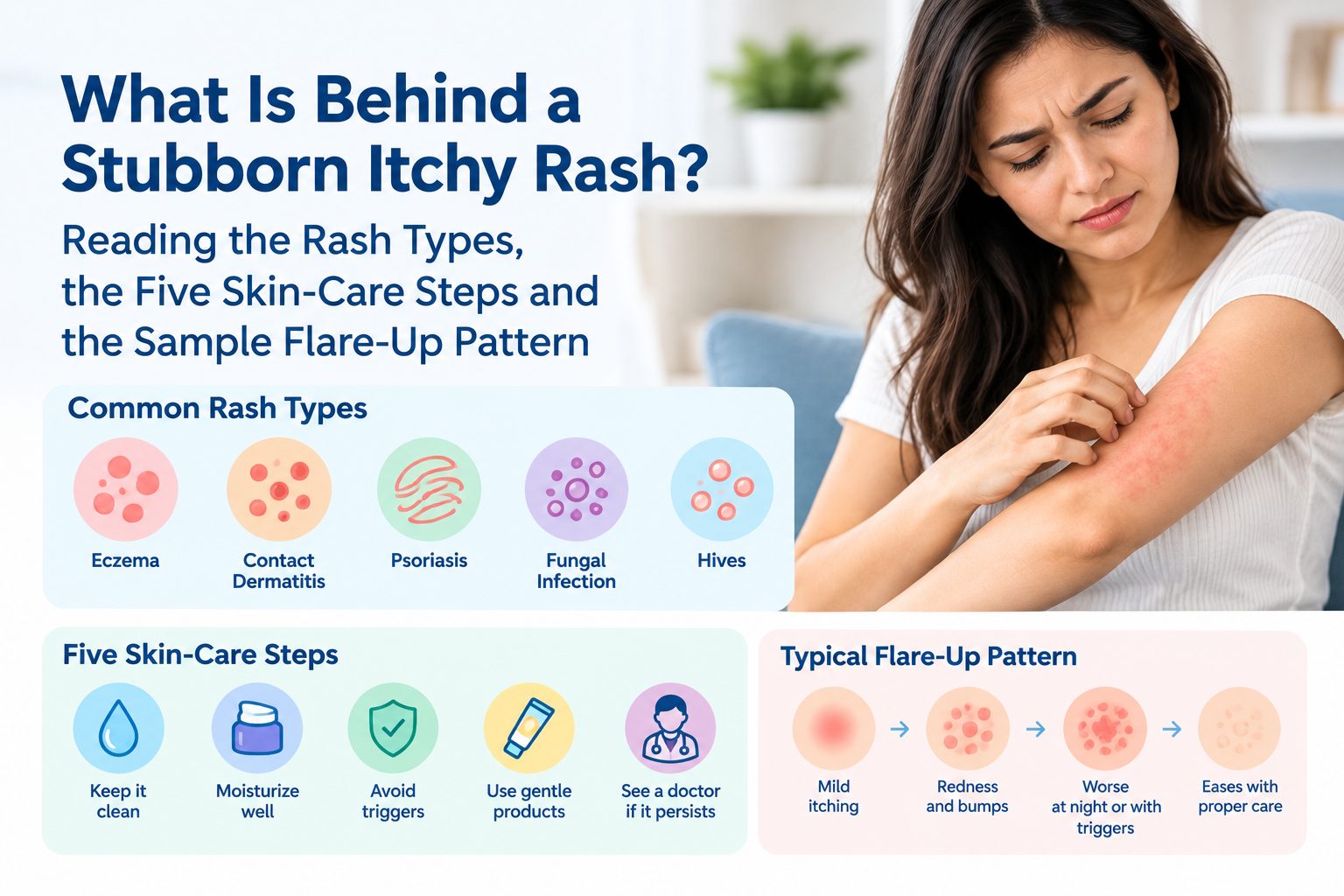
Table of contents
- 1. What a Rash Is Telling You
- 2. Common Rash Types Compared
- 3. Common Triggers
- 4. The Five Skin-Care Steps
- 5. Sample Flare-Up Pattern
- 6. Treatments a Clinician May Use
- 7. Red Flags: Rashes That Need Quick Care
- 8. Prevention and Long-Term Control
- Conclusion
- Frequently Asked Questions
- See a Doctor in Elmhurst or Chinatown
An itchy rash can be small and brief or red, cracked, and impossible to ignore. Causes range from eczema and allergic reactions to irritants, infections, and medicine side effects. Because many rashes look alike, the pattern, location, and timing matter as much as the appearance.
This guide reads the common rash types, shows a five-step skin-care routine that helps many people, charts a sample flare-up pattern, and lists the rashes that should be checked quickly. For help choosing where to go, see our article on when to visit urgent care instead of waiting for your doctor.
In this article:
- 1. What a rash is telling you
- 2. Common rash types compared (table)
- 3. Common triggers (graph)
- 4. The five skin-care steps
- 5. Sample flare-up pattern
- 6. Treatments a clinician may use
- 7. Red flags: rashes that need quick care
- 8. Prevention and long-term control
1. What a Rash Is Telling You
A rash is a change in skin color, texture, or feel. It reflects inflammation, irritation, infection, or an immune reaction. Eczema, also called atopic dermatitis, is a chronic condition marked by dry, itchy, inflamed skin that tends to flare and settle. It is common in children but can start or continue in adulthood.
You can read more in the MedlinePlus eczema page and the American Academy of Dermatology eczema guide.
2. Common Rash Types Compared
| Rash type | What it looks and feels like | Common triggers | Contagious? |
|---|---|---|---|
| 1. Eczema (atopic dermatitis) | Dry, red, very itchy patches; thickened skin in long-term cases | Dry air, stress, irritants, allergens | No |
| 2. Contact dermatitis | Red, itchy or burning rash where skin touched a substance | Soaps, metals, plants, cosmetics, latex | No |
| 3. Hives (urticaria) | Raised, itchy welts that come and go within hours | Foods, medicines, infections, heat | No |
| 4. Fungal rash (e.g., ringworm) | Ring-shaped, scaly, itchy patch with clearer center | Warm, moist skin; contact with infected people or pets | Yes |
| 5. Heat rash | Tiny red bumps in sweaty areas | Hot, humid weather, tight clothing | No |
| 6. Shingles | Painful, blistering rash on one side of the body | Reactivation of chickenpox virus | Can spread chickenpox virus to non-immune people |
Shingles is preventable in many cases. Our adult vaccines guide explains who should consider the shingles vaccine.
3. Common Triggers
The graph below is an illustrative guide to how often people report different triggers for eczema flares. It is not measured data, and your triggers may differ.
| Trigger | How commonly reported (graph) | Practical tip |
|---|---|---|
| Dry skin | ██████████ Very common | Moisturize at least once or twice daily |
| Harsh soaps and detergents | ████████░░ Very common | Use fragrance-free, gentle products |
| Stress | ███████░░░ Common | Short breaks, sleep, movement |
| Weather changes | ██████░░░░ Common | Use a humidifier in dry months |
| Allergens (dust, pollen, pets) | █████░░░░░ Common | Reduce exposure; see allergy guidance |
| Sweat and heat | ████░░░░░░ Moderate | Rinse and moisturize after sweating |
| Certain fabrics (wool) | ███░░░░░░░ Moderate | Choose soft cotton |
If sneezing and itchy eyes accompany skin flares, read our guide on seasonal allergies.
4. The Five Skin-Care Steps
A simple routine that many dermatology guides recommend for dry, itchy skin:
- Bathe briefly in lukewarm, not hot, water, about 5 to 10 minutes, with a gentle fragrance-free cleanser.
- Pat the skin gently with a towel instead of rubbing, leaving it slightly damp.
- Moisturize within a few minutes of bathing with a thick, fragrance-free cream or ointment, and repeat during the day.
- Avoid known triggers such as harsh soaps, scented products, and rough fabrics, and keep fingernails short.
- Treat flares early as directed by your clinician, using prescribed or recommended creams instead of scratching.
5. Sample Flare-Up Pattern
Eczema often moves in cycles. The graph below is an illustrative example of how a flare might rise and settle with good care. It is not patient data.
| Phase | Itch and redness (graph) | What helps |
|---|---|---|
| Trigger exposure | ███░░░░░░░ Rising | Remove the trigger; moisturize |
| Peak flare | ██████████ Highest | Cool compress, prescribed treatment, avoid scratching |
| Early calming | ██████░░░░ Falling | Keep moisturizing generously |
| Recovery | ███░░░░░░░ Mild | Maintain daily skin care |
| Maintenance | █░░░░░░░░░ Minimal | Prevent the next flare |
6. Treatments a Clinician May Use
| Treatment | Purpose | Note |
|---|---|---|
| Moisturizers and ointments | Restore the skin barrier | Foundation of care |
| Topical corticosteroids | Calm inflammation during flares | Use exactly as prescribed |
| Non-steroid topical medicines | Calm inflammation in sensitive areas | Prescribed by a clinician |
| Antihistamines | May help itching, especially hives | Ask which type suits you |
| Antibiotics or antifungals | Treat infection when present | Only when needed |
| Referral to a dermatologist | Persistent or severe cases | Includes newer options |
Do not start strong steroid creams on your own, especially on the face or for children. Learn about primary care and referral services at City Prime Care.
7. Red Flags: Rashes That Need Quick Care
| Warning sign | Possible concern | Action |
|---|---|---|
| Rash with trouble breathing, swelling of lips, tongue, or throat | Severe allergic reaction (anaphylaxis) | Call 911 |
| Rash with high fever, confusion, or severe illness | Serious infection | Go to the ER |
| Rapidly spreading rash with blisters or skin peeling | Possible serious drug reaction or infection | Go to the ER |
| Rash that does not blanch when pressed, with fever | Possible serious infection | Go to the ER |
| Painful blistering rash on one side (possible shingles) | Needs prompt treatment | Be seen within a day or two |
| Warm, swollen, painful skin with spreading redness | Possible skin infection (cellulitis) | Be seen the same day |
| Rash after starting a new medicine | Possible drug reaction | Call a clinician promptly |
For minor skin injuries rather than rashes, see our guide on first aid for cuts and burns.
8. Prevention and Long-Term Control
These habits help keep skin calmer:
- Keep a skin diary to identify triggers
- Moisturize daily, even when skin looks clear
- Wash new clothes before wearing and use fragrance-free detergent
- Use sunscreen and avoid harsh scrubs
- Manage stress and sleep; see our article on sleep and your health
- Keep regular checkups; our annual physical guide lists what to review
- Ask about lifestyle counseling if stress or habits are contributing
Conclusion
Most itchy rashes are manageable once the cause and triggers are understood. Gentle daily care, early treatment of flares, and attention to warning signs keep skin healthier and avoid complications.
Contact Us: If a rash is persistent, spreading, or affecting your sleep or daily life, reach City Prime Care through our Contact Us page. This article is for general education and does not replace personal medical advice. For trouble breathing or facial swelling, call 911.
Frequently Asked Questions
See a Doctor in Elmhurst or Chinatown
Have a question about your own health? Book a visit at our Elmhurst, Queens clinic or our Chinatown, Manhattan clinic, or explore our primary care services.
Related articles
Healthcare
Why Do You Feel Tired All the Time? Reading the Anemia Signs, the Five Testing Steps and the Sample Iron-Level Recovery
Constant tiredness, pale skin and shortness of breath can point to anemia. Learn the common causes, the blood tests used, a sample iron recovery pattern, five testing steps and when symptoms need urgent attention.
Healthcare
How Do Kidney Stones Cause Sudden Severe Pain? Reading the Warning Signs, the Five Prevention Steps and the Sample Stone-Size Outlook
Kidney stones can cause sudden, intense flank pain and blood in the urine. Learn the warning signs, how size affects passing a stone, five prevention steps, and when pain with fever or vomiting needs urgent care.
Healthcare
How Do Ear Infections Show Up in Children and Adults? Reading the Symptom Patterns, the Five Care Steps and the Sample Recovery Timeline
Ear infections cause pain, fever and muffled hearing in children and adults alike. Compare middle-ear infection and swimmer's ear, follow five care steps, see a sample recovery timeline, and learn when to be seen quickly.





