
HealthcareBy City Prime Care Team
Red, Itchy, Watery Eyes? A Practical Guide to Pink Eye and Other Common Eye Irritations
Pink eye can be viral, bacterial or allergic, and the right care depends on which one you have. Learn the differences, home-care steps, how to prevent spreading it, and the eye symptoms that need urgent attention.
Medically reviewed by City Prime Care Administrator8 min read
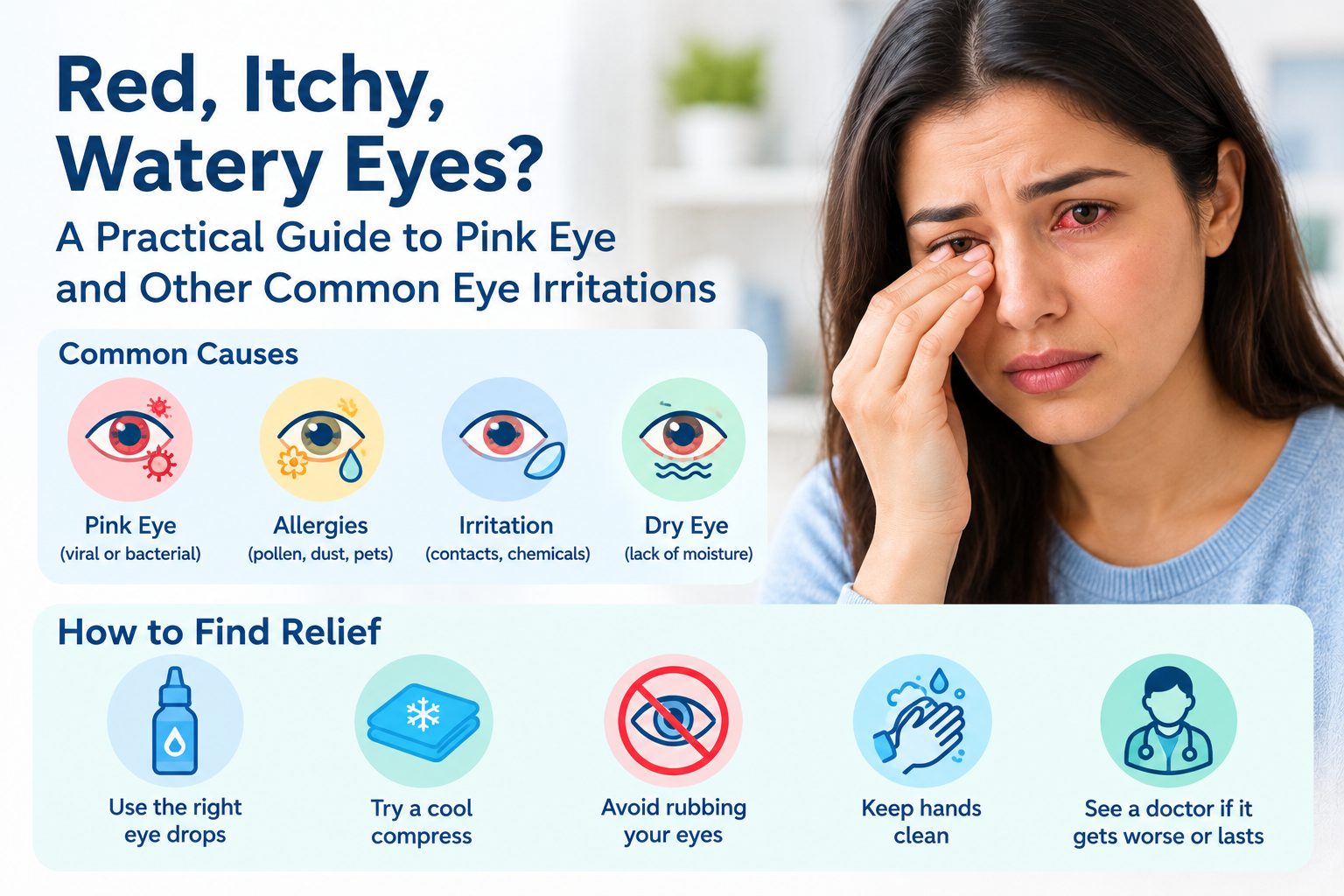
Table of contents
- 1. What Pink Eye Is
- 2. Viral vs Bacterial vs Allergic Pink Eye
- 3. How Long It Usually Lasts
- 4. Home-Care Steps
- 5. When Treatment Is Needed
- 6. Red Flags: Eye Symptoms That Need Urgent Care
- 7. Preventing Spread
- 8. Contact Lens and Eye-Care Habits
- Conclusion
- Frequently Asked Questions
- See a Doctor in Elmhurst or Chinatown
Waking up with a red, gritty, or sticky eye is a very common experience, and the first thought is often pink eye. Pink eye, medically called conjunctivitis, is inflammation of the thin clear layer covering the white of the eye and the inside of the eyelids. It is common in both children and adults, and in many cases it is mild.
However, not all red eyes are pink eye, and not all pink eye needs the same treatment. Viral, bacterial, and allergic forms look similar at first but are managed differently. This article explains how to tell them apart, what you can do at home, how to avoid spreading it to others, and which eye symptoms should never wait. To plan where to seek care, you may also find our guide to walk-in clinic vs urgent care useful.
In this article:
- 1. What pink eye is
- 2. Viral vs bacterial vs allergic (table)
- 3. How long it lasts (graph)
- 4. Home-care steps
- 5. When treatment is needed
- 6. Red flags: eye symptoms that need urgent care
- 7. Preventing spread
- 8. Contact lens and eye-care habits
1. What Pink Eye Is
The tiny blood vessels in the conjunctiva widen when it is irritated or infected, which gives the eye its pink or red color. Causes include viruses, bacteria, allergens, and irritants such as smoke, chlorine, or a foreign particle. Pink eye usually affects the surface of the eye and does not change vision significantly, but vision changes or significant pain suggest a different problem.
You can read more in the MedlinePlus pink eye page.
2. Viral vs Bacterial vs Allergic Pink Eye
| Feature | Viral | Bacterial | Allergic |
|---|---|---|---|
| 1. Discharge | Watery, clear | Thick, yellow or green, often crusting | Watery, stringy |
| 2. Main sensation | Gritty, burning | Sticky, irritated | Intense itching |
| 3. Eyes affected | Often starts in one and spreads to both | One or both | Usually both |
| 4. Other symptoms | Often with a cold or sore throat | Eyelids stuck together after sleep | Sneezing, runny nose, itchy nose |
| 5. Contagious? | Yes, very | Yes | No |
| 6. Typical treatment | Supportive care; resolves on its own | Sometimes antibiotic drops chosen by a clinician | Avoid triggers, antihistamine drops or medicine |
If your eyes are itchy with sneezing and congestion during a particular season, allergies are likely. Our article on seasonal allergies explains triggers and treatment in more detail.
3. How Long It Usually Lasts
Timelines vary. The graph below is an illustrative guide to typical duration, not patient data.
| Type | Typical duration (graph) | Note |
|---|---|---|
| Viral | ███████░░░ About 1 to 2 weeks | Often worst in the first 3 to 5 days |
| Bacterial | █████░░░░░ Several days to about a week | May improve faster with proper treatment |
| Allergic | ██████████ Lasts as long as exposure | Improves when trigger is removed |
| Irritant-related | ██░░░░░░░░ Often a day or two | Rinse and avoid the irritant |
4. Home-Care Steps
For mild pink eye without red-flag symptoms:
- Wash your hands before and after touching your eyes or face.
- Gently clean the eyelids and lashes with a clean, damp cloth or cotton pad, using a fresh one for each eye, to remove crusting.
- Apply a cool compress for itching or swelling, or a warm compress for crusting and discomfort.
- Use lubricating artificial tears to ease gritty, dry feelings if your clinician agrees.
- Stop wearing contact lenses until your eyes are fully healed and your clinician says it is safe, and discard lenses and cases that may be contaminated.
- Avoid rubbing your eyes, which can worsen irritation and spread infection.
- Do not share towels, pillowcases, makeup, or eye drops.
5. When Treatment Is Needed
Many cases of pink eye clear without medicine, but a clinician should check you in certain situations.
| Situation | Why it matters | Suggested step |
|---|---|---|
| Thick discharge with eyelids stuck shut | May be bacterial | Get evaluated |
| Symptoms lasting more than a week | May be something else | Book a visit |
| Symptoms in a newborn | Can be serious | Seek care right away |
| Contact lens wearer with red, painful eye | Risk of corneal infection | Be seen the same day |
| Weakened immune system | Higher risk of complications | Contact your clinician |
| Frequent recurring episodes | May point to allergy or another cause | Discuss with a clinician |
6. Red Flags: Eye Symptoms That Need Urgent Care
Seek urgent eye care or emergency care if you notice any of the following. These are not typical of simple pink eye.
Seek care promptly for:
- Moderate to severe eye pain
- Sudden vision loss, blurring, or seeing halos around lights
- Strong sensitivity to light
- A feeling that something is stuck in the eye that does not clear
- A chemical splash or injury to the eye (rinse immediately with clean water and seek emergency care)
- A red eye with nausea, vomiting, or severe headache
- Swelling and redness spreading around the eye, or fever
A red eye together with a severe headache can overlap with other conditions. Our guide on tension headaches, migraines and warning-sign headaches explains which headache patterns need urgent attention.
7. Preventing Spread
Viral and bacterial pink eye spread easily, especially among children and in workplaces.
Practical precautions:
- Wash hands frequently with soap and water
- Use a clean towel and washcloth every time, and wash them in hot water
- Change pillowcases daily while infected
- Do not share eye makeup, drops, or contact lens supplies
- Replace eye makeup used during the infection
- Ask your clinician when it is safe to return to school or work, since guidance varies with the cause and treatment
8. Contact Lens and Eye-Care Habits
Healthy eye habits reduce irritation and infection:
- Wash hands before handling contact lenses
- Follow the recommended replacement schedule and never sleep in lenses unless approved
- Do not rinse lenses or cases with tap water
- Take screen breaks to reduce dry-eye symptoms
- Keep up with regular checkups; our annual physical guide explains routine screening, and a dedicated eye exam is also important
- Learn how our team approaches acute care for everyday problems
Conclusion
Pink eye is usually mild, but the cause matters, and certain symptoms signal a more serious eye problem. Simple hygiene, careful home care, and timely evaluation protect both your vision and the people around you.
Contact Us: If your eye symptoms are not improving or you are unsure what is causing them, get in touch with City Prime Care through our Contact Us page. This article is for general education and does not replace personal medical advice. For sudden vision loss, severe pain, or eye injury, seek emergency care or call 911.
Frequently Asked Questions
See a Doctor in Elmhurst or Chinatown
Have a question about your own health? Book a visit at our Elmhurst, Queens clinic or our Chinatown, Manhattan clinic, or explore our primary care services.
Related articles
Healthcare
Why Do You Feel Tired All the Time? Reading the Anemia Signs, the Five Testing Steps and the Sample Iron-Level Recovery
Constant tiredness, pale skin and shortness of breath can point to anemia. Learn the common causes, the blood tests used, a sample iron recovery pattern, five testing steps and when symptoms need urgent attention.
Healthcare
How Do Kidney Stones Cause Sudden Severe Pain? Reading the Warning Signs, the Five Prevention Steps and the Sample Stone-Size Outlook
Kidney stones can cause sudden, intense flank pain and blood in the urine. Learn the warning signs, how size affects passing a stone, five prevention steps, and when pain with fever or vomiting needs urgent care.
Healthcare
How Do Ear Infections Show Up in Children and Adults? Reading the Symptom Patterns, the Five Care Steps and the Sample Recovery Timeline
Ear infections cause pain, fever and muffled hearing in children and adults alike. Compare middle-ear infection and swimmer's ear, follow five care steps, see a sample recovery timeline, and learn when to be seen quickly.





