HealthcareBy City Prime Care Team
Why Is Your Scalp Flaking and Itchy Even After Washing Your Hair, and Is It Dandruff or Seborrheic Dermatitis? Reading the Flake Types, the Five Scalp-Care Steps and the Sample Eight-Week Shampoo Plan
Flaky, itchy scalp that keeps coming back? Learn the difference between dandruff, seborrheic dermatitis and look-alikes, five scalp-care steps, an eight-week shampoo plan and when to see a doctor.
Medically reviewed by Dr. Helen Vasquez11 min read
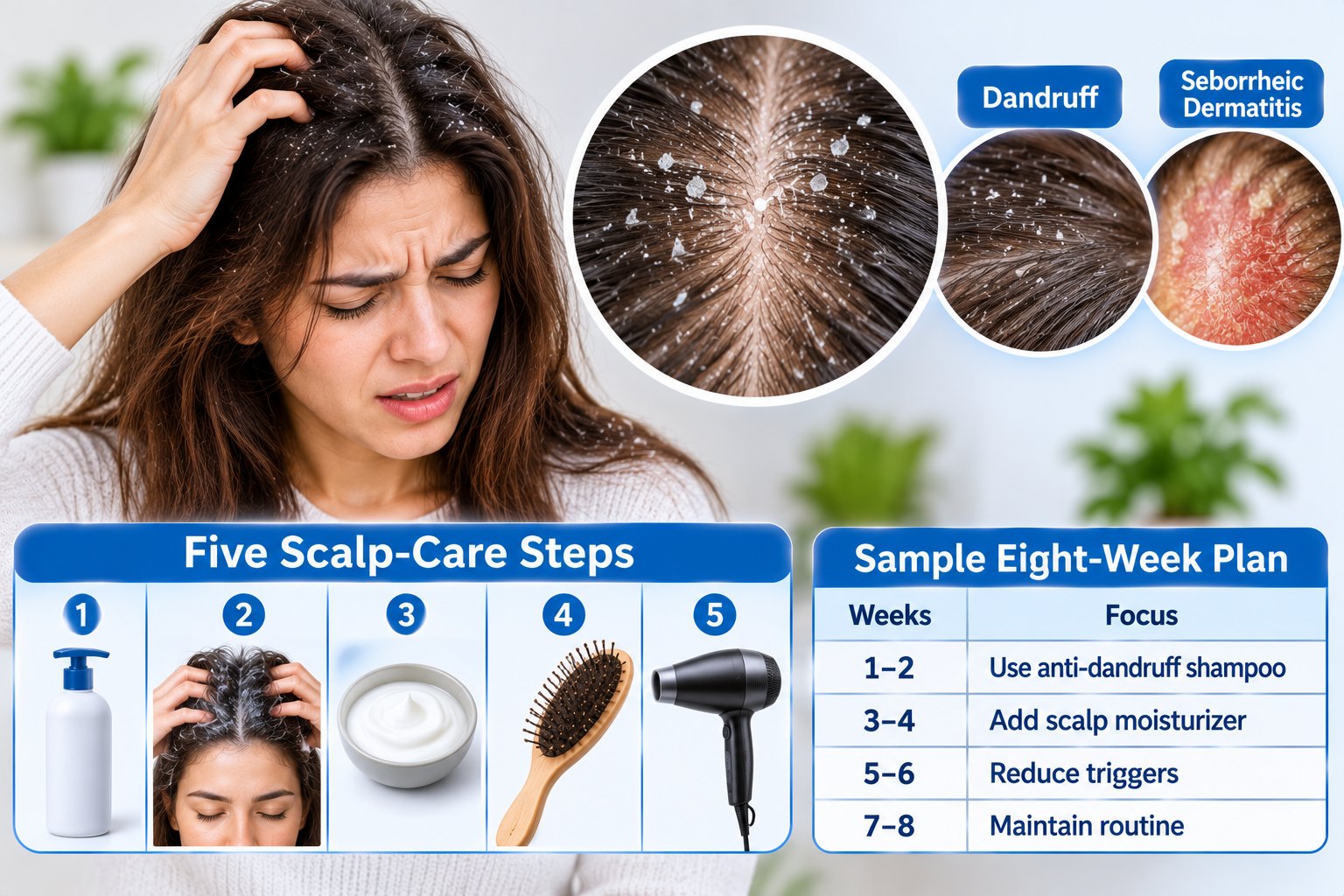
Table of contents
- 1. What Is Dandruff?
- 2. Reading the Flake Types
- 3. Dandruff vs Look-Alikes
- 4. Causes and Who Is at Higher Risk
- 5. Medicated Shampoo Ingredients at a Glance
- 6. The Five Scalp-Care Steps
- 7. Graph: Illustrative Flake Score Over Eight Weeks
- 8. Sample Eight-Week Shampoo Plan
- 9. Red Flags: When to See a Clinician
- 10. Where to Get Care: Elmhurst, Chinatown and Lower Manhattan
- 11. Contact Us
- Conclusion
- Frequently Asked Questions
- See a Doctor in Elmhurst or Chinatown
White or yellowish flakes on your shoulders, an itchy scalp and the feeling that nothing you buy at the pharmacy seems to last are signs that bring many people to ask about dandruff. Dandruff is one of the most common scalp conditions in adults. It is not contagious, not caused by poor hygiene and not dangerous, but it can be embarrassing, uncomfortable and stubborn, and it often returns in cold, dry winter months in New York.
This guide explains the difference between ordinary dandruff and seborrheic dermatitis, how to tell them from scalp psoriasis, eczema and fungal infections, five scalp-care steps, a sample eight-week shampoo plan and the red flags that mean a doctor should look at your scalp. City Prime Care serves patients in Elmhurst, Queens and Lower Manhattan. This article is general education and not a substitute for personal medical advice.
Quick takeaways:
- Dandruff is linked to a normal scalp yeast called Malassezia, oily skin and individual skin sensitivity, not to dirty hair.
- Medicated shampoos with zinc pyrithione, selenium sulfide, ketoconazole, salicylic acid or coal tar control most cases when used consistently.
- Dandruff tends to relapse, so a maintenance routine matters more than a one-time fix.
- Hair loss patches, oozing, spreading redness, severe pain or no improvement after about four weeks deserve a medical check.
1. What Is Dandruff?
Dandruff is a mild form of scalp inflammation in which skin cells shed faster and in larger clumps than usual, forming visible flakes and sometimes itching. When the same process is more inflamed, with red, greasy, scaly patches that may also affect the eyebrows, sides of the nose, ears and chest, doctors call it seborrheic dermatitis. The Mayo Clinic explains the basics on its dandruff symptoms and causes page, and the UK National Health Service offers a plain-language dandruff overview.
Both conditions are common in teens and adults, are more frequent in men, and often flare with stress, lack of sleep, cold dry weather, illness and hormonal changes.
2. Reading the Flake Types
| Pattern | What you see | What it usually means | Typical first step |
|---|---|---|---|
| Fine, dry white flakes | Small powdery flakes, mild itch, no redness | Dry scalp or mild dandruff | Gentle shampoo, moisturizing, then medicated shampoo if it persists |
| Larger, oily yellowish flakes | Greasy scales that stick to the scalp or hair | Classic dandruff or mild seborrheic dermatitis | Medicated shampoo such as zinc pyrithione or ketoconazole |
| Red, greasy, scaly patches | Redness plus scale on scalp, eyebrows, nose folds, ears | Seborrheic dermatitis | Medicated shampoo and clinician review if not improving |
| Thick silvery plaques | Well-defined thick, silvery scale, sometimes beyond hairline | Possible scalp psoriasis | Clinician evaluation |
| Patchy hair loss with scale | Round scaly patches and broken hairs | Possible fungal infection (tinea capitis), more common in children | Prompt medical check; needs prescription treatment |
3. Dandruff vs Look-Alikes
| Condition | Typical clue | How it differs from dandruff |
|---|---|---|
| Dry scalp | Tight, dry skin, flakes are small and white, worse in winter | No oiliness or redness; improves with moisturizing and less hot water |
| Scalp psoriasis | Thick, raised, silvery plaques that may extend past the hairline | Sharper edges and thicker scale; see our guide to psoriasis plaque types and flare triggers |
| Contact dermatitis | Itching, burning or redness after a new hair product or dye | Linked to a specific product; improves when the trigger is stopped |
| Tinea capitis (scalp ringworm) | Round scaly patches with broken hairs, sometimes tender lumps | Fungal infection needing prescription medicine, especially in children |
| Head lice | Intense itching, tiny white nits stuck to hair shafts | Nits do not brush off like flakes |
| Product buildup | White residue after heavy styling products | Disappears with clarifying shampoo |
4. Causes and Who Is at Higher Risk
Dandruff is more likely, or harder to control, if you:
- Have naturally oily skin or wash your hair very infrequently, which allows oil and yeast to build up.
- Are under stress, short on sleep or recovering from illness.
- Live with a condition such as Parkinson's disease, HIV or other immune problems, which are linked to more seborrheic dermatitis.
- Use harsh hair products, hot water or frequent alcohol-based styling sprays that irritate the scalp.
- Spend winter in dry, heated indoor air, as many New Yorkers do; see how seasons affect mood and skin in our guide to winter low mood and seasonal affective disorder.
- Have a family history of scalp or skin inflammation, or have adult skin issues such as hormonal acne along the jaw and chin.
5. Medicated Shampoo Ingredients at a Glance
| Ingredient | What it does | Notes |
|---|---|---|
| Zinc pyrithione | Slows yeast and reduces flaking | Often first choice; widely available |
| Selenium sulfide | Slows skin cell turnover and reduces yeast | Can discolor light or treated hair if not rinsed well |
| Ketoconazole | Antifungal that targets Malassezia | Over-the-counter and prescription strengths; usually used a few times a week |
| Salicylic acid | Loosens and lifts scale | Can dry the scalp; pair with a conditioner on hair lengths |
| Coal tar | Slows skin cell growth | Stronger smell, can stain light hair and make skin more sun-sensitive |
Always follow the label, leave medicated shampoo on the scalp for the time stated (often about five minutes), and rinse thoroughly. Ask a clinician or pharmacist before using products on children, during pregnancy, or if you have a known skin allergy.
6. The Five Scalp-Care Steps
For typical dandruff in a healthy adult:
- Wash regularly with lukewarm water, working shampoo into the scalp itself and not just the hair; frequent washing does not cause dandruff and often helps control it.
- Choose a medicated shampoo and massage it into the scalp, leaving it in place for the time listed on the label before rinsing well.
- Rotate active ingredients, for example zinc pyrithione one week and ketoconazole the next, if one product stops working as well.
- Reduce triggers: limit heavy styling products, avoid scratching with nails, manage stress, sleep enough and keep indoor air from becoming extremely dry.
- Move to a maintenance schedule once flakes settle, such as medicated shampoo once or twice weekly, and see a clinician if the scalp does not improve after about four weeks.
Do not pick at scales or scratch hard, since this can break the skin and invite infection. Skin and scalp checks fit naturally into a yearly checkup; see our annual physical guide and our reminder on how to spot skin cancer early for unusual scalp spots.
7. Graph: Illustrative Flake Score Over Eight Weeks
This is a teaching graph, not patient data. It shows how flaking may fall steadily with a medicated shampoo and then stay low on a maintenance routine, compared with no treatment, where flakes rise and fall with triggers.
| Week | Flake score with treatment (illustrative) | Flake score without treatment (illustrative) |
|---|---|---|
| Week 0 | ██████████ | ██████████ |
| Week 1 | ████████ | █████████ |
| Week 2 | ██████ | ██████████ |
| Week 4 | ███ | ████████ |
| Week 6 | ██ | █████████ |
| Week 8 | █ | █████████ |
8. Sample Eight-Week Shampoo Plan
| Weeks | Goal | Sample actions | Check |
|---|---|---|---|
| Weeks 1-2 | Start and calm the scalp | Medicated shampoo 3 times a week, plain gentle shampoo on other days; no scratching | Is itching starting to ease? |
| Weeks 3-4 | Reduce flakes | Continue schedule; leave lather on for the label time; rinse well | Fewer flakes on dark clothing? |
| Weeks 5-6 | Lock in control | Rotate to a second active ingredient if progress stalls; keep stress and sleep in check | Is redness gone? If not, book a visit |
| Weeks 7-8 | Maintain | Medicated shampoo once or twice weekly; keep a note of flare triggers | If flakes return fast, ask a clinician about a prescription option |
9. Red Flags: When to See a Clinician
Get a medical check for:
- Patchy hair loss, broken hairs or tender lumps on the scalp, especially in a child.
- Oozing, crusting, pus, painful sores or spreading redness, which can signal infection.
- Thick silvery plaques, nail changes or joint pain, which can point to psoriasis.
- Severe itching that disrupts sleep, or a scalp reaction after a new product or medicine.
- No improvement after about four weeks of consistent medicated shampoo use.
- A new, changing or non-healing spot on the scalp or face.
10. Where to Get Care: Elmhurst, Chinatown and Lower Manhattan
If a scalp problem becomes painful, infected or sudden, many people search for urgent care Elmhurst NY, a walk in clinic Elmhurst NY, urgent care 11373, a same day doctor appointment Elmhurst or Same-Day Acute Care in Elmhurst Queens. For ongoing flares, repeat prescriptions and skin checks, patients choose a primary care doctor Elmhurst NY, a family doctor Elmhurst Queens, Primary Care Doctors in Elmhurst NY or chronic disease management Elmhurst NY when conditions such as diabetes or immune problems make skin issues harder to control.
People comparing options often search for Best Primary Care Clinic in Elmhurst Queens, Best Primary Care Doctor in Elmhurst Queens, Primary Care Near Me Elmhurst Queens, Best Primary Care Clinics in Queens NY, Primary Care Clinics and Doctors in Queens NY and Top Primary Care Clinics in Queens NY. City Prime Care offers Men's and Women's Healthcare in Elmhurst NY, a physical exam clinic Elmhurst NY and preventive care Elmhurst NY, so a scalp or skin concern can be reviewed alongside the rest of your health.
Downtown, people look for primary care Lower Manhattan, primary care Chinatown NYC, a doctor near Catherine Street NYC, primary care 75 Catherine St, a walk-in clinic Chinatown NYC, a Primary Care Clinic in Chinatown Manhattan or a Healthcare Center in Chinatown Manhattan NY. Citywide searches include primary care doctor NYC, family doctor Manhattan NYC, annual physical exam NYC, same day primary care NYC and preventive care Lower Manhattan. Residents searching for Primary Care Doctors Serving Todt Hill Staten Island are welcome to contact the clinic to ask about care options and travel. If your scalp does not respond to home care, a review can also help decide whether you need a dermatology referral; see when your primary care doctor sends you to a specialist.
| Area | Common searches | How care can help |
|---|---|---|
| Elmhurst (ZIP 11373) | Urgent care 11373, same day doctor appointment Elmhurst | Quick look at infected, painful or suddenly worse scalp skin |
| Elmhurst, Queens | Family doctor Elmhurst Queens, primary care doctor Elmhurst NY | Ongoing scalp and skin care plans and prescriptions |
| Queens | Best Primary Care Clinics in Queens NY, Top Primary Care Clinics in Queens NY | Easy-to-reach primary care for the whole family |
| Lower Manhattan | Primary care Lower Manhattan, preventive care Lower Manhattan | Skin checks and referral planning |
| Chinatown / Catherine Street | Primary care Chinatown NYC, doctor near Catherine Street NYC, primary care 75 Catherine St | Convenient downtown visits |
| Citywide | Primary care doctor NYC, family doctor Manhattan NYC, same day primary care NYC | Same-day or scheduled evaluation |
You can also find the clinic on Google.
11. Contact Us
Is your scalp still flaking, burning or losing hair despite treatment? Visit our Contact Us page or see our Google listing. For sudden severe swelling, fever with a spreading skin infection or any serious allergic reaction, seek emergency care.
Conclusion
Dandruff and seborrheic dermatitis are common, manageable and not a sign of poor hygiene. Regular scalp washing, the right medicated shampoo, a simple maintenance plan and attention to triggers control most cases, while hair loss, infection, thick plaques or no improvement after about four weeks call for a clinician's review.
Frequently Asked Questions
See a Doctor in Elmhurst or Chinatown
Have a question about your own health? Book a visit at our Elmhurst, Queens clinic or our Chinatown, Manhattan clinic, or explore our primary care services.
Related articles
Healthcare
Why Are Your Ankles and Feet Swollen by Evening, and When Is Leg Swelling Serious? Reading the Swelling Patterns, the Five Relief Steps and the Sample Two-Week Swelling Diary
Swollen ankles after a long day can be harmless, but swelling in one leg, sudden weight gain or breathlessness can signal a clot, heart, kidney or liver problem. Learn the patterns, five relief steps and a two-week diary.
Healthcare
Why Is a Red, Itchy Ring-Shaped Patch Spreading on Your Skin, and Is It Ringworm? Reading the Patch Types, the Five Treatment Steps and the Sample Four-Week Clearing Plan
A red, scaly, ring-shaped itchy patch is often ringworm, a common fungal skin infection that is not caused by a worm. Learn the patch types, look-alike rashes, five treatment steps and a four-week clearing plan.
Healthcare
Why Is Your Hair Thinning or Falling Out in Clumps, and Could a Health Problem Be Behind It? Reading the Hair Loss Patterns, the Five Checkup Steps and the Sample Six-Month Regrowth Timeline
Finding more hair in the shower or brush can be stressful. Learn the common hair loss patterns, which blood tests and health problems matter, five checkup steps and a realistic six-month regrowth timeline.