HealthcareBy City Prime Care Team
Why Is a Red, Itchy Ring-Shaped Patch Spreading on Your Skin, and Is It Ringworm? Reading the Patch Types, the Five Treatment Steps and the Sample Four-Week Clearing Plan
A red, scaly, ring-shaped itchy patch is often ringworm, a common fungal skin infection that is not caused by a worm. Learn the patch types, look-alike rashes, five treatment steps and a four-week clearing plan.
Medically reviewed by Dr. Karl E. Latortue11 min read
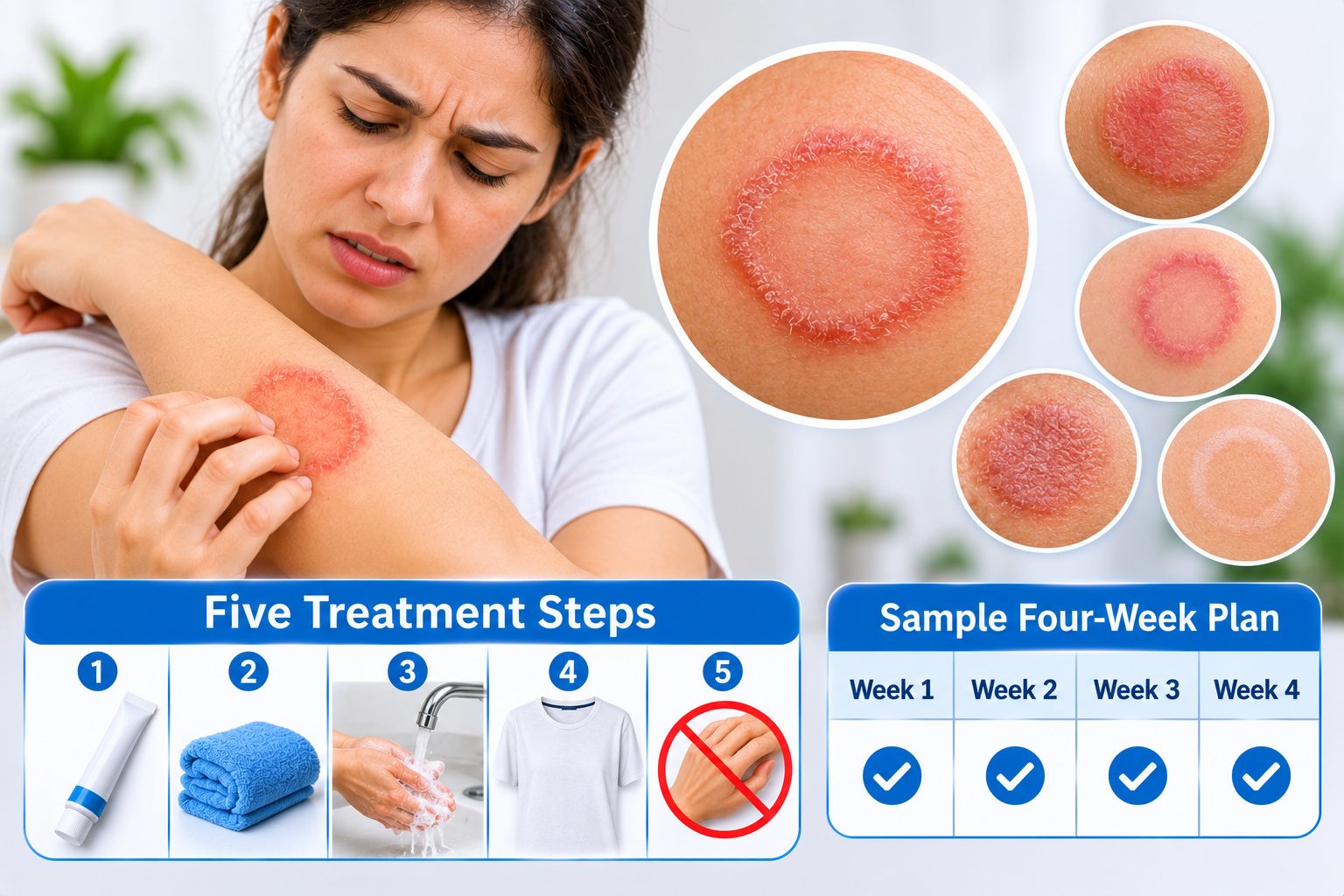
Table of contents
- 1. What Is Ringworm?
- 2. Reading the Patch Types
- 3. Ringworm vs Look-Alike Rashes
- 4. How Ringworm Spreads and Who Is at Higher Risk
- 5. What a Clinician May Do
- 6. The Five Treatment Steps
- 7. Graph: Illustrative Rash Size Over Four Weeks
- 8. Sample Four-Week Clearing Plan
- 9. Red Flags: When to Get Prompt Care
- 10. Where to Get Care: Elmhurst, Chinatown and Lower Manhattan
- 11. Related Reading From City Prime Care
- 12. Contact Us
- Conclusion
- Frequently Asked Questions
- See a Doctor in Elmhurst or Chinatown
You notice a red, scaly patch on your arm, trunk, groin or foot that itches and seems to grow outward, with a clearer center and a raised, rim-like edge. Many people assume it is eczema or a bug bite and try a steroid cream, only to see it spread. This kind of rash is often ringworm, a common fungal skin infection that has nothing to do with worms. It is contagious, usually treatable at home with the right cream and best handled early.
This guide explains the patch types, how ringworm differs from eczema, psoriasis and other rashes, five treatment steps, a sample four-week clearing plan and the red flags that need prompt care. City Prime Care serves patients in Elmhurst, Queens, Chinatown and Lower Manhattan. This article is general education and not a substitute for personal medical advice.
Quick takeaways:
- Ringworm (tinea) is caused by fungi called dermatophytes that live on skin, hair and nails, and it spreads through skin contact, shared towels, gyms, pets and damp footwear.
- Most body and groin ringworm clears with an over-the-counter antifungal cream used for two to four weeks, continuing about a week after the rash looks gone.
- Steroid cream alone can make ringworm look better for a while and then spread it, so it is not the right first treatment.
- Scalp ringworm, widespread rashes, and rashes in people with weakened immunity usually need a prescription antifungal taken by mouth.
1. What Is Ringworm?
Ringworm is a fungal infection of the outer layers of skin, hair or nails. The name comes from the ring-shaped rash it can produce, not from a worm. Doctors call it tinea, followed by the body area involved. The Centers for Disease Control and Prevention explains the basics on its ringworm information page.
The fungi thrive in warm, moist places, which is why ringworm is common in people who sweat, wear tight clothing, share gym equipment or walk barefoot in locker rooms and pools. Pets such as cats and dogs can also carry it, and children often catch it from pets or at school.
2. Reading the Patch Types
| Type | Where it appears | Typical clues |
|---|---|---|
| Tinea corporis (body) | Arms, legs, trunk, face | Round or oval red scaly patch with a raised rim and clearer center; itchy |
| Tinea cruris (jock itch) | Groin and inner thighs | Red, itchy, sharply edged patch that often spares the scrotum; worse with sweat |
| Tinea pedis (athlete's foot) | Between toes and on soles | Peeling, cracked, itchy skin; see athlete's foot and toenail fungus |
| Tinea capitis (scalp) | Scalp, mostly in children | Scaly patches, broken hairs, sometimes bald spots or tender swelling; needs oral medicine |
| Tinea unguium (nails) | Toenails and fingernails | Thick, yellow, crumbly nails that are slow to improve |
| Tinea faciei (face) | Cheeks, chin, forehead | Red patches that may look like eczema and are often mistaken for it |
3. Ringworm vs Look-Alike Rashes
| Condition | Typical clue | How it differs |
|---|---|---|
| Eczema (nummular) | Coin-shaped, very itchy, often oozing or crusted | Usually no clear center and not much outward spread; steroid cream helps |
| Psoriasis | Thick, silvery-white scale on red plaques, elbows and knees | Plaques are usually thicker and may appear on both sides of the body |
| Granuloma annulare | Smooth, non-scaly ring of small bumps | Little to no scale or itch |
| Pityriasis rosea | Single larger 'herald' patch, then many small oval patches | Oval patches follow skin lines; not responsive to antifungals |
| Lyme disease rash (erythema migrans) | Expanding red ring after a tick bite, may have a clear center | Usually not scaly or very itchy; tick exposure and flu-like symptoms; needs prompt care |
| Contact dermatitis | Red, itchy rash where a product touched the skin | Follows the shape of the trigger; improves when the trigger is removed |
4. How Ringworm Spreads and Who Is at Higher Risk
Ringworm is more likely if you:
- Share towels, clothing, combs, bedding or sports gear with someone who has it.
- Touch an infected pet, especially a kitten or puppy with patchy fur.
- Walk barefoot in locker rooms, gym showers or around pools.
- Sweat heavily, wear tight or non-breathable clothing or stay in damp clothes or shoes.
- Practice contact sports such as wrestling, where skin-to-skin contact is frequent.
- Have diabetes, a weakened immune system, obesity or skin folds that stay moist.
5. What a Clinician May Do
A visit for a suspected fungal rash often includes:
- A history of when the rash began, itch, contact with pets or sports partners, and any creams already used.
- A skin exam, sometimes with a gentle scraping of the scale for a quick microscope test (KOH test) or a fungal culture.
- Advice on an antifungal cream, and a prescription cream or tablets when the rash is large, deep, on the scalp or not responding.
- A check for diabetes or other conditions when infections keep coming back; see our guide to prediabetes.
- Referral to a dermatologist if the diagnosis is unclear or stubborn; see when your primary care doctor sends you to a specialist.
6. The Five Treatment Steps
For typical ringworm on the body or groin in a healthy adult:
- Confirm it is likely ringworm: a round, scaly, itchy patch with a raised edge that has not improved with moisturizer or a steroid cream.
- Apply an antifungal cream such as clotrimazole, miconazole or terbinafine to the rash and about an inch of normal skin around it, once or twice daily as the package states.
- Keep treating for about one to two weeks after the rash looks gone, even if it seems healed, since stopping early lets it come back; most cases take two to four weeks.
- Keep skin clean and dry, wash towels and clothes in hot water, change socks and underwear daily and do not share personal items.
- See a clinician if there is no improvement in about two weeks, if the rash spreads or if it is on the scalp, nails or face.
Avoid using a steroid cream by itself on a suspected fungal rash, because it can hide the typical ring and make the infection harder to recognize. Ask a clinician before using antifungal medicines if you are pregnant, breastfeeding or treating a young child.
7. Graph: Illustrative Rash Size Over Four Weeks
This is a teaching graph, not patient data. It compares a patch treated with a full antifungal course against one treated with a steroid cream alone, where the rash may fade at first and then return larger.
| Week | Antifungal cream for the full course (illustrative) | Steroid cream alone (illustrative) |
|---|---|---|
| Week 0 | ██████ | ██████ |
| Week 1 | █████ | ███ |
| Week 2 | ███ | ██ |
| Week 3 | ██ | ████ |
| Week 4 | █ | ███████ |
8. Sample Four-Week Clearing Plan
| Weeks | Goal | Sample actions | Check |
|---|---|---|---|
| Week 1 | Start treatment and stop spread | Apply antifungal cream daily, wash towels and bedding, avoid sharing items | Is the itch easing? |
| Week 2 | Clear the active rash | Continue cream, keep skin dry, wear loose cotton clothing | Is the edge smaller and less red? |
| Week 3 | Finish the course | Keep applying for about one to two weeks after it looks clear | Is the scaling gone? |
| Week 4 | Prevent a repeat | Dry skin well after showers, wear sandals in locker rooms, treat pets if advised | See a clinician if it has not cleared |
9. Red Flags: When to Get Prompt Care
See a clinician promptly for:
- Scaly patches on the scalp, hair breaking off or bald spots, especially in a child.
- A large, widespread rash or one that is not improving after about two weeks of treatment.
- Painful swelling, pus, fever or spreading warmth, which can signal a bacterial infection on top of the rash.
- A ring-shaped rash after a tick bite or with fever, fatigue and joint aches.
- Ringworm in someone with diabetes, a weakened immune system or who takes steroid medicines.
- A rash on the face, near the eyes or in the genital area that is not clearly improving.
10. Where to Get Care: Elmhurst, Chinatown and Lower Manhattan
A rash that is spreading, itchy or painful is a common reason people search for urgent care Elmhurst NY, a walk in clinic Elmhurst NY, urgent care 11373, a same day doctor appointment Elmhurst or Same-Day Acute Care in Elmhurst Queens. For repeat infections, skin checks and long-term health review, patients choose a primary care doctor Elmhurst NY, a family doctor Elmhurst Queens, Primary Care Doctors in Elmhurst NY or chronic disease management Elmhurst NY.
People comparing options often search for Best Primary Care Clinic in Elmhurst Queens, Best Primary Care Doctor in Elmhurst Queens, Primary Care Near Me Elmhurst Queens, Best Primary Care Clinics in Queens NY, Primary Care Clinics and Doctors in Queens NY and Top Primary Care Clinics in Queens NY. City Prime Care offers Men's and Women's Healthcare in Elmhurst NY, a physical exam clinic Elmhurst NY and preventive care Elmhurst NY, including skin concerns and family visits.
Downtown, people look for primary care Lower Manhattan, primary care Chinatown NYC, a doctor near Catherine Street NYC, primary care 75 Catherine St, a walk-in clinic Chinatown NYC, a Primary Care Clinic in Chinatown Manhattan or a Healthcare Center in Chinatown Manhattan NY. Citywide searches include primary care doctor NYC, family doctor Manhattan NYC, annual physical exam NYC, same day primary care NYC, preventive care Lower Manhattan and primary care doctor near me. Residents searching for Primary Care Doctors Serving Todt Hill Staten Island are welcome to contact the clinic to ask about care options and travel.
| Area | Common searches | How care can help |
|---|---|---|
| Elmhurst (ZIP 11373) | Urgent care 11373, same day doctor appointment Elmhurst | Quick skin exam and treatment plan |
| Elmhurst, Queens | Family doctor Elmhurst Queens, primary care doctor Elmhurst NY | Follow-up for repeat or stubborn infections |
| Queens | Best Primary Care Clinics in Queens NY, Top Primary Care Clinics in Queens NY | Easy-to-reach primary care for the family |
| Lower Manhattan | Primary care Lower Manhattan, preventive care Lower Manhattan | Convenient care near work |
| Chinatown / Catherine Street | Primary care Chinatown NYC, doctor near Catherine Street NYC, primary care 75 Catherine St | Convenient downtown care |
| Citywide | Primary care doctor NYC, family doctor Manhattan NYC, same day primary care NYC | Same-day or scheduled evaluation |
You can also find the clinic on Google or learn more on the City Prime Care website.
11. Related Reading From City Prime Care
These guides on our site cover connected skin and health topics:
12. Contact Us
Is a ring-shaped rash spreading or not responding to creams? Visit our Contact Us page or see our Google listing. If a rash comes with fever, a tick bite or spreading pain and redness, seek care promptly.
Conclusion
Ringworm is common, contagious and very treatable when it is recognized early and the antifungal course is finished. Because several rashes look alike, a patch that is not clearly improving after about two weeks, or one on the scalp, should be examined rather than treated by guesswork.
Frequently Asked Questions
See a Doctor in Elmhurst or Chinatown
Have a question about your own health? Book a visit at our Elmhurst, Queens clinic or our Chinatown, Manhattan clinic, or explore our primary care services.
Related articles
Healthcare
Why Is a Rough Bump Growing on Your Hand or the Bottom of Your Foot, and Is It a Wart? Reading the Wart Types, the Five Treatment Steps and the Sample Twelve-Week Clearing Plan
Rough bumps on the hands or soles of the feet are often warts caused by HPV. Learn the wart types, five treatment steps, red flags and a sample twelve-week clearing plan.
Healthcare
Why Are Your Ankles and Feet Swollen by Evening, and When Is Leg Swelling Serious? Reading the Swelling Patterns, the Five Relief Steps and the Sample Two-Week Swelling Diary
Swollen ankles after a long day can be harmless, but swelling in one leg, sudden weight gain or breathlessness can signal a clot, heart, kidney or liver problem. Learn the patterns, five relief steps and a two-week diary.
Healthcare
Why Is Your Hair Thinning or Falling Out in Clumps, and Could a Health Problem Be Behind It? Reading the Hair Loss Patterns, the Five Checkup Steps and the Sample Six-Month Regrowth Timeline
Finding more hair in the shower or brush can be stressful. Learn the common hair loss patterns, which blood tests and health problems matter, five checkup steps and a realistic six-month regrowth timeline.