HealthcareBy City Prime Care Team
Why Is Your Hair Thinning or Falling Out in Clumps, and Could a Health Problem Be Behind It? Reading the Hair Loss Patterns, the Five Checkup Steps and the Sample Six-Month Regrowth Timeline
Finding more hair in the shower or brush can be stressful. Learn the common hair loss patterns, which blood tests and health problems matter, five checkup steps and a realistic six-month regrowth timeline.
Medically reviewed by Dr. Karl E. Latortue11 min read
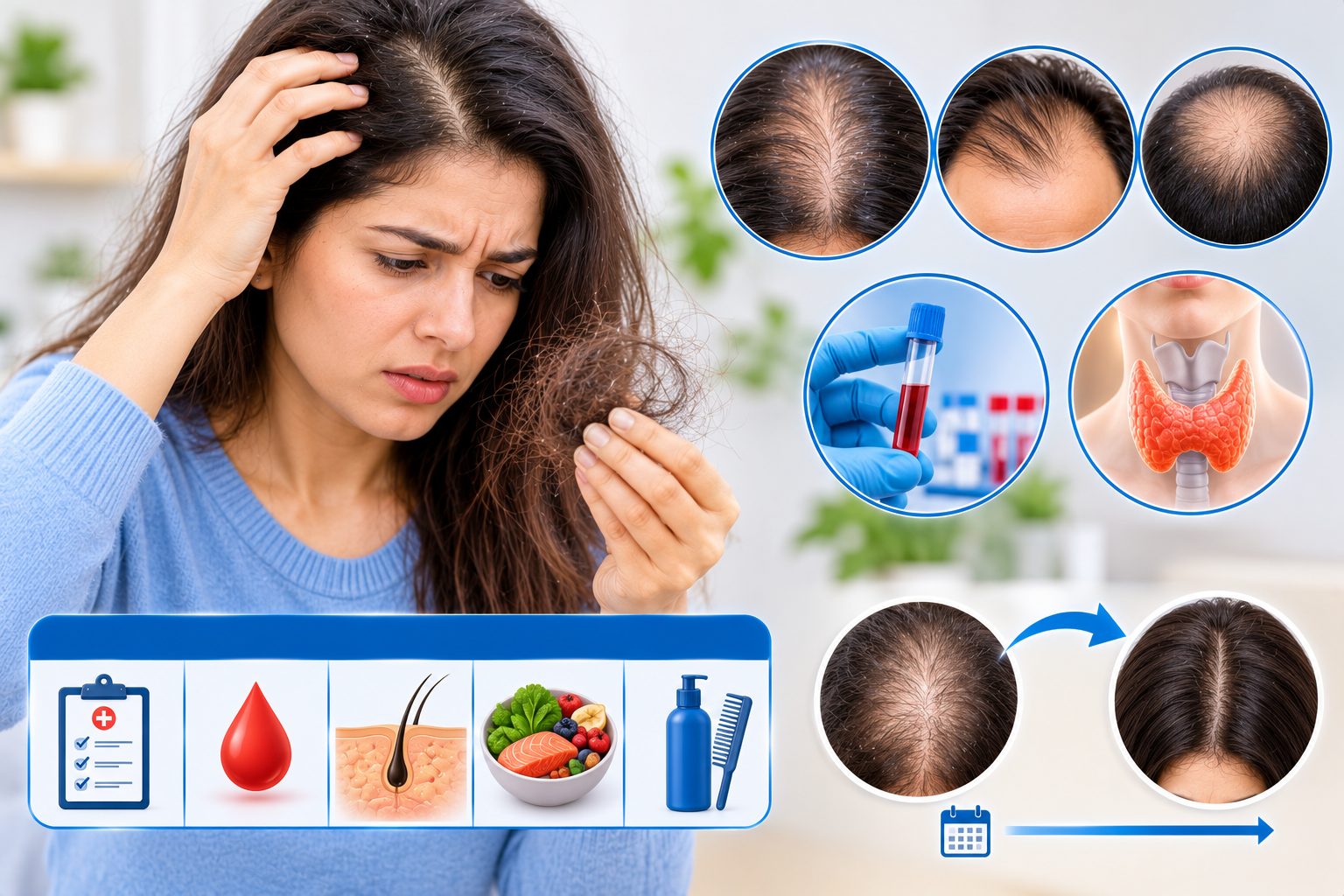
Table of contents
- 1. How Hair Grows and Why It Falls Out
- 2. Reading the Hair Loss Patterns
- 3. Health Problems and Triggers That Can Cause Hair Loss
- 4. Normal Shedding vs Concerning Loss
- 5. The Five Checkup Steps
- 6. What a Clinician May Do
- 7. Graph: Illustrative Hair Shedding After a Trigger
- 8. Sample Six-Month Regrowth Timeline
- 9. Red Flags: When to Get Prompt Care
- 10. Where to Get Care: Elmhurst, Chinatown and Lower Manhattan
- 11. Related Reading From City Prime Care
- 12. Contact Us
- Conclusion
- Frequently Asked Questions
- See a Doctor in Elmhurst or Chinatown
You find a clump of hair in the shower drain, your ponytail feels thinner, or your part looks wider than it did a year ago. Hair loss is stressful, and many people worry it means something serious. The truth is that shedding some hair every day is normal, and many causes of increased shedding are temporary and reversible. Others, such as thyroid disease, iron deficiency or hormonal conditions, deserve a proper checkup.
This guide explains the common hair loss patterns, which health problems and blood tests matter, five checkup steps, a sample six-month regrowth timeline and the red flags that need prompt care. City Prime Care serves patients in Elmhurst, Queens, Chinatown and Lower Manhattan. This article is general education and not a substitute for personal medical advice.
Quick takeaways:
- Losing roughly 50 to 100 hairs a day is normal; more than that for weeks, new patches or visible thinning is worth a checkup.
- Heavy shedding that starts about two to three months after illness, surgery, childbirth, rapid weight loss or major stress is often temporary and usually regrows over several months.
- Thyroid problems, iron deficiency, low vitamin levels, hormonal conditions and some medicines can all cause hair loss and are checked with simple blood tests.
- Round bald patches, scalp scaling, pain or scarring need an exam, since some causes are treatable only if caught early.
1. How Hair Grows and Why It Falls Out
Each hair follicle cycles through a long growing phase, a short transition phase and a resting phase before the hair sheds and a new one begins. At any time most scalp hairs are growing and a smaller share is resting. When a trigger pushes many follicles into the resting phase at once, you notice much more shedding a couple of months later. The American Academy of Dermatology describes the common types of hair loss on its hair loss resource page.
Hair loss can be diffuse (all over), patterned (receding hairline, crown thinning or a widening part), patchy (round bare spots) or scarring (where follicles are destroyed). The pattern is the best clue to the cause.
2. Reading the Hair Loss Patterns
| Pattern | What it looks like | Common cause |
|---|---|---|
| Diffuse thinning with heavy shedding | More hair in the brush and shower, thinner ponytail, no bald patches | Telogen effluvium after illness, surgery, childbirth, crash dieting or stress |
| Widening part or crown thinning in women; receding hairline and crown in men | Gradual thinning over years, smaller finer hairs | Androgenetic (pattern) hair loss, often inherited |
| Smooth round bald patches | Sudden, well-defined spots, sometimes in the beard or eyebrows | Alopecia areata, an autoimmune condition |
| Thinning at the hairline or ears | Pulling or tightness from tight styles, braids or extensions | Traction alopecia |
| Scaly, itchy patches with broken hairs | Red or gray scaly areas, possible tender swelling, often in children | Scalp ringworm (tinea capitis); see ringworm and fungal rashes |
| Smooth, shiny, scarred areas with pain, burning or redness | Hair does not return, follicle openings disappear | Scarring (cicatricial) alopecia; needs early specialist care |
3. Health Problems and Triggers That Can Cause Hair Loss
Possible contributors include:
- Thyroid disease, both underactive and overactive.
- Iron deficiency or anemia, low vitamin D or low vitamin B12; see why vitamin D is low so often in New York and signs of vitamin B12 deficiency.
- Hormonal conditions such as polycystic ovary syndrome, pregnancy, postpartum changes and menopause.
- Medicines including some blood thinners, certain antidepressants, retinoids, beta blockers, chemotherapy and hormonal treatments; tell your clinician about every medicine and supplement.
- High fever, major illness, surgery, rapid weight loss, very low calorie or low protein diets, and significant emotional stress.
- Autoimmune conditions such as alopecia areata and lupus, and scalp skin conditions such as seborrheic dermatitis; see itchy flaky scalp.
- Hair care habits such as tight hairstyles, frequent harsh chemical treatments and heat styling.
4. Normal Shedding vs Concerning Loss
| Feature | Usually normal shedding | Worth a checkup |
|---|---|---|
| Daily loss | About 50 to 100 hairs, some seen in the brush or shower | Handfuls of hair, a noticeably thinner ponytail |
| Duration | Stable over time | More than about six to eight weeks of increased shedding |
| Scalp | Normal skin | Scaling, redness, pain, burning or visible bald patches |
| Other symptoms | None | Fatigue, weight change, heavy periods, cold intolerance, rash or joint pain |
| Pattern | Even hair density | A widening part, receding hairline or clear bare spots |
5. The Five Checkup Steps
A sensible approach to hair loss in a healthy adult:
- Note when the shedding started and what happened in the preceding three months, such as illness, surgery, childbirth, weight loss, new medicines or stress.
- Look at the pattern and take simple photos of the part and hairline monthly so changes are easy to see.
- Have a clinician examine the scalp and ask about periods, diet, family history and medicines.
- Get basic blood tests when appropriate, such as blood count, iron stores (ferritin), thyroid function and vitamin D or B12; see how to read your blood test results.
- Treat the cause and choose proven options for pattern loss, such as minoxidil, with a clinician's guidance, and be patient since regrowth takes months.
Be cautious with expensive supplements, biotin megadoses and online miracle products. High-dose biotin can interfere with some lab tests, so tell your clinician if you take it. Medicines such as finasteride or others for pattern hair loss need a prescription and a discussion of benefits and side effects.
6. What a Clinician May Do
A hair loss visit often includes:
- A history of when the loss began, what else changed, medicines, diet, family history and, for women, periods and pregnancy history.
- A scalp exam, a gentle hair pull test and, if needed, a closer look with a dermatoscope.
- Blood tests for anemia, iron, thyroid, vitamin levels and, in selected cases, hormones or autoimmune markers.
- A treatment plan, which may include minoxidil, prescription medicines or treatment of an underlying condition.
- Referral to a dermatologist for patchy, scarring or stubborn hair loss; see when your primary care doctor sends you to a specialist.
7. Graph: Illustrative Hair Shedding After a Trigger
This is a teaching graph, not patient data. It shows how shedding may peak a few months after a trigger such as illness or childbirth and then settle as new hairs grow.
| Months after trigger | Shedding level, trigger resolved (illustrative) | Shedding level, trigger continues (illustrative) |
|---|---|---|
| Month 0 | ██ | ██ |
| Month 2 | ███████ | ███████ |
| Month 3 | ██████████ | ██████████ |
| Month 4 | ███████ | █████████ |
| Month 6 | ███ | ████████ |
8. Sample Six-Month Regrowth Timeline
| Months | Goal | Sample actions | Check |
|---|---|---|---|
| Month 1 | Find the cause | Clinician visit, blood tests, medicine review, gentle hair care | Is a treatable cause found? |
| Months 2-3 | Treat and protect | Treat thyroid or iron problems, balanced protein-rich meals, avoid tight styles | Is shedding slowing? |
| Months 3-4 | Start regrowth care | Begin minoxidil or other plan if advised, take monthly photos | Are short new hairs appearing? |
| Months 5-6 | Review progress | Compare photos, recheck labs if advised, adjust the plan | Is density improving? |
| After 6 months | Decide next steps | If there is little change, see a dermatologist for other options | Is another cause likely? |
9. Red Flags: When to Get Prompt Care
See a clinician promptly for:
- Sudden bald patches or hair loss in eyebrows, eyelashes or beard.
- A painful, burning, red, scaly or crusted scalp, or pus and swelling on the scalp.
- Hair loss with fatigue, weight change, heat or cold intolerance, a racing heart or hair that feels brittle, which can signal a thyroid problem.
- Hair loss with heavy periods, irregular periods, acne or excess facial hair in women.
- Hair loss after starting a new medicine; do not stop prescribed medicine without advice.
- Hair loss in a child, especially with scaly patches.
10. Where to Get Care: Elmhurst, Chinatown and Lower Manhattan
A scalp that is sore, scaly or suddenly bald in spots is a common reason people search for urgent care Elmhurst NY, a walk in clinic Elmhurst NY, urgent care 11373, a same day doctor appointment Elmhurst or Same-Day Acute Care in Elmhurst Queens. For blood tests, thyroid and iron checks and long-term follow-up, patients choose a primary care doctor Elmhurst NY, a family doctor Elmhurst Queens, Primary Care Doctors in Elmhurst NY or chronic disease management Elmhurst NY.
People comparing options often search for Best Primary Care Clinic in Elmhurst Queens, Best Primary Care Doctor in Elmhurst Queens, Primary Care Near Me Elmhurst Queens, Best Primary Care Clinics in Queens NY, Primary Care Clinics and Doctors in Queens NY and Top Primary Care Clinics in Queens NY. City Prime Care offers Men's and Women's Healthcare in Elmhurst NY, a physical exam clinic Elmhurst NY and preventive care Elmhurst NY, including lab review and hormone and thyroid concerns.
Downtown, people look for primary care Lower Manhattan, primary care Chinatown NYC, a doctor near Catherine Street NYC, primary care 75 Catherine St, a walk-in clinic Chinatown NYC, a Primary Care Clinic in Chinatown Manhattan or a Healthcare Center in Chinatown Manhattan NY. Citywide searches include primary care doctor NYC, family doctor Manhattan NYC, annual physical exam NYC, same day primary care NYC, preventive care Lower Manhattan and primary care doctor near me. Residents searching for Primary Care Doctors Serving Todt Hill Staten Island are welcome to contact the clinic to ask about care options and travel.
| Area | Common searches | How care can help |
|---|---|---|
| Elmhurst (ZIP 11373) | Urgent care 11373, same day doctor appointment Elmhurst | Quick scalp exam and next steps |
| Elmhurst, Queens | Family doctor Elmhurst Queens, primary care doctor Elmhurst NY | Blood tests, thyroid and iron checks, follow-up |
| Queens | Best Primary Care Clinics in Queens NY, Top Primary Care Clinics in Queens NY | Easy-to-reach care for the family |
| Lower Manhattan | Primary care Lower Manhattan, preventive care Lower Manhattan | Convenient follow-up near work |
| Chinatown / Catherine Street | Primary care Chinatown NYC, doctor near Catherine Street NYC, primary care 75 Catherine St | Convenient downtown care |
| Citywide | Primary care doctor NYC, family doctor Manhattan NYC, same day primary care NYC | Same-day or scheduled evaluation |
You can also find the clinic on Google or learn more on the City Prime Care website.
11. Related Reading From City Prime Care
12. Contact Us
Is your hair shedding more than usual or thinning in patches? Visit our Contact Us page or see our Google listing. If a scalp is painful, infected or hair is falling out in sudden patches, ask for an exam sooner.
Conclusion
Hair loss has many causes, and most are treatable or temporary once they are identified. A careful history, a scalp exam and a few simple blood tests often point to the answer, and starting the right plan early gives the best chance of regrowth.
Frequently Asked Questions
See a Doctor in Elmhurst or Chinatown
Have a question about your own health? Book a visit at our Elmhurst, Queens clinic or our Chinatown, Manhattan clinic, or explore our primary care services.
Related articles
Healthcare
Why Are Your Ankles and Feet Swollen by Evening, and When Is Leg Swelling Serious? Reading the Swelling Patterns, the Five Relief Steps and the Sample Two-Week Swelling Diary
Swollen ankles after a long day can be harmless, but swelling in one leg, sudden weight gain or breathlessness can signal a clot, heart, kidney or liver problem. Learn the patterns, five relief steps and a two-week diary.
Healthcare
Why Is a Red, Itchy Ring-Shaped Patch Spreading on Your Skin, and Is It Ringworm? Reading the Patch Types, the Five Treatment Steps and the Sample Four-Week Clearing Plan
A red, scaly, ring-shaped itchy patch is often ringworm, a common fungal skin infection that is not caused by a worm. Learn the patch types, look-alike rashes, five treatment steps and a four-week clearing plan.
Healthcare
Why Do Painful Muscle Cramps Wake You at Night, and Are They a Sign of Something Beyond Tired Legs? Reading the Cramp Triggers, the Five Prevention Steps and the Sample Four-Week Stretching Plan
A sudden, knotted calf cramp at 3 a.m. is common and usually harmless, but frequent cramps can point to dehydration, medicines, nerve or circulation problems. Learn the triggers, five prevention steps and a four-week stretching plan.