HealthcareBy City Prime Care Team
Is Your Winter Low Mood Seasonal Affective Disorder? Reading the Symptom Pattern, the Five Self-Care Steps and the Sample Winter Mood Plan
If your mood and energy drop every fall and lift in spring, it may be more than the winter blues. Learn the signs of seasonal depression, five self-care steps and a sample winter mood plan.
Medically reviewed by Dr. Karl E. Latortue9 min read
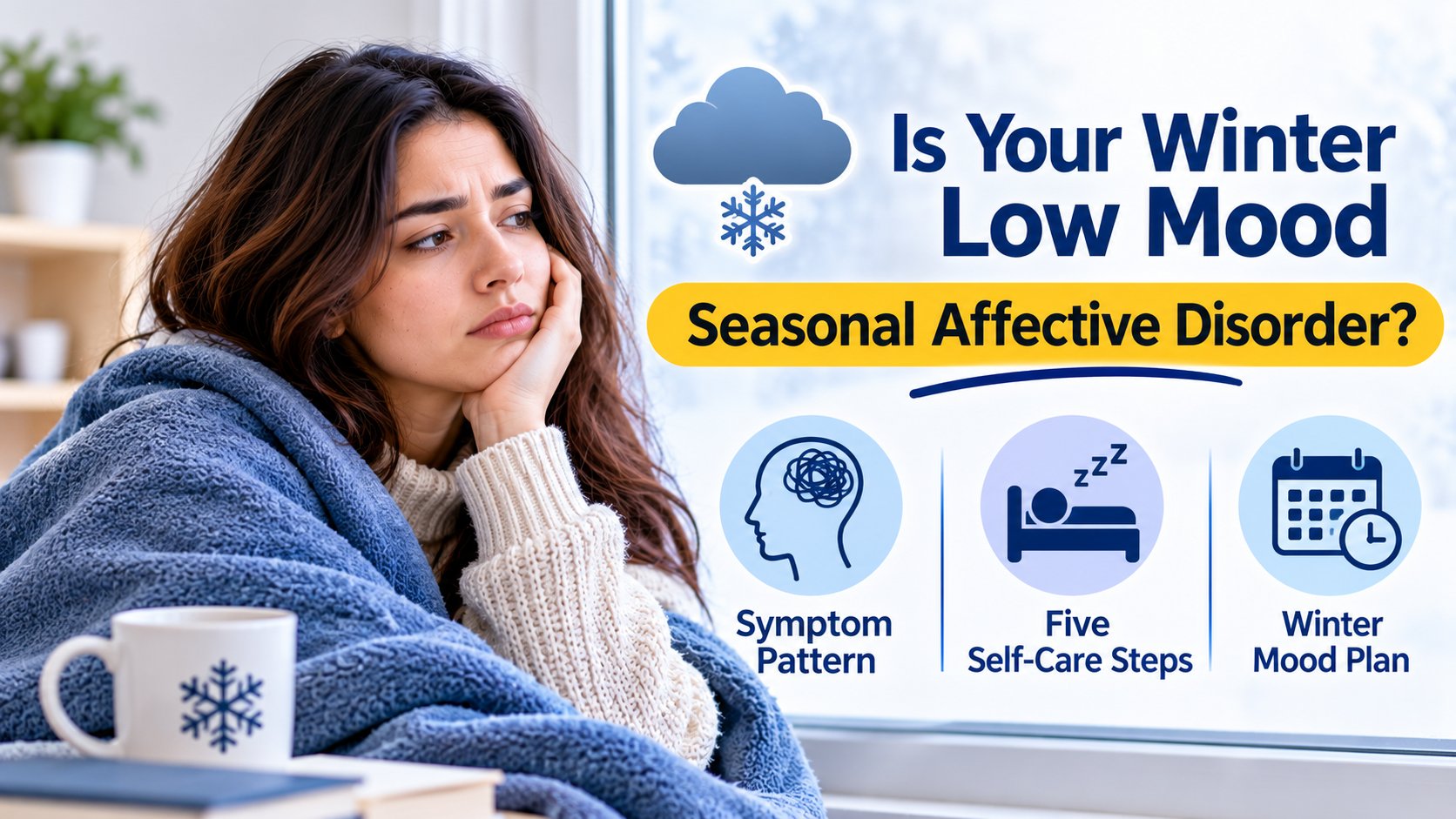
Table of contents
- 1. Winter Blues or Seasonal Affective Disorder?
- 2. Common Symptoms of Winter-Pattern SAD
- 3. Why Does Winter Affect Mood?
- 4. Five Self-Care Steps
- 5. Treatment Options Compared
- 6. When to Get Help Now
- 7. Sample Winter Mood Plan With a Mood Graph
- 8. Contact Us and Find Us Online
- Conclusion
- Frequently Asked Questions
- See a Doctor in Elmhurst or Chinatown
As the days shorten in November, many people notice that they sleep more, crave carbohydrates, lose motivation and feel flat. For some, this is a mild case of the winter blues. For others, it is a recurring pattern of depression that returns every fall or winter and lifts in spring or summer. That pattern is known as seasonal affective disorder, often shortened to SAD, which is a form of major depression with a seasonal pattern.
This guide explains how SAD differs from the winter blues, the common symptoms, why winter affects mood, five self-care steps, treatment options and a sample winter mood plan. It is general education only. If you are in distress or feel unsafe, call or text 988 (the Suicide and Crisis Lifeline) or call 911 right away.
| At a Glance | Key Point |
|---|---|
| What it is | Depression that follows a seasonal pattern, most often starting in fall or winter |
| Typical signs | Low mood, low energy, oversleeping, carbohydrate cravings, weight gain, withdrawing from others |
| Who is affected | Adults of all ages; more often diagnosed in women and in people living farther from the equator |
| Common treatments | Light therapy, talk therapy, medicine, daily routine changes |
| Get help promptly if | Symptoms disrupt daily life or you feel unsafe |
1. Winter Blues or Seasonal Affective Disorder?
Feeling a bit slower in winter is common. SAD is different because the symptoms are more severe, last most of the day nearly every day, and interfere with work, relationships or daily care. A clinician usually looks for the same seasonal pattern over at least two years.
| Feature | Winter Blues | Seasonal Affective Disorder |
|---|---|---|
| Mood | Mildly down, still able to enjoy things | Persistent low mood, loss of interest |
| Energy | Somewhat lower | Heavy fatigue, hard to function |
| Sleep | Slightly longer or lighter | Often oversleeping but still tired |
| Daily life | Mostly unaffected | Work, school or relationships suffer |
| Duration | Comes and goes through the winter | Most days for weeks, recurring each year |
The National Institute of Mental Health has a clear overview of seasonal affective disorder, and MedlinePlus explains it in plain language on its seasonal affective disorder page.
2. Common Symptoms of Winter-Pattern SAD
Symptoms vary, but winter-pattern SAD often includes:
- Feeling sad, empty or hopeless most of the day, nearly every day.
- Loss of interest in activities you usually enjoy.
- Low energy and a heavy, slowed-down feeling.
- Sleeping much more than usual and still feeling tired.
- Craving starchy or sweet foods and gaining weight.
- Trouble concentrating and making decisions.
- Pulling away from friends, family and social plans.
- Feeling worthless or guilty.
Less commonly, people have a summer pattern, with trouble sleeping, poor appetite, weight loss and agitation. If you ever feel unsafe, seek help right away, whatever the season.
3. Why Does Winter Affect Mood?
Researchers do not fully understand SAD, but several factors are thought to contribute. Less daylight may disrupt the body clock, lower serotonin activity and raise melatonin, which promotes sleepiness. Lower sunlight can also reduce vitamin D, although the link to mood is not settled.
| Possible Factor | How It May Matter |
|---|---|
| Shorter days | Disrupts the body clock and sleep-wake rhythm |
| Serotonin changes | May lower mood and energy |
| Melatonin changes | May increase sleepiness in the dark months |
| Lower vitamin D | Common in New York winters; role in mood is still being studied |
| Personal history | Past depression or bipolar disorder, or a family history, raises risk |
Vitamin D is often low in winter in our area. See our guide on why vitamin D is low so often in New York before taking supplements, and ask about testing.
4. Five Self-Care Steps
These steps can support treatment, but they do not replace care when symptoms are significant:
- Get daylight early: step outside within an hour of waking, even on cloudy days, and sit near bright windows.
- Keep a steady sleep schedule: go to bed and wake at the same times, and avoid long daytime naps.
- Move daily: a 20 to 30 minute walk or other exercise can lift mood and energy.
- Stay connected: schedule regular plans with friends and family, even when you do not feel like it.
- Eat regular meals: choose protein, vegetables and whole grains, and limit alcohol, which can worsen mood and sleep.
Good sleep habits matter a lot in winter. Read our guide on how many hours of sleep you need and ten habits for better sleep.
5. Treatment Options Compared
| Option | What It Involves | Good to Know |
|---|---|---|
| Light therapy | Sitting by a special bright light box, often about 20 to 30 minutes each morning | Often started in early fall; ask a clinician about the right device, especially if you have eye disease or bipolar disorder |
| Cognitive behavioral therapy for SAD | Talk therapy that changes unhelpful thoughts and builds activity | Benefits may last beyond the winter |
| Antidepressant medicine | Prescribed by a clinician, sometimes started before symptoms usually begin | Needs follow-up for side effects |
| Vitamin D | May be suggested if a blood test shows low levels | Evidence for treating SAD alone is mixed |
| Lifestyle changes | Light exposure, exercise, sleep and social routine | Works best alongside other treatment |
Always check with a clinician before using a light box or starting a supplement, particularly if you take other medicines. Our guide on when stress, low mood or anxiety need a doctor's help explains how screening works.
6. When to Get Help Now
Seek care promptly if:
- Your low mood lasts most of the day for two weeks or more.
- You cannot work, care for yourself or keep up with daily tasks.
- You are using alcohol or drugs to cope.
- You feel hopeless or like a burden to others.
- You feel unsafe: call or text 988, or call 911 or go to the nearest emergency room.
Low mood can also come from other conditions, such as thyroid problems or anemia. Our article on how hormones or your thyroid can explain how you feel covers one common overlap.
7. Sample Winter Mood Plan With a Mood Graph
This illustrative plan shows how someone with mild to moderate winter-pattern SAD might build supports starting in fall. It is a teaching example, not a prescription, and plans should be tailored with a clinician. The squares show example mood levels, where more squares mean better mood.
| Month | Plan | Example Mood Level |
|---|---|---|
| October | Visit a clinician, check vitamin D and thyroid, set a steady sleep schedule | ■■■■■■ |
| November | Start morning light therapy if advised, daily outdoor walk, schedule weekly social plans | ■■■■■ |
| December | Keep routine through holidays, limit alcohol, begin therapy or medicine if recommended | ■■■■■ |
| January | Check in with clinician, adjust treatment, protect sleep and exercise | ■■■■■■ |
| February | Continue plan; track mood weekly | ■■■■■■■ |
| March and April | Slowly step down as daylight returns, only as your clinician advises | ■■■■■■■■ |
8. Contact Us and Find Us Online
If your mood sinks every winter, you do not have to wait it out. Our team can listen, screen for depression, check for other causes and plan next steps. For non-emergency questions, Contact Us, book a visit, or find City Prime Care on Google: City Prime Care on Google. If you are in crisis, call or text 988.
Conclusion
Seasonal affective disorder is common, real and treatable. Notice your yearly pattern, protect light, sleep, movement and connection, and ask for professional help early rather than late. This article is for general education and does not replace medical advice.
Frequently Asked Questions
See a Doctor in Elmhurst or Chinatown
Have a question about your own health? Book a visit at our Elmhurst, Queens clinic or our Chinatown, Manhattan clinic, or explore our primary care services.
Related articles
Healthcare
Why Are Your Ankles and Feet Swollen by Evening, and When Is Leg Swelling Serious? Reading the Swelling Patterns, the Five Relief Steps and the Sample Two-Week Swelling Diary
Swollen ankles after a long day can be harmless, but swelling in one leg, sudden weight gain or breathlessness can signal a clot, heart, kidney or liver problem. Learn the patterns, five relief steps and a two-week diary.
Healthcare
Why Is a Red, Itchy Ring-Shaped Patch Spreading on Your Skin, and Is It Ringworm? Reading the Patch Types, the Five Treatment Steps and the Sample Four-Week Clearing Plan
A red, scaly, ring-shaped itchy patch is often ringworm, a common fungal skin infection that is not caused by a worm. Learn the patch types, look-alike rashes, five treatment steps and a four-week clearing plan.
Healthcare
Why Is Your Hair Thinning or Falling Out in Clumps, and Could a Health Problem Be Behind It? Reading the Hair Loss Patterns, the Five Checkup Steps and the Sample Six-Month Regrowth Timeline
Finding more hair in the shower or brush can be stressful. Learn the common hair loss patterns, which blood tests and health problems matter, five checkup steps and a realistic six-month regrowth timeline.