
HealthcareBy City Prime Care Team
Why Are Honey-Colored Crusty Sores Spreading Around Your Nose and Mouth, and Is It Impetigo? Reading the Sore Types, the Five Care Steps and the Sample Ten-Day Healing Timeline
Honey-colored crusts, blisters or weepy sores around the nose, mouth or a small cut can be impetigo, a contagious bacterial skin infection. Learn the sore types, five care steps and a sample ten-day healing timeline.
Medically reviewed by Dr. Helen Vasquez11 min read
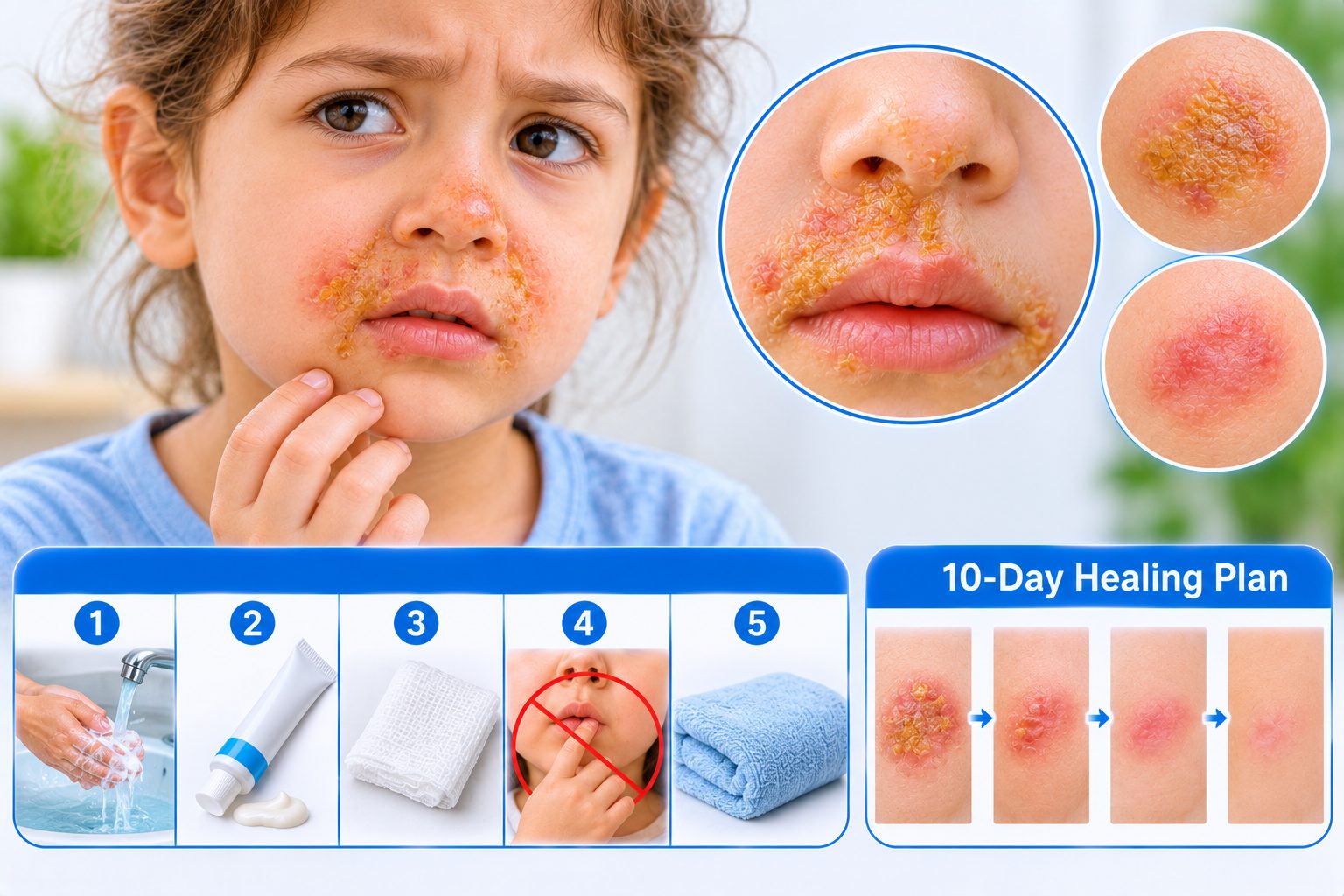
Table of contents
- 1. What Is Impetigo?
- 2. Reading the Sore Types
- 3. Impetigo vs Look-Alike Skin Problems
- 4. How Impetigo Spreads and Who Is at Higher Risk
- 5. How a Clinician Diagnoses and Chooses Treatment
- 6. The Five Care Steps
- 7. Treatment Options at a Glance
- 8. Graph: Illustrative Sore Activity During Treatment
- 9. Sample Ten-Day Healing Timeline
- 10. Red Flags: When to Get Care Promptly
- 11. Where to Get Care: Elmhurst, Chinatown and Lower Manhattan
- 12. Related Reading From City Prime Care
- 13. Contact Us
- Conclusion
- Frequently Asked Questions
- See a Doctor in Elmhurst or Chinatown
A small scratch, a cold, an insect bite or a patch of eczema is often where it begins. A day or two later, a red sore appears, then leaks and dries into a honey-colored or golden crust, usually around the nose and mouth. New sores pop up nearby, and a classmate, sibling or coworker may develop the same thing. This is the typical story of impetigo, one of the most common bacterial skin infections, especially in children but also in adults. It looks alarming, but it responds well to treatment when it is recognized early.
This guide explains the sore types, how impetigo spreads, five care steps, a sample ten-day healing timeline and the red flags that need prompt care. City Prime Care serves patients in Elmhurst, Queens, Chinatown and Lower Manhattan. This article is general education and not a substitute for personal medical advice. The American Academy of Dermatology also describes this infection in its impetigo overview.
Quick takeaways:
- Impetigo is caused by Staphylococcus aureus or group A Streptococcus bacteria entering broken or irritated skin.
- It is contagious through touch and shared items, so covering sores, washing hands and not sharing towels matter.
- Small areas are often treated with a prescription antibiotic ointment; widespread sores usually need antibiotics by mouth.
- Fever, spreading redness, dark or cola-colored urine, swelling or sores that do not improve in a few days need prompt evaluation.
1. What Is Impetigo?
Impetigo is an infection of the top layers of the skin. Bacteria that normally live on the skin or in the nose get into tiny breaks caused by scratches, cuts, bites, rashes or even a runny nose that irritates the skin around the nostrils. The infection then forms blisters or sores that ooze and crust.
It is most common in children aged two to five years, but older children and adults can get it too, especially in warm, humid weather, in crowded settings and when the skin barrier is damaged. Good hygiene does not make a person immune, and having impetigo is not a sign of neglect.
2. Reading the Sore Types
| Type | What it looks like | Who gets it | Notes |
|---|---|---|---|
| Nonbullous (crusted) impetigo | Red sores that burst, ooze and form honey-colored crusts | Children and adults; most common form | Often around the nose, mouth or on arms and legs |
| Bullous impetigo | Fluid-filled blisters that break and leave a yellow-brown crust | Infants and young children | Caused by Staphylococcus aureus toxins; often on the trunk, diaper area and skin folds |
| Ecthyma | Deeper, punched-out ulcers with a thick crust | Children, people with poor circulation or weak immunity | Can leave scars and needs prompt treatment |
| Secondary impetigo | Crusts over existing eczema, bites or scrapes | People with underlying skin problems | Treat both the infection and the skin condition |
Fresh sores can look like cold sores, ringworm or bug bites. A clinician can usually tell the difference by the appearance and, if needed, a swab for culture.
3. Impetigo vs Look-Alike Skin Problems
| Condition | Typical clue | How it differs from impetigo |
|---|---|---|
| Cold sores (herpes simplex) | Clusters of small blisters on the lip edge, with tingling beforehand | Recurs in the same place; antiviral treatment rather than antibiotics |
| Ringworm | Ring-shaped scaly patch with a clearer center | Dry scale rather than golden weeping crusts; see ringworm |
| Scabies | Intense night itching, tiny burrows between fingers | Itch is the main feature; see scabies |
| Bug bites | Scattered itchy bumps, sometimes scratched open | Impetigo often starts in scratched bites; see bug bites and bee stings |
| Eczema flare | Dry, itchy, patchy skin without pus | No honey-colored crust unless it becomes infected |
4. How Impetigo Spreads and Who Is at Higher Risk
Impetigo spreads through:
- Direct contact with the sores, including scratching and then touching other skin.
- Shared towels, clothing, razors, bedding, toys and sports gear.
- Close settings such as schools, child care, sports teams and crowded homes.
- Warm, humid weather, which helps bacteria grow on the skin.
- Skin damage from eczema, bites, cuts, scabies, chickenpox or a constantly runny nose.
People with diabetes, weakened immunity or poor circulation can develop more serious skin infections and should be seen early.
5. How a Clinician Diagnoses and Chooses Treatment
A visit usually includes:
- A look at the sores and a history of recent cuts, rashes, bites, sports contacts and exposure to others with sores.
- A review of how widespread the infection is and whether there is fever, swollen glands or signs of deeper infection.
- A swab for culture when sores are widespread, recur or do not respond, which can also check for MRSA.
- A choice between topical and oral antibiotics, based on the size of the area and the person's age and health.
- A plan for hygiene, wound care and return to school, work or sports; see when your primary care doctor sends you to a specialist if sores keep returning.
6. The Five Care Steps
If impetigo is suspected or confirmed:
- Get examined early: a prescription antibiotic is usually needed, and over-the-counter first-aid creams rarely clear it.
- Clean gently: soak crusts with warm soapy water, pat dry and apply the prescribed ointment as directed, or take the antibiotic exactly as prescribed for the full course.
- Cover and contain: place a loose dressing or gauze over sores, keep nails short and wash hands after touching the area.
- Do not share and do wash: use separate towels, cloths and bedding, and wash them in hot water; clean toys, sports gear and surfaces that touch the sores.
- Stay out until safe: children and adults usually stay home until about 24 hours after starting antibiotics or until sores are crusted and healing, as advised by the clinician.
Do not pick or scrub off the crusts, since this spreads bacteria and can cause scarring.
7. Treatment Options at a Glance
| Option | Best for | Notes |
|---|---|---|
| Mupirocin ointment | Small areas of nonbullous impetigo | Applied two to three times daily for about five to seven days as prescribed |
| Retapamulin ointment | Small areas, age 9 months and older | An alternative topical option |
| Oral antibiotics (such as cephalexin or dicloxacillin) | Widespread, bullous or ecthyma lesions | Chosen based on likely bacteria and local resistance |
| Clindamycin or trimethoprim-sulfamethoxazole | Suspected or proven MRSA | Used when cultures or risk suggest resistant bacteria |
| Warm soaks and gentle cleansing | All cases | Helps remove crusts so ointment can reach the skin |
| Treat the underlying cause | Eczema, scabies or bites | Prevents repeat infection |
8. Graph: Illustrative Sore Activity During Treatment
This is a teaching graph, not patient data. It shows how oozing and new sores usually fall within a few days of starting effective treatment, while the skin keeps healing for a week or more. Real recovery varies with the person and the treatment.
| Time | Oozing and new sores (illustrative) |
|---|---|
| Day 0 (start) | ██████████ |
| Day 2 | ███████ |
| Day 4 | ████ |
| Day 7 | ██ |
| Day 10 | █ |
9. Sample Ten-Day Healing Timeline
| When | Goal | Sample actions | Check |
|---|---|---|---|
| Day 0 | Diagnose and start treatment | Visit, exam, first dose or ointment application, hygiene plan | Is the plan clear for hands, towels and sores? |
| Days 1-3 | Stop spread | Cover sores, no sharing, stay home as advised | Are new sores slowing? |
| Days 3-5 | Check response | Crusts soften and dry, redness shrinks | Is there improvement or is a recheck needed? |
| Days 7-10 | Finish the course | Complete antibiotics, continue gentle skin care | Are sores dry and healing? |
| After day 10 | Prevent a repeat | Treat eczema, trim nails, clean small cuts promptly | Any new sores or recurrences? |
10. Red Flags: When to Get Care Promptly
See a clinician promptly for:
- Fever, chills, feeling very unwell or swollen glands.
- Redness, warmth, pain or swelling that spreads beyond the sores, which can signal cellulitis.
- Sores that do not improve after two to three days of treatment, or keep coming back.
- Dark, cola-colored or bloody urine, facial puffiness or high blood pressure in the weeks after a strep skin infection; see blood in the urine.
- Deep, punched-out sores or sores in a baby under a few months old.
- Diabetes, weakened immunity or other health conditions that raise the risk of complications.
11. Where to Get Care: Elmhurst, Chinatown and Lower Manhattan
Crusty, spreading sores are a common reason people search for urgent care Elmhurst NY, a walk in clinic Elmhurst NY, urgent care 11373, a same day doctor appointment Elmhurst or Same-Day Acute Care in Elmhurst Queens. For ongoing skin, eczema and wellness care, families choose a primary care doctor Elmhurst NY, a family doctor Elmhurst Queens, Primary Care Doctors in Elmhurst NY or chronic disease management Elmhurst NY.
People comparing options often search for Best Primary Care Clinic in Elmhurst Queens, Best Primary Care Doctor in Elmhurst Queens, Primary Care Near Me Elmhurst Queens, Best Primary Care Clinics in Queens NY, Primary Care Clinics and Doctors in Queens NY and Top Primary Care Clinics in Queens NY. City Prime Care offers Men's and Women's Healthcare in Elmhurst NY, a physical exam clinic Elmhurst NY and preventive care Elmhurst NY, including skin infection treatment and follow-up.
Downtown, people look for primary care Lower Manhattan, primary care Chinatown NYC, a doctor near Catherine Street NYC, primary care 75 Catherine St, a walk-in clinic Chinatown NYC, a Primary Care Clinic in Chinatown Manhattan or a Healthcare Center in Chinatown Manhattan NY. Citywide searches include primary care doctor NYC, family doctor Manhattan NYC, annual physical exam NYC, same day primary care NYC, preventive care Lower Manhattan and primary care doctor near me. Residents searching for Primary Care Doctors Serving Todt Hill Staten Island are welcome to contact the clinic to ask about care options and travel.
| Area | Common searches | How care can help |
|---|---|---|
| Elmhurst (ZIP 11373) | Urgent care 11373, same day doctor appointment Elmhurst | Same-day skin exam and prescription |
| Elmhurst, Queens | Family doctor Elmhurst Queens, primary care doctor Elmhurst NY | Follow-up and recurrence prevention |
| Queens | Best Primary Care Clinics in Queens NY, Top Primary Care Clinics in Queens NY | Easy-to-reach primary care for the family |
| Lower Manhattan | Primary care Lower Manhattan, preventive care Lower Manhattan | Convenient visits near work |
| Chinatown / Catherine Street | Primary care Chinatown NYC, doctor near Catherine Street NYC, primary care 75 Catherine St | Convenient downtown care |
| Citywide | Primary care doctor NYC, family doctor Manhattan NYC, same day primary care NYC | Same-day or scheduled evaluation |
You can also find the clinic on Google or learn more on the City Prime Care website.
12. Related Reading From City Prime Care
These guides on our site cover connected topics:
13. Contact Us
Do you or your child have crusty, weeping sores that keep spreading? Visit our Contact Us page or see our Google listing. If there is fever, spreading redness or the person looks very unwell, seek urgent care.
Conclusion
Impetigo is common, contagious and very treatable. Early treatment, gentle cleaning, covering the sores and not sharing towels usually clear it within about a week to ten days. Finish the full course of treatment, treat any underlying eczema or bites, and return promptly if the infection spreads or does not improve.
Frequently Asked Questions
See a Doctor in Elmhurst or Chinatown
Have a question about your own health? Book a visit at our Elmhurst, Queens clinic or our Chinatown, Manhattan clinic, or explore our primary care services.
Related articles
Healthcare
Chickenpox in Adults and Children in Elmhurst, NY: How the Rash Develops and What to Expect
Itchy red spots that turn into blisters and then crusts are the classic sign of chickenpox. Learn how the rash develops, how long you are contagious, five care steps, a ten-day timeline and when to see a doctor.
Healthcare
Shin Splints in Elmhurst, NY: How Lower Leg Pain Builds and What to Expect From Recovery
Aching pain along the inner edge of the shin during running or walking is often shin splints. Learn how they develop, how they differ from a stress fracture, five recovery steps and a sample six-week return plan.
Healthcare
Tonsillitis in Queens, NY: How Swollen Tonsils Are Evaluated and What to Expect From Treatment
Red, swollen tonsils with a painful throat and fever are the hallmarks of tonsillitis. Learn how viral and bacterial cases differ, how strep is tested, five care steps and when tonsil surgery is considered.