HealthcareBy City Prime Care Team
Why Is a Rough Bump Growing on Your Hand or the Bottom of Your Foot, and Is It a Wart? Reading the Wart Types, the Five Treatment Steps and the Sample Twelve-Week Clearing Plan
Rough bumps on the hands or soles of the feet are often warts caused by HPV. Learn the wart types, five treatment steps, red flags and a sample twelve-week clearing plan.
Medically reviewed by Dr. Karl E. Latortue10 min read
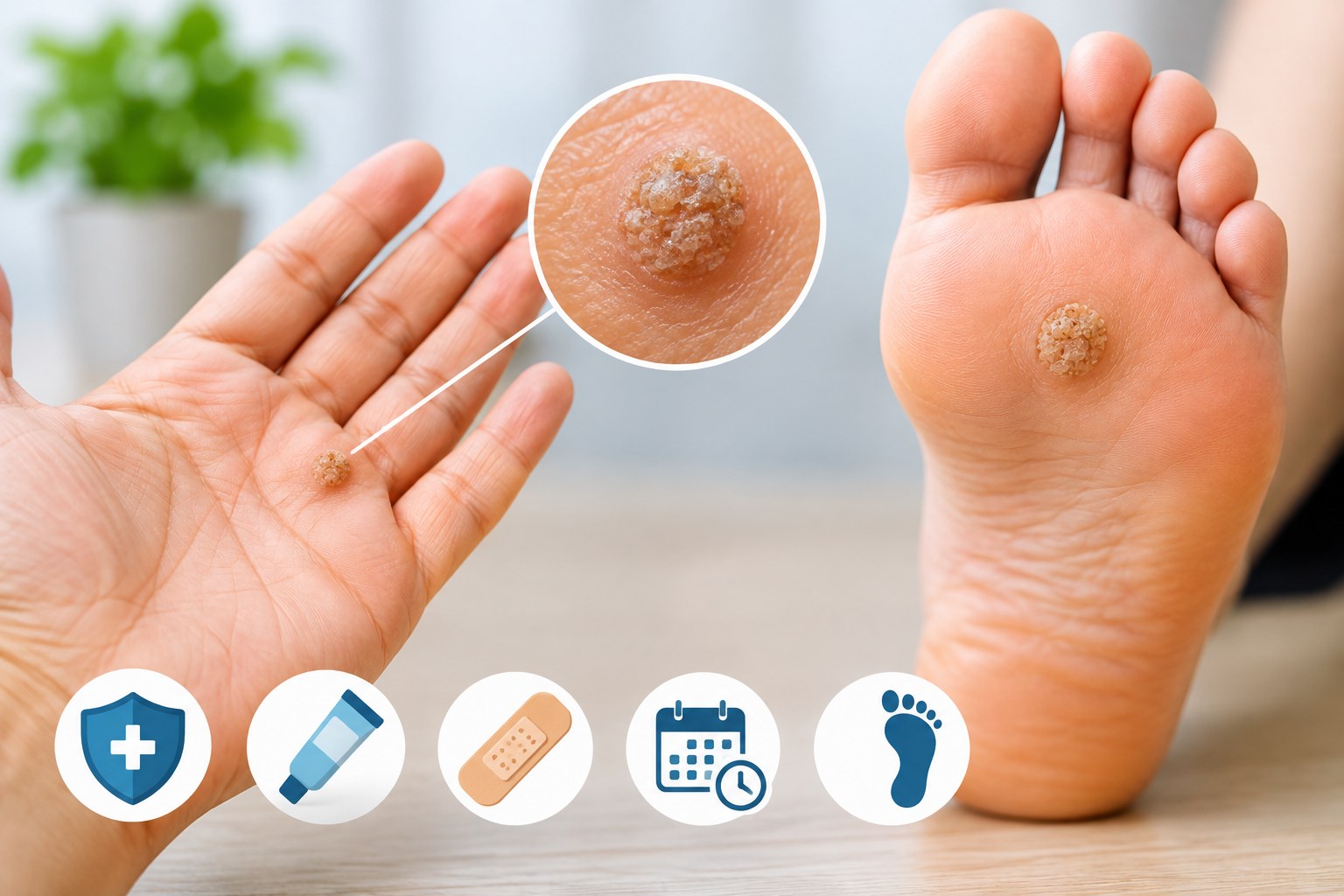
Table of contents
- 1. What Is a Wart?
- 2. Reading the Wart Types
- 3. Wart vs Look-Alikes
- 4. Causes and Who Is at Higher Risk
- 5. What a Clinician May Do
- 6. The Five Treatment Steps
- 7. Graph: Illustrative Wart Size Over Treatment
- 8. Sample Twelve-Week Clearing Plan
- 9. Red Flags: When to See a Clinician Promptly
- 10. Where to Get Care: Elmhurst, Chinatown and Lower Manhattan
- 11. Contact Us
- Conclusion
- Frequently Asked Questions
- See a Doctor in Elmhurst or Chinatown
A small, rough, skin-colored bump on a finger, knuckle or the sole of your foot that has slowly grown, perhaps with tiny black dots inside, is very often a wart. Warts are harmless growths caused by the human papillomavirus (HPV), and they are among the most common skin conditions in children, teens and adults. They are annoying, sometimes painful on the foot, and can take months to clear, but they are not dangerous in most healthy people.
This guide explains the main wart types, how to tell warts from corns, fungal infections and other skin growths, five treatment steps, a sample twelve-week clearing plan and the red flags that mean a growth needs a medical check. City Prime Care serves patients in Elmhurst, Queens and Lower Manhattan. This article is general education and not a substitute for personal medical advice.
Quick takeaways:
- Warts are caused by HPV and spread by direct contact and shared damp surfaces such as pool decks and locker rooms.
- Many warts clear on their own over months to a couple of years, but treatment can speed this up.
- Treatment needs patience: most home and clinic treatments are repeated for weeks, and recurrence is common.
- A growth that bleeds, changes color, looks unusual or occurs in someone with diabetes or a weak immune system should be examined by a clinician.
1. What Is a Wart?
HPV infects the top layer of skin, usually through tiny cuts or scratches, and makes the skin cells multiply, forming a rough lump. The virus spreads by touching a wart, by sharing towels or razors, and by walking barefoot on damp surfaces. Wart viruses on the skin are different from the types of HPV linked to cervical and other cancers. The American Academy of Dermatology warts overview and the Mayo Clinic common warts page are reliable patient references.
The immune system eventually learns to recognize the virus, which is why many warts disappear without treatment, though this may take a long time.
2. Reading the Wart Types
| Type | Where it appears | What it looks like | Typical concern |
|---|---|---|---|
| Common wart | Fingers, knuckles, hands, knees | Rough, dome-shaped, skin-colored or gray, tiny black dots | Cosmetic, can spread |
| Plantar wart | Soles and heels of the feet | Flat, pushed inward by walking, tender, black dots | Painful when standing or walking |
| Flat wart | Face, forearms, legs | Small, smooth, flat-topped, many at once | Spread by shaving |
| Filiform wart | Face, around mouth, eyes, nose | Thin, finger-like growths | Cosmetic, can irritate |
| Periungual wart | Around fingernails and toenails | Rough ring-like growth at the nail edge | Can distort the nail |
3. Wart vs Look-Alikes
| Condition | Typical clue | How it differs from a wart |
|---|---|---|
| Corn or callus | Hard, thick skin over a pressure point | Skin lines continue across a corn; warts interrupt skin lines and show black dots |
| Athlete's foot | Peeling, itchy skin between toes | Scaly rash, no raised core; see peeling, itchy skin between the toes |
| Ingrown toenail | Red, painful nail edge | Nail-related, see the edge of your toenail red and painful |
| Skin cancer or unusual mole | Bleeding, changing color or shape, not healing | Needs a clinician's check; do not treat at home |
4. Causes and Who Is at Higher Risk
Warts are more likely or harder to clear if you:
- Are a child or teen, whose immune systems are still meeting the virus.
- Bite your nails, pick at your skin or have cuts and cracked skin on your hands.
- Walk barefoot in pools, gyms and shared showers.
- Have a weakened immune system from medicines or illness, including HIV, organ transplant or chemotherapy.
- Have diabetes, where foot problems need extra care; see our type 2 diabetes guide.
5. What a Clinician May Do
A typical visit includes:
- A close look at the growth, sometimes with the surface gently pared to see the black dots, to confirm it is a wart.
- Prescription-strength salicylic acid, or freezing with liquid nitrogen (cryotherapy), repeated every two to three weeks.
- Other options such as cantharidin, immunotherapy or minor procedures for stubborn warts.
- A biopsy or referral to a dermatologist if the growth looks unusual, bleeds or is not responding; see when your primary care doctor sends you to a specialist.
- Foot-care advice for people with diabetes or poor circulation, who should not self-treat foot warts.
6. The Five Treatment Steps
For a typical common or plantar wart in a healthy adult:
- Soak the wart in warm water for about five minutes, then gently file away softened dead skin with a disposable emery board or pumice stone, which you should not share or reuse on other skin.
- Apply over-the-counter salicylic acid (17 percent liquid or 40 percent patch for common and plantar warts, following the label) once daily, protecting the surrounding healthy skin.
- Cover the wart with a bandage or duct tape if you like, and change it daily; this may help in some cases, though evidence is mixed.
- Keep going consistently for up to twelve weeks, and stop if the skin becomes very sore or irritated.
- See a clinician if there is no improvement after several weeks, if the wart spreads, is painful, bleeds, or if you have diabetes or poor circulation.
Do not cut a wart off at home or use harsh remedies that burn the skin, as this can cause scarring and infection. A yearly checkup can include a skin and foot review; see our annual physical guide.
7. Graph: Illustrative Wart Size Over Treatment
This is a teaching graph, not patient data. It shows how a wart may shrink slowly with consistent treatment, with some ups and downs along the way.
| Week | Wart size, treated (illustrative) | Wart size, untreated (illustrative) |
|---|---|---|
| Week 0 | ██████████ | ██████████ |
| Week 3 | ████████ | ██████████ |
| Week 6 | ██████ | █████████ |
| Week 9 | ███ | █████████ |
| Week 12 | █ | ████████ |
8. Sample Twelve-Week Clearing Plan
| Weeks | Goal | Sample actions | Check |
|---|---|---|---|
| Weeks 1-2 | Start and learn the routine | Daily soak, file and salicylic acid; protect healthy skin | Is the skin too sore or irritated? |
| Weeks 3-6 | Thin the wart | Continue daily; consider a clinic visit for freezing every 2 to 3 weeks | Is the wart flatter and less painful? |
| Weeks 7-10 | Push through the stubborn core | Keep going consistently; wash tools and hands after treatment | Are black dots fading, normal skin lines returning? |
| Weeks 11-12 | Confirm clearing and prevent spread | Stop when skin lines return across the area; keep feet dry, wear sandals in showers | If not clearing, see a clinician for other options |
9. Red Flags: When to See a Clinician Promptly
Get a medical check for:
- A growth that bleeds, changes color or shape, or has an irregular border; it may not be a wart.
- A foot wart in someone with diabetes, numbness or poor circulation.
- Rapid spread of many warts, especially in someone with a weakened immune system.
- Signs of infection after treatment, such as increasing redness, warmth, swelling, pus or fever.
- Warts on the face, genitals or in the mouth, which need clinician guidance rather than home treatment.
10. Where to Get Care: Elmhurst, Chinatown and Lower Manhattan
For a painful foot wart or an infected skin spot, many people search for urgent care Elmhurst NY, a walk in clinic Elmhurst NY, urgent care 11373, or a same day doctor appointment Elmhurst. For repeat treatments, skin and foot checks and diabetes care, patients choose a primary care doctor Elmhurst NY, a family doctor Elmhurst Queens, or chronic disease management Elmhurst NY. Downtown, people look for primary care Lower Manhattan, primary care Chinatown NYC, a doctor near Catherine Street NYC, primary care 75 Catherine St, or a walk-in clinic Chinatown NYC.
| Area | Common searches | How care can help |
|---|---|---|
| Elmhurst (ZIP 11373) | Urgent care 11373, same day doctor appointment Elmhurst | Quick check of painful or infected growths |
| Elmhurst, Queens | Family doctor Elmhurst Queens, primary care doctor Elmhurst NY | Repeat wart treatment and foot care |
| Lower Manhattan | Primary care Lower Manhattan, preventive care Lower Manhattan | Skin checks and referral planning |
| Chinatown / Catherine Street | Primary care Chinatown NYC, doctor near Catherine Street NYC, primary care 75 Catherine St | Convenient downtown care |
| Citywide | Primary care doctor NYC, family doctor Manhattan NYC, same day primary care NYC | Same-day or scheduled evaluation |
A primary care doctor near me search, a physical exam clinic Elmhurst NY visit, preventive care Elmhurst NY, or an annual physical exam NYC is a convenient way to have unusual skin growths looked at. You can also find the clinic on Google.
11. Contact Us
Is a bump not going away, growing or painful? Visit our Contact Us page or see our Google listing. For signs of serious infection such as spreading redness with fever, seek urgent care.
Conclusion
Warts are common, usually harmless and often stubborn. Consistent treatment over weeks, good foot and hand hygiene and patience clear most of them, while unusual-looking growths, foot warts in people with diabetes and spreading warts deserve a clinician's check.
Frequently Asked Questions
See a Doctor in Elmhurst or Chinatown
Have a question about your own health? Book a visit at our Elmhurst, Queens clinic or our Chinatown, Manhattan clinic, or explore our primary care services.
Related articles
Healthcare
Why Is a Red, Itchy Ring-Shaped Patch Spreading on Your Skin, and Is It Ringworm? Reading the Patch Types, the Five Treatment Steps and the Sample Four-Week Clearing Plan
A red, scaly, ring-shaped itchy patch is often ringworm, a common fungal skin infection that is not caused by a worm. Learn the patch types, look-alike rashes, five treatment steps and a four-week clearing plan.
Healthcare
Why Are Your Ankles and Feet Swollen by Evening, and When Is Leg Swelling Serious? Reading the Swelling Patterns, the Five Relief Steps and the Sample Two-Week Swelling Diary
Swollen ankles after a long day can be harmless, but swelling in one leg, sudden weight gain or breathlessness can signal a clot, heart, kidney or liver problem. Learn the patterns, five relief steps and a two-week diary.
Healthcare
Why Is Your Hair Thinning or Falling Out in Clumps, and Could a Health Problem Be Behind It? Reading the Hair Loss Patterns, the Five Checkup Steps and the Sample Six-Month Regrowth Timeline
Finding more hair in the shower or brush can be stressful. Learn the common hair loss patterns, which blood tests and health problems matter, five checkup steps and a realistic six-month regrowth timeline.