
HealthcareBy City Prime Care Team
Shin Splints in Elmhurst, NY: How Lower Leg Pain Builds and What to Expect From Recovery
Aching pain along the inner edge of the shin during running or walking is often shin splints. Learn how they develop, how they differ from a stress fracture, five recovery steps and a sample six-week return plan.
Medically reviewed by Dr. Karl E. Latortue11 min read
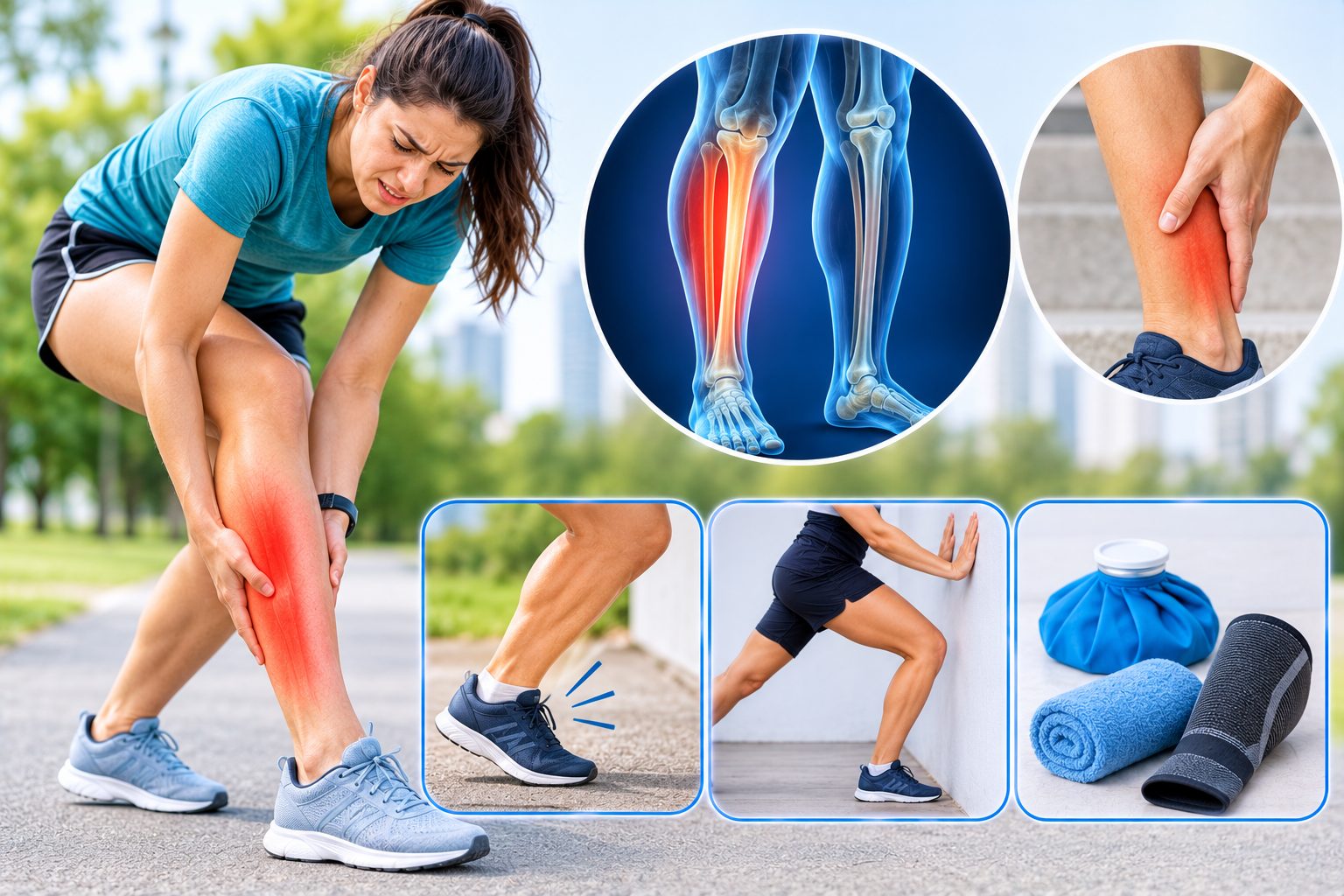
Table of contents
- 1. What Are Shin Splints?
- 2. Reading the Severity Stages
- 3. Shin Splints vs Look-Alike Problems
- 4. Causes and Who Is at Higher Risk
- 5. How a Clinician Evaluates Shin Pain
- 6. The Five Recovery Steps
- 7. Treatment Options at a Glance
- 8. Graph: Illustrative Pain Level During Recovery
- 9. Sample Six-Week Return Plan
- 10. Red Flags: When to Get Care Promptly
- 11. Where to Get Care: Elmhurst, Chinatown and Lower Manhattan
- 12. Related Reading From City Prime Care
- 13. Contact Us
- Conclusion
- Frequently Asked Questions
- See a Doctor in Elmhurst or Chinatown
You started running again, added a few extra miles or switched to a new walking routine, and now a dull ache runs along the inside of your shin. It is sore when you push off, eases when you warm up and aches again after you stop. This pattern is typical of shin splints, known medically as medial tibial stress syndrome. It is one of the most common overuse problems in runners, dancers, athletes, military recruits and anyone who suddenly increases their activity.
This guide explains how shin splints develop, how they differ from a stress fracture, five recovery steps, a sample six-week return plan and the red flags that need prompt care. City Prime Care serves patients in Elmhurst, Queens, Chinatown and Lower Manhattan. This article is general education and not a substitute for personal medical advice. The American Academy of Orthopaedic Surgeons also explains the problem in its shin splints guide.
Quick takeaways:
- Shin splints cause diffuse aching pain along the lower inner shin that builds with activity, usually from repeated stress on the bone and the muscles attached to it.
- Common triggers include a sudden jump in distance or intensity, hard surfaces, worn shoes, flat feet and tight or weak calf muscles.
- Most cases improve over several weeks with relative rest, a gradual return and better footwear and strength; pinpoint bone pain or pain at rest could mean a stress fracture.
- Pain that wakes you at night, swelling, numbness or a leg that cannot bear weight needs prompt evaluation.
1. What Are Shin Splints?
The shin bone, or tibia, is the large bone at the front of the lower leg. Muscles and connective tissue attach to its inner edge. When you repeatedly load the leg, such as with running or jumping, those attachments and the bone surface can become irritated, causing a spread-out aching pain along the lower two thirds of the inner shin.
Shin splints are an overuse injury, which means the load has outpaced the body's ability to adapt. They are not usually dangerous, but ignoring them can allow a stress reaction in the bone to turn into a stress fracture.
2. Reading the Severity Stages
| Stage | What you may notice | Typical approach |
|---|---|---|
| Stage 1: Mild | Pain only after activity, gone within an hour | Reduce volume, check shoes, add calf strengthening |
| Stage 2: Moderate | Pain at the start of activity that eases with warm-up, then returns after | Cut high-impact activity, cross-train, plan a gradual return |
| Stage 3: Significant | Pain during all of the activity and aching afterward | Rest from impact, clinician review, consider imaging |
| Stage 4: Severe | Pain with walking or at rest; tenderness at a single spot | Needs evaluation for a stress fracture before returning to sport |
The stage matters less than how the pain behaves over time. Pain that is getting worse despite rest is a reason to be seen.
3. Shin Splints vs Look-Alike Problems
| Condition | Typical clue | How it differs from shin splints |
|---|---|---|
| Stress fracture | Pinpoint tenderness on the bone, pain that persists at rest or at night | Pain is in one small spot rather than spread over several inches |
| Exertional compartment syndrome | Tightness, burning or numbness that builds with exercise and fades with rest | Pressure-type pain with possible numbness and foot weakness |
| Achilles tendinitis | Pain and stiffness at the back of the heel | Different location; see Achilles tendinitis |
| Blood clot in the calf | One-sided calf swelling, warmth and tenderness | Swelling and warmth are prominent; needs urgent evaluation |
| Night cramps | Sudden painful muscle tightening at night | Short episodes with relief on stretching; see night leg cramps |
| Ankle or foot swelling | Puffy lower legs by evening | Swelling rather than activity pain; see ankle and foot swelling |
4. Causes and Who Is at Higher Risk
Shin splints are linked to:
- A sudden increase in running distance, speed, hills or training days, often when starting a new program.
- Hard or uneven surfaces such as concrete sidewalks, which are common for city runners.
- Worn-out or poorly fitting running shoes, usually after 300 to 500 miles of use.
- Flat feet or very high arches, and an uneven stride that adds stress to the lower leg.
- Tight calves, weak hip and core muscles or limited ankle motion.
- Low bone density or low vitamin D; see why vitamin D is low so often in New York.
- Sports with repeated impact, such as running, dance, basketball, soccer and military drills.
5. How a Clinician Evaluates Shin Pain
A visit usually includes:
- A history of your training, surfaces, shoes, recent changes, past injuries and when the pain occurs.
- A leg exam pressing along the shin to separate spread-out soreness from a single point of bone tenderness.
- A check of calf flexibility, foot posture, ankle motion and your walk or running pattern.
- An X-ray when a stress fracture is suspected, though early stress injuries may not show; see when an injury or cough calls for an X-ray. MRI or a bone scan may be used in some cases.
- A recovery plan and, when needed, a referral to sports medicine, physical therapy or podiatry; see when your primary care doctor sends you to a specialist.
6. The Five Recovery Steps
To recover from shin splints:
- Rest from the trigger: cut back or pause running and jumping until walking is pain-free, and keep moving with low-impact options such as swimming, cycling or an elliptical.
- Calm the pain: ice for 15 to 20 minutes after activity, and ask a clinician whether a short course of an over-the-counter pain reliever is safe for you.
- Fix the setup: replace worn shoes, choose a shoe that suits your foot type and use softer surfaces when you can.
- Strengthen and stretch: do calf raises, heel and toe walking, hip and core strengthening and gentle calf stretches to share the load.
- Return gradually: restart with walk-run intervals and increase total weekly volume by no more than about 10 percent.
A common mistake is returning to full training as soon as the pain fades. A staged return protects against relapse.
7. Treatment Options at a Glance
| Option | Best for | Notes |
|---|---|---|
| Relative rest and cross-training | All stages | Keeps fitness while the shin settles |
| Ice and short-term pain relievers | Flare-ups | Short term; check safety with your clinician |
| Supportive shoes or orthotic inserts | Flat feet, high arches, worn shoes | May ease strain on the shin |
| Physical therapy | Recurring or stubborn pain | Strength, running form and load management |
| Imaging | Suspected stress fracture | X-ray first; MRI if early injury is suspected |
| Walking boot or crutches | Confirmed stress fracture | Used when walking itself is painful |
8. Graph: Illustrative Pain Level During Recovery
This is a teaching graph, not patient data. It shows how pain often falls over several weeks with relative rest and a gradual return. Real recovery varies with the severity and the person.
| Time | Shin pain with activity (illustrative) |
|---|---|
| Week 0 (start) | ██████████ |
| Week 1 | ████████ |
| Week 2 | ██████ |
| Week 4 | ███ |
| Week 6 | █ |
9. Sample Six-Week Return Plan
| When | Goal | Sample actions | Check |
|---|---|---|---|
| Week 0 | Calm the shin | Pause impact, ice after use, cross-train, replace worn shoes | Is walking pain-free? |
| Weeks 1-2 | Build strength | Calf raises, hip and core work, gentle stretching | Is the shin less tender to touch? |
| Weeks 3-4 | Restart impact | Walk-run intervals on a softer surface every other day | Is pain 2 out of 10 or less and gone within an hour? |
| Weeks 5-6 | Rebuild volume | Increase total time slowly, add easy runs | Any return of morning or night pain? |
| After week 6 | Maintain | Keep strength work, rotate shoes, plan rest days | Is the pain staying away at your usual volume? |
10. Red Flags: When to Get Care Promptly
See a clinician promptly for:
- Pain in one small spot on the bone that hurts when pressed or when hopping, which may be a stress fracture.
- Pain at rest or that wakes you at night.
- Swelling, warmth or redness of the lower leg, or calf pain with swelling on one side, especially after travel or inactivity.
- Numbness, tingling, weakness or a cold, pale foot.
- A leg that cannot bear weight or pain that is getting worse despite rest.
- Fever with a hot, red, painful leg.
11. Where to Get Care: Elmhurst, Chinatown and Lower Manhattan
Leg pain after a new running routine is a common reason people search for urgent care Elmhurst NY, a walk in clinic Elmhurst NY, urgent care 11373, a same day doctor appointment Elmhurst or Same-Day Acute Care in Elmhurst Queens. For ongoing injury follow-up, footwear advice and fitness planning, patients choose a primary care doctor Elmhurst NY, a family doctor Elmhurst Queens, Primary Care Doctors in Elmhurst NY or chronic disease management Elmhurst NY.
People comparing options often search for Best Primary Care Clinic in Elmhurst Queens, Best Primary Care Doctor in Elmhurst Queens, Primary Care Near Me Elmhurst Queens, Best Primary Care Clinics in Queens NY, Primary Care Clinics and Doctors in Queens NY and Top Primary Care Clinics in Queens NY. City Prime Care offers Men's and Women's Healthcare in Elmhurst NY, a physical exam clinic Elmhurst NY and preventive care Elmhurst NY, including musculoskeletal evaluation and referrals.
Downtown, people look for primary care Lower Manhattan, primary care Chinatown NYC, a doctor near Catherine Street NYC, primary care 75 Catherine St, a walk-in clinic Chinatown NYC, a Primary Care Clinic in Chinatown Manhattan or a Healthcare Center in Chinatown Manhattan NY. Citywide searches include primary care doctor NYC, family doctor Manhattan NYC, annual physical exam NYC, same day primary care NYC, preventive care Lower Manhattan and primary care doctor near me. Residents searching for Primary Care Doctors Serving Todt Hill Staten Island are welcome to contact the clinic to ask about care options and travel.
| Area | Common searches | How care can help |
|---|---|---|
| Elmhurst (ZIP 11373) | Urgent care 11373, same day doctor appointment Elmhurst | Prompt exam for leg pain and a possible stress fracture |
| Elmhurst, Queens | Family doctor Elmhurst Queens, primary care doctor Elmhurst NY | Injury follow-up and activity planning |
| Queens | Best Primary Care Clinics in Queens NY, Top Primary Care Clinics in Queens NY | Easy-to-reach primary care for the family |
| Lower Manhattan | Primary care Lower Manhattan, preventive care Lower Manhattan | Convenient visits near work |
| Chinatown / Catherine Street | Primary care Chinatown NYC, doctor near Catherine Street NYC, primary care 75 Catherine St | Convenient downtown care |
| Citywide | Primary care doctor NYC, family doctor Manhattan NYC, same day primary care NYC | Same-day or scheduled evaluation |
You can also find the clinic on Google or learn more on the City Prime Care website.
12. Related Reading From City Prime Care
13. Contact Us
Is an ache along your shin getting in the way of your walk or workout? Visit our Contact Us page or see our Google listing. If the pain is sharp in one spot, wakes you at night or you cannot put weight on the leg, seek care promptly.
Conclusion
Shin splints are common and usually settle with rest from impact, better shoes, strength work and a gradual return to training. The important step is not to push through worsening pain, because a stress fracture needs a different plan. If pain is pinpoint, constant or not improving, ask a clinician to check.
Frequently Asked Questions
See a Doctor in Elmhurst or Chinatown
Have a question about your own health? Book a visit at our Elmhurst, Queens clinic or our Chinatown, Manhattan clinic, or explore our primary care services.
Related articles
Healthcare
Why Does Your Shoulder Ache When You Lift Your Arm, and Could It Be a Rotator Cuff Injury? Reading the Pain Pattern, the Five Rehab Steps and the Sample Strengthening Plan
Shoulder pain that worsens when you reach overhead or lie on your side may be a rotator cuff problem. Learn the causes, diagnosis, five rehab steps, treatment options and a sample strengthening plan with a simple graph.
Healthcare
Why Does Your Knee Click, Catch or Give Way After a Twist, and Could It Be a Meniscus Tear? Reading the Knee Clues, the Five Protection Steps and the Sample Recovery Plan
A twisting injury or years of wear can tear the meniscus, the cushion inside the knee, causing pain, swelling, catching and giving way. Learn the knee clues, causes, red flags, treatments, five protection steps and a sample recovery plan with a simple graph.
Healthcare
Why Does Pain Shoot From Your Neck Down Your Arm With Tingling in Your Fingers, and Is It a Pinched Nerve? Reading the Nerve Pattern, the Five Relief Steps and the Sample Eight-Week Recovery Plan
Neck pain that travels into the arm with finger tingling often means a pinched nerve (cervical radiculopathy). Learn the nerve pattern, relief steps, red flags and a recovery plan.