
HealthcareBy City Prime Care Team
Chickenpox in Adults and Children in Elmhurst, NY: How the Rash Develops and What to Expect
Itchy red spots that turn into blisters and then crusts are the classic sign of chickenpox. Learn how the rash develops, how long you are contagious, five care steps, a ten-day timeline and when to see a doctor.
Medically reviewed by Dr. Helen Vasquez11 min read
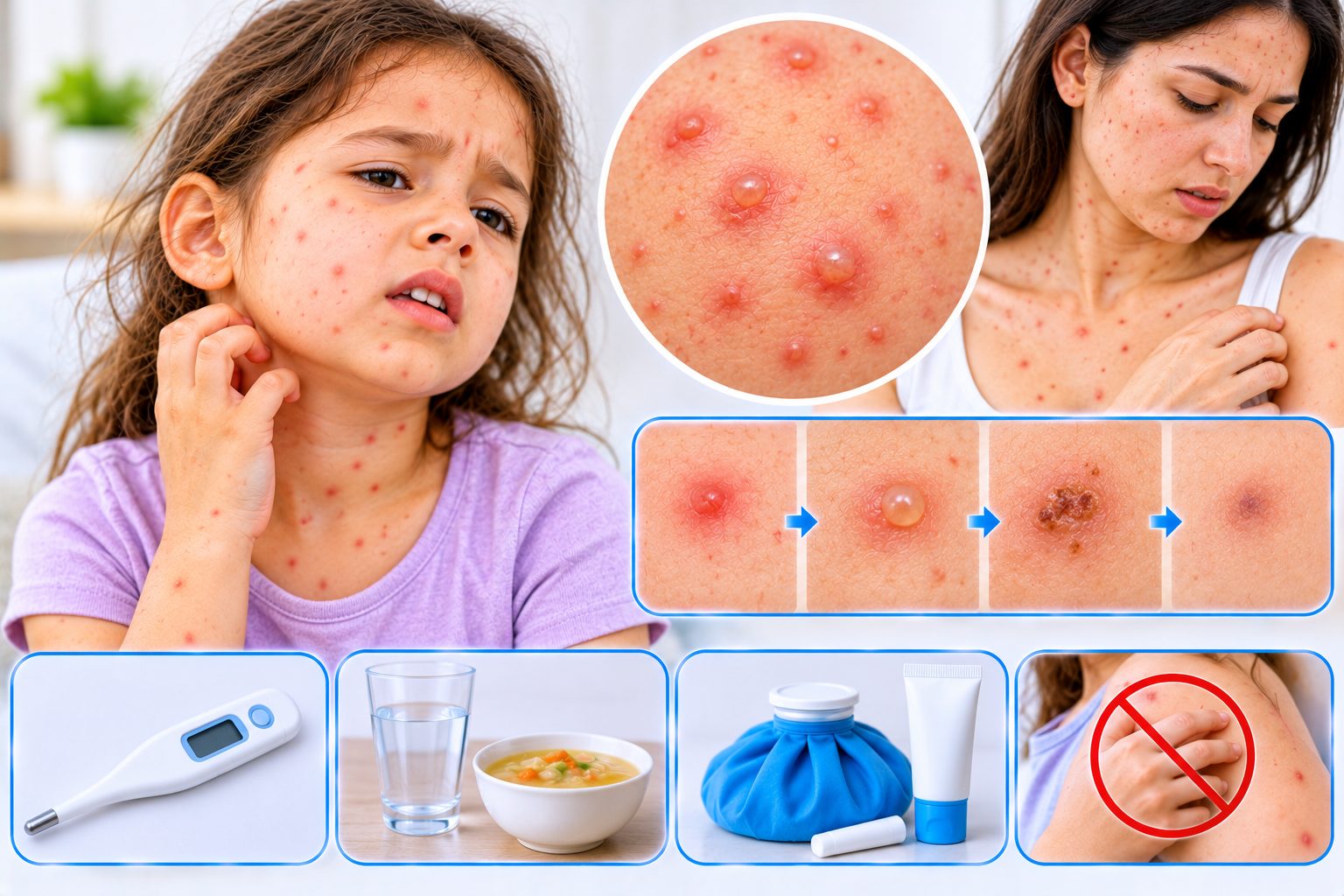
Table of contents
- 1. What Is Chickenpox?
- 2. How the Rash Develops: The Stages
- 3. Chickenpox vs Look-Alike Rashes
- 4. How It Spreads and Who Is at Higher Risk
- 5. How a Clinician Diagnoses Chickenpox
- 6. The Five Comfort-and-Care Steps
- 7. Treatment and Prevention at a Glance
- 8. Graph: Illustrative Itch Level Across the Illness
- 9. Sample Ten-Day Care Timeline
- 10. Red Flags: When to Get Care Promptly
- 11. Where to Get Care: Elmhurst, Chinatown and Lower Manhattan
- 12. Related Reading From City Prime Care
- 13. Contact Us
- Conclusion
- Frequently Asked Questions
- See a Doctor in Elmhurst or Chinatown
Your child comes home tired and a little feverish, and the next morning there are itchy red spots on the chest and back. By evening some of them look like tiny water-filled blisters. This is the classic story of chickenpox, caused by the varicella-zoster virus. Many children get it, but adults who never had it or were never vaccinated can catch it too, and adults often feel sicker.
This guide explains how the rash develops, how long you are contagious, five care steps, a sample ten-day timeline and the red flags that need prompt care. City Prime Care serves patients in Elmhurst, Queens, Chinatown and Lower Manhattan. This article is general education and not a substitute for personal medical advice. The CDC also explains the illness in its chickenpox guide.
Quick takeaways:
- Chickenpox causes an itchy rash that goes through spots, blisters and crusts, often with fever, tiredness and loss of appetite.
- A person can spread the virus from about one to two days before the rash appears until every blister has crusted over, usually around five to seven days.
- Most healthy children recover at home with comfort care; adults, pregnant women, newborns and people with weak immune systems need to be seen promptly.
- Two doses of the chickenpox vaccine are the best protection; never give aspirin to a child with chickenpox.
1. What Is Chickenpox?
Chickenpox is a highly contagious viral infection. The virus spreads through the air when an infected person coughs or sneezes and through contact with fluid from the blisters. After you recover, the virus stays quiet in nerve cells for life and can return years later as shingles.
Symptoms usually start 10 to 21 days after exposure. Before the vaccine became routine, nearly every child had chickenpox. Today cases are far fewer, but outbreaks still happen, especially among unvaccinated people.
2. How the Rash Develops: The Stages
| Stage | What it looks like | Typical timing | What you may feel |
|---|---|---|---|
| Early symptoms | Fever, tiredness, headache, poor appetite | 1 to 2 days before the rash | Feeling unwell and achy |
| Red spots | Small flat or slightly raised pink-red spots, often starting on the face, chest and back | Day 1 | Mild to moderate itching |
| Blisters | Clear fluid-filled bumps on a red base, often described as a dewdrop on a rose petal | Days 1 to 3 | Strong itching |
| Breaking open | Blisters leak or burst and form small open sores | Days 2 to 4 | Itching and some soreness |
| Crusting | Scabs form; new spots keep appearing in waves | Days 4 to 7 | Itching eases; you are still contagious until all have crusted |
| Healing | Scabs fall off over one to two weeks | Days 7 to 14 | Mild itch; skin may be pink for a while |
A key clue is that spots at different stages appear at the same time in the same area. Most people have 250 to 500 blisters, though a mild case can have far fewer.
3. Chickenpox vs Look-Alike Rashes
| Condition | Typical clue | How it differs from chickenpox |
|---|---|---|
| Shingles | Painful, burning band of blisters on one side of the body | Limited to one nerve area rather than widespread; occurs in people who already had chickenpox |
| Scabies | Intense night itching with tiny bumps between the fingers | No fever and no blisters in waves; see scabies and night itching |
| Impetigo | Honey-colored crusts around the nose and mouth | Bacterial skin infection; see impetigo and honey-colored sores |
| Insect bites | A few itchy raised bumps, often on exposed skin | No fever and no spreading in waves; see bug bites and bee stings |
| Hand, foot and mouth disease | Mouth sores and spots on the palms and soles | Distribution on hands, feet and mouth rather than the trunk |
| Ringworm | A ring-shaped scaly patch | Slow-growing patch rather than many blisters; see ringworm |
4. How It Spreads and Who Is at Higher Risk
Chickenpox spreads easily, and these people are at higher risk for severe illness:
- Anyone who has never had chickenpox and has not had two vaccine doses and is exposed to a person with the infection.
- Newborns and babies younger than 12 months, especially if the mother was not immune.
- Pregnant women who are not immune, because the infection can be serious for mother and baby.
- People with weak immune systems from cancer treatment, steroids or other conditions.
- Teenagers and adults, who are more likely than young children to develop complications such as pneumonia.
- Children who take aspirin-containing medicines, who face a risk of a rare but serious condition called Reye syndrome.
Many adults born in the United States before 1980 are considered immune, but this does not apply to everyone, so ask a clinician if you are unsure, especially if you work in healthcare, are planning a pregnancy or travel often.
5. How a Clinician Diagnoses Chickenpox
A visit usually includes:
- A history of exposure, vaccine status, fever, other symptoms and any medical conditions or medicines that affect immunity.
- A skin exam, looking for blisters at different stages and checking for signs of bacterial infection such as spreading redness, warmth or pus.
- A check of temperature, breathing and hydration.
- In unclear cases, a swab of a blister or a blood test to confirm the virus or immunity.
- Advice on staying home, protecting others and whether an antiviral medicine is appropriate; see when your primary care doctor sends you to a specialist if more complex care is needed.
Calling ahead before visiting any clinic is helpful, so staff can bring you in without exposing other patients, especially babies and pregnant women in the waiting room.
6. The Five Comfort-and-Care Steps
To ease chickenpox at home:
- Control the itch: use cool compresses, lukewarm baths with colloidal oatmeal and calamine lotion on the spots; avoid hot water, which can worsen itching.
- Protect the skin: trim fingernails short, use soft clothing and mittens at night for young children to limit scratching and scarring.
- Treat fever and aches safely: use acetaminophen if needed; never give aspirin to children or teenagers, and check with a clinician before using ibuprofen.
- Stay hydrated and eat soft foods: offer fluids often, and cold treats or soft foods if mouth sores make eating painful.
- Stay home until all blisters have crusted: this protects others, and avoid contact with newborns, pregnant women and people with weak immune systems during that time.
Antiviral medicines such as acyclovir or valacyclovir may be recommended for adults, teenagers and people at higher risk, and they work best when started within about 24 hours of the first rash, so do not wait to call.
7. Treatment and Prevention at a Glance
| Option | Best for | Notes |
|---|---|---|
| Oatmeal baths, calamine, cool compresses | Everyone | Comfort care that eases itching |
| Acetaminophen | Fever and aches | Follow the dose on the label or your clinician's advice |
| Antiviral medicine | Adults, teenagers, high-risk people and some other cases | Best started early; needs a clinician's prescription |
| Antibiotics | Secondary bacterial skin infection | Not used for chickenpox itself, because it is a virus |
| Chickenpox vaccine (two doses) | Children and non-immune adults | Children usually get doses at 12 to 15 months and 4 to 6 years; non-immune adults get two doses at least 4 weeks apart |
| Post-exposure vaccine or immune globulin | Some exposed people who are not immune | Time-sensitive; call a clinician as soon as possible after exposure |
To see how chickenpox fits with other vaccines, read our guide to adult vaccines.
8. Graph: Illustrative Itch Level Across the Illness
This is a teaching graph, not patient data. It shows how itching often peaks in the first few days while new blisters appear and then fades as crusts form. Real courses vary by age and the number of spots.
| Day | Itch intensity (illustrative) |
|---|---|
| Day 1 | ██████ |
| Day 2 | █████████ |
| Day 3 | ██████████ |
| Day 5 | ███████ |
| Day 7 | ████ |
| Day 10 | ██ |
9. Sample Ten-Day Care Timeline
| When | Goal | Sample actions | Check |
|---|---|---|---|
| Day 1 | Confirm and isolate | Call a clinician, stay home, start comfort care | Are there signs of high risk, such as pregnancy or a weak immune system? |
| Days 2-4 | Control symptoms | Oatmeal baths, calamine, acetaminophen, fluids, short nails | Is the child drinking and passing urine? |
| Days 5-7 | Watch for crusting | Keep skin clean and dry, avoid scratching, continue rest | Have all blisters crusted over? |
| Days 8-10 | Return to routine | Go back to school or work once all blisters are crusted and you feel well | Is any spot red, warm, swollen or draining pus? |
| After recovery | Prevent future problems | Check vaccine records for the family; protect the skin from sun while scars fade | Is anyone at home not yet vaccinated? |
10. Red Flags: When to Get Care Promptly
See a clinician promptly or seek urgent care for:
- A fever that lasts more than four days or rises above 102 degrees Fahrenheit.
- Rash that spreads to the eyes, or becomes very red, warm, swollen, tender or leaks pus, which may be a bacterial infection.
- Trouble breathing, a persistent bad cough or chest pain.
- Severe headache, stiff neck, confusion, unusual drowsiness, trouble walking or seizures.
- Repeated vomiting, signs of dehydration or very little urine; see dehydration warning signs.
- Chickenpox in a newborn, a pregnant woman, an adult or anyone with a weak immune system.
11. Where to Get Care: Elmhurst, Chinatown and Lower Manhattan
A fever and a new itchy rash is a common reason people search for urgent care Elmhurst NY, a walk in clinic Elmhurst NY, urgent care 11373, a same day doctor appointment Elmhurst or Same-Day Acute Care in Elmhurst Queens. For vaccine records, immunity checks and ongoing family care, patients choose a primary care doctor Elmhurst NY, a family doctor Elmhurst Queens, Primary Care Doctors in Elmhurst NY or chronic disease management Elmhurst NY.
People comparing options often search for Best Primary Care Clinic in Elmhurst Queens, Best Primary Care Doctor in Elmhurst Queens, Primary Care Near Me Elmhurst Queens, Best Primary Care Clinics in Queens NY, Primary Care Clinics and Doctors in Queens NY and Top Primary Care Clinics in Queens NY. City Prime Care offers Men's and Women's Healthcare in Elmhurst NY, a physical exam clinic Elmhurst NY and preventive care Elmhurst NY, including vaccine review and skin rash evaluation.
Downtown, people look for primary care Lower Manhattan, primary care Chinatown NYC, a doctor near Catherine Street NYC, primary care 75 Catherine St, a walk-in clinic Chinatown NYC, a Primary Care Clinic in Chinatown Manhattan or a Healthcare Center in Chinatown Manhattan NY. Citywide searches include primary care doctor NYC, family doctor Manhattan NYC, annual physical exam NYC, same day primary care NYC, preventive care Lower Manhattan and primary care doctor near me. Residents searching for Primary Care Doctors Serving Todt Hill Staten Island are welcome to contact the clinic to ask about care options and travel.
| Area | Common searches | How care can help |
|---|---|---|
| Elmhurst (ZIP 11373) | Urgent care 11373, same day doctor appointment Elmhurst | Prompt exam for fever and a new blistering rash |
| Elmhurst, Queens | Family doctor Elmhurst Queens, primary care doctor Elmhurst NY | Vaccine records, immunity questions and follow-up |
| Queens | Best Primary Care Clinics in Queens NY, Top Primary Care Clinics in Queens NY | Easy-to-reach primary care for the family |
| Lower Manhattan | Primary care Lower Manhattan, preventive care Lower Manhattan | Convenient visits near work |
| Chinatown / Catherine Street | Primary care Chinatown NYC, doctor near Catherine Street NYC, primary care 75 Catherine St | Convenient downtown care |
| Citywide | Primary care doctor NYC, family doctor Manhattan NYC, same day primary care NYC | Same-day or scheduled evaluation |
You can also find the clinic on Google or learn more on the City Prime Care website.
12. Related Reading From City Prime Care
13. Contact Us
Noticing a fever with a new itchy blistering rash, or were you exposed and are unsure of your immunity? Visit our Contact Us page or see our Google listing. Call ahead so staff can protect other patients, and seek urgent care for trouble breathing, confusion or a rash that looks infected.
Conclusion
Chickenpox is usually a mild illness in healthy children, but it can be serious for adults, pregnant women, babies and people with weak immune systems. Comfort care, rest and staying home until all blisters crust over are the foundation. Vaccination is the best way to prevent it, and early contact with a clinician matters if you are in a higher-risk group.
Frequently Asked Questions
See a Doctor in Elmhurst or Chinatown
Have a question about your own health? Book a visit at our Elmhurst, Queens clinic or our Chinatown, Manhattan clinic, or explore our primary care services.
Related articles
Healthcare
Tonsillitis in Queens, NY: How Swollen Tonsils Are Evaluated and What to Expect From Treatment
Red, swollen tonsils with a painful throat and fever are the hallmarks of tonsillitis. Learn how viral and bacterial cases differ, how strep is tested, five care steps and when tonsil surgery is considered.
Healthcare
Easy Bruising in Elmhurst, NY: Why Bruises Appear Easily and What to Expect From a Checkup
Finding large bruises without remembering a bump can be unsettling. Learn the common causes of easy bruising, how bruise colors change, which blood tests may be used, five care steps and when to see a doctor.
Healthcare
Croup in Young Children in Queens, NY: How the Barking Cough Develops and What to Expect
A seal-like barking cough and noisy breathing at night are the signs of croup in young children. Learn how croup develops, how severity is judged, five home-care steps, a sample five-day timeline and when to get urgent care.