HealthcareBy City Prime Care Team
Why Do Your Feet Tingle or Burn, and Could It Be Peripheral Neuropathy? Reading the Nerve Symptoms, the Five Foot-Care Steps and the Sample Symptom Log
Tingling, burning or numb feet can signal nerve damage from diabetes, low B12, alcohol or other causes. Learn the symptoms, causes, tests, five foot-care steps and a sample symptom log with a simple graph.
Medically reviewed by Dr. Helen Vasquez10 min read
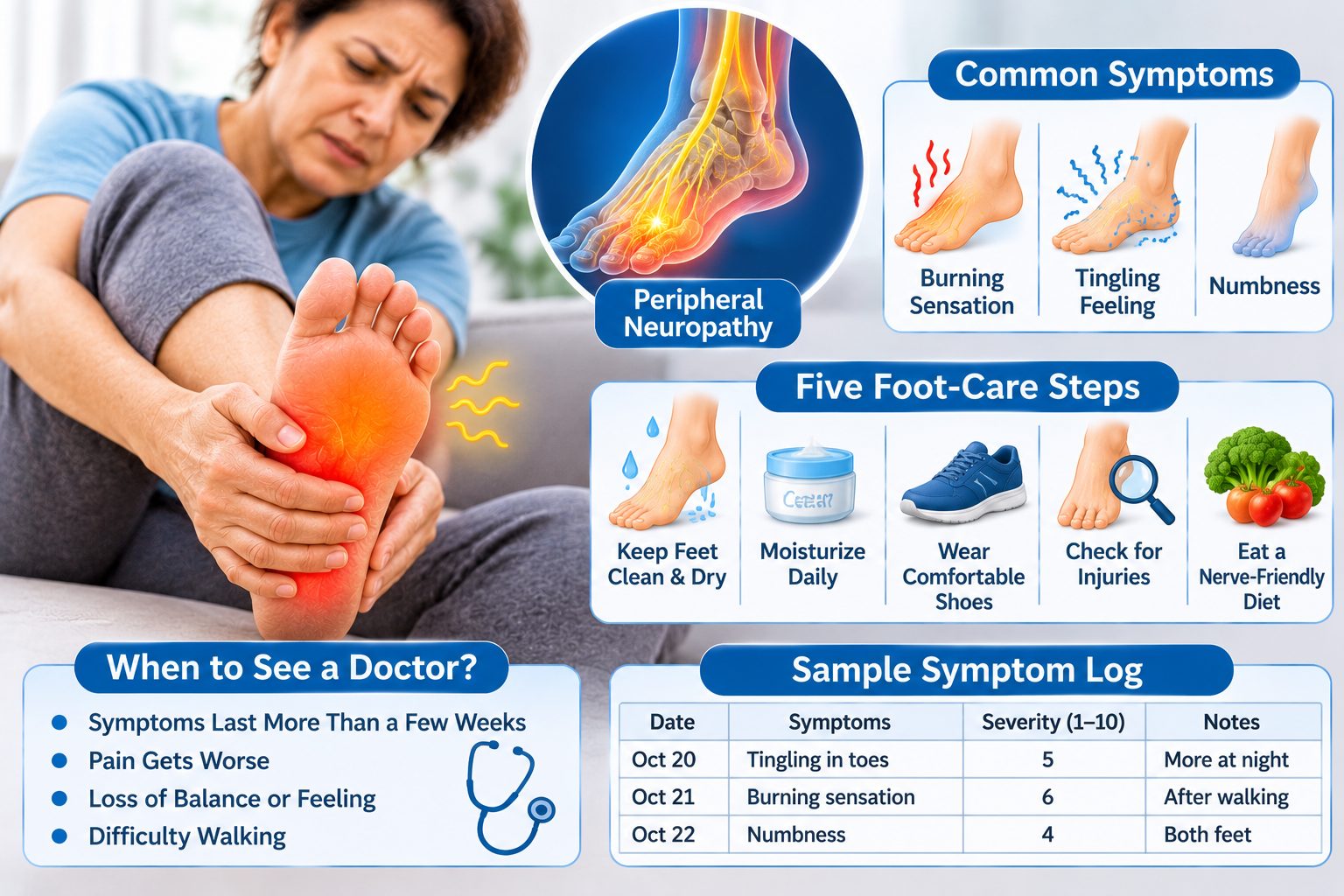
Table of contents
- 1. What Is Peripheral Neuropathy?
- 2. Symptoms by Type of Nerve
- 3. Common Causes and Clues
- 4. Five Steps to Find the Cause
- 5. Treatment Options
- 6. Five Foot-Care Steps
- 7. Red Flags: Seek Prompt Care
- 8. Staying Steady: Balance and Fall Safety
- 9. Sample Symptom Log
- 10. Contact Us and Find Us Online
- Conclusion
- Frequently Asked Questions
- See a Doctor in Elmhurst or Chinatown
Peripheral neuropathy is damage to the nerves outside the brain and spinal cord. These nerves carry sensation, control muscles and manage automatic body functions, so damage can cause tingling, burning, numbness, weakness and balance problems, most often in the feet and hands first. It has many possible causes, and finding the cause matters because some are treatable and some can progress quietly if ignored.
This guide explains the common symptoms, the usual causes, how the evaluation works, the five foot-care steps, treatment options, red flags and a sample symptom log you can use before a visit. It is general education only. Sudden weakness, rapidly spreading numbness, loss of bladder or bowel control, or a foot wound that is not healing needs prompt evaluation.
| At a Glance | Key Point |
|---|---|
| What it is | Damage to nerves outside the brain and spinal cord |
| Common symptoms | Numbness, tingling, burning pain, weakness and poor balance, often starting in the feet |
| Common causes | Diabetes, low vitamin B12, alcohol, thyroid or kidney disease, certain medicines |
| Key tests | Exam, blood tests and sometimes nerve studies |
| Best protection | Treat the cause and check your feet every day |
1. What Is Peripheral Neuropathy?
Peripheral nerves include sensory nerves for touch, pain and temperature, motor nerves for muscle movement and autonomic nerves that control functions such as blood pressure, digestion and sweating. Neuropathy can affect one nerve, several nerves or many nerves, and it may come on quickly or over years. For trusted background, see the NINDS page on peripheral neuropathy and the MedlinePlus overview of peripheral nerve disorders.
2. Symptoms by Type of Nerve
| Nerve Type | Common Symptoms |
|---|---|
| Sensory (feeling) | Tingling, pins and needles, numbness, burning or sharp pain, sensitivity to light touch, not feeling heat or injuries |
| Motor (movement) | Muscle weakness, cramps, twitching, foot drop, trouble gripping or dropping things |
| Autonomic (automatic) | Dizziness on standing, abnormal sweating, digestive changes, bladder or sexual problems |
A typical pattern is a symmetrical "stocking and glove" spread, starting in the toes and moving up the legs before the hands are affected.
3. Common Causes and Clues
| Cause | Clue | Usual Check |
|---|---|---|
| Diabetes or prediabetes | Burning or numb feet, often worse at night; see our guides on type 2 diabetes and prediabetes | Fasting glucose and A1c |
| Vitamin B12 deficiency | Tingling with tiredness or memory changes; see signs of vitamin B12 deficiency | B12 level and related tests |
| Heavy alcohol use | Foot pain and weakness; see how much alcohol is too much | History, liver and nutrition tests |
| Kidney or thyroid disease | Slow onset with other symptoms; see how to tell if your kidneys are healthy | Kidney function and TSH |
| Medicines and toxins | Symptoms start after a drug such as certain chemotherapy medicines, or very high vitamin B6 | Medication review |
| Infections, autoimmune disease and injury | Rapid onset, patchy symptoms or a known injury | Targeted tests and specialist review |
4. Five Steps to Find the Cause
A typical evaluation includes:
- A careful history: when symptoms began, which areas are affected, alcohol use, family history and every medicine and supplement you take.
- A physical exam checking strength, reflexes, balance, light touch, vibration and a filament test of foot sensation.
- Blood tests such as glucose or A1c, vitamin B12, thyroid, kidney and liver function and a complete blood count.
- Nerve conduction studies or electromyography when the cause is unclear or the pattern is unusual.
- Referral to a neurologist or other specialist when needed.
For help reading lab results, see how to read your blood test results without panic. To understand referrals, read when your primary care doctor sends you to a specialist.
5. Treatment Options
| Approach | How It Helps |
|---|---|
| Treat the cause | Better blood sugar control, B12 replacement or stopping a harmful drug can halt or slow progression |
| Medicines for nerve pain | Your clinician may discuss prescription options for burning or shooting pain, and may adjust them for side effects |
| Topical treatments | Some creams or patches can ease localized pain |
| Physical therapy and exercise | Improves strength, balance and walking |
| Lifestyle | Limiting alcohol, not smoking, healthy eating and good sleep support nerve health |
Do not start or stop nerve medicines without your clinician. Some over-the-counter pain relievers and supplements, including high-dose vitamin B6, can cause or worsen neuropathy.
6. Five Foot-Care Steps
Numb feet cannot warn you about injuries, so daily care matters:
- Look at both feet every day, including between the toes and the soles, using a mirror or asking someone to help.
- Wash and dry feet carefully, especially between the toes, and moisturize the tops and soles but not between the toes.
- Wear well-fitting shoes and clean, dry socks, and do not walk barefoot, even indoors.
- Trim nails straight across, and have thick or ingrown nails handled by a clinician or foot specialist.
- Test bath water with your hand or elbow, and see a clinician promptly for any blister, sore, redness or swelling that does not heal in a few days.
If a small cut or scrape does occur, see our guide to first aid at home for cuts and burns.
7. Red Flags: Seek Prompt Care
Get urgent evaluation for:
- Sudden or rapidly spreading weakness or numbness.
- Loss of bladder or bowel control.
- A foot wound that is red, swollen, draining or black, especially with diabetes.
- Fever with a hot, red foot.
- Difficulty breathing, swallowing or speaking.
For help deciding where to go, see where to go when illness strikes suddenly.
8. Staying Steady: Balance and Fall Safety
Reduced feeling in the feet can affect balance and raise fall risk. Good lighting, non-slip footwear, clear walkways and regular strength and balance exercise help. Older adults can use our guide on how seniors in Queens can lower their risk of falling.
9. Sample Symptom Log
Keeping a short log for one to two weeks before your visit helps your clinician see patterns. The squares show example severity from 1 to 8. This is a teaching example.
| Day and Time | Symptom and Location | Example Severity | Possible Trigger or Note |
|---|---|---|---|
| Mon night | Burning in both feet | ■■■■■■ | Worse in bed; sheets feel painful |
| Tue morning | Numb toes | ■■■ | Improves after walking |
| Wed afternoon | Tingling in fingertips | ■■ | After typing for hours |
| Thu evening | Sharp shooting pain in left foot | ■■■■■ | After a long day on my feet |
| Fri morning | Unsteady when standing up | ■■■■ | Dizzy; check blood pressure |
| Sat | Symptoms mild | ■ | Rested; limited alcohol |
10. Contact Us and Find Us Online
If you have tingling, burning or numbness in your feet or hands, or you have diabetes and want a foot check, our team can examine you, order tests and build a plan. For non-emergency questions, Contact Us, book a visit, or find City Prime Care on Google: City Prime Care on Google. For sudden weakness or loss of bladder or bowel control, call 911 or go to the emergency room.
Conclusion
Peripheral neuropathy often starts quietly in the feet, and the best outcomes come from finding and treating the cause early while protecting your feet every day. Bring a symptom log and your medicine list to your visit. This article is for general education and does not replace medical advice.
Frequently Asked Questions
See a Doctor in Elmhurst or Chinatown
Have a question about your own health? Book a visit at our Elmhurst, Queens clinic or our Chinatown, Manhattan clinic, or explore our primary care services.
Related articles
Healthcare
Why Are Your Ankles and Feet Swollen by Evening, and When Is Leg Swelling Serious? Reading the Swelling Patterns, the Five Relief Steps and the Sample Two-Week Swelling Diary
Swollen ankles after a long day can be harmless, but swelling in one leg, sudden weight gain or breathlessness can signal a clot, heart, kidney or liver problem. Learn the patterns, five relief steps and a two-week diary.
Healthcare
Why Is a Red, Itchy Ring-Shaped Patch Spreading on Your Skin, and Is It Ringworm? Reading the Patch Types, the Five Treatment Steps and the Sample Four-Week Clearing Plan
A red, scaly, ring-shaped itchy patch is often ringworm, a common fungal skin infection that is not caused by a worm. Learn the patch types, look-alike rashes, five treatment steps and a four-week clearing plan.
Healthcare
Why Is Your Hair Thinning or Falling Out in Clumps, and Could a Health Problem Be Behind It? Reading the Hair Loss Patterns, the Five Checkup Steps and the Sample Six-Month Regrowth Timeline
Finding more hair in the shower or brush can be stressful. Learn the common hair loss patterns, which blood tests and health problems matter, five checkup steps and a realistic six-month regrowth timeline.