HealthcareBy City Prime Care Team
What Are the Signs of Vitamin B12 Deficiency? Reading the Symptom Clues, the Five Testing Steps and the Sample Treatment Timeline
Low vitamin B12 can cause tiredness, tingling and trouble concentrating. See who is at risk, the signs worth testing for, how doctors confirm it, treatment options from pills to injections and a sample treatment timeline.
Medically reviewed by Dr. Karl E. Latortue9 min read
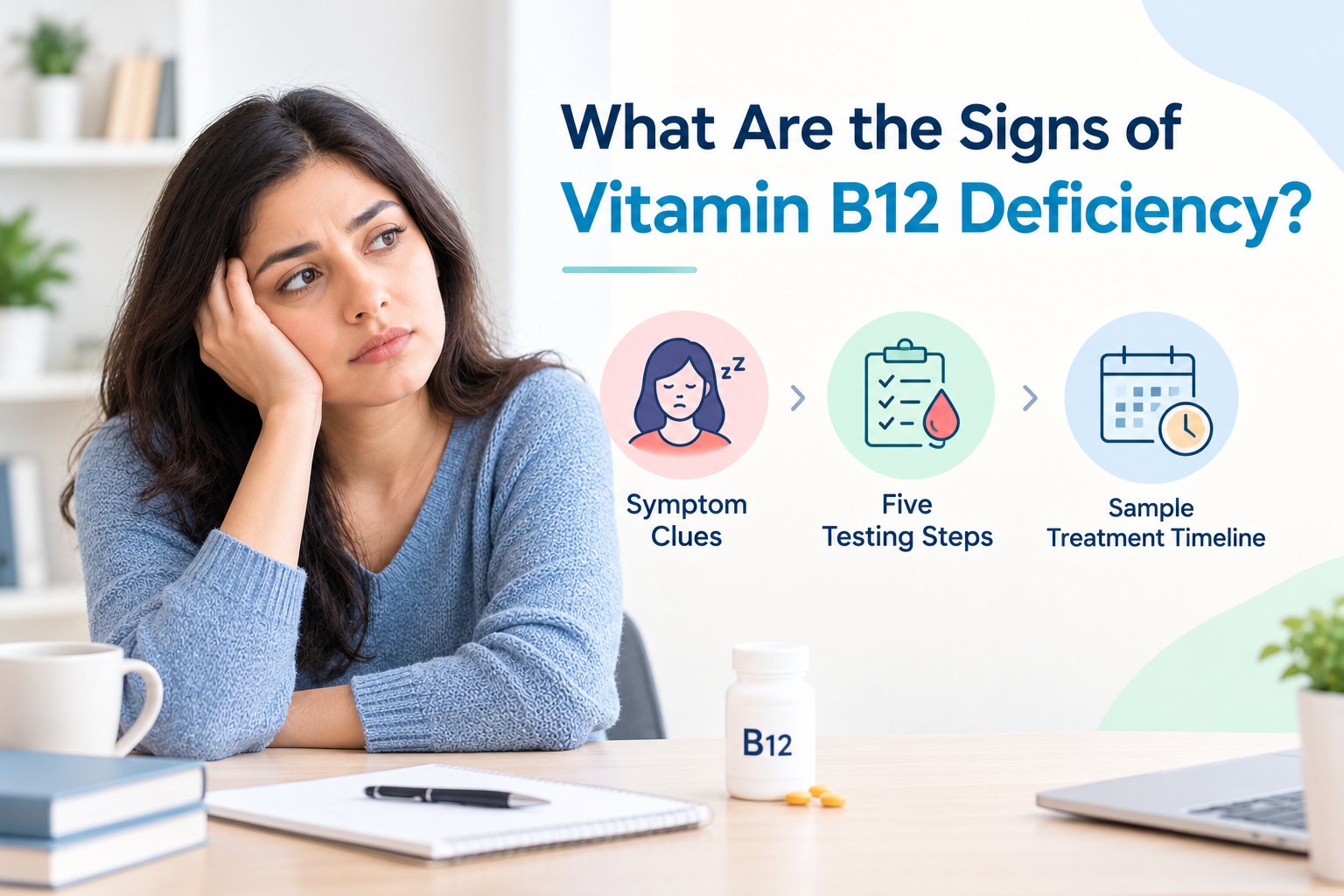
Table of contents
Vitamin B12 helps your body make red blood cells and keep nerves working. When levels run low, the signs can be slow and vague: tiredness, a foggy head, pins and needles in the hands or feet. Because those signs overlap with thyroid problems, depression, and poor sleep, B12 deficiency is easy to miss, and easy to treat once found.
This guide explains the signs of B12 deficiency, who is most at risk, how it is confirmed, the treatment options from tablets to injections, and a sample treatment timeline. It draws on the vitamin and mineral infusions page of the City Prime Care website, which says B12 shots are given in the office for a confirmed deficiency, usually followed by maintenance shots or oral B12 once levels recover. It is general education, not personal medical advice. See the clinic's vitamin and mineral infusions page.
In this article:
- 1. What B12 does
- 2. Who is at risk (table)
- 3. Signs and symptoms (table and graph)
- 4. The five testing steps
- 5. Treatment options (table)
- 6. A sample treatment timeline
- 7. Food, supplements, and prevention
- 8. Red flags: when not to wait
1. What B12 Does
Vitamin B12 is found mainly in animal foods such as meat, fish, eggs, and dairy, and in fortified foods. It supports red blood cell production and nerve health. Absorbing it from food takes several steps in the stomach and gut, so deficiency can come from a lack in the diet or from trouble absorbing it.
For reliable background, see the NIH Office of Dietary Supplements B12 fact sheet and the MedlinePlus pernicious anemia page. Tiredness can also come from other causes; see our guide on why you feel tired all the time.
2. Who Is at Risk
The clinic says B12 deficiency is common in several groups.
| Group | Why risk is higher |
|---|---|
| 1. Older adults | Absorb less B12 from food as they age |
| 2. People who have had weight-loss surgery | Changes in the stomach and gut reduce absorption |
| 3. Patients with pernicious anemia | The body cannot absorb B12 properly |
| 4. Strict vegans | Little B12 in plant foods unless fortified or supplemented |
| 5. Long-term metformin users | The medicine can reduce B12 absorption |
| 6. People with celiac disease, Crohn's disease, or stomach surgery | Gut conditions affect absorption |
| 7. Long-term users of acid reducers | Less stomach acid means less B12 released from food |
If you take metformin for diabetes, see our guide to diabetes checkups, and ask whether B12 should be checked.
3. Signs and Symptoms
The clinic says deficiency symptoms are often vague. A search for a B12 shot near me often starts with tiredness, tingling in the hands or feet, or a low number on a routine blood test. The graph below is an illustrative guide to how commonly each sign is reported, not clinic data.
| Sign | How commonly reported (graph) | Note |
|---|---|---|
| Ongoing tiredness and weakness | ██████████ Very common | Also caused by many other conditions |
| Pins and needles or numbness | ████████░░ Common | Can indicate nerve involvement; do not ignore |
| Pale skin, shortness of breath on stairs | ███████░░░ Common | Suggests anemia |
| Trouble concentrating or memory problems | ██████░░░░ Frequent | Overlaps with sleep and mood |
| Mood changes | █████░░░░░ Frequent | Overlaps with depression |
| Sore tongue, balance problems | ████░░░░░░ Less common | Seek evaluation |
None of these proves a deficiency on its own. They overlap with thyroid problems, depression, and poor sleep, which is why the clinic checks rather than guesses.
4. The Five Testing Steps
The clinic says it orders blood work before any shot or infusion. In practice:
- Review symptoms, diet, medicines, and risk factors such as metformin, acid reducers, vegan diet, or past gut surgery.
- Examine you, including a check for pallor, heart rate, and nerve findings if you have tingling.
- Order blood tests, which may include a complete blood count, B12 and folate levels, ferritin and iron studies, and thyroid tests.
- Add further tests if the result is borderline or the cause is unclear, as your clinician decides.
- Review the results with you, explain what is low and why, and only then recommend treatment.
The clinic says blood can often be drawn during your visit, and results usually return within a few days through its diagnostic testing service. See our guide on common blood tests.
5. Treatment Options
| Option | What it involves | When it fits |
|---|---|---|
| 1. Diet and fortified foods | More B12-rich or fortified foods | Mild shortfall from diet |
| 2. Oral B12 tablets | Taken by mouth, daily or as directed | The clinic says most people low in B12, vitamin D, or iron do well on tablets, so pills are usually the first option |
| 3. B12 injections | A series of shots given in the office, followed by maintenance shots or a switch to oral B12 once levels recover | Very low levels, significant symptoms, or when the gut cannot absorb enough |
| 4. Treating the cause | Reviewing metformin or acid reducers, managing gut conditions | Absorption problems |
| 5. Follow-up blood tests | Repeat B12 and blood count to confirm levels are rising | At every stage |
The clinic says an in-office injection takes only a few minutes and you can go back to work straight after. It notes that many people notice improvement over several weeks rather than right away.
6. A Sample Treatment Timeline
The timeline below is an illustrative example, not patient data. Your clinician sets the actual plan.
| Time | Symptoms and B12 level (graph) | What happens |
|---|---|---|
| Week 0 | ██░░░░░░░░ Low | Symptoms, risk review, and blood tests show low B12 |
| Weeks 1-4 | ████░░░░░░ Rising | Injection series if advised, or oral B12 if suitable |
| Weeks 6-12 | ██████░░░░ Improving | Repeat blood work; many people feel better |
| After recovery | ████████░░ In range | Maintenance shots or oral B12 |
| Long term | ██████████ Stable | Periodic checks, especially with ongoing risk factors |
7. Food, Supplements, and Prevention
Practical steps, to discuss with your clinician:
- Include B12 sources such as fish, meat, eggs, dairy, or fortified foods
- If you are vegan, plan for fortified foods or a supplement
- If you take metformin or acid reducers long term, ask about periodic B12 checks
- After weight-loss surgery, follow your team's supplement plan
- Do not self-treat with high doses without testing; the clinic says it recommends treatment only for a documented deficiency
- Keep yearly checkups; see our annual physical guide
8. Red Flags: When Not to Wait
| Warning sign | Action |
|---|---|
| Chest pain, trouble breathing, or swelling of the face or throat | Call 911 |
| Numbness or weakness that is spreading, or trouble walking | Be seen promptly |
| Black or bloody stools, or vomiting blood | Go to the ER |
| Confusion or severe memory changes | Be seen promptly |
| Tiredness lasting weeks, with pale skin or breathlessness | Book a visit and blood tests |
To start, use the appointment page and choose Primary Care or Vitamin and Mineral Infusions. For more about the types of treatment, see our guide on types of vitamin infusions.
Conclusion
B12 deficiency is common, easy to confirm with a blood test, and very treatable. If you have risk factors or symptoms such as tingling and tiredness, ask for testing instead of guessing.
Contact Us: To ask about B12 testing or treatment, reach City Prime Care through our Contact Us page. You can also view City Prime Care on Google. This article is for general information and does not replace personal medical advice. In an emergency, call 911.
Frequently Asked Questions
See a Doctor in Elmhurst or Chinatown
Have a question about your own health? Book a visit at our Elmhurst, Queens clinic or our Chinatown, Manhattan clinic, or explore our primary care services.
Related articles
Healthcare
What Are the Different Types of Vitamin Infusions? Reading the Nutrient Options, the Delivery Methods and the Sample Treatment Path
B12 shots, vitamin D therapy, iron infusions and custom nutrient infusions are different treatments for different problems. See each type, how it is delivered, when pills are enough and a sample treatment path.
Healthcare
Why Is Vitamin D Low So Often in New York? Reading the Risk Groups, the Testing Steps and the Sample Retest Timeline
Weak winter sun and indoor lives leave many New Yorkers low in vitamin D. Learn who is at risk, the signs, how testing works, how treatment and retesting are usually done, and the risks of taking too much.
Healthcare
When Does Your Primary Care Doctor Send You to a Specialist? Reading the Referral Triggers, the Insurance Steps and the Sample Referral Timeline
A referral connects your primary care team to a specialist. Learn when referrals happen, how insurance approval works, what to prepare, how records and results flow back, and a sample referral timeline.