
HealthcareBy City Prime Care Team
Wheezing, Coughing, Tight Chest? What Asthma Really Is and How to Keep It Under Control
Wheezing, cough or tight chest? Learn asthma symptoms, common triggers, peak flow zones, quick-relief vs controller medicines, and the emergency signs that need care right away.
Medically reviewed by City Prime Care Administrator9 min read
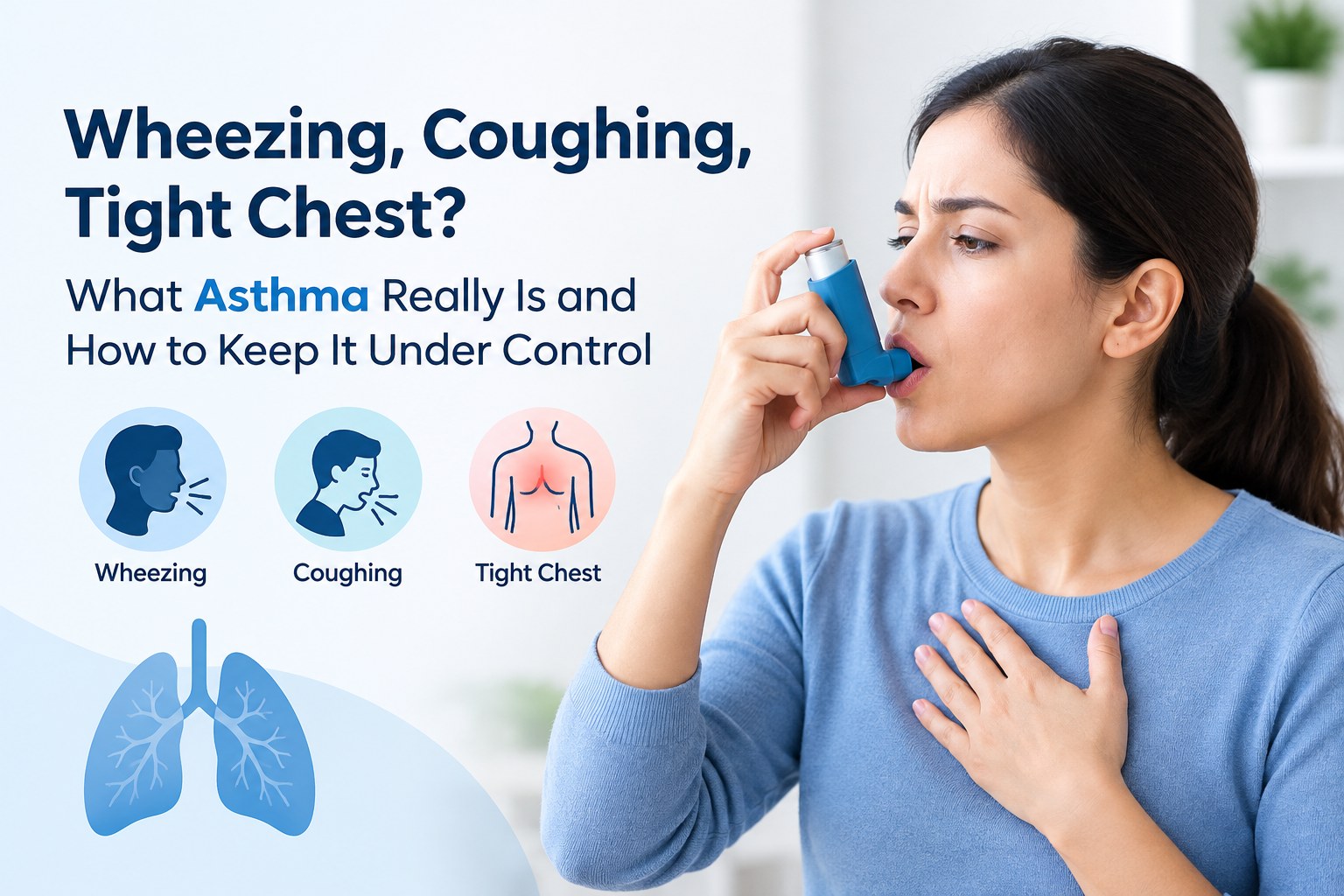
Table of contents
- 1. What Is Asthma and What Happens in Your Airways?
- 2. Common Asthma Symptoms
- 3. Common Asthma Triggers and How to Reduce Them
- 4. Quick-Relief vs Controller Medicines
- 5. Peak Flow Zones at a Glance (Simple Graph)
- 6. What to Do During an Asthma Flare-Up (Step by Step)
- 7. Emergency Warning Signs: Call 911 or Go to the ER
- 8. Daily Habits That Help Keep Asthma Under Control
- 9. Asthma Myths vs Facts
- 10. Related Reading and Trusted Sources
- Conclusion
- Frequently Asked Questions
- See a Doctor in Elmhurst or Chinatown
Asthma is a long-term condition in which the airways in your lungs become inflamed and narrow, making it harder to breathe. It affects children and adults, ranges from mild to severe, and can usually be controlled well with the right plan and medicines.
In this guide you will find the most common asthma symptoms, the triggers to watch for, how quick-relief and controller medicines differ, what peak flow zones mean, step-by-step actions during a flare-up, and the emergency warning signs that should never be ignored. This is general information and does not replace personal medical advice.
1. What Is Asthma and What Happens in Your Airways?
During an asthma flare-up, three things happen in the airways at the same time. Together they reduce the amount of air that can move in and out. The MedlinePlus asthma page gives an official overview.
| Change in the airways | What is happening | What you may feel |
|---|---|---|
| Inflammation | The lining of the airways swells | Chest tightness, a constant irritated feeling |
| Muscle tightening | Muscles around the airways squeeze | Wheezing, shortness of breath |
| Extra mucus | Airways produce thick mucus | Coughing, especially at night or early morning |
2. Common Asthma Symptoms
Symptoms differ from person to person and can change from day to day:
- Wheezing, a whistling sound when you breathe out
- Coughing that is worse at night, early morning, or during exercise
- Chest tightness or pressure
- Shortness of breath
- Trouble sleeping because of cough or breathing problems
- Needing to stop during activity that you used to do easily
Not every cough is asthma. A cough that lasts for weeks, comes back with exercise or cold air, or is paired with wheezing is worth getting checked.
3. Common Asthma Triggers and How to Reduce Them
Triggers are things that irritate the airways or set off an allergic reaction. Knowing your own triggers is one of the most useful steps in controlling asthma.
| Trigger type | Examples | Ways to reduce exposure |
|---|---|---|
| Allergens | Dust mites, pollen, pet dander, mold, cockroaches | Wash bedding weekly in hot water, use allergen-proof covers, keep windows closed on high pollen days |
| Irritants | Tobacco smoke, strong perfumes, cleaning sprays, air pollution | Keep your home smoke-free, use fragrance-free products, check the daily air quality report |
| Respiratory infections | Colds, flu, COVID-19 | Wash hands, stay up to date with vaccines, see our flu vs cold vs COVID-19 guide |
| Weather and air | Cold air, sudden temperature changes, humidity | Cover your nose and mouth with a scarf in cold weather |
| Exercise | Running or vigorous activity, especially in cold dry air | Warm up first and use medicine before exercise if your clinician advises it |
| Emotions and stress | Strong laughter, crying, anxiety | Practice calming breathing and talk to your clinician about stress |
4. Quick-Relief vs Controller Medicines
Most people with asthma use two kinds of medicines. They do different jobs, so it is important to know which one is which. Your clinician decides the exact medicine and dose for you.
| Medicine type | Purpose | When it is used | Common examples |
|---|---|---|---|
| Quick-relief (rescue) | Relaxes tight airway muscles within minutes | During symptoms or before exercise, as directed | Albuterol inhaler |
| Controller (preventer) | Lowers airway inflammation over time | Every day, even when you feel well | Inhaled corticosteroids such as budesonide or fluticasone |
If you find yourself using your quick-relief inhaler more often than usual, that is a sign your asthma may not be well controlled and your plan needs review. See the NHLBI asthma overview for more on treatment options.
5. Peak Flow Zones at a Glance (Simple Graph)
A peak flow meter measures how fast you can blow air out. Your personal best number is the starting point, and the zones below are shown as a percentage of it. Each block in the graph equals 10 percent of your personal best, showing the lower limit of each zone.
| Zone | Peak flow (% of personal best) | Meaning | Graph |
|---|---|---|---|
| Green | 80 to 100% | Asthma is under control | ████████ |
| Yellow | 50 to 79% | Caution: airways are narrowing, follow your action plan | █████ |
| Red | Below 50% | Medical alert: use rescue medicine and seek care right away | Below █████ |
6. What to Do During an Asthma Flare-Up (Step by Step)
If symptoms start, follow your written asthma action plan. In general:
- Stay as calm as you can and sit upright. Do not lie flat.
- Move away from the trigger if you know it, such as smoke or a pet.
- Use your quick-relief inhaler exactly as your plan describes, with a spacer if you have one.
- Wait a few minutes and check how you feel. If you use a peak flow meter, measure again.
- If symptoms are improving, keep resting and follow your plan for the next steps.
- If symptoms are not improving, are getting worse, or you are in the red zone, get medical help immediately.
7. Emergency Warning Signs: Call 911 or Go to the ER
Do not wait if you or someone else has any of these signs:
- Severe shortness of breath or struggling to breathe
- Not able to speak a full sentence without gasping
- Lips, face, or fingernails turning blue or gray
- Rescue inhaler gives little or no relief
- Chest or neck muscles pulling in with each breath
- Confusion, extreme drowsiness, or fainting
For milder flare-ups, or when you are unsure, a clinic visit may help. Our guide on when to visit urgent care instead of waiting for your doctor explains how to decide.
8. Daily Habits That Help Keep Asthma Under Control
- Take controller medicines every day if prescribed, even when you feel fine
- Keep a written asthma action plan and share it with family, school, or work
- Carry your quick-relief inhaler everywhere
- Track symptoms or peak flow in a simple notebook or phone note
- Stay current on vaccines; see our adult vaccines guide
- Aim for good sleep, since nighttime symptoms can signal poor control; our sleep guide has useful tips
- Review your plan at your yearly visit; see the annual physical checkup guide
9. Asthma Myths vs Facts
| Myth | Fact |
|---|---|
| Asthma is only a childhood condition | It can start or return at any age |
| Inhalers are addictive | Asthma inhalers are not addictive; they are safe when used as prescribed |
| You should avoid exercise if you have asthma | Most people can exercise with a good plan; activity is usually encouraged |
| If you feel fine, you can stop controller medicine | Stopping on your own can lead to flare-ups; talk to your clinician first |
| Asthma is just anxiety | Anxiety can worsen symptoms but asthma is a real airway condition |
10. Related Reading and Trusted Sources
More from City Prime Care: read about seasonal allergies and how they differ from a cold, since allergies are a common asthma trigger. Our guides on dehydration and walk-in clinic vs urgent care may also help.
Trusted outside sources: CDC: About Asthma, NHLBI: What Is Asthma? and MedlinePlus: Asthma.
Conclusion
Asthma can be controlled. Knowing your triggers, using medicines the right way, and having a written action plan make serious flare-ups much less likely. If your symptoms are getting more frequent or harder to manage, it is a good time to review your plan with a clinician.
Contact Us
Having breathing problems or questions about your asthma plan? Our Queens, NY team can help you with evaluation and next steps. Contact City Prime Care here. This article is for general information and does not replace advice from your own healthcare provider. In an emergency, call 911.
Frequently Asked Questions
See a Doctor in Elmhurst or Chinatown
Have a question about your own health? Book a visit at our Elmhurst, Queens clinic or our Chinatown, Manhattan clinic, or explore our primary care services.
Related articles
Healthcare
Why Do You Feel Tired All the Time? Reading the Anemia Signs, the Five Testing Steps and the Sample Iron-Level Recovery
Constant tiredness, pale skin and shortness of breath can point to anemia. Learn the common causes, the blood tests used, a sample iron recovery pattern, five testing steps and when symptoms need urgent attention.
Healthcare
How Do Kidney Stones Cause Sudden Severe Pain? Reading the Warning Signs, the Five Prevention Steps and the Sample Stone-Size Outlook
Kidney stones can cause sudden, intense flank pain and blood in the urine. Learn the warning signs, how size affects passing a stone, five prevention steps, and when pain with fever or vomiting needs urgent care.
Healthcare
How Do Ear Infections Show Up in Children and Adults? Reading the Symptom Patterns, the Five Care Steps and the Sample Recovery Timeline
Ear infections cause pain, fever and muffled hearing in children and adults alike. Compare middle-ear infection and swimmer's ear, follow five care steps, see a sample recovery timeline, and learn when to be seen quickly.





