HealthcareBy City Prime Care Team
Why Do Painful Muscle Cramps Wake You at Night, and Are They a Sign of Something Beyond Tired Legs? Reading the Cramp Triggers, the Five Prevention Steps and the Sample Four-Week Stretching Plan
A sudden, knotted calf cramp at 3 a.m. is common and usually harmless, but frequent cramps can point to dehydration, medicines, nerve or circulation problems. Learn the triggers, five prevention steps and a four-week stretching plan.
Medically reviewed by Dr. Helen Vasquez11 min read
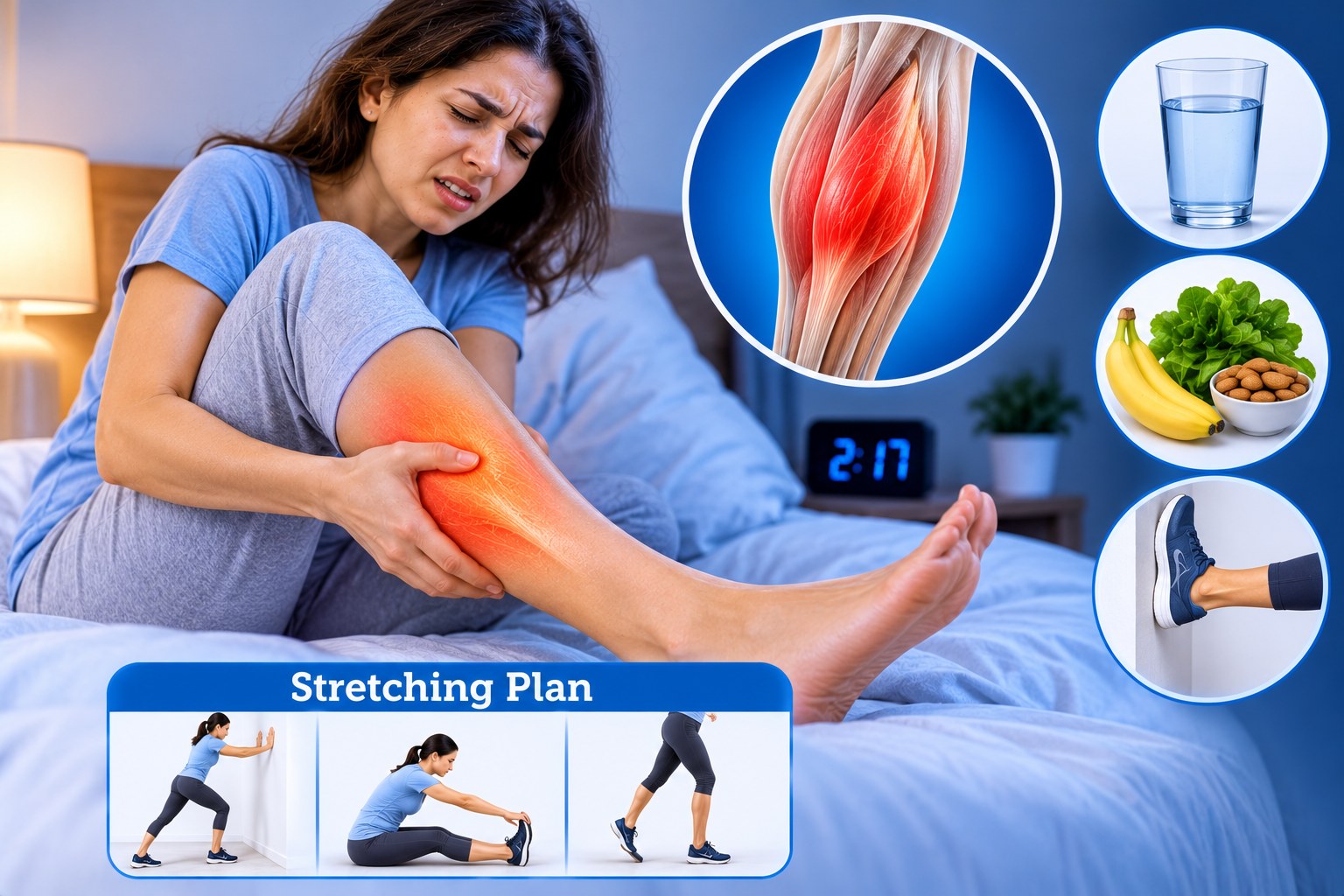
Table of contents
- 1. What Is a Muscle Cramp?
- 2. Reading the Cramp Triggers
- 3. Cramps vs Look-Alike Leg Problems
- 4. Who Is at Higher Risk?
- 5. What a Clinician May Do
- 6. The Five Prevention Steps
- 7. Graph: Illustrative Weekly Cramp Count
- 8. Sample Four-Week Stretching Plan
- 9. Red Flags: When to Get Prompt Care
- 10. Where to Get Care: Elmhurst, Chinatown and Lower Manhattan
- 11. Related Reading From City Prime Care
- 12. Contact Us
- Conclusion
- Frequently Asked Questions
- See a Doctor in Elmhurst or Chinatown
It is 3 a.m., and your calf suddenly locks into a hard, painful knot. You grab your foot, hop out of bed and wait for the muscle to let go, then lie awake with a sore leg for the rest of the night. Night leg cramps are extremely common, especially after age 50, in pregnancy and in people who are active, dehydrated or take certain medicines. Most are harmless, but frequent or severe cramps can be a clue to a problem with fluids, minerals, nerves or circulation.
This guide explains common cramp triggers, how cramps differ from restless legs and blood clots, five prevention steps, a sample four-week stretching plan and the red flags that need prompt care. City Prime Care serves patients in Elmhurst, Queens, Chinatown and Lower Manhattan. This article is general education and not a substitute for personal medical advice.
Quick takeaways:
- A muscle cramp is a sudden, painful, involuntary tightening that usually lasts seconds to a few minutes, most often in the calf, foot or thigh.
- Common triggers include muscle fatigue, dehydration, low potassium, magnesium or calcium, certain medicines, pregnancy, prolonged sitting and nerve or circulation problems.
- Stretching the calf and walking usually relieves a cramp, and daily stretching and hydration help prevent them.
- A cramp with a swollen, red or warm calf, weakness, numbness or dark urine after exercise needs prompt medical attention.
1. What Is a Muscle Cramp?
A cramp happens when a muscle contracts suddenly and does not relax. It may feel like a hard lump under the skin, and the muscle can stay sore for hours afterward. Most cramps are not dangerous, but the cause is not always clear. Experts think tired muscles and misfiring nerve signals play a large part. The National Institutes of Health describes common causes and relief steps on its MedlinePlus muscle cramps page.
Night cramps tend to strike when the calf is in a shortened position, such as when toes are pointed under the blanket. Many people also feel stiffness or soreness the next day.
2. Reading the Cramp Triggers
| Trigger | Typical clues | What may help |
|---|---|---|
| Muscle fatigue or overuse | Cramps after a hard workout, long walk or a day standing | Warm up, build activity slowly, stretch after exercise |
| Dehydration and heat | Dark urine, thirst, sweating, hot weather; see dehydration warning signs | Drink fluids regularly, replace fluids after sweating |
| Low potassium, magnesium or calcium | Cramps with weakness or heartbeat changes, often with diuretics or diarrhea | Blood tests and treatment of the cause; do not self-treat with large supplement doses |
| Medicines | Cramps that began after a new prescription, such as water pills, some cholesterol and asthma medicines | Review with a clinician; do not stop prescribed medicines on your own |
| Long sitting or standing | Cramps after desk days or long travel | Move hourly, change position, stretch the calves |
| Pregnancy | Cramps in the second and third trimesters | Stretching, hydration and a discussion with the prenatal clinician |
| Nerve, circulation or kidney problems | Cramps with numbness, tingling, cold feet or pain when walking | Needs evaluation for diabetes, nerve compression, artery disease or kidney disease |
3. Cramps vs Look-Alike Leg Problems
| Condition | Typical clue | How it differs |
|---|---|---|
| Muscle cramp | Sudden hard knot, relieved by stretching | Short-lived, muscle visibly tight |
| Restless legs syndrome | Urge to move the legs with crawling feelings, worse at rest in the evening | Not a locked muscle; see restless legs syndrome |
| Deep vein thrombosis (blood clot) | Constant swelling, warmth, redness and tenderness in one calf | Does not ease with stretching; needs urgent care; see signs of a blood clot in the leg |
| Peripheral artery disease | Calf pain when walking that eases with rest, cold or pale feet | Pain is triggered by activity, not sleep |
| Nerve compression (sciatica) | Pain shooting from the back or buttock down the leg with tingling | Pain follows a nerve path; see sciatica and nerve pain |
| Achilles or calf strain | Pain after sudden effort or injury | Pain stays and is tender to press; see Achilles tendinitis |
4. Who Is at Higher Risk?
Night cramps are more likely if you:
- Are over 50, since muscles and tendons shorten and nerves change with age.
- Are pregnant, especially in later trimesters.
- Exercise hard, play sports in the heat or stand for long hours on hard surfaces.
- Take diuretics, statins, some blood pressure or asthma medicines, or other medicines linked to cramps.
- Have diabetes, kidney disease, thyroid disease or liver disease; see our guide to prediabetes.
- Drink little water, drink a lot of alcohol or have frequent diarrhea or vomiting.
5. What a Clinician May Do
A visit for frequent cramps often includes:
- A history of when cramps occur, how long they last, your medicines, hydration, exercise and pregnancy status.
- A physical exam of the legs, pulses, nerves, reflexes and muscle strength.
- Blood tests for potassium, magnesium, calcium, kidney function, blood sugar and thyroid; see how to read your blood test results.
- A leg ultrasound or circulation test when a clot or artery problem is suspected.
- A medicine review and treatment of the cause, plus referral to a specialist if needed; see when your primary care doctor sends you to a specialist.
Quinine, once used for night cramps, is not recommended because it can cause serious side effects. Magnesium supplements help some people but are not proven for everyone, and large doses can cause diarrhea or harm in kidney disease, so ask a clinician before starting them.
6. The Five Prevention Steps
For occasional night cramps in a healthy adult:
- Stretch your calves and hamstrings gently for a minute or two before bed and after exercise.
- Stay hydrated through the day, drinking enough that your urine is pale yellow, and replace fluids after sweating.
- Keep blankets loose so your feet are not pointed down, and consider sleeping with the feet slightly off the end of the mattress or on a pillow.
- Wear supportive shoes during the day, take regular movement breaks and build exercise gradually.
- Review your medicines with a clinician and keep a short cramp diary to look for patterns.
To relieve a cramp as it happens, stand on the leg or pull the toes of the cramped foot toward the shin, walk around, and gently massage the muscle. Heat can ease soreness afterward.
7. Graph: Illustrative Weekly Cramp Count
This is a teaching graph, not patient data. It shows how night cramps may become less frequent when a person adds nightly stretching and hydration, compared with no change in habits.
| Week | Nightly stretching and hydration (illustrative) | No change in habits (illustrative) |
|---|---|---|
| Week 1 | ███████ | ███████ |
| Week 2 | █████ | ███████ |
| Week 3 | ███ | ██████ |
| Week 4 | ██ | ███████ |
8. Sample Four-Week Stretching Plan
| Weeks | Goal | Sample actions | Check |
|---|---|---|---|
| Week 1 | Build the habit | Two 30-second calf stretches on each leg before bed, extra water in the afternoon | Are cramps shorter or milder? |
| Week 2 | Add hamstrings and feet | Add hamstring stretch and toe flexes, avoid pointed-toe sleeping position | Fewer night wake-ups? |
| Week 3 | Review triggers | Check medicines, caffeine, alcohol and exercise timing with a clinician | Any new pattern found? |
| Week 4 | Decide next step | Continue stretching; if cramps persist, arrange blood tests and an exam | Are cramps still more than twice a week? |
9. Red Flags: When to Get Prompt Care
See a clinician promptly for:
- A cramp-like pain that does not ease, with swelling, redness, warmth or tenderness in one calf, which can be a blood clot.
- Cramps with new weakness, numbness, a drooping foot or trouble walking.
- Cramps after exercise with dark, tea-colored urine, severe muscle pain or weakness, which can signal muscle breakdown.
- Cramps with a racing or irregular heartbeat, severe diarrhea, vomiting or signs of dehydration.
- Cramps that began after starting a new medicine; do not stop it without advice.
- Frequent cramps with fatigue, weight change, increased thirst or foamy urine, which can point to diabetes, thyroid or kidney problems.
10. Where to Get Care: Elmhurst, Chinatown and Lower Manhattan
A cramp that does not ease, a swollen calf or sudden weakness is a common reason people search for urgent care Elmhurst NY, a walk in clinic Elmhurst NY, urgent care 11373, a same day doctor appointment Elmhurst or Same-Day Acute Care in Elmhurst Queens. For repeated cramps, blood tests and medicine reviews, patients choose a primary care doctor Elmhurst NY, a family doctor Elmhurst Queens, Primary Care Doctors in Elmhurst NY or chronic disease management Elmhurst NY.
People comparing options often search for Best Primary Care Clinic in Elmhurst Queens, Best Primary Care Doctor in Elmhurst Queens, Primary Care Near Me Elmhurst Queens, Best Primary Care Clinics in Queens NY, Primary Care Clinics and Doctors in Queens NY and Top Primary Care Clinics in Queens NY. City Prime Care offers Men's and Women's Healthcare in Elmhurst NY, a physical exam clinic Elmhurst NY and preventive care Elmhurst NY, including electrolyte and blood sugar checks.
Downtown, people look for primary care Lower Manhattan, primary care Chinatown NYC, a doctor near Catherine Street NYC, primary care 75 Catherine St, a walk-in clinic Chinatown NYC, a Primary Care Clinic in Chinatown Manhattan or a Healthcare Center in Chinatown Manhattan NY. Citywide searches include primary care doctor NYC, family doctor Manhattan NYC, annual physical exam NYC, same day primary care NYC, preventive care Lower Manhattan and primary care doctor near me. Residents searching for Primary Care Doctors Serving Todt Hill Staten Island are welcome to contact the clinic to ask about care options and travel.
| Area | Common searches | How care can help |
|---|---|---|
| Elmhurst (ZIP 11373) | Urgent care 11373, same day doctor appointment Elmhurst | Same-day exam of a painful or swollen leg |
| Elmhurst, Queens | Family doctor Elmhurst Queens, primary care doctor Elmhurst NY | Blood tests, medicine review and follow-up |
| Queens | Best Primary Care Clinics in Queens NY, Top Primary Care Clinics in Queens NY | Easy-to-reach primary care for the family |
| Lower Manhattan | Primary care Lower Manhattan, preventive care Lower Manhattan | Convenient follow-up near work |
| Chinatown / Catherine Street | Primary care Chinatown NYC, doctor near Catherine Street NYC, primary care 75 Catherine St | Convenient downtown care |
| Citywide | Primary care doctor NYC, family doctor Manhattan NYC, same day primary care NYC | Same-day or scheduled evaluation |
You can also find the clinic on Google or learn more on the City Prime Care website.
11. Related Reading From City Prime Care
These guides on our site cover connected topics:
12. Contact Us
Are leg cramps waking you up or getting more frequent? Visit our Contact Us page or see our Google listing. If one calf is swollen, red or warm, or you have trouble breathing or chest pain, seek urgent care right away.
Conclusion
Night leg cramps are usually benign and often improve with stretching, hydration and small habit changes. Frequent, severe or one-sided cramp-like pain, especially with swelling, weakness or new medicines, deserves a clinician's review so that a treatable cause is not missed.
Frequently Asked Questions
See a Doctor in Elmhurst or Chinatown
Have a question about your own health? Book a visit at our Elmhurst, Queens clinic or our Chinatown, Manhattan clinic, or explore our primary care services.
Related articles
Healthcare
Why Does a Cough Last for Weeks With a Whooping Sound After Coughing Fits, and Could It Be Pertussis? Reading the Three Stages, the Five Prevention Steps and the Sample Recovery and Vaccine Timeline
A cough that lasts for weeks, comes in violent fits and ends with a gasp may be whooping cough (pertussis). Learn the stages, who is at risk, five prevention steps and a recovery timeline.
Healthcare
Why Are Your Ankles and Feet Swollen by Evening, and When Is Leg Swelling Serious? Reading the Swelling Patterns, the Five Relief Steps and the Sample Two-Week Swelling Diary
Swollen ankles after a long day can be harmless, but swelling in one leg, sudden weight gain or breathlessness can signal a clot, heart, kidney or liver problem. Learn the patterns, five relief steps and a two-week diary.
Healthcare
Why Is a Red, Itchy Ring-Shaped Patch Spreading on Your Skin, and Is It Ringworm? Reading the Patch Types, the Five Treatment Steps and the Sample Four-Week Clearing Plan
A red, scaly, ring-shaped itchy patch is often ringworm, a common fungal skin infection that is not caused by a worm. Learn the patch types, look-alike rashes, five treatment steps and a four-week clearing plan.