HealthcareBy City Prime Care Team
Is Your Lingering Chest Cold Acute Bronchitis, and Do You Really Need Antibiotics? Reading the Cough Timeline, the Five Warning Signs and the Sample Recovery Calendar
A cough that lingers after a cold is often acute bronchitis. Learn the symptoms, why antibiotics usually do not help, five warning signs, home care and a sample recovery calendar with a simple graph.
Medically reviewed by Dr. Karl E. Latortue10 min read
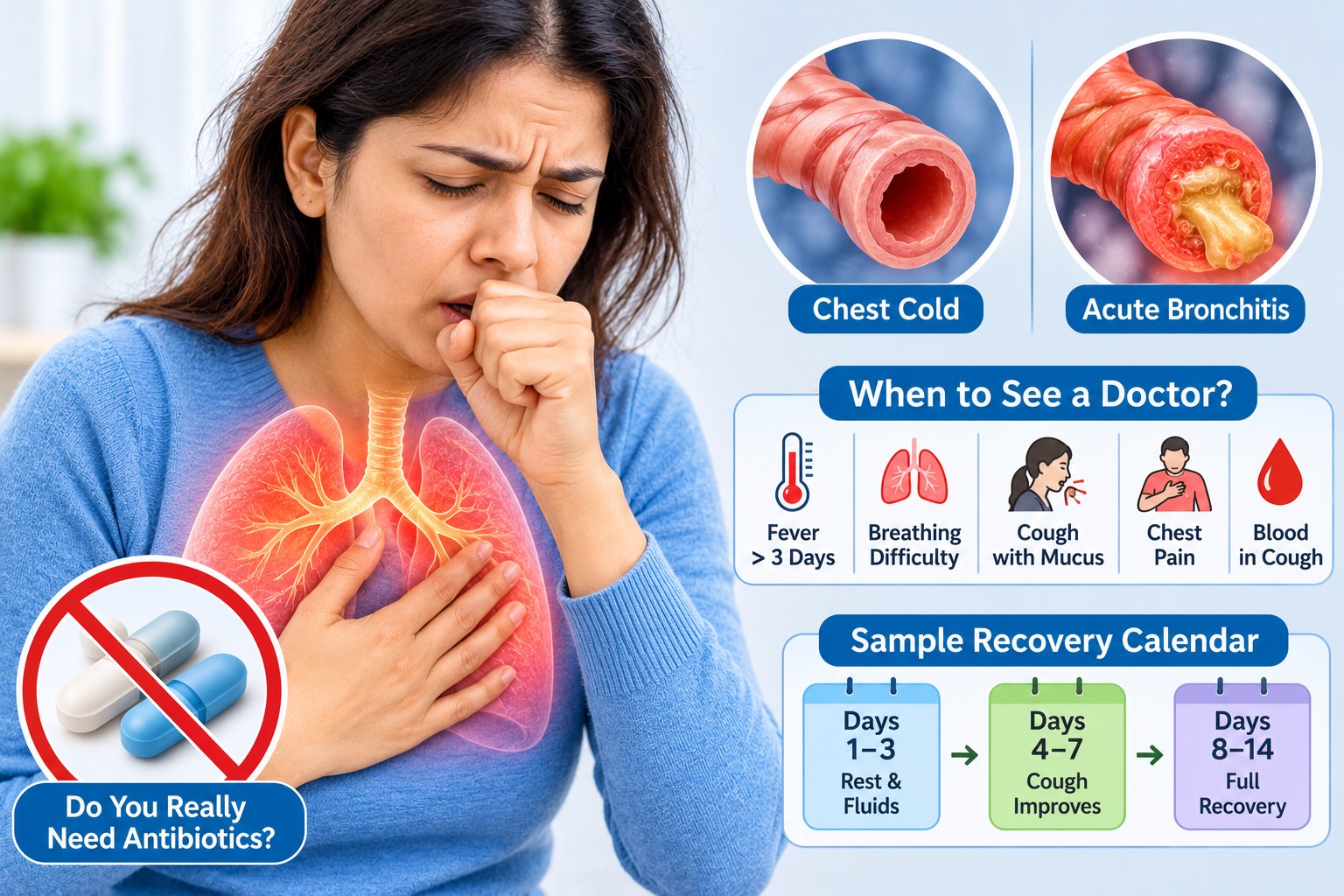
Table of contents
- 1. What Is Acute Bronchitis?
- 2. Acute Bronchitis vs Chronic Bronchitis
- 3. Symptoms and the Typical Cough Timeline
- 4. Bronchitis, Cold, Flu, Pneumonia or Asthma?
- 5. Do You Really Need Antibiotics?
- 6. Five Warning Signs That Need Prompt Care
- 7. How Bronchitis Is Diagnosed
- 8. Home Care and Treatment Options
- 9. Sample Recovery Calendar
- 10. Five Ways to Lower Your Risk
- 11. Primary, Urgent and Preventive Care in Elmhurst and Lower Manhattan
- 12. Contact Us and Find Us Online
- Conclusion
- Frequently Asked Questions
- See a Doctor in Elmhurst or Chinatown
Acute bronchitis, often called a chest cold, is inflammation of the bronchial tubes, the airways that carry air into your lungs. It usually follows a cold or flu-like virus and causes a cough that may bring up clear, white, yellow or green mucus. The cough is the hallmark symptom, and it often lingers for one to three weeks, sometimes longer, long after fever, sore throat and body aches have faded.
Because most cases are caused by viruses, antibiotics usually do not help and can cause side effects. This guide explains what bronchitis is, how it differs from a cold, pneumonia and asthma, the symptoms and cough timeline, when antibiotics might matter, the five warning signs that need prompt care, home treatment, a sample recovery calendar and how to lower your risk. It is general education only. Severe trouble breathing, blue lips, chest pain or coughing blood needs emergency care. Call 911.
| At a Glance | Key Point |
|---|---|
| What it is | Inflammation of the bronchial tubes, usually after a viral infection |
| Main symptom | A cough that may bring up mucus and last 1 to 3 weeks |
| Antibiotics | Usually not helpful because most cases are viral |
| See a clinician if | Shortness of breath, high fever, coughing blood, chest pain or a cough beyond 3 weeks |
| Best prevention | No smoking, a yearly flu shot, hand washing and avoiding smoke exposure |
1. What Is Acute Bronchitis?
Your bronchial tubes branch from the windpipe into each lung. When a virus irritates and swells their lining, the airways make extra mucus and trigger a cough to clear it. Acute bronchitis comes on over a few days and clears within weeks. It is very common in fall and winter, when cold, flu and RSV viruses spread. For trusted background, see MedlinePlus on bronchitis and the NHLBI overview of bronchitis.
2. Acute Bronchitis vs Chronic Bronchitis
| Feature | Acute Bronchitis | Chronic Bronchitis |
|---|---|---|
| Duration | Days to a few weeks | A productive cough on most days for at least 3 months in 2 years in a row |
| Common cause | Viruses | Long-term smoke or irritant exposure; part of COPD |
| Treatment goal | Ease symptoms while the infection clears | Long-term lung care, quitting smoking, inhalers and rehab |
| Who is affected | Anyone, especially after a cold | Mostly adult smokers and former smokers |
If you smoke or vape, quitting is the single best step for your airways. See the best way to quit smoking or vaping with a doctor's help.
3. Symptoms and the Typical Cough Timeline
Common signs of acute bronchitis include:
- A cough that starts dry and often becomes wet or productive after a few days.
- Clear, white, yellow or green mucus; color alone does not prove a bacterial infection.
- Chest soreness or a tight feeling from repeated coughing.
- Mild fever, chills, a sore throat or a runny nose at the start.
- Fatigue, mild wheezing and a cough that is worse at night or in cold air.
Studies suggest the average bronchitis cough lasts about 18 days, which surprises many people who expect to feel better in a week. A slow fade is normal as long as you are steadily improving.
4. Bronchitis, Cold, Flu, Pneumonia or Asthma?
| Condition | Clues | Learn More |
|---|---|---|
| Common cold or sinus infection | Runny nose, sore throat and congestion lead; cough is milder | Sinus infection or a bad cold |
| Influenza | Sudden high fever, body aches and exhaustion | When to get your flu shot |
| RSV | Cough, wheeze and trouble breathing, especially in babies and older adults | RSV and who is at risk |
| Pneumonia | Higher fever, fast breathing, sharp chest pain, feeling much sicker | Warning signs of pneumonia |
| Asthma | Repeated wheeze and cough, worse with triggers or exercise | See a clinician for breathing tests |
A cough with no clear cause that lasts past three weeks deserves a closer look. Read when a cough is more than a cold.
5. Do You Really Need Antibiotics?
For most healthy adults and children, the answer is no. Antibiotics kill bacteria, not viruses, and acute bronchitis is usually viral. Taking them when they are not needed will not speed recovery, can cause diarrhea, rashes and allergic reactions, and adds to antibiotic resistance. The CDC explains this in its guide to bronchitis and antibiotic use.
A clinician may consider antibiotics if they suspect whooping cough or a bacterial infection such as pneumonia, or in some people with serious lung disease. That decision needs an in-person exam.
6. Five Warning Signs That Need Prompt Care
See a clinician promptly, or go to the emergency room for severe symptoms, if you have:
- Shortness of breath, fast breathing or wheezing that does not settle.
- A fever above 100.4 degrees Fahrenheit that lasts more than 3 days or returns after improving.
- Coughing up blood or rust-colored mucus.
- Sharp chest pain, or a cough that lasts longer than 3 weeks.
- Any of these symptoms in a baby, an older adult, a pregnant person, or someone with heart disease, lung disease, diabetes or a weak immune system.
Not sure where to go? Read when a problem calls for the emergency room instead of urgent care in Queens.
7. How Bronchitis Is Diagnosed
Diagnosis is usually based on your symptoms and a lung exam. Your clinician listens for wheezing or crackles, checks your temperature and oxygen level and asks about smoking, exposures and recent illness. A chest X-ray may be ordered if pneumonia is possible, and tests for flu, COVID-19 or whooping cough may be added. See when an injury or cough calls for an X-ray for what to expect.
8. Home Care and Treatment Options
| Option | How It Helps | Notes |
|---|---|---|
| Rest and fluids | Thins mucus and supports recovery | Warm water, broth and tea are fine |
| Honey | May soothe a nighttime cough in adults and children over 1 year | Never give honey to a child under 1 year |
| Humidifier or steamy shower | Loosens mucus and eases airway irritation | Clean the humidifier often |
| Pain and fever medicine | Eases aches and fever | Use as the label directs; ask a clinician about your child's dose |
| Cough medicine | Some adults use it for sleep | Not recommended for children under 4; check with a clinician first |
| Inhaler | Used if there is wheezing or asthma | Prescription only; needs an exam |
| Avoid smoke and fumes | Lets airways heal | Includes smoking, vaping and secondhand smoke |
9. Sample Recovery Calendar
This teaching example shows a typical uncomplicated course in a healthy adult. Everyone recovers at a different pace. The squares show example cough intensity, with more squares meaning a stronger cough.
| When | What Often Happens | Example Cough Intensity |
|---|---|---|
| Days 1 to 3 | Cold symptoms, sore throat, low fever, dry cough starts | ■■■ |
| Days 4 to 7 | Cough becomes wet, chest feels sore, mucus increases | ■■■■■■ |
| Week 2 | Fever gone, energy returns, cough is the main symptom | ■■■■ |
| Week 3 | Cough fades and mucus clears | ■■ |
| Week 4 and beyond | A lingering cough this long should be checked | ■ |
If your cough is getting worse instead of better, or returns after you felt well, book an exam rather than waiting.
10. Five Ways to Lower Your Risk
You cannot avoid every cold, but these habits protect your airways:
- Get a yearly flu shot and stay current on other recommended vaccines.
- Wash your hands often and avoid touching your face during cold season.
- Do not smoke or vape, and avoid secondhand smoke.
- Wear a mask in dusty, smoky or heavily polluted settings.
- Treat asthma, allergies and reflux, which can keep airways irritated; see what causes acid reflux.
11. Primary, Urgent and Preventive Care in Elmhurst and Lower Manhattan
If a stubborn cough is keeping you up, you do not have to wait weeks to be seen. Many Queens patients look for urgent care Elmhurst NY, a walk in clinic Elmhurst NY or a same day doctor appointment Elmhurst when a chest cold will not clear. City Prime Care helps neighbors in Elmhurst, including those searching for urgent care 11373, a primary care doctor Elmhurst NY or a family doctor Elmhurst Queens. If you typed primary care doctor near me, our team can also handle follow-up care, a physical exam clinic Elmhurst NY visit, preventive care Elmhurst NY and chronic disease management Elmhurst NY for conditions such as asthma that make bronchitis harder to shake.
We also serve patients downtown. If you are looking for primary care Lower Manhattan, a primary care doctor NYC or primary care Chinatown NYC, our team near 75 Catherine St in Chinatown can help. People searching for a doctor near Catherine Street NYC, primary care 75 Catherine St, a walk-in clinic Chinatown NYC or a family doctor Manhattan NYC can be seen for cough and breathing concerns, and the same visit is a good time to book an annual physical exam NYC, same day primary care NYC or preventive care Lower Manhattan. Learn what to expect in what happens at your first urgent care visit in Elmhurst and which conditions urgent care in Elmhurst can treat.
12. Contact Us and Find Us Online
If your cough has lasted more than a week or two, you are short of breath, or you want to know whether antibiotics make sense, our team can examine you and guide next steps. For non-emergency questions, Contact Us, book a visit, or find City Prime Care on Google: City Prime Care on Google. For severe trouble breathing, blue lips, chest pain or coughing blood, call 911 or go to the emergency room.
Conclusion
Acute bronchitis is usually a viral illness that clears on its own, though the cough can last for weeks. Rest, fluids and avoiding smoke are the core treatments, and antibiotics rarely help. Know the five warning signs, and get checked if your cough lasts beyond three weeks or you feel worse instead of better. This article is for general education and does not replace medical advice.
Frequently Asked Questions
See a Doctor in Elmhurst or Chinatown
Have a question about your own health? Book a visit at our Elmhurst, Queens clinic or our Chinatown, Manhattan clinic, or explore our primary care services.
Related articles
Healthcare
Why Are Your Ankles and Feet Swollen by Evening, and When Is Leg Swelling Serious? Reading the Swelling Patterns, the Five Relief Steps and the Sample Two-Week Swelling Diary
Swollen ankles after a long day can be harmless, but swelling in one leg, sudden weight gain or breathlessness can signal a clot, heart, kidney or liver problem. Learn the patterns, five relief steps and a two-week diary.
Healthcare
Why Is a Red, Itchy Ring-Shaped Patch Spreading on Your Skin, and Is It Ringworm? Reading the Patch Types, the Five Treatment Steps and the Sample Four-Week Clearing Plan
A red, scaly, ring-shaped itchy patch is often ringworm, a common fungal skin infection that is not caused by a worm. Learn the patch types, look-alike rashes, five treatment steps and a four-week clearing plan.
Healthcare
Why Is Your Hair Thinning or Falling Out in Clumps, and Could a Health Problem Be Behind It? Reading the Hair Loss Patterns, the Five Checkup Steps and the Sample Six-Month Regrowth Timeline
Finding more hair in the shower or brush can be stressful. Learn the common hair loss patterns, which blood tests and health problems matter, five checkup steps and a realistic six-month regrowth timeline.