
HealthcareBy City Prime Care Team
Is Your Cold Actually RSV, and Who Is at Risk of Severe Illness? Reading the Symptom Clues, the Five High-Risk Groups and the Sample Illness Timeline
RSV looks like a cold in most healthy adults but can be serious in babies and older adults. Learn the symptom clues, the five high-risk groups, prevention options and a sample illness timeline.
Medically reviewed by City Prime Care Administrator9 min read
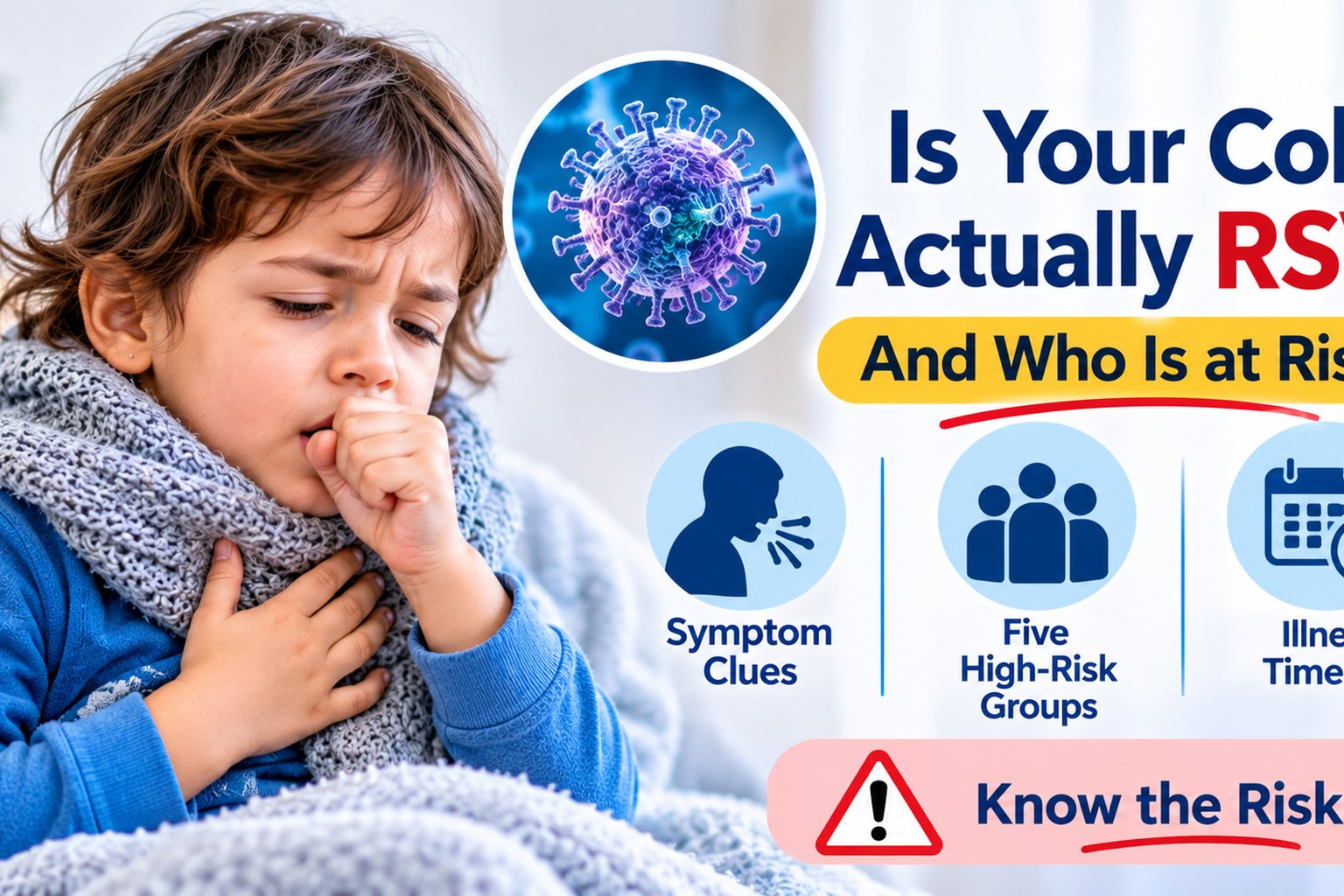
Table of contents
- 1. What Is RSV?
- 2. RSV vs Cold vs Flu vs COVID-19
- 3. Five High-Risk Groups
- 4. Symptoms: Adults and Older Children
- 5. Warning Signs in Babies and Young Children
- 6. Treatment and Home Care
- 7. Prevention: Habits and Immunizations
- 8. Sample Illness Timeline With a Symptom Graph
- 9. Contact Us and Find Us Online
- Conclusion
- Frequently Asked Questions
- See a Doctor in Elmhurst or Chinatown
Respiratory syncytial virus, better known as RSV, circulates every fall and winter. In most healthy children and adults it causes cold-like symptoms such as a runny nose, cough and mild fever that clear in a week or two. But in young infants, older adults and people with heart, lung or immune conditions, RSV can lead to bronchiolitis or pneumonia and may require hospital care.
This guide explains the symptom clues, how RSV compares with a cold, flu and COVID-19, the five high-risk groups, warning signs, treatment at home, prevention options and a sample illness timeline. It is general education only. Trouble breathing, bluish lips or skin, or a baby who is not feeding needs urgent evaluation.
| At a Glance | Key Point |
|---|---|
| What it is | A common seasonal respiratory virus |
| Usual illness | Runny nose, cough, sneezing, low fever, lasting about 1 to 2 weeks |
| Highest risk | Young infants, older adults, and people with lung, heart or immune conditions |
| Treatment | Mostly supportive care at home; hospital care for severe cases |
| Prevention | Hand hygiene, staying home when sick, and RSV immunizations for eligible people |
1. What Is RSV?
RSV spreads through droplets from coughs and sneezes and by touching contaminated surfaces. In the northern United States, the season generally runs from fall through early spring. Almost every child has had RSV by age two, and adults can be reinfected throughout life.
For reliable background, see the CDC page on RSV and the MedlinePlus entry on RSV infections.
2. RSV vs Cold vs Flu vs COVID-19
These illnesses overlap a lot, and only testing can tell them apart. The table gives general patterns.
| Feature | RSV | Common Cold | Flu | COVID-19 |
|---|---|---|---|---|
| Onset | Gradual over days | Gradual | Sudden | Variable |
| Fever | Mild or none in adults | Rare to mild | Common and often high | Possible |
| Cough | Common; wheezing possible | Mild | Dry, can be severe | Common |
| Body aches | Mild | Mild | Often strong | Possible |
| Severe risk groups | Infants, older adults, lung or heart disease | Low | Older adults, young children, pregnancy, chronic illness | Older adults, chronic illness, weak immunity |
For a closer comparison, read our guide on flu vs cold vs COVID-19 in Queens. If a cough lingers, see when a cough is more than a cold.
3. Five High-Risk Groups
| Group | Why Risk Is Higher |
|---|---|
| 1. Infants, especially under 6 months | Small airways swell and clog easily; they can tire from breathing hard |
| 2. Premature babies and babies with heart or lung disease | Less breathing reserve |
| 3. Adults 60 and older, especially 75 and older | Immune defenses weaken with age; higher chance of pneumonia and hospital stays |
| 4. Adults with heart or lung disease such as asthma, COPD or heart failure | RSV can worsen the underlying condition |
| 5. People with weakened immune systems | The body has a harder time clearing the virus |
Adults with asthma should have an action plan ready each season. See our guide on keeping asthma under control through every season in Queens. Older adults who take many medicines may find our guide on taking many medicines safely helpful.
4. Symptoms: Adults and Older Children
Symptoms usually appear 4 to 6 days after exposure and may include:
- Runny or stuffy nose and sneezing.
- Cough, sometimes with wheezing.
- Sore throat and mild headache.
- Low-grade fever or none.
- Tiredness and decreased appetite.
Most healthy adults recover at home. Older adults may feel more breathless or have worse heart or lung symptoms, and can become dehydrated, so see a clinician if breathing is hard or you are not drinking.
5. Warning Signs in Babies and Young Children
Get urgent medical care for an infant or child who has:
- Fast, labored breathing, flaring nostrils or the skin pulling in between or under the ribs.
- Bluish or gray color on the lips, tongue or fingernails.
- Not feeding well, or fewer wet diapers than usual, which can signal dehydration.
- Unusual sleepiness, limpness or difficulty waking, or irritability that cannot be soothed.
- Pauses in breathing, or a fever in a baby younger than 3 months.
Call 911 for severe breathing trouble or blue color. For help deciding between settings, see where to go when illness strikes suddenly and how to tell a common childhood illness from one that needs a doctor.
6. Treatment and Home Care
There is no specific antiviral for most RSV infections, so treatment supports the body while the virus runs its course. Antibiotics do not work on viruses and are used only if a bacterial complication develops.
Home care often includes:
- Fluids: offer frequent drinks or feeds to prevent dehydration, and watch urine output.
- Rest: allow extra sleep and limit school or work until fever-free and improving.
- Clear the nose: use saline drops or spray and gentle suction for babies; run a clean cool-mist humidifier if it helps.
- Fever and pain relief: use only medicines suitable for the person's age and health, following the label, and ask a clinician or pharmacist, especially for babies.
- Avoid smoke: keep tobacco and vaping smoke away from everyone, especially children.
Dehydration can sneak up during any respiratory illness. Our guide on dehydration warning signs explains what to watch for. If symptoms are moving toward the chest, our guide on warning signs of pneumonia is worth reading.
7. Prevention: Habits and Immunizations
| Prevention Step | Who It Helps | Good to Know |
|---|---|---|
| Hand washing and cleaning shared surfaces | Everyone | Wash for at least 20 seconds |
| Staying home when sick and covering coughs | Everyone, especially around babies and older adults | Avoid kissing babies when you have cold symptoms |
| RSV vaccine for adults | Older adults and some adults at higher risk | Recommended by the CDC for certain age and risk groups; ask a clinician if you qualify |
| RSV vaccine during pregnancy | Protects newborns through antibodies passed on | Given in the late third trimester during the RSV season; discuss timing with your obstetric clinician |
| RSV antibody for infants | Babies younger than 8 months born during or entering their first RSV season, and some older high-risk children | Ask your pediatric clinician which option fits your baby |
| Flu and COVID-19 vaccines | Everyone eligible | Reduce other respiratory illness during the same season |
Recommendations change, so confirm current guidance with your clinician. Our guides on adult vaccines and when to get your flu shot this season can help you plan.
8. Sample Illness Timeline With a Symptom Graph
This illustrative timeline shows a typical RSV course in a healthy adult with a cold-like illness. It is a teaching example, and babies and older adults can follow a different course. The squares show example symptom levels.
| Day | What Happens | Example Symptom Level |
|---|---|---|
| Day 0 to 4 | Exposure, no symptoms yet | ■ |
| Day 5 | Runny nose, sneezing, mild sore throat | ■■■ |
| Day 6 to 7 | Cough starts; tired; low fever | ■■■■■ |
| Day 8 to 9 | Cough peaks; wheeze possible; rest and fluids | ■■■■■■ |
| Day 10 to 12 | Congestion and cough ease | ■■■ |
| Week 2 to 3 | Mild leftover cough may linger | ■ |
9. Contact Us and Find Us Online
If you or your child has a cough, wheeze or breathing symptoms, or you want to ask about RSV prevention, our team can examine you, test if appropriate and guide care. For non-emergency questions, Contact Us, book a visit, or find City Prime Care on Google: City Prime Care on Google.
Conclusion
RSV is usually a mild cold for healthy people, but a serious illness for the youngest and oldest. Know who is at risk, watch breathing and fluid intake closely, use prevention tools that fit your situation and seek care early when in doubt. This article is for general education and does not replace medical advice.
Frequently Asked Questions
See a Doctor in Elmhurst or Chinatown
Have a question about your own health? Book a visit at our Elmhurst, Queens clinic or our Chinatown, Manhattan clinic, or explore our primary care services.
Related articles
Healthcare
Why Do You Feel Dizzy or Like the Room Is Spinning, and When Is It Serious? Reading the Dizziness Types, the Five Warning Signs and the Sample Balance Diary
Dizziness and vertigo have many causes, from inner-ear crystals to dehydration to stroke. Learn the three dizziness types, five warning signs and a sample balance diary to bring to your doctor.
Healthcare
What Are the Warning Signs of Pneumonia, and Who Needs Care Fast? Reading the Symptom Clues, the Five Risk Groups and the Sample Recovery Timeline
Pneumonia is a lung infection that can be mild or serious. Learn how it differs from a cold or the flu, the warning signs, the five higher-risk groups, how severity is judged and what recovery usually looks like.
Healthcare
How Can You Recognize a Stroke in Time? Reading the BE-FAST Warning Signs, the Five Emergency Steps and the Sample Hospital Timeline
Stroke care is a race against time. Learn the BE-FAST warning signs, the five emergency steps, what happens at the hospital, why a TIA is a warning and which risk factors you can control.





