
HealthcareBy City Prime Care Team
How Long Does an IV Drip Actually Help? Reading the Effect Windows, the Five Factors and the Sample Recovery Curve
Do IV benefits last hours, days or weeks? It depends on why you got the drip. Learn what lasts, what does not, the factors that matter, and how to read a sample recovery curve honestly.
Medically reviewed by City Prime Care Administrator8 min read
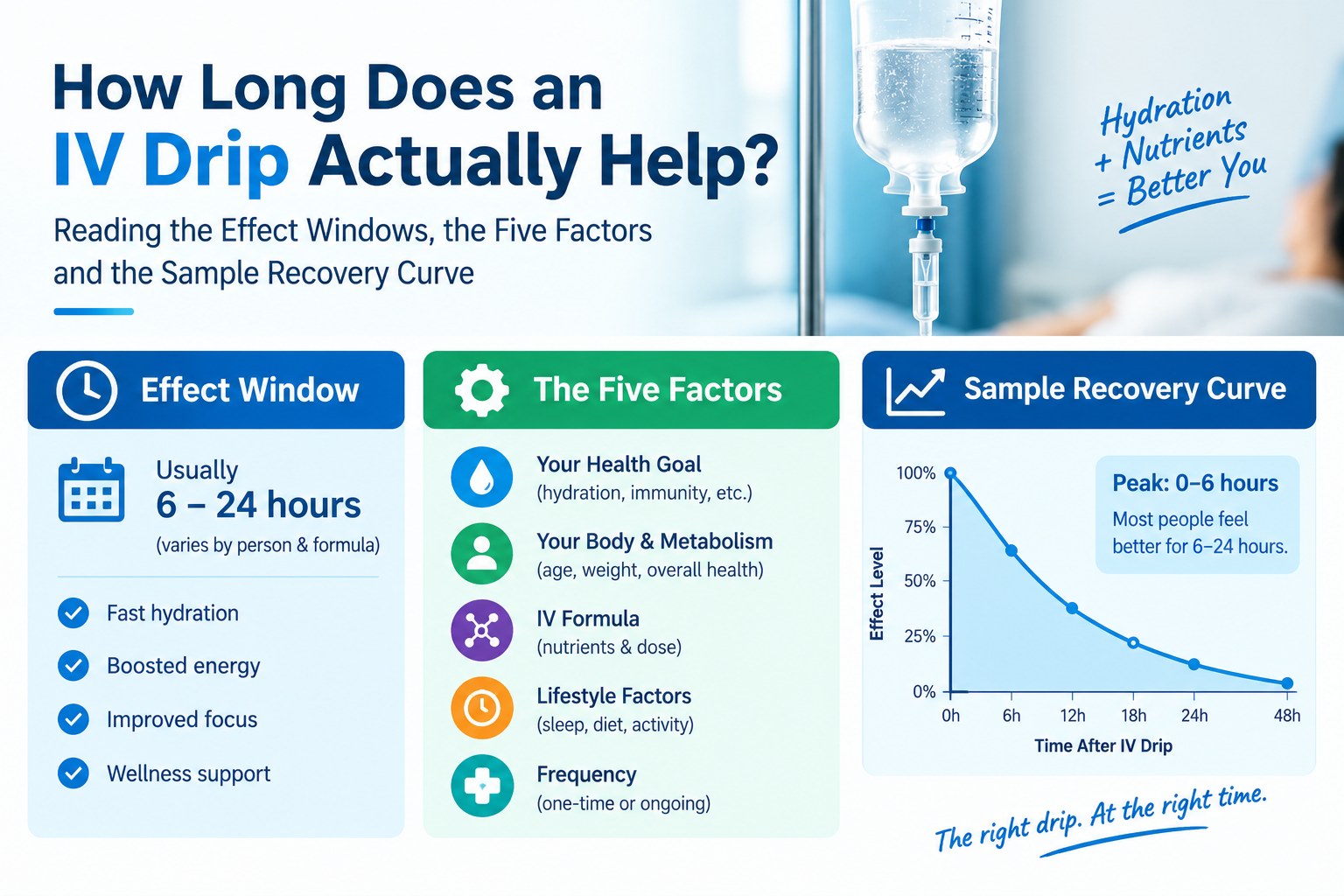
Table of contents
- 1. The Honest Answer First
- 2. Effect Windows by Type of Drip
- 3. A Sample Recovery Curve
- 4. Five Factors That Change How Long It Lasts
- 5. How to Make the Benefits Last
- 6. How Often Is Too Often?
- 7. When Fatigue Keeps Coming Back
- 8. Red Flags and Booking
- Conclusion
- Frequently Asked Questions
- See a Doctor in Elmhurst or Chinatown
It is one of the most common questions about IV therapy: how long will I feel better? The honest answer is that it depends on why you had the drip. Fluids for true dehydration work quickly and last as long as you stay hydrated. Vitamin add-ins are a different story, because your body clears extra vitamins you do not need, and ongoing tiredness often has a cause a drip cannot fix.
This guide explains what typically lasts and what does not, based on the cautious approach on the City Prime Care IV drip therapy page. It covers the effect windows for each type of drip, the factors that change results, a sample recovery curve, how to make benefits last, and when to see a doctor instead of booking another drip. It is general education, not personal medical advice. You can find City Prime Care on Google: City Prime Care on Google. See the clinic's IV drip therapy page.
In this article:
- 1. The honest answer first
- 2. Effect windows by type of drip (table)
- 3. A sample recovery curve (graph)
- 4. Five factors that change how long it lasts
- 5. How to make the benefits last
- 6. How often is too often?
- 7. When fatigue keeps coming back
- 8. Red flags and booking
1. The Honest Answer First
The clinic says the fluid is the part of a drip most likely to make a noticeable difference, and that you may feel less lightheaded within the hour after hydration when you were truly dry. It also says that extra vitamins in a well-nourished person are mostly cleared by the kidneys, and that no drip detoxifies the body or cures illness. So there is no single number of days that applies to everyone.
For background on dehydration and how the body handles fluid, see the MedlinePlus dehydration page and our guide on dehydration warning signs.
2. Effect Windows by Type of Drip
The table below describes what is generally reasonable to expect for each use. It is not a promise, and individual results vary.
| Type or use | What may improve | How long it generally lasts | What decides it |
|---|---|---|---|
| 1. Hydration drip for true dehydration | Dryness, lightheadedness, headache | Hours to a day or so, as long as you keep drinking and the cause is resolved | Whether you keep losing fluid or drink enough afterward |
| 2. Immune Support drip | Mostly the fluid effect | No lasting immune effect has been shown in healthy adults | Flu shot, sleep, and hand washing matter more |
| 3. Energy and Recovery drip | Hydration after exertion or travel | Short term; B vitamins beyond what you need are cleared | Sleep, food, and training load |
| 4. Myers' Cocktail | Warm, flushed feeling during infusion; mixed results afterward | Unclear; small studies are mixed | Individual response |
| 5. Treatment of a confirmed deficiency (B12, iron, vitamin D) | Gradual improvement of symptoms and labs | Weeks to months, with retesting | The cause of the deficiency and follow-up care |
The clinic notes that treatment of a lab-confirmed deficiency is a separate service with its own workup; see its vitamin and mineral infusions page. Many people notice improvement over several weeks rather than right away, it says, and repeat blood work confirms levels are rising.
3. A Sample Recovery Curve
The graph below is an illustrative curve, not patient data, showing how someone who was truly dehydrated might feel after a hydration drip. It shows why the benefit comes mainly from fluids and fades when habits do not change.
| Time after the drip | How you might feel (graph) | What helps |
|---|---|---|
| Before the drip | ██░░░░░░░░ Low | Dry, lightheaded, tired |
| Right after (within the hour) | ████████░░ Much better | Fluids restored |
| Later that day | ███████░░░ Good | Keep drinking, eat a meal |
| Next day | ██████░░░░ Steady, if the cause is resolved | Rest and regular fluids |
| A few days later | █████░░░░░ Depends on habits | Sleep, food, and the underlying cause |
4. Five Factors That Change How Long It Lasts
These factors shape the result:
- Why you had it: true dehydration responds well; vague tiredness often does not.
- The underlying cause: a stomach bug that is still active, ongoing heavy sweating, or a poor sleep schedule can undo the benefit quickly.
- Your health conditions: heart, kidney, and blood pressure problems change how much fluid is safe.
- What you do afterward: drinking enough, eating, and resting extend the benefit.
- Whether a real deficiency exists: confirmed low B12, iron, or vitamin D needs follow-up and retesting, not repeated drips.
5. How to Make the Benefits Last
| Habit | Practical step |
|---|---|
| Hydration | Sip fluids through the day; pale yellow urine is a good sign |
| Food | Eat regular meals; see the clinic's lifestyle counseling |
| Sleep | Keep a steady wake-up time; see sleep and your health |
| Cause | Treat the cause, such as a stomach bug or overtraining; see upset stomach and recovery |
| Follow-up labs | If a deficiency was treated, retest as your clinician advises |
6. How Often Is Too Often?
The clinic does not publish a fixed schedule, and it says the right frequency depends on the drip and your health. A drip should have a clear reason each time. If you feel the need for repeated drips to keep your energy up, that is a sign to look for an underlying cause rather than add more infusions.
| Pattern | What it suggests | Next step |
|---|---|---|
| One drip after a clear event, such as a stomach bug or long travel | Reasonable use | Recover and rehydrate |
| Repeated drips for tiredness | Possible unaddressed cause | Blood work and a visit |
| Needing drips for dryness or lightheadedness often | Possible medical issue | Call the clinic |
7. When Fatigue Keeps Coming Back
The clinic says ongoing tiredness can come from anemia, thyroid problems, poor sleep, or depression, and a drip will not fix those. It says it would rather check your blood work first. See our guides on why you feel tired all the time and low energy in men, and our guide to common blood tests.
Persistent tiredness deserves a visit if:
- It lasts several weeks despite rest
- It comes with weight change, pale skin, or shortness of breath
- It comes with low mood or loss of interest
- You have numbness or tingling
- You rely on caffeine or drips to function
8. Red Flags and Booking
| Warning sign | Action |
|---|---|
| Confusion, fainting, or no urine for many hours | Call 911 |
| Chest pain or severe shortness of breath | Call 911 |
| Pain, redness, or swelling at the IV site | Call the clinic the same day |
| Vomiting or diarrhea that will not stop | Be seen the same day |
| Symptoms returning within days | Book a visit to look for the cause |
To book, use the appointment page and see our guide on what to expect from an IV drip visit.
Conclusion
How long an IV helps depends on what it was for. Rehydration works fast and fades if the cause continues. Vitamin add-ins have limited lasting effect. Real deficiencies need follow-up, not repeat drips.
Contact Us: To ask about IV therapy, tiredness that keeps coming back, or testing, reach City Prime Care through our Contact Us page, or find the clinic on Google: City Prime Care on Google. This article is for general information and does not replace personal medical advice. In an emergency, call 911.
Frequently Asked Questions
See a Doctor in Elmhurst or Chinatown
Have a question about your own health? Book a visit at our Elmhurst, Queens clinic or our Chinatown, Manhattan clinic, or explore our primary care services.
Related articles
Healthcare
What Drives the Price of an IV Drip in Queens? Reading the Cost Factors, the Five Questions to Ask and the Sample Quote Checklist
IV drip prices vary widely and are often not posted online. Learn what affects the cost, why wellness drips are usually self-pay, how to compare quotes fairly, and a sample quote checklist for Queens.
Healthcare
Is an IV Drip Really Better Than a Vitamin Pill? Reading the Absorption Claims, the Five Decision Questions and the Sample Comparison Chart
IV drips are marketed as faster and stronger than supplements, but the evidence is more nuanced. Compare IV therapy with oral supplements, see when each makes sense, and use five questions and a sample chart to decide.
Healthcare
What Should You Expect From an IV Drip Visit in Elmhurst? Reading the Four Drips, the Safety Screening and the Sample Session Timeline
IV drips are popular, but evidence for wellness drips in healthy people is limited. See the four drips offered, who they suit, the medical screening first, honest benefits and risks, and a sample session timeline.





