
HealthcareBy City Prime Care Team
Why Are You Always Tired as a Man? Reading the Common Causes, the Five Checks and the Sample Fatigue Diary
Constant tiredness has many causes besides low testosterone: sleep, sleep apnea, thyroid, anemia, blood sugar, mood and medicines. See the common causes, five checks a doctor runs and a sample fatigue diary.
Medically reviewed by City Prime Care Administrator9 min read
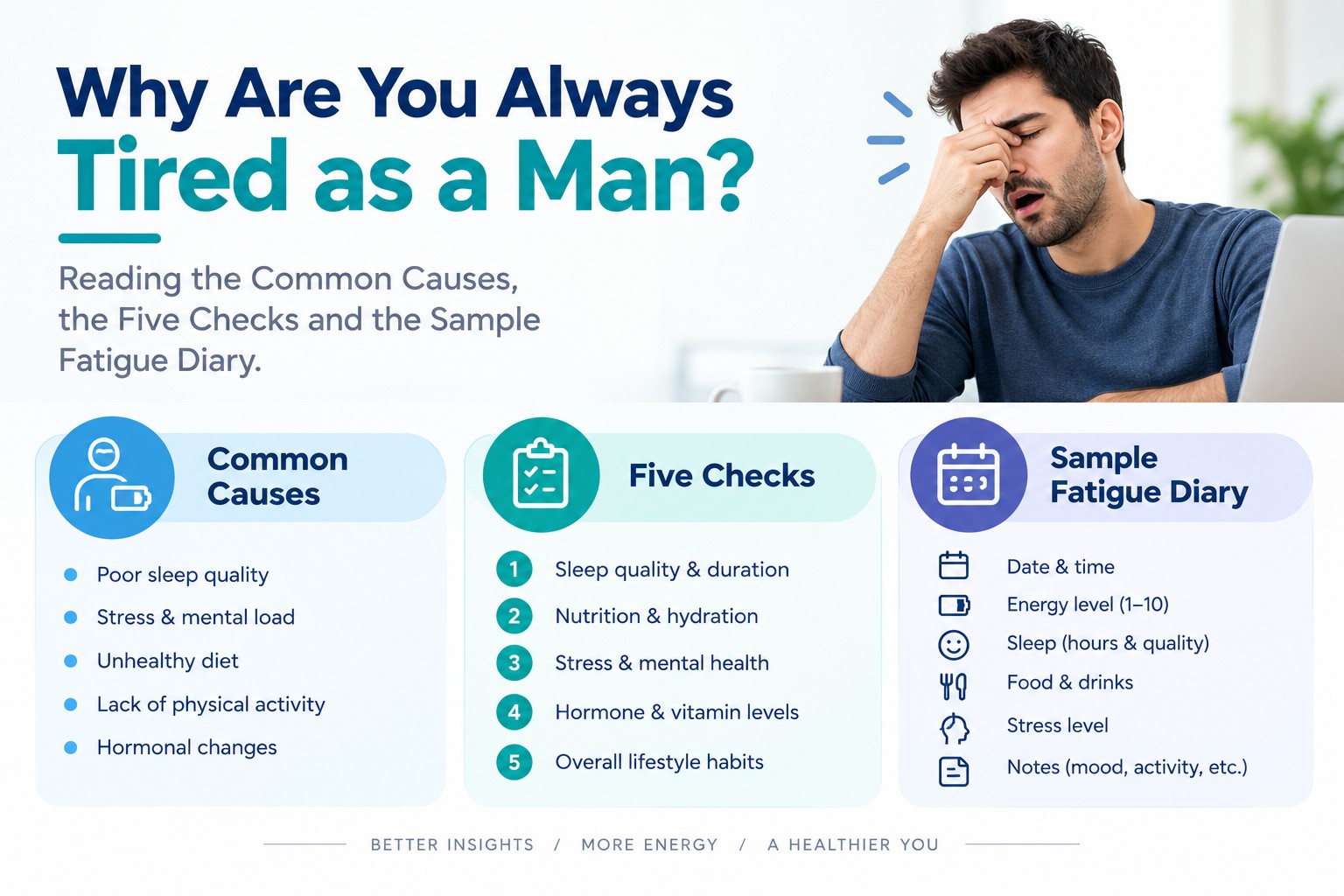
Table of contents
- 1. When Tiredness Is More Than Tiredness
- 2. Common Causes of Fatigue in Men
- 3. How Often Each Cause Is Found
- 4. Low Testosterone: What to Know
- 5. The Five Checks
- 6. A Sample Fatigue Diary
- 7. What Can Help While You Wait for Answers
- 8. Red Flags: When Not to Wait
- Conclusion
- Frequently Asked Questions
- See a Doctor in Elmhurst or Chinatown
Men are often told that being tired is part of getting older, working hard, or raising a family. Sometimes that is true. But persistent low energy, especially if it comes with a drop in sex drive, low mood, poor sleep, or loss of strength, can have causes a doctor can find and treat. Low testosterone is one possible cause, but it is far from the only one, and it is often not the answer.
This guide explains the common causes of fatigue in men, five checks a clinician typically runs, how low testosterone is evaluated, and how to keep a simple fatigue diary. It draws on the men's health page of the City Prime Care website, which says low energy and similar symptoms can have many causes and that the whole picture should be reviewed before anyone labels it a hormone problem. It is general education, not personal medical advice. See the clinic's men's health page.
In this article:
- 1. When tiredness is more than tiredness
- 2. Common causes (table)
- 3. How often each cause is found (graph)
- 4. Low testosterone: what to know
- 5. The five checks
- 6. A sample fatigue diary
- 7. What can help while you wait for answers
- 8. Red flags: when not to wait
1. When Tiredness Is More Than Tiredness
Everyone feels run down after a bad week. Fatigue deserves attention when it lasts for weeks, does not improve with rest, interferes with work or relationships, or comes with other changes such as low mood, loss of interest, weight change, or trouble concentrating.
The clinic says that before anyone labels low energy a hormone problem, its clinicians look at the whole picture: sleep, weight, medicines, thyroid function, mood, and other health conditions. That approach avoids both missed diagnoses and unnecessary treatment. For general background, see the MedlinePlus men's health page.
2. Common Causes of Fatigue in Men
| Cause | Clues | How it is checked |
|---|---|---|
| 1. Poor or short sleep | Late nights, shift work, irregular schedule, screens | Sleep history; see sleep and your health |
| 2. Sleep apnea | Loud snoring, pauses in breathing, morning headaches, daytime sleepiness | Sleep history and referral for a sleep study; see MedlinePlus sleep apnea |
| 3. Depression or anxiety | Low mood, loss of interest, irritability, poor sleep | Screening questions at the visit |
| 4. Thyroid problems | Tiredness, feeling cold, weight change, hair thinning | TSH blood test |
| 5. Anemia | Pale skin, breathlessness on exertion, fast heartbeat | Blood count; see why you feel tired all the time |
| 6. Diabetes or prediabetes | Thirst, frequent urination, weight change | A1C and blood sugar; see diabetes checkups |
| 7. Medicines | Fatigue that began after a new medicine | Medicine review |
| 8. Alcohol, caffeine, or heavy stress | Poor sleep quality, crashes, anxiety | Lifestyle review |
| 9. Low testosterone | Reduced interest in sex, fewer morning erections, erectile difficulty, loss of muscle strength, extra body fat, low mood | Morning blood tests, repeated to confirm |
3. How Often Each Cause Is Found
The graph below is an illustrative guide to how often clinicians commonly find each cause behind long-lasting fatigue in men, not clinic data. It shows why sleep and lifestyle usually come before hormones.
| Cause | How often found (graph) | Note |
|---|---|---|
| Sleep, stress, and lifestyle | ██████████ Most common | Often fixable without tests |
| Mood and anxiety | ███████░░░ Common | Treatable |
| Sleep apnea | ██████░░░░ Common | Often missed |
| Diabetes or prediabetes | █████░░░░░ Frequent | Often silent |
| Medicines | ████░░░░░░ Frequent | Ask about every medicine |
| Thyroid and anemia | ███░░░░░░░ Less common | Simple blood tests |
| Low testosterone | ██░░░░░░░░ Less common than assumed | Confirm with repeat testing |
4. Low Testosterone: What to Know
The clinic says low testosterone is evaluated with blood tests, usually drawn in the morning when levels are highest, and a low result is typically repeated on a separate day to confirm it. Related hormones and a blood count may be checked as well. Samples are sent to an outside laboratory, and the provider reviews the numbers with you, aiming for a clear answer about whether your hormone levels explain how you feel, not a single number read in isolation.
| Symptom the clinic lists | Why it does not prove low testosterone |
|---|---|
| Reduced interest in sex, fewer morning erections, erectile difficulty | Also caused by stress, poor sleep, diabetes, blood pressure medicines, and mood |
| Ongoing fatigue, loss of muscle strength, extra body fat | Also caused by inactivity, sleep apnea, thyroid disease, and poor nutrition |
| Low mood | Also caused by depression, stress, and life events |
| Reduced body hair or thinning bones over time | Can have other causes; discuss with a clinician |
Treatment decisions are individual and depend on symptoms, confirmed labs, age, fertility plans, and other health risks. The clinic says some men improve by addressing sleep, weight, or medicines, and it may refer you to endocrinology or urology when hormone therapy is being considered or the cause is unclear. See the Urology Care Foundation for patient information.
5. The Five Checks
A typical evaluation of fatigue includes:
- History: when it started, how it affects you, sleep, snoring, mood, alcohol, caffeine, and every medicine and supplement.
- Exam: blood pressure, weight, heart and lung checks, thyroid, and general condition.
- Screening questions for depression, anxiety, and sleep problems.
- Blood tests chosen for you, often a blood count, blood sugar or A1C, kidney and liver function, and thyroid; plus morning testosterone when symptoms suggest it; see common blood tests.
- A plan: treat what is found, adjust habits, refer if needed, and recheck, with results explained in plain language; see understanding your diagnostic testing results.
6. A Sample Fatigue Diary
A simple two-week diary helps your clinician see patterns. The graph below is an illustrative example of how someone might score energy from 0 to 10 and track possible influences. It is not patient data.
| Day | Energy (graph) | Sleep hours | Caffeine or alcohol | Notes |
|---|---|---|---|---|
| Mon | █████░░░░░ | 6 | 3 coffees | Woke twice |
| Tue | ████░░░░░░ | 5 | 2 coffees, 1 drink | Snoring noted |
| Wed | ██████░░░░ | 7 | 1 coffee | Walked at lunch |
| Thu | ████░░░░░░ | 5 | 3 coffees | Stressful day |
| Fri | █████░░░░░ | 6 | 2 drinks | Late night |
What to track:
- Energy score each evening
- Hours slept and number of times you woke
- Caffeine, alcohol, and meals
- Mood, stress, and activity
- Any morning erections, snoring noted by a partner, or morning headaches
- New medicines or supplements
7. What Can Help While You Wait for Answers
| Habit | Practical step |
|---|---|
| Sleep | Keep a steady wake-up time, limit screens before bed, and aim for enough hours |
| Activity | Short daily walks; build up gradually |
| Food and drink | Regular meals, water through the day, less alcohol, and caffeine earlier in the day |
| Stress | Breathing exercises, breaks, and boundaries around work |
| Support | Ask about lifestyle counseling for nutrition, sleep, stress, and weight |
| Hydration | See our guide on dehydration warning signs |
IV drips are sometimes marketed for tiredness. The clinic notes that ongoing tiredness can come from anemia, thyroid problems, poor sleep, or depression and that a drip will not fix those, so it checks blood work first if fatigue keeps coming back. See our guide to IV drip therapy.
8. Red Flags: When Not to Wait
| Warning sign | Action |
|---|---|
| Chest pain, fainting, or severe shortness of breath | Call 911 |
| Fatigue with unplanned weight loss, night sweats, or fever | Book a prompt visit |
| Black or bloody stools, or vomiting blood | Go to the ER |
| Extreme thirst, frequent urination, blurry vision | Be seen soon; possible diabetes |
| Persistent low mood, hopelessness, or thoughts of self-harm | Call or text 988; see the 988 Lifeline |
| Fatigue that lasts several weeks and is getting worse | Book a visit through the appointment page |
Conclusion
Feeling constantly tired is a symptom, not a personality trait. A history, a few simple checks, and sometimes blood tests can find the cause, and many causes are very treatable.
Contact Us: To ask about fatigue, low energy, or testosterone testing, reach City Prime Care through our Contact Us page. This article is for general information and does not replace personal medical advice. In an emergency, call 911.
Frequently Asked Questions
See a Doctor in Elmhurst or Chinatown
Have a question about your own health? Book a visit at our Elmhurst, Queens clinic or our Chinatown, Manhattan clinic, or explore our primary care services.
Related articles
Healthcare
Is Your Weaker Urine Stream a Sign of an Enlarged Prostate? Reading the Urinary Symptoms, the Five Evaluation Steps and the Sample Symptom Score
A weaker stream, getting up at night and a bladder that never feels empty are common after 50 and often point to an enlarged prostate. Learn the symptoms, how it is evaluated, how PSA fits in, treatment options and a sample symptom score.
Healthcare
How Do You Protect Your Bones as You Age? Reading the Risk Factors, the Bone-Density Timeline and the Sample Bone-Health Plan
Bones thin silently, and the first sign can be a fracture. Learn the risk factors for osteoporosis, when bone density testing is recommended, calcium and vitamin D basics, and a sample bone-health plan.
Healthcare
When Do Stress, Low Mood or Anxiety Need a Doctor's Help? Reading the Warning Signs, the Five Screening Steps and the Sample Check-In Plan
Stress, low mood and anxiety are common and treatable, but many people wait too long. Learn the signs that deserve a doctor's help, how primary care screens and treats, treatment options, and a sample weekly check-in plan.





