
HealthcareBy City Prime Care Team
Easy Bruising in Elmhurst, NY: Why Bruises Appear Easily and What to Expect From a Checkup
Finding large bruises without remembering a bump can be unsettling. Learn the common causes of easy bruising, how bruise colors change, which blood tests may be used, five care steps and when to see a doctor.
Medically reviewed by Dr. Helen Vasquez11 min read
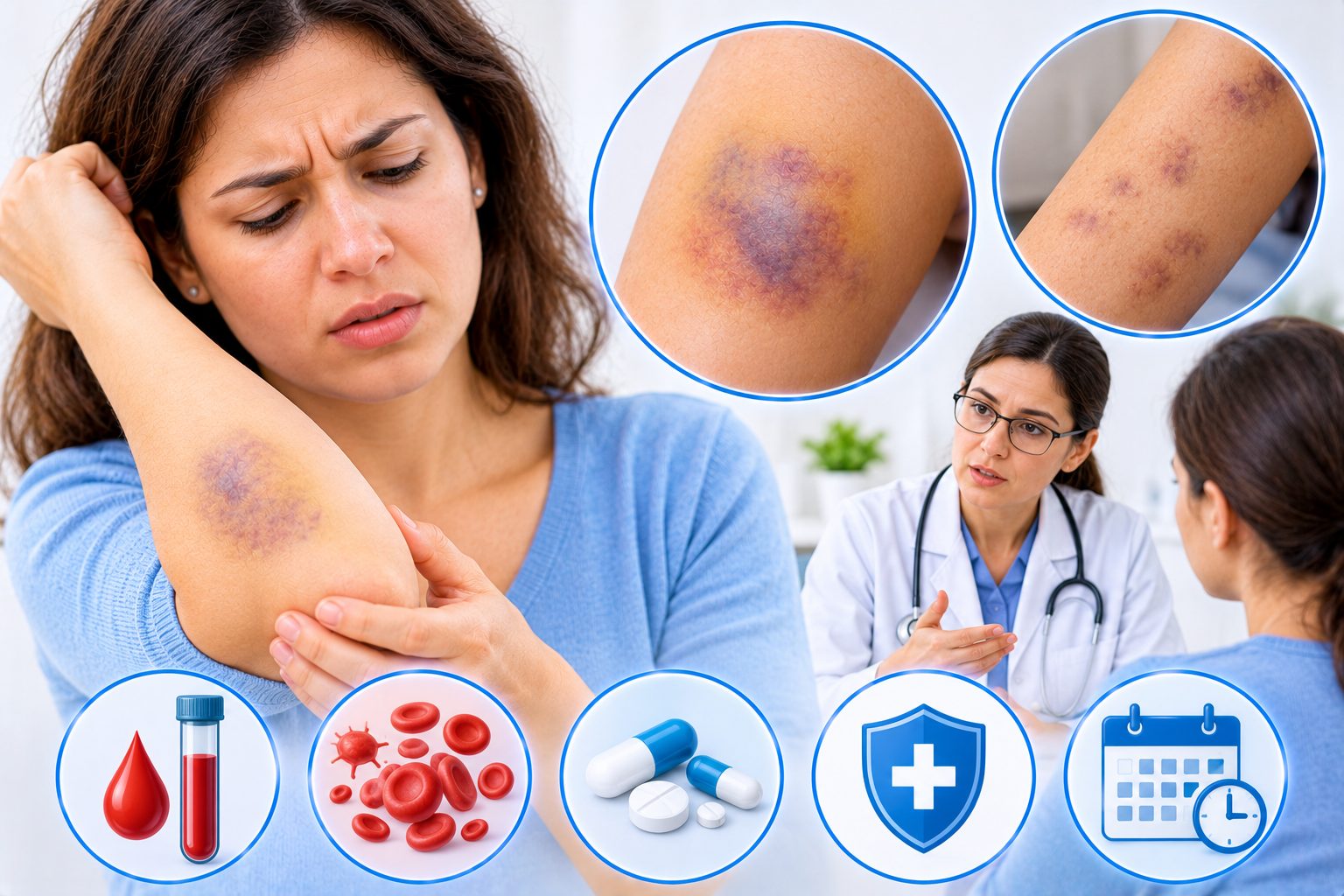
Table of contents
- 1. Why Do Bruises Form?
- 2. How a Bruise Changes Color
- 3. Easy Bruising vs Look-Alike Skin Changes
- 4. Causes and Who Is at Higher Risk
- 5. How a Clinician Evaluates Easy Bruising
- 6. The Five Care Steps
- 7. Tests and Treatments at a Glance
- 8. Graph: Illustrative Bruise Fading Over Two Weeks
- 9. Sample Four-Week Tracking Plan
- 10. Red Flags: When to Get Care Promptly
- 11. Where to Get Care: Elmhurst, Chinatown and Lower Manhattan
- 12. Related Reading From City Prime Care
- 13. Contact Us
- Conclusion
- Frequently Asked Questions
- See a Doctor in Elmhurst or Chinatown
You notice a dark purple patch on your thigh, a few on your arms, and you cannot remember bumping into anything. Maybe you have started a new medicine, you are getting older or the marks seem larger and slower to fade than they used to be. Easy bruising is common and usually harmless, especially with age, but it can sometimes point to a medicine effect, a vitamin deficiency or a blood problem that deserves a check.
This guide explains how bruises form and change color, common and less common causes, which tests a clinician may order, five care steps, a sample four-week tracking plan and the red flags that need prompt care. City Prime Care serves patients in Elmhurst, Queens, Chinatown and Lower Manhattan. This article is general education and not a substitute for personal medical advice. The National Heart, Lung, and Blood Institute also explains bleeding and clotting problems on its bleeding disorders page.
Quick takeaways:
- A bruise forms when small blood vessels under the skin break and blood leaks into the tissue; thin, aging or sun-damaged skin and some medicines make this happen more easily.
- Blood thinners, aspirin, anti-inflammatory medicines, steroids and some supplements are common causes; do not stop a prescribed medicine without talking to your clinician.
- Bruising with nosebleeds, bleeding gums, heavy periods, tiny red dots on the skin, fatigue or weight loss deserves prompt evaluation.
- A simple blood count and clotting tests can often clarify the cause quickly.
1. Why Do Bruises Form?
Under the skin are tiny blood vessels called capillaries. A bump can damage them, and blood leaks into the surrounding tissue, which shows up as a bruise. Platelets and clotting proteins in the blood normally seal the leak quickly. If the vessels are fragile or the clotting system does not work as well as it should, bruises appear more easily or grow larger.
With age, skin becomes thinner and loses the fatty layer that cushions blood vessels, which is why older adults often bruise on the forearms and hands after minor bumps, sometimes called senile purpura.
2. How a Bruise Changes Color
| Stage | Typical color | Approximate timing | What is happening |
|---|---|---|---|
| Fresh | Red or pink | Day 0 to 1 | Fresh blood under the skin |
| Early | Blue, purple or dark | Days 1 to 5 | Blood loses oxygen |
| Healing | Green | Days 5 to 10 | Hemoglobin breaks down into biliverdin |
| Late | Yellow or brown | Days 10 to 14 | Pigments continue to break down and clear |
| Resolved | Normal skin color | About 2 weeks, longer in older adults | Body reabsorbs the blood |
A bruise that does not fade within about four weeks, keeps growing, feels like a hard lump or is very painful should be checked.
3. Easy Bruising vs Look-Alike Skin Changes
| Condition | Typical clue | How it differs from a bruise |
|---|---|---|
| Petechiae | Tiny pinpoint red or purple dots that do not fade when pressed | Small dots rather than patches; may signal low platelets and needs prompt evaluation |
| Hematoma | A raised, firm collection of blood | Swelling and a lump, often after a deeper injury |
| Varicose or spider veins | Visible blue or red vessels | Vessels are permanent and branching rather than a fading patch |
| Contact dermatitis or rash | Itchy red area | Itching and scaling rather than a flat colored patch |
| Cellulitis | Red, warm, tender spreading skin | Warm and spreading with possible fever |
| Ankle swelling with discoloration | Puffy legs and darker skin | Swelling is prominent; see ankle and foot swelling |
4. Causes and Who Is at Higher Risk
Easy bruising is linked to:
- Aging and sun-damaged skin, especially on the forearms, hands and legs.
- Medicines such as aspirin, ibuprofen, naproxen, blood thinners (warfarin and newer anticoagulants), antiplatelet drugs, steroids and some antidepressants.
- Supplements such as fish oil, vitamin E, ginkgo, garlic and ginger in large amounts, which may increase bleeding.
- Low levels of vitamin C or vitamin K, or poor nutrition; see why vitamin D is low so often in New York for related nutrition checks.
- Liver disease, kidney disease or alcohol use that affects clotting.
- Blood conditions such as low platelets, von Willebrand disease and other clotting disorders, and in rare cases leukemia.
- Family history of easy bruising or bleeding, and frequent heavy menstrual bleeding in women.
- Physical activity or contact sports, and frequent small bumps.
5. How a Clinician Evaluates Easy Bruising
A visit usually includes:
- A history of when the bruising began, where it appears, how large the bruises are, bleeding elsewhere, family history and all medicines and supplements.
- A skin and body exam to look at the pattern of bruises, tiny red dots, joint swelling, pale skin, an enlarged spleen or signs of liver disease.
- A complete blood count (CBC) to check platelets, red cells and white cells.
- Clotting tests such as PT/INR and aPTT, and sometimes liver and kidney tests, vitamin levels or specific tests for bleeding disorders.
- A plan for medicine changes if needed, nutrition advice and referral to a blood specialist when results are abnormal; see when your primary care doctor sends you to a specialist.
6. The Five Care Steps
If you bruise easily:
- Review your medicines and supplements: bring a full list to your clinician, and never stop a prescribed blood thinner without medical advice.
- Protect the skin: pad sharp furniture corners, wear long sleeves or protective gear when appropriate and use moisturizer to keep skin supple.
- Treat a fresh bruise: rest the area, apply a cold pack wrapped in cloth for 10 to 15 minutes in the first day, then use gentle warmth and elevate a bruised limb.
- Eat for healthy skin and clotting: include vitamin C foods such as citrus and peppers and vitamin K foods such as leafy greens, unless your clinician has given specific dietary advice for a blood thinner.
- Track and test: photograph bruises, note dates and size and get a CBC and clotting tests if bruising is frequent, large or unexplained.
Avoid rubbing or massaging a fresh bruise, and avoid starting new supplements without checking for effects on bleeding.
7. Tests and Treatments at a Glance
| Option | Best for | Notes |
|---|---|---|
| CBC (complete blood count) | First-line check for low platelets or anemia | Quick blood test |
| PT/INR and aPTT | Clotting function | Helps assess liver function and clotting factors |
| Vitamin and nutrition tests | Suspected deficiency | Vitamin C, vitamin K or B12 may be checked in some cases |
| Medicine adjustment | Drug-related bruising | Done only by the prescribing clinician |
| Specialist referral | Abnormal blood counts or clotting | Hematologist evaluates bleeding disorders |
| Skin protection and moisturizer | Age-related thin skin | Reduces new bruises |
8. Graph: Illustrative Bruise Fading Over Two Weeks
This is a teaching graph, not patient data. It shows how the visible size and darkness of a typical bruise fade over about two weeks. Real timing depends on age, medicines and bruise depth.
| Day | Bruise visibility (illustrative) |
|---|---|
| Day 1 | ██████ |
| Day 3 | ██████████ |
| Day 5 | █████████ |
| Day 8 | ██████ |
| Day 11 | ███ |
| Day 14 | █ |
9. Sample Four-Week Tracking Plan
| When | Goal | Sample actions | Check |
|---|---|---|---|
| Week 0 | Gather information | List medicines and supplements, photograph bruises, book a checkup | Do bruises appear with no clear injury? |
| Week 1 | Get answers | Exam, CBC, clotting tests, medicine review | Are results normal? |
| Weeks 2-3 | Act on findings | Adjust medicines with the clinician, improve nutrition, protect skin | Are new bruises fewer or smaller? |
| Week 4 | Review | Follow up on test results and bruise diary | Do bruises still last longer than two to four weeks? |
| After week 4 | Maintain | Report new bleeding symptoms early; routine checkups | Any nosebleeds, gum bleeding or heavy periods? |
10. Red Flags: When to Get Care Promptly
See a clinician promptly for:
- Many unexplained bruises, especially large ones on the trunk, back or face.
- Tiny red or purple dots on the skin that do not fade when pressed.
- Bleeding from the nose or gums that is frequent or hard to stop, blood in urine or stool, or unusually heavy periods; see blood in urine.
- Bruising with fever, fatigue, pale skin, weight loss or frequent infections.
- A bruise after a head injury with headache, confusion or vomiting; see head injury and concussion.
- A painful, rapidly growing or very swollen lump after a bump, which could be a hematoma.
- New bruising soon after starting a medicine or supplement.
11. Where to Get Care: Elmhurst, Chinatown and Lower Manhattan
A sudden change in bruising or a large painful bruise is a common reason people search for urgent care Elmhurst NY, a walk in clinic Elmhurst NY, urgent care 11373, a same day doctor appointment Elmhurst or Same-Day Acute Care in Elmhurst Queens. For ongoing blood work, medicine reviews and checkups, patients choose a primary care doctor Elmhurst NY, a family doctor Elmhurst Queens, Primary Care Doctors in Elmhurst NY or chronic disease management Elmhurst NY.
People comparing options often search for Best Primary Care Clinic in Elmhurst Queens, Best Primary Care Doctor in Elmhurst Queens, Primary Care Near Me Elmhurst Queens, Best Primary Care Clinics in Queens NY, Primary Care Clinics and Doctors in Queens NY and Top Primary Care Clinics in Queens NY. City Prime Care offers Men's and Women's Healthcare in Elmhurst NY, a physical exam clinic Elmhurst NY and preventive care Elmhurst NY, including blood tests and medicine reviews.
Downtown, people look for primary care Lower Manhattan, primary care Chinatown NYC, a doctor near Catherine Street NYC, primary care 75 Catherine St, a walk-in clinic Chinatown NYC, a Primary Care Clinic in Chinatown Manhattan or a Healthcare Center in Chinatown Manhattan NY. Citywide searches include primary care doctor NYC, family doctor Manhattan NYC, annual physical exam NYC, same day primary care NYC, preventive care Lower Manhattan and primary care doctor near me. Residents searching for Primary Care Doctors Serving Todt Hill Staten Island are welcome to contact the clinic to ask about care options and travel.
| Area | Common searches | How care can help |
|---|---|---|
| Elmhurst (ZIP 11373) | Urgent care 11373, same day doctor appointment Elmhurst | Prompt exam for a large or painful bruise |
| Elmhurst, Queens | Family doctor Elmhurst Queens, primary care doctor Elmhurst NY | Blood tests, medicine reviews and follow-up |
| Queens | Best Primary Care Clinics in Queens NY, Top Primary Care Clinics in Queens NY | Easy-to-reach primary care for the family |
| Lower Manhattan | Primary care Lower Manhattan, preventive care Lower Manhattan | Convenient visits near work |
| Chinatown / Catherine Street | Primary care Chinatown NYC, doctor near Catherine Street NYC, primary care 75 Catherine St | Convenient downtown care |
| Citywide | Primary care doctor NYC, family doctor Manhattan NYC, same day primary care NYC | Same-day or scheduled evaluation |
You can also find the clinic on Google or learn more on the City Prime Care website.
12. Related Reading From City Prime Care
These guides on our site cover connected topics:
13. Contact Us
Are you bruising more than usual or finding marks you cannot explain? Visit our Contact Us page or see our Google listing. If bruising comes with heavy bleeding, fever, a head injury or tiny red dots across the skin, seek care promptly.
Conclusion
Easy bruising is often due to age, skin changes or medicines, but unexplained or widespread bruising with other bleeding symptoms deserves a simple blood test. Bring a full list of medicines and supplements to your visit, track new bruises and do not stop prescribed medicines on your own.
Frequently Asked Questions
See a Doctor in Elmhurst or Chinatown
Have a question about your own health? Book a visit at our Elmhurst, Queens clinic or our Chinatown, Manhattan clinic, or explore our primary care services.
Related articles
Healthcare
Chickenpox in Adults and Children in Elmhurst, NY: How the Rash Develops and What to Expect
Itchy red spots that turn into blisters and then crusts are the classic sign of chickenpox. Learn how the rash develops, how long you are contagious, five care steps, a ten-day timeline and when to see a doctor.
Healthcare
Tonsillitis in Queens, NY: How Swollen Tonsils Are Evaluated and What to Expect From Treatment
Red, swollen tonsils with a painful throat and fever are the hallmarks of tonsillitis. Learn how viral and bacterial cases differ, how strep is tested, five care steps and when tonsil surgery is considered.
Healthcare
Croup in Young Children in Queens, NY: How the Barking Cough Develops and What to Expect
A seal-like barking cough and noisy breathing at night are the signs of croup in young children. Learn how croup develops, how severity is judged, five home-care steps, a sample five-day timeline and when to get urgent care.